
Published: 2026-10-29 | Last Updated: 2026-10-29
A supplier notice announcing a switch from hexavalent to trivalent chrome plating, usually framed as an environmental compliance improvement, raises a question many buyers don’t think to ask until well after the switch has already happened: does your existing specification, written years ago around hexavalent chrome’s specific performance characteristics, still accurately describe what you’re now receiving? The two chemistries are not drop-in equivalents, and treating the switch as a purely administrative notice rather than a genuine specification change is where problems quietly begin. A notification letter that reads like routine paperwork can, in substance, represent one of the more significant process changes a buyer will encounter in an otherwise stable supplier relationship.
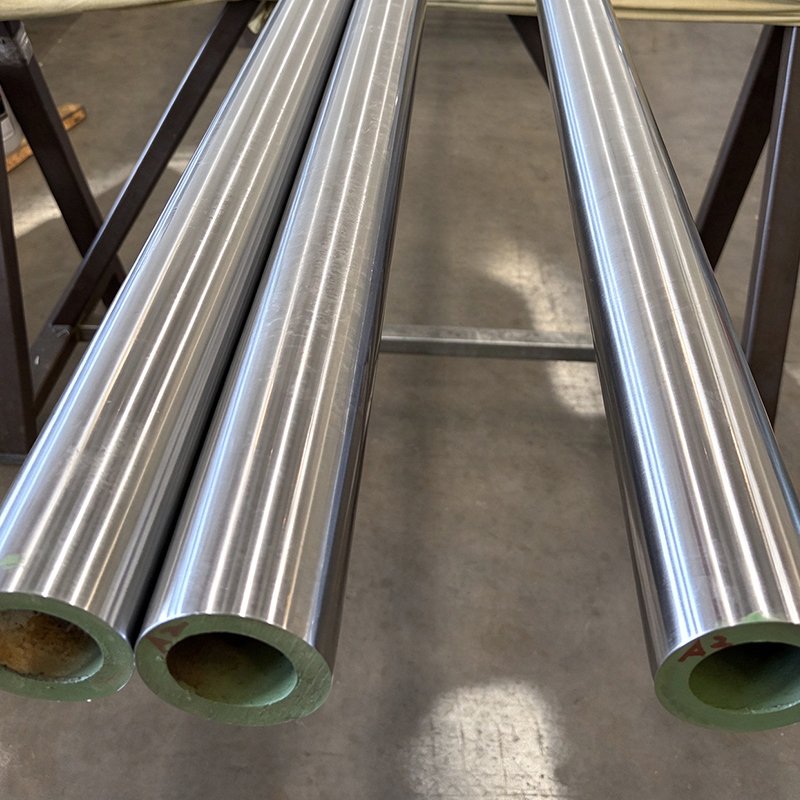
Why Trivalent and Hexavalent Chrome Aren’t Simply Interchangeable
Trivalent chrome plating processes generally produce a different deposit structure, different microcracking pattern, and in some cases, different hardness and wear characteristics compared to hexavalent chrome, even when both are nominally plated to the same specified thickness. Request a side-by-side comparison of key performance characteristics — hardness, corrosion resistance under your specific exposure conditions, and wear rate under your application’s actual duty cycle — between the supplier’s previous hexavalent process and the new trivalent process, rather than assuming the switch is functionally transparent simply because both are called “chrome plating” on a certificate. A supplier who has already performed this comparison testing and can share results demonstrates considerably more rigor than one who frames the switch purely as an environmental upgrade without addressing the performance question directly. The absence of any comparison data at the time of notification is itself informative — it suggests the supplier may be treating the switch as a regulatory compliance formality rather than a change warranting its own engineering validation before reaching customers.
Why Your Original Specification Language May No Longer Say What You Think It Says
Many chrome plating specifications were originally written assuming hexavalent chrome as the only realistic option, since trivalent chrome processes were less mature or less commonly available at the time the specification was drafted. Review your own specification language to check whether it explicitly calls out chrome type, or whether it simply references a performance standard without specifying which chemistry must be used to achieve it, since a performance-based specification may technically permit a trivalent switch while a chemistry-specific specification would not. A specification that doesn’t explicitly address this distinction leaves the door open for a supplier to make the switch without formally requesting a specification change, even though the actual physical properties of what you’re receiving have changed. Updating your specification language going forward to explicitly address chemistry type, rather than leaving the question implicit, closes this gap for future supplier transitions as well, not just the current one.
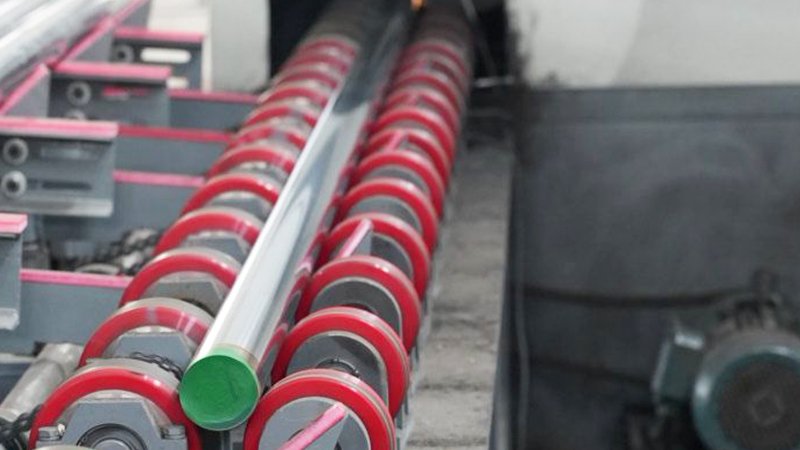
Running Your Own Validation Rather Than Relying Solely on Supplier Data
Supplier-provided comparison data is a useful starting point, but independently validating critical performance characteristics against your own application’s actual requirements provides a more reliable basis for the decision than trusting supplier data alone, particularly for applications where plating performance is safety-relevant or where field failure consequences are severe. For applications where plating performance genuinely matters to safety or reliability, run your own corrosion and wear validation on samples of the new trivalent chrome process before accepting it as a full specification replacement, rather than relying entirely on the supplier’s own internal comparison data. This additional validation step adds some time and cost upfront but provides independent confirmation rather than depending entirely on a single source’s characterization of the change. A third-party testing lab, independent of both buyer and supplier, can provide additional credibility for the validation results if the findings later need to be referenced in a dispute or shared with an end customer who has their own questions about the transition.
What a Reasonable Transition Period Looks Like
Rather than an abrupt, unannounced switch or an abrupt full rejection of any change at all, a reasonable transition typically includes a defined trial period where both chemistries are tracked in parallel, or where the new process is validated on a subset of production before being adopted for the full order volume. Negotiate a defined trial period with your supplier — a specific quantity or time window during which trivalent chrome parts are tracked separately and monitored for field performance — before fully committing to the new process across your entire order volume. This staged approach limits downside exposure if an unexpected issue emerges with the new process, while still allowing the transition to proceed without indefinite delay for a supplier that has legitimate business reasons for making the switch. Defining clear success criteria for the trial period in advance — specific test results or field performance thresholds that must be met before the full transition is approved — keeps the evaluation objective rather than becoming a subjective judgment call made under pressure to simply complete the transition on schedule.
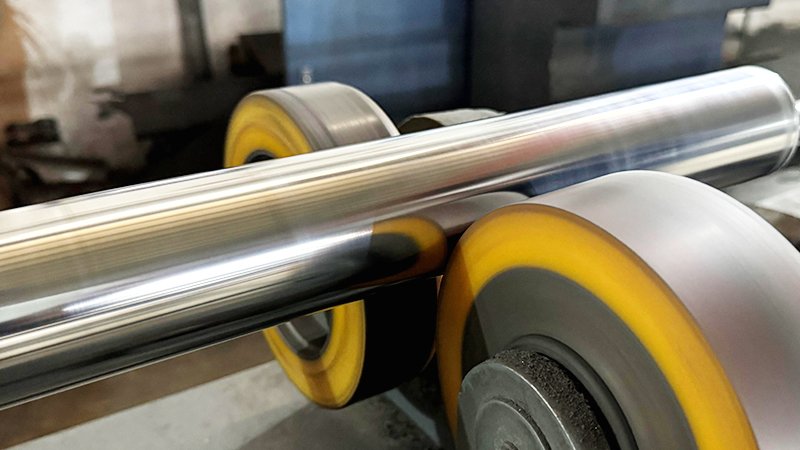
Why Environmental Compliance Drivers Don’t Override Your Right to Verify Performance
Hexavalent chrome plating faces increasing regulatory restriction in many jurisdictions, and a supplier’s switch to trivalent chrome is often driven by genuine, unavoidable compliance requirements rather than any desire to cut costs or corners. Acknowledging that the underlying driver for a chemistry switch may be entirely legitimate regulatory compliance doesn’t eliminate your right, as a buyer, to independently verify that the resulting product still meets your application’s actual performance requirements. A supplier facing a genuine regulatory deadline for the switch should still be willing to support reasonable verification testing, and resistance to this kind of verification — even when the underlying driver is compliance rather than cost-cutting — deserves the same scrutiny as resistance to verification for any other specification change. Recognizing the legitimacy of the regulatory pressure a supplier faces is not the same as granting an automatic pass on performance verification, and conflating the two is a common but avoidable mistake that leaves a genuine performance gap unexamined simply because the underlying motivation for the change was sympathetic.
Why Microcracking Pattern Differences Matter More Than They Appear To
The microcracking network that develops in a chrome plating deposit plays a meaningful role in how corrosion resistance and lubricant retention actually behave in service, and trivalent and hexavalent processes often produce measurably different crack density and crack pattern characteristics even at equivalent thickness and hardness specifications. Request microscopic cross-section images comparing the microcracking pattern of the new trivalent process against your historical hexavalent baseline, since a denser or coarser crack network can mean meaningfully different corrosion resistance in service even when bulk hardness numbers look identical on a standard test report. This kind of comparison requires more specialized testing than a standard thickness or hardness check, but for applications where corrosion resistance under harsh field conditions is a primary performance requirement, this additional scrutiny is proportionate to what’s actually at stake in the transition. Not every application justifies this level of scrutiny, and a reasonable risk-based approach reserves the full microscopic comparison for applications where corrosion performance is genuinely critical, applying a lighter verification standard for applications where it matters less.
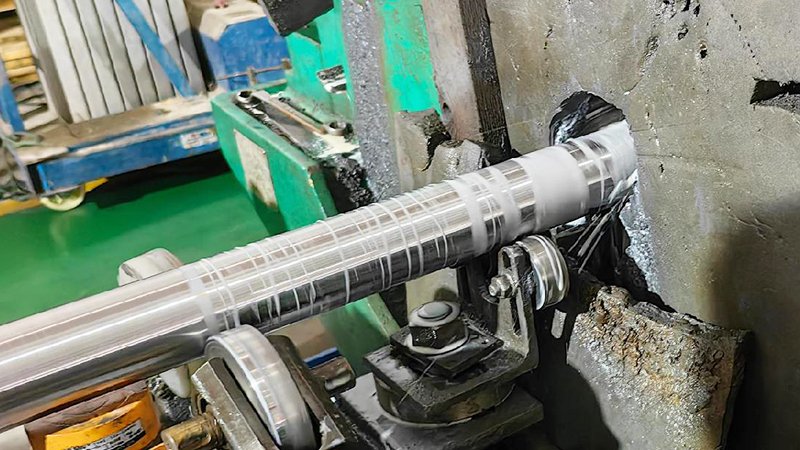
How to Handle Existing Inventory Manufactured Under the Old Process
A supplier transition to trivalent chrome rarely happens as a clean cutover — there’s typically a period where inventory manufactured under the old hexavalent process remains in the supply chain alongside newly produced trivalent chrome parts, and distinguishing between the two becomes operationally important if your validation process treats them differently. Request that the supplier clearly mark or document which chemistry was used for any given production lot during the transition period, so your own inventory management can track which parts were validated under which process rather than assuming uniformity across a mixed-inventory period. Skipping this tracking step risks a situation where validated and unvalidated material becomes commingled in your own warehouse, undermining the value of whatever validation testing was performed on a specific sample batch. A simple lot-marking convention, agreed with the supplier before the transition begins, prevents this confusion with minimal added administrative burden on either side.
What to Do If Your Application Specifically Requires Hexavalent Chrome’s Properties
For a narrow subset of genuinely demanding applications, hexavalent chrome’s specific performance characteristics may not be adequately replicated by any trivalent alternative currently available, regardless of how carefully the trivalent process has been optimized. If validation testing reveals a genuine, unacceptable performance gap for your specific application, raise this directly with your supplier as a basis for either sourcing continued hexavalent chrome plating from an alternate source still permitted to offer it, or jointly exploring whether a modified trivalent process or an entirely different surface treatment approach can close the gap. This is a less common outcome than a successful transition, but treating it as a real possibility rather than assuming every application can simply absorb the switch protects against forcing an inadequate substitute onto an application where the performance gap genuinely matters. Identifying this possibility early, before the broader supply chain fully transitions away from hexavalent availability, preserves more options than discovering the gap only after alternate hexavalent sources have become scarce or unavailable.
Building This Verification Into Your Standard Supplier Change Notification Process
A chemistry switch is one specific example of a broader category of supplier-initiated process changes that can affect product performance without necessarily triggering a formal specification amendment through standard channels. Establish a standing requirement that your suppliers notify you of any process chemistry change — not just chrome plating type, but any similar underlying process modification — before implementation, giving you the opportunity to request validation testing proactively rather than discovering the change only after receiving altered product. Suppliers willing to commit to this kind of proactive notification policy are demonstrating the kind of partnership-oriented transparency worth valuing in a long-term relationship, separate from the specific chrome chemistry question at hand. Writing this notification requirement into a standing supplier agreement, rather than relying on informal goodwill, gives it the same enforceability as other quality and performance terms already governing the relationship. Treating process chemistry notifications with the same contractual seriousness as pricing or delivery terms reflects how materially these changes can actually affect a finished product’s real-world performance.

Related Reading
- A Chrome Plating Thickness “Within Spec” Can Still Be the Wrong Thickness for Your Application
- Chrome Rod Salt Spray Failure: Is It the Plating?
Written by Alex, Production Engineer at EAST AI