
A designer of a boom cylinder once could not understand why his rods kept wearing a bright, polished band on one side and why the rod seals failed early on that same side. The rod steel was good, the chrome was good, and the tube was good, yet something was grinding the rod against one side of its guide. The answer was side load, and specifically a rod gland whose bearing was too short to handle it. His cylinder was carrying transverse forces the rod support was never designed to react, and the bushing was losing the fight.
The rod gland and its bushing, the assembly that guides the rod where it exits the cylinder, is often treated as a routine detail, yet it is what reacts side loads and keeps the rod running true. Get its bearing length and design wrong and you get one-sided wear, early seal failure, and scored rods and bores, exactly the symptoms the boom-cylinder designer saw. For engineers specifying cylinders, understanding side load and gland bearing design is key to durable, smooth-running cylinders.
Where side load comes from
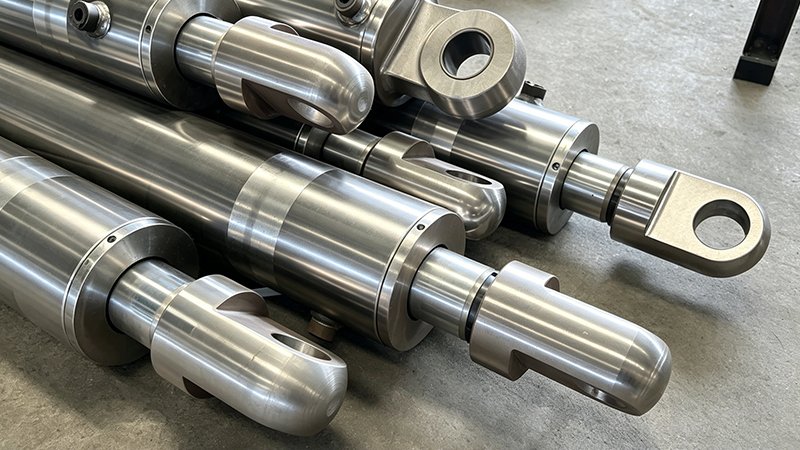
In an ideal world a cylinder would see only axial load, straight along its centreline, and the rod would need only to be pushed and pulled. In the real world, cylinders routinely see transverse, or side, loads. These arise when the load is not perfectly aligned with the cylinder axis, when the cylinder drives a pivoting linkage, when the machine frame flexes, or simply from the weight of a long extended rod and its attached load acting off-axis.
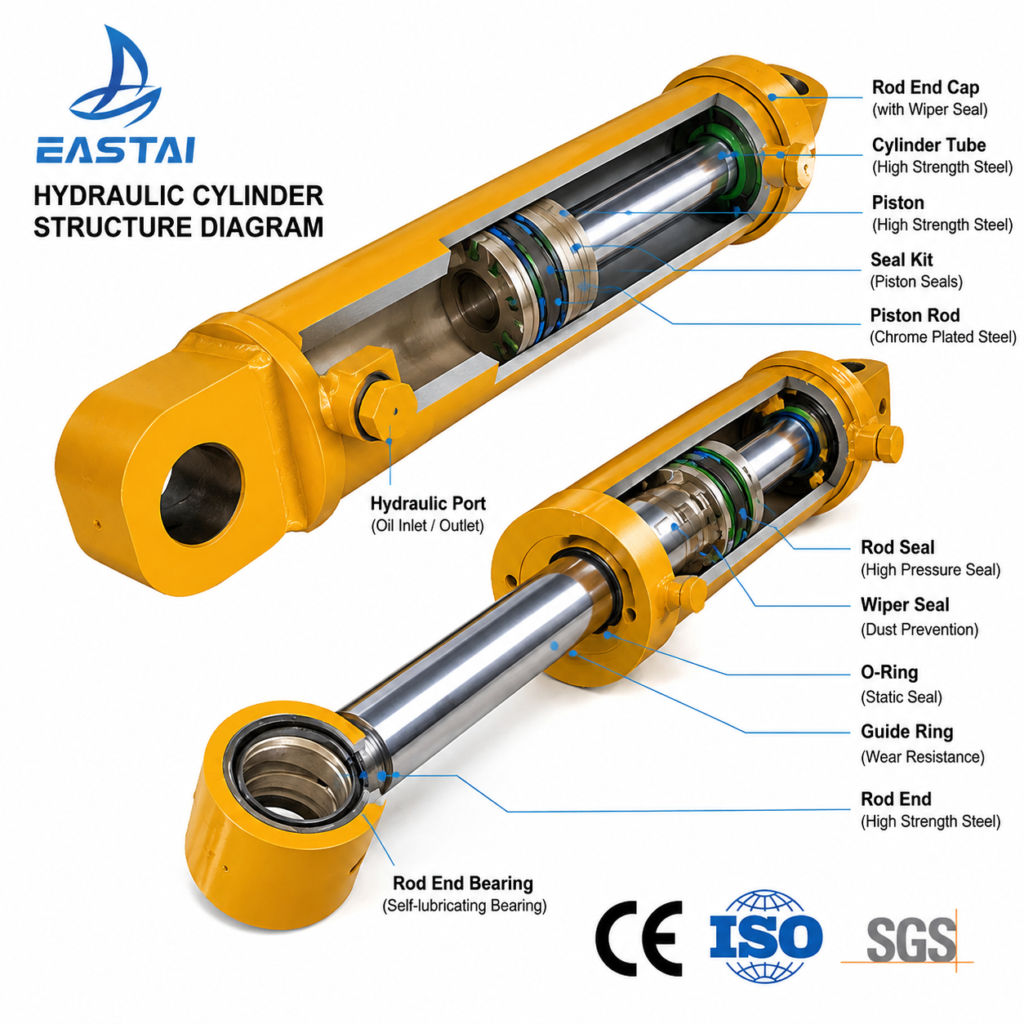
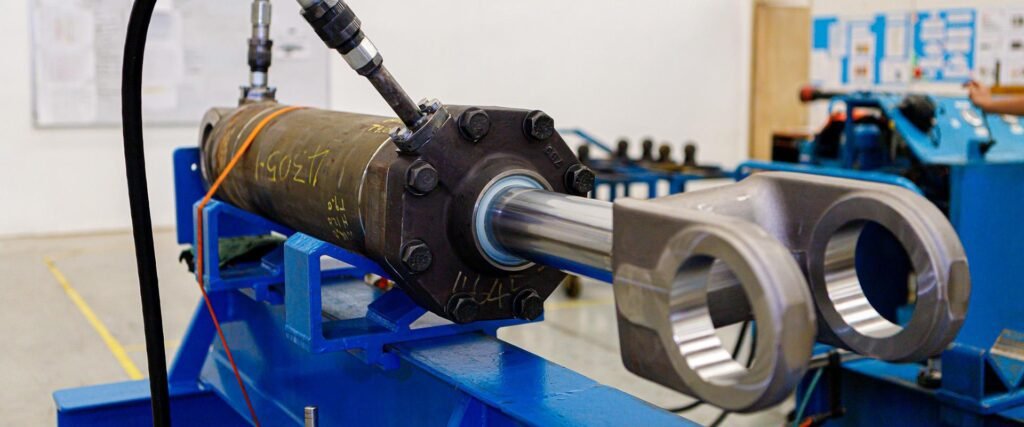
Side loads are reacted by the two bearing points inside the cylinder: the piston bearing inside the bore and the rod bushing in the gland. Together these form a two-point support that keeps the rod aligned, and any transverse force is shared between them. The rod bushing in particular carries a concentrated load where the rod exits, because it is the fulcrum closest to the external load, and it is here that side load does its damage if the design is inadequate.
The consequence of side load is contact pressure between the rod and the bushing, and between the piston and the bore. If that contact pressure is too high, the surfaces wear, the rod develops the one-sided polished band, the bushing wears oval, and the seals, which are not meant to carry load, get dragged into metal-to-metal contact and fail early. Managing side load is therefore about keeping these contact pressures within what the bearing surfaces can tolerate.
Bearing length and the L/D ratio
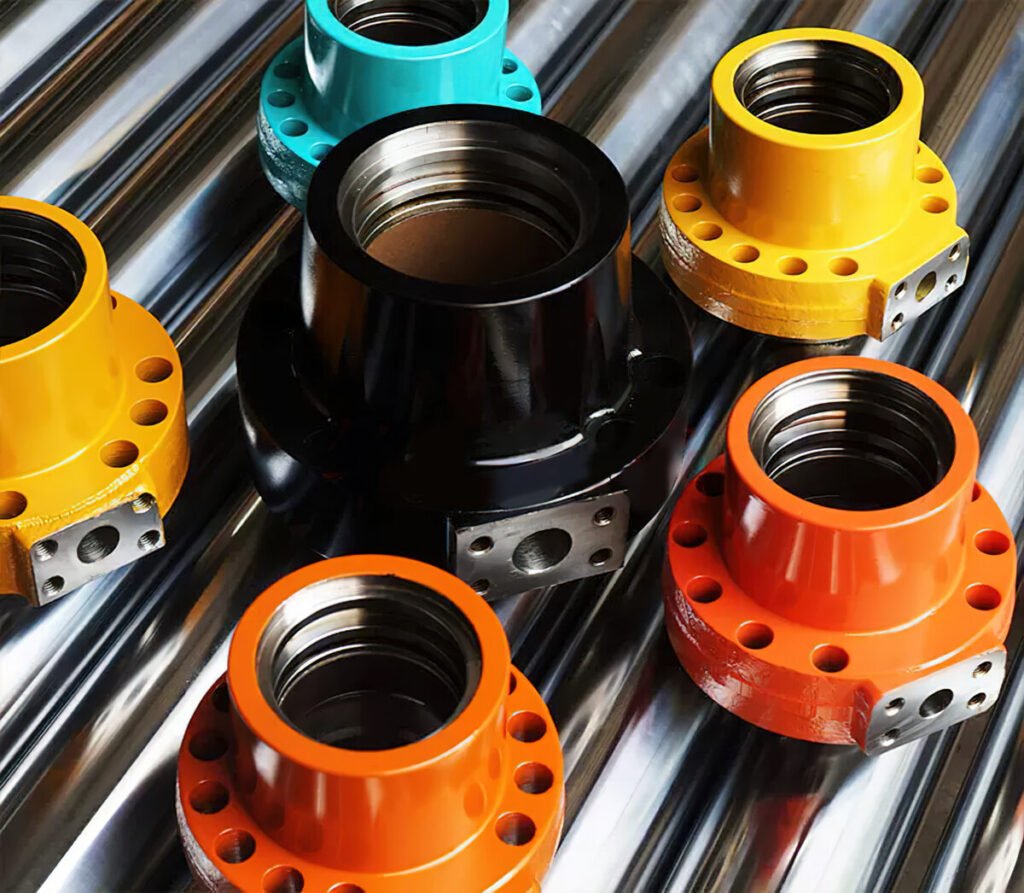
The single most important lever for handling side load in the gland is the bearing length of the rod bushing, often considered relative to the rod diameter as a length-to-diameter, or L/D, ratio. A longer bearing spreads a given side load over more area, reducing the contact pressure on the rod and bushing, and it also gives better angular control of the rod, resisting the tendency to cock or tilt under transverse force.
A bushing that is too short concentrates the side load on a small area, producing high contact pressure that wears both the rod chrome and the bushing quickly. This is what happened in the boom cylinder: the short bushing could not spread the load, so it dug into one side of the rod. Increasing the bearing length, raising the L/D ratio, spreads the same load over more surface and dramatically lowers the wear rate. This is why heavily side-loaded cylinders use generously long rod bushings.
There is a similar consideration inside the barrel: the separation between the piston bearing and the rod bushing sets how well the two-point support resists tilting. When the rod is fully extended and the piston approaches the gland, that separation shrinks and the support becomes less effective, which is one reason side-load problems worsen at full stroke. Designing for adequate bearing length and adequate separation between the two bearings is what keeps the rod running true across the whole stroke.
Bushing material and fit
Bearing length handles the magnitude of the load, but the bushing material and fit determine how well the surfaces survive the contact. The rod bushing is usually made from a bearing material chosen to be softer and more forgiving than the rod’s hard chrome surface, so that in any metal contact the bushing wears rather than the expensive rod. Bronze, filled polymers, and bearing-grade composites are common choices, each with its own load and speed capability.
The fit between the rod and the bushing is a genuine design parameter, because it sets the running clearance. Too tight and the bushing binds, generates heat, and can seize; too loose and the rod can move enough to load the seals and allow the very side movement the bushing is meant to prevent. The clearance has to be chosen for the rod diameter, the materials, and the thermal conditions, and it depends on the rod being made to a consistent diameter tolerance so the clearance is repeatable.
This is where rod diameter tolerance connects to gland design. If the rod diameter varies from the specification, the carefully chosen bushing clearance is thrown off, becoming too tight or too loose. A rod held to a consistent fit grade lets the designer set a reliable bushing clearance, while a rod with a loose diameter tolerance makes the gland behaviour unpredictable. Good gland design therefore assumes, and requires, a well-controlled rod.
Designing the gland for the duty
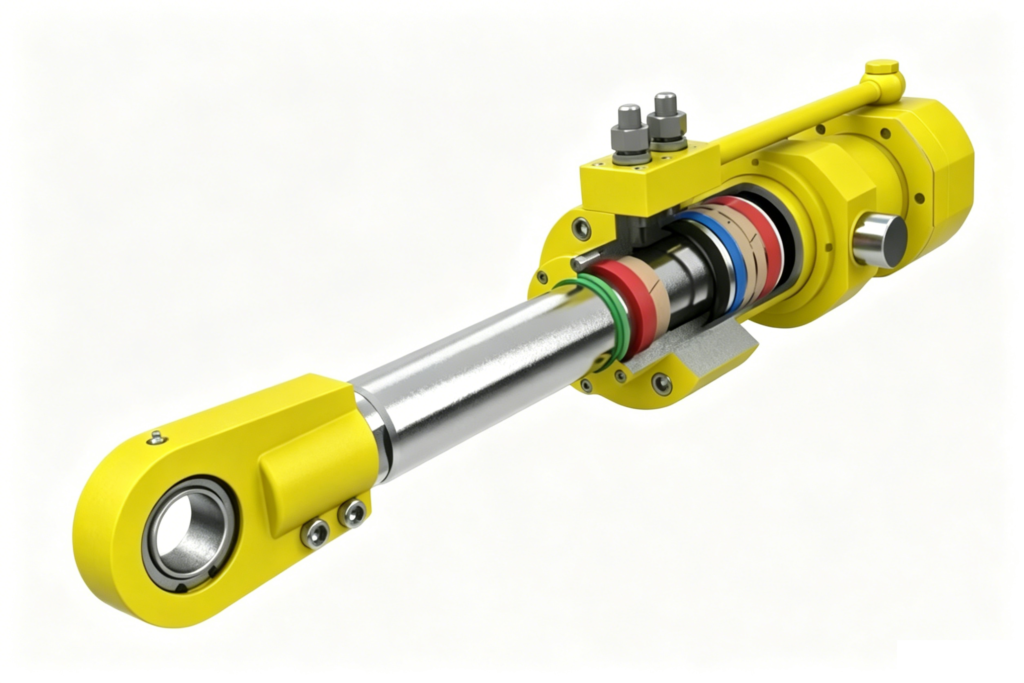
Bringing it together, designing a rod gland for real side loads starts with honestly estimating those loads: the misalignment, the linkage geometry, the extended weight, and any shock. Those loads, reacted at the bushing, give the contact pressure for a chosen bearing length, and the length is then sized so that pressure stays within what the bushing material can sustain for the required life. For heavily side-loaded cylinders, this drives a longer bushing than a purely axial view would suggest.
The gland also has to protect the seals from the load, and this is a design principle worth stating: bearings carry load, seals seal, and the two functions should be separated. A well-designed gland positions the bearing to take the side load so that the rod seal sees only sealing duty, not the transverse force. When bearing and sealing are muddled, or the bearing is inadequate, the seal is forced to act as a bearing and fails, which is the early-seal-failure symptom that so often accompanies side-load wear.
Finally, remember that the gland works together with the rod and the tube as a system. A generous bearing length, a suitable bushing material, a correct fit, and a rod held to a consistent diameter all combine to keep contact pressures low and the rod running true. Specify them together, with the real side loads in mind, and the one-sided wear band, the oval bushing, and the early seal failures give way to a cylinder that runs smoothly and lasts, even when the load refuses to stay perfectly axial.
Related Reading
- Chrome Plated Rod for Truck-Mounted and Crawler Cranes: Long-Stroke Straightness and Bending Resistance: https://eastai-tech.com/chrome-plated-rod-for-truck-mounted-and-crawler-cranes-long-stroke-straightness-and-bending-resistance/
- Honed Tube for Crane and Lifting Equipment: Long-Stroke Straightness Requirements: https://eastai-tech.com/honed-tube-for-crane-and-lifting-equipment-long-stroke-straightness-requirements/
Guide the Rod, Protect the Seal
Side load is managed by bearing length and a well-controlled rod, not by asking the seal to do a bearing’s job. EAST AI has supplied the chrome plated rod and honed tube behind guided cylinders since 2006, and we help designers build glands that keep the rod running true.
What we offer:
- Chrome plated rod held to a consistent fit grade for reliable bushing clearance
- Honed tube with the bore quality to support piston bearings and seals
- Technical support on bearing length, side load, and gland design
- Consistent components so your clearance and wear calculations hold in service
Tell us your side loads and we will help you specify rod and tube to suit. Email: marketdi@east-ai.cn | Phone: +86 13382202696 Address: No. 108, Lunan Road, Wuxi, Jiangsu, China.
Written by Alex, Production Engineer at EAST AI