
Written by Alex, Production Engineer at EAST AI
A truck-mounted crane’s boom extension cylinder or a crawler crane’s luffing cylinder can run stroke lengths several times longer than a typical construction machinery ram. That length is exactly what makes straightness tolerance the single most important spec line on these tubes — a deviation that’s completely irrelevant on a short-stroke cylinder becomes a real seal-wear problem once you stretch the same tube out to six or eight meters.
We’ve supplied honed tube into enough crane and lifting equipment programs — truck cranes, crawler cranes, tower crane luffing systems — to know that straightness deserves more attention here than it does almost anywhere else in our product range.
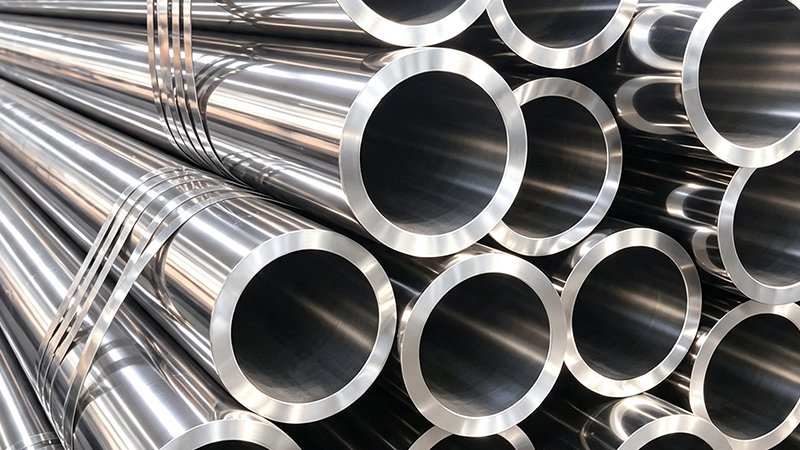
Why Straightness Tolerance Is Usually Expressed Per Meter
Straightness is typically specified as a deviation per unit length — for example, a certain number of millimeters of bow per meter of tube — rather than as a single absolute number, precisely because the practical effect of a given deviation scales with stroke length. A tube holding 0.2mm/m of straightness has roughly six times the total bow tolerance over a 6-meter length that it would over a 1-meter length, even though the per-meter number looks identical on the spec sheet.
For long-stroke crane cylinders, we calculate the cumulative effect of the per-meter tolerance across the full working length before confirming a spec, rather than treating the per-meter number as automatically acceptable regardless of overall length.
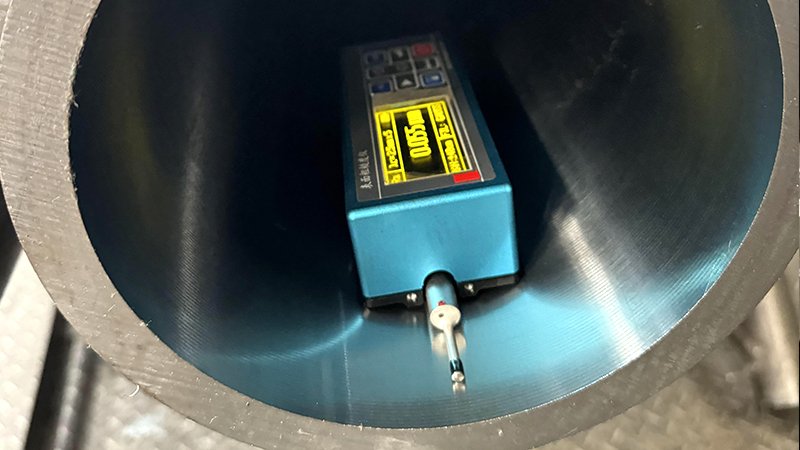
How Bow Translates Into Side Loading
A tube with any bow at all doesn’t push the piston perfectly straight through its stroke — the slight curvature introduces a lateral force against the bore wall as the piston travels, and that side loading concentrates seal wear on one side of the bore rather than distributing it evenly. Over a long stroke, even a small amount of bow accumulates into a meaningful lateral deflection by the time the piston reaches full extension.
This is why the failure signature on a long-stroke cylinder with a straightness problem is usually one-sided seal wear rather than uniform wear — it’s a diagnostic clue that often gets misread as a seal quality issue when the tube straightness is the actual root cause.
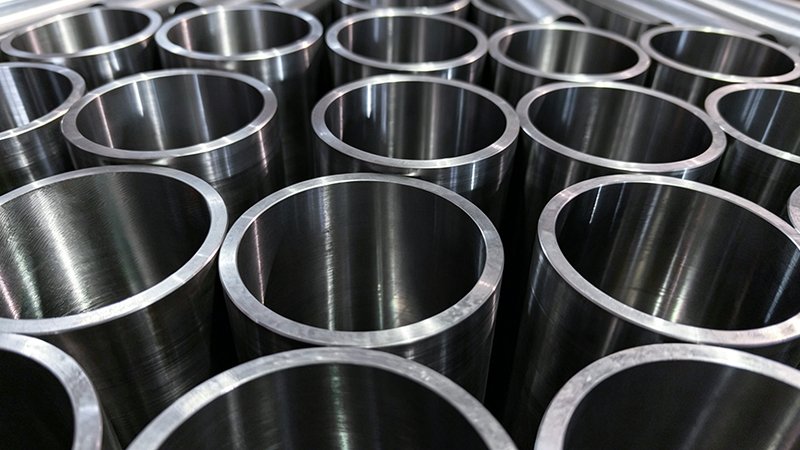
Straightness for Welded vs Non-Welded Assemblies
Long-stroke crane cylinders are typically welded into their end caps, and the welding process itself can introduce distortion beyond whatever straightness the tube carried before assembly. Checking straightness only on the raw tube, before welding, misses this — the tube can pass inspection at the mill and still come out of the customer’s own welding process with a bow that wasn’t there originally.
We recommend customers verify straightness again after welding for long-stroke assemblies specifically, and we can supply tube with tighter pre-weld straightness margin when the customer’s welding process is known to introduce a predictable amount of distortion.
Wall Thickness and Buckling Resistance on Long Strokes
Beyond straightness, long-stroke cylinders under compressive load carry a buckling risk that shorter cylinders at the same bore and pressure don’t face to the same degree — the tube is effectively a long, slender column under axial load during retraction against resistance. Wall thickness and, in some designs, intermediate support or guide arrangements need to account for this column effect, not just the working pressure rating alone.
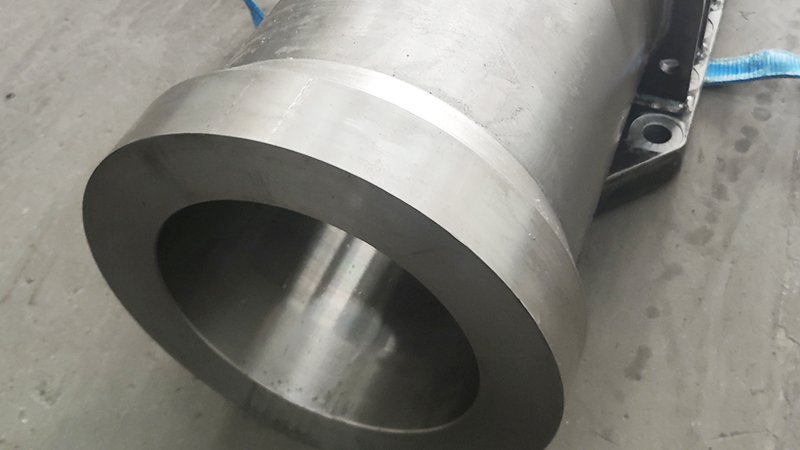
A Field Case Worth Knowing About
One pattern we’ve seen with crane equipment manufacturers: a boom extension cylinder develops seal leakage concentrated on one side of the piston within the first year of service, while a shorter cylinder from the same production batch — same tube grade, same nominal straightness spec — shows no issue at all. The tube straightness was within the per-meter tolerance on paper for both, but the longer cylinder’s cumulative bow over its full stroke length was enough to create measurable side loading that the shorter cylinder never experienced.
The fix was tightening the straightness tolerance specifically for the longer-stroke tube rather than applying the same per-meter number across the whole product line regardless of length. It’s a reminder that a per-meter spec needs to be evaluated against actual stroke length, not treated as a flat pass/fail number.
How We Verify Straightness Before Shipment
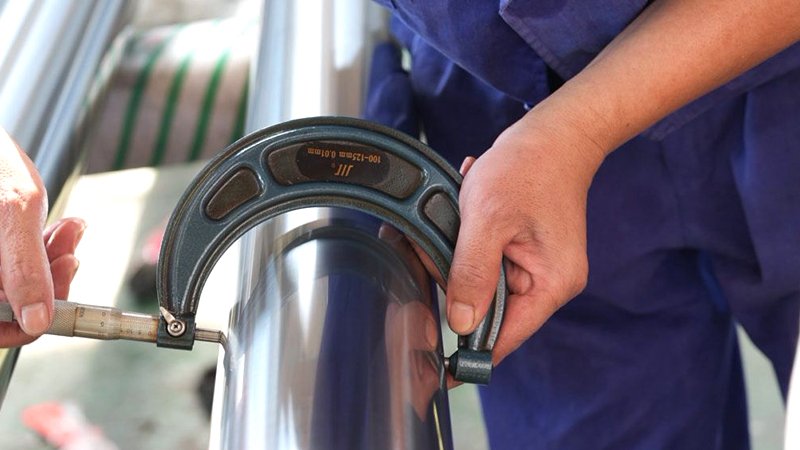
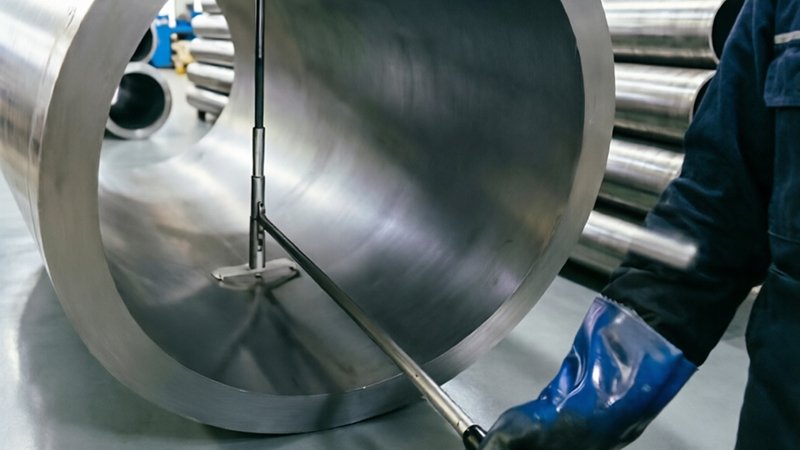
We check straightness along the full tube length as part of 100% pre-shipment inspection, and for long-stroke crane and lifting applications, we record straightness at multiple points rather than a single overall reading, since a tube can meet an average straightness figure while still carrying a local deviation that matters more than the average suggests.
What to Send With Your RFQ
Send us the full stroke length, bore diameter, working pressure, and whether the tube will be welded into the end assembly on your side. If your equipment is a known long-stroke design — boom extension, luffing, or similar — flag that specifically so we can confirm straightness tolerance against the actual working length rather than a generic per-meter default.
Frequently Asked Questions
Why does straightness tolerance matter more for long-stroke crane cylinders? Straightness is usually specified per meter of length, so the total bow over a long stroke can be significantly greater than over a short one even at the same per-meter tolerance, which increases side loading and one-sided seal wear risk.
Can welding affect tube straightness after it leaves the mill? Yes. Welding the tube into end caps can introduce distortion beyond the original straightness, so we recommend re-checking straightness after welding for long-stroke assemblies specifically.
Does wall thickness need to account for anything beyond working pressure on long-stroke cylinders? Yes. Long, slender cylinders under compressive load carry a buckling risk that shorter cylinders don’t face to the same degree, so wall thickness and support design need to consider this column effect as well as pressure rating.
How is straightness verified on long tubes before shipment? We check straightness at multiple points along the full tube length as part of pre-shipment inspection, rather than relying on a single average reading, since local deviations can matter more than the overall average.
References & Further Reading
Internal resources:
External references:
- ISO 9001:2015, Quality Management Systems — Requirements, referenced for our batch-inspection process: iso.org
- National Fluid Power Association (NFPA), the leading standards body for the hydraulic and pneumatic industry, referenced for general fluid power industry context: nfpa.com
Tell Us Your Stroke Length, Not Just Your Straightness Number
If you’re specifying honed tube for a crane boom, luffing cylinder, or other long-stroke lifting application, a per-meter straightness figure alone doesn’t tell the full story. Tell us your actual stroke length and whether the tube will be welded on your end, and we’ll confirm a tolerance that holds up across the full working length.