
Written by Alex, Production Engineer at EAST AI
A crane boom extension rod does something most hydraulic rods never have to deal with: it extends several meters into open air, supported at only one end, while carrying an off-center load at the far end through the boom structure. That’s a very different mechanical situation from a short-stroke rod that stays fully supported inside its cylinder bore through most of its travel, and it changes what matters most in the rod spec.
We’ve supplied chrome plated rod into enough truck-mounted and crawler crane programs to know that bending resistance and straightness deserve more attention here than the wear-focused questions that dominate most other applications.
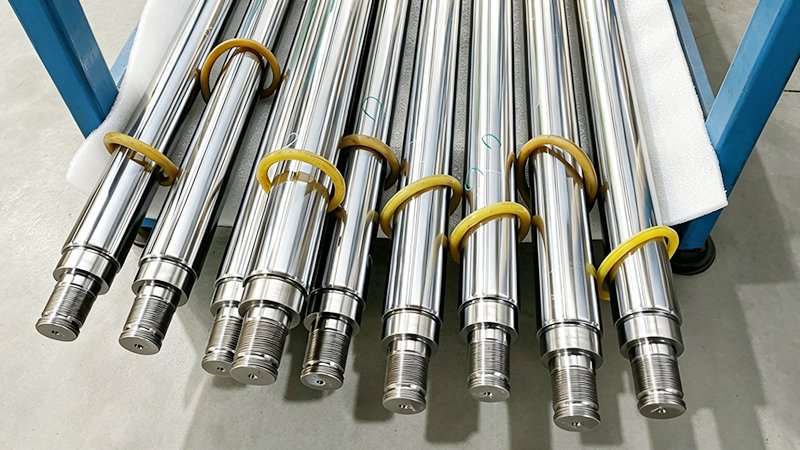
Why Column Effect Matters on Extended Booms
When a long rod extends well beyond its cylinder bore, the unsupported length behaves like a slender column under compressive and bending load, particularly when the boom is carrying an off-center or swinging load. This is a fundamentally different loading condition than a rod that stays mostly bore-supported through its stroke, and it means rod diameter and core material strength need to be sized against bending and column stability, not just against the cylinder’s working pressure rating.
We calculate this column effect specifically for long-extension boom applications rather than sizing the rod purely off bore diameter and pressure, because a rod that’s adequately sized on pressure alone can still be marginal on bending resistance at full extension.
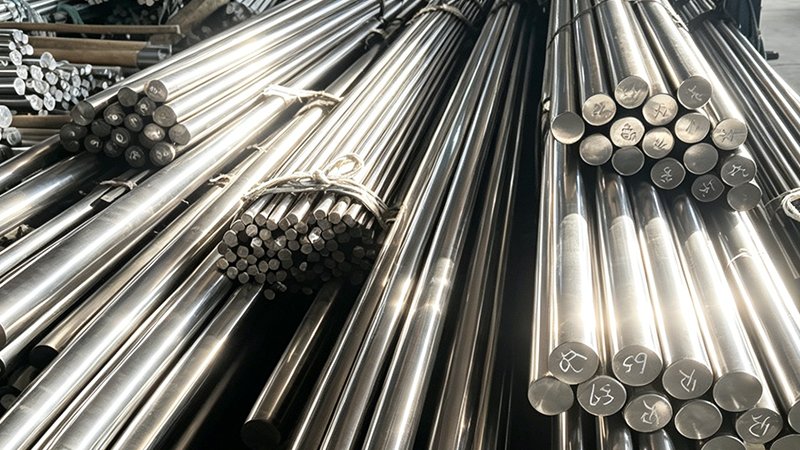
Straightness Tolerance Over Long Unsupported Lengths
Straightness matters on every chrome plated rod we make, but the practical consequence of a given straightness tolerance scales with how much of the rod’s length goes unsupported during operation. A small bow that would be irrelevant on a fully bore-supported rod becomes a real source of bending stress concentration on a boom extension rod that’s cantilevered several meters into open air at full extension.
For crane boom applications, we hold tighter straightness tolerances specifically because of this unsupported-length effect, rather than applying the same tolerance band we’d use for a fully supported industrial cylinder rod.
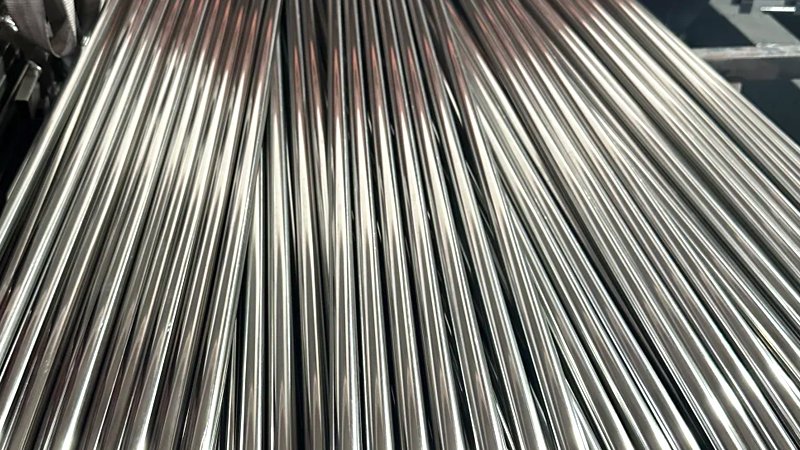
Core Hardness for Bending and Shock Combined
Crane cylinders combine steady load-bearing duty with occasional shock events — a load swinging into position, a sudden stop, wind gust loading on an extended boom. This combination of steady bending stress plus intermittent shock is one of the scenarios where induction hardened rod, with its tougher core and wear-resistant surface, tends to outperform lighter-duty treatments, because the core needs to absorb shock without permanently deforming while the surface resists the wear from continuous extension and retraction cycling.
Diameter and Wall Considerations for Hollow Rod Designs
Longer crane boom rods are sometimes specified as hollow rod to reduce weight without proportionally reducing bending stiffness, since a hollow section retains most of a solid rod’s resistance to bending while cutting mass — a real consideration when the rod itself adds to the load the crane structure has to support at full extension. We size wall thickness on hollow rod designs against both the working pressure and the bending load case together, since the two failure modes interact differently than they would on a solid rod.
A Field Case Worth Knowing About
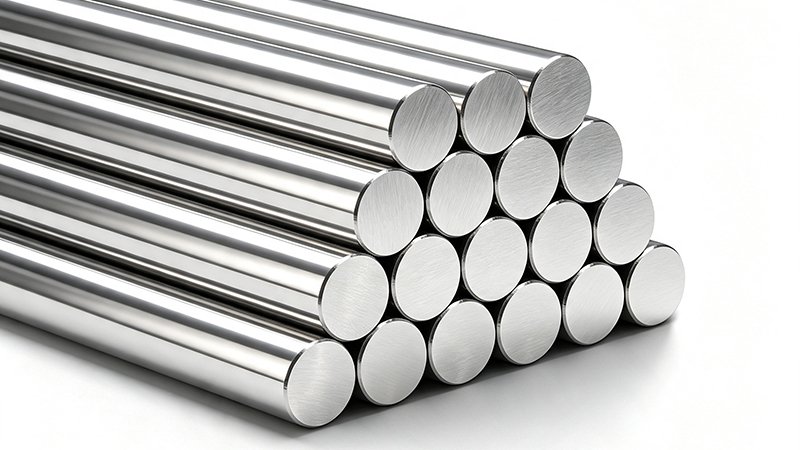
One pattern worth mentioning: a crane manufacturer reported a boom extension rod developing a slight permanent bend after several years of service, even though the rod had never seen a documented overload event and passed every dimensional check at the time of manufacture. On review, the original rod spec had been sized primarily against working pressure, with straightness held to a standard tolerance rather than the tighter band appropriate for the boom’s actual unsupported length at full extension.
Moving to a tighter straightness tolerance and a slightly larger diameter for the necessary bending stiffness margin, on the replacement rod, resolved the recurring issue. The original rod hadn’t failed from a material defect — it had been specified against the wrong load case for how it was actually being used mechanically.
How We Verify Straightness and Diameter Before Shipment
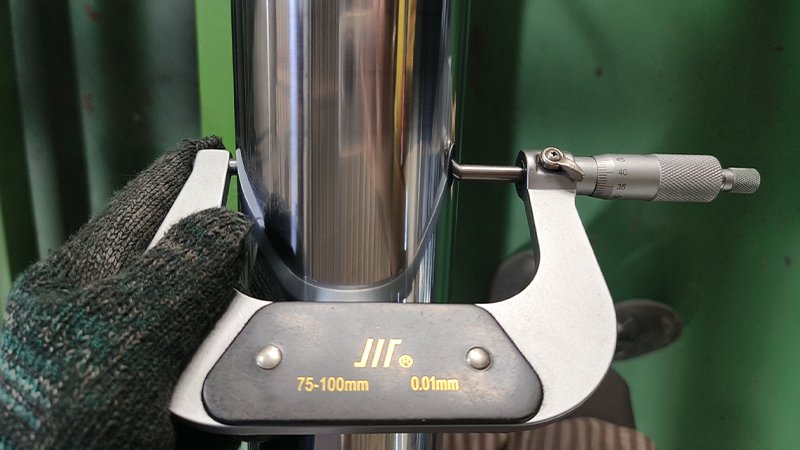
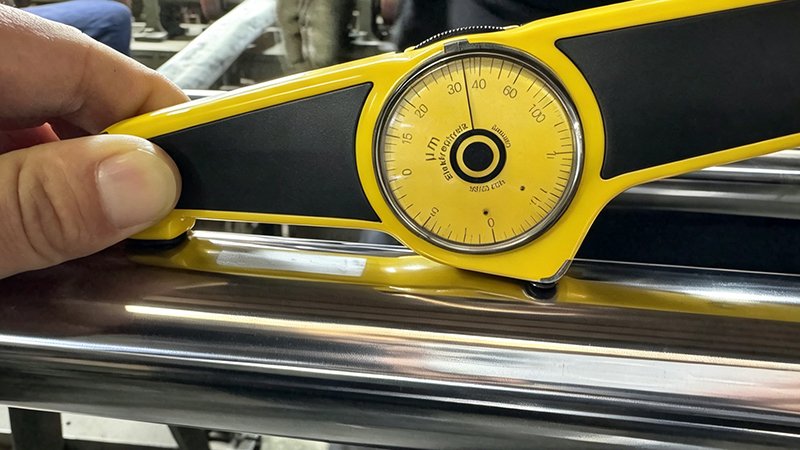
We check straightness along the full rod length and diameter consistency at multiple points as part of 100% pre-shipment inspection, and for known crane and boom applications, we pay particular attention to straightness given how directly it translates into bending stress once the rod is in service at full extension.
What to Send With Your RFQ
Send us the full extended length, typical load and whether it’s centered or off-center through the boom structure, working pressure, and whether solid or hollow rod is preferred. If you have an engineering calculation for required bending stiffness or column stability, share it directly so we can confirm diameter and wall thickness against your own numbers.
Frequently Asked Questions
Why does an extended crane boom rod need different spec consideration than a fully supported cylinder rod? An extended rod behaves like an unsupported column carrying bending load, particularly with off-center loads, which is a different failure mode than the wear-focused concerns typical of fully bore-supported rods. Diameter and straightness need to account for this bending case specifically.
Does straightness tolerance need to be tighter for crane boom rods? Generally yes. The practical effect of a given straightness deviation scales with how much of the rod is unsupported during operation, so long-extension boom rods typically need tighter straightness than fully supported industrial rods.
Is hollow rod suitable for crane boom applications? Often yes, since hollow sections retain much of a solid rod’s bending stiffness while reducing weight, which matters because the rod’s own mass adds to what the crane structure supports at full extension. Wall thickness needs to be sized against both pressure and bending load together.
What heat treatment is typically recommended for crane cylinder rods? Induction hardened rod is commonly recommended for crane applications combining steady bending load with occasional shock events, since the tougher core absorbs shock while the hardened surface resists cycling wear.
References & Further Reading
Internal resources:
- Chrome Plated Rod Product Range
- Hollow Chrome Plated Rod
- Induction and Hardened Chrome Plated Rod (HRC 50-62)
External references:
- ISO 6158:2018, Metallic and Other Inorganic Coatings — Electrodeposited Coatings of Chromium for Engineering Purposes, referenced for hard chrome plating requirements: iso.org
- ISO 9001:2015, Quality Management Systems — Requirements, referenced for our batch-inspection process: iso.org
Tell Us Your Extended Length, Not Just Your Bore Size
If you’re specifying chrome plated rod for a crane boom or long-extension lifting cylinder, tell us the fully extended length and whether the load is centered or off-center. It’s the detail that determines whether we’re sizing against pressure alone or against a real bending and column stability case — and it’s usually the difference between a rod that stays straight for years and one that doesn’t.