
Two chrome plated rods can carry identical chrome—same thickness, same hardness, same beautiful finish—and behave completely differently in service. One holds straight and shrugs off side loads; the other takes a permanent bow and dents under the same duty. The chrome is not the difference. The base steel under the chrome is. And the two most common choices, CK45 (a medium-carbon steel, SAE 1045 equivalent) and 42CrMo (a chromium-molybdenum alloy steel, 42CrMo4 / AISI 4140 equivalent), sit at opposite ends of a cost-and-capability trade-off that every specifier should understand.
This article is for engineers and senior procurement staff selecting chrome plated rod, and it explains when the workhorse CK45 base is the right economic choice and when the application genuinely needs 42CrMo.
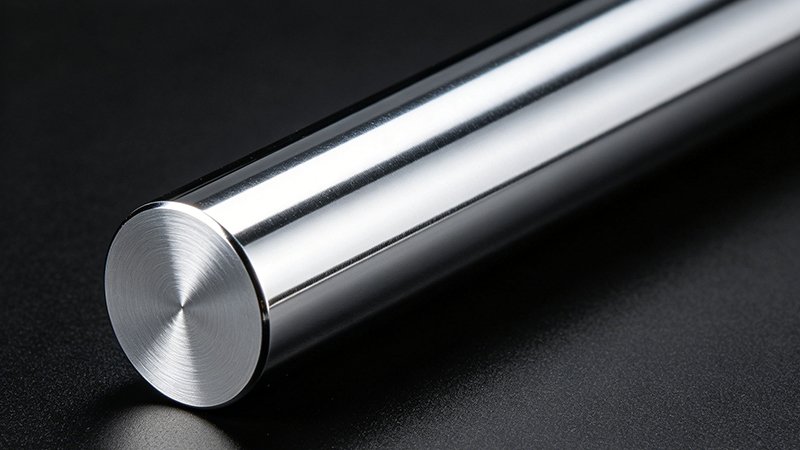
The Chrome Is Thin; the Base Carries the Load
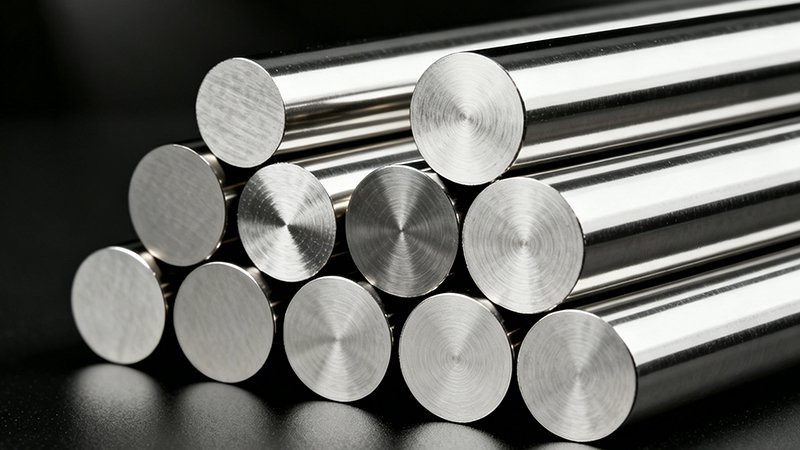
It bears repeating because it is so often forgotten: the hard chrome layer is only some tens of microns thick. It provides surface hardness and corrosion resistance, but it contributes almost nothing to the rod’s bulk mechanical strength. When a rod resists bending, buckling, side load, and surface indentation from the guide bushing, it is the base steel doing that work. The chrome rides on top. So the base steel decides the rod’s yield strength, its fatigue resistance, and how much load it takes before it deforms permanently.
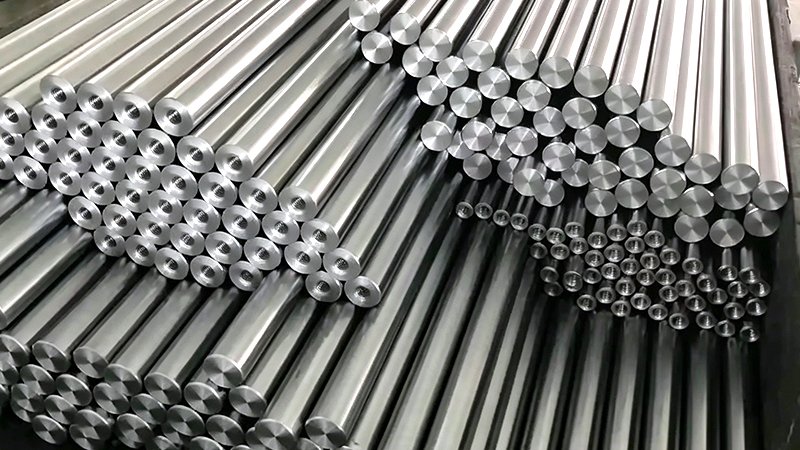
CK45: The Economical Workhorse
CK45 is a medium-carbon steel with around 0.45% carbon and no significant alloying. In the common supply condition it offers solid, predictable strength at a low cost and with excellent availability. For the large majority of general hydraulic rods—moderate diameters, moderate loads, indoor or light-duty mobile service—CK45 is entirely adequate and is the sensible economic default.
Its limits show up under demanding mechanical duty. Compared with an alloy steel, CK45 has lower hardenability, meaning that in larger diameters the strength at the core falls off because the quench cannot harden all the way through. It also has lower fatigue strength and less resistance to permanent bending under high side loads. For a short, fat rod at modest pressure this rarely matters. For a long, slender rod under high load, it can matter a great deal.
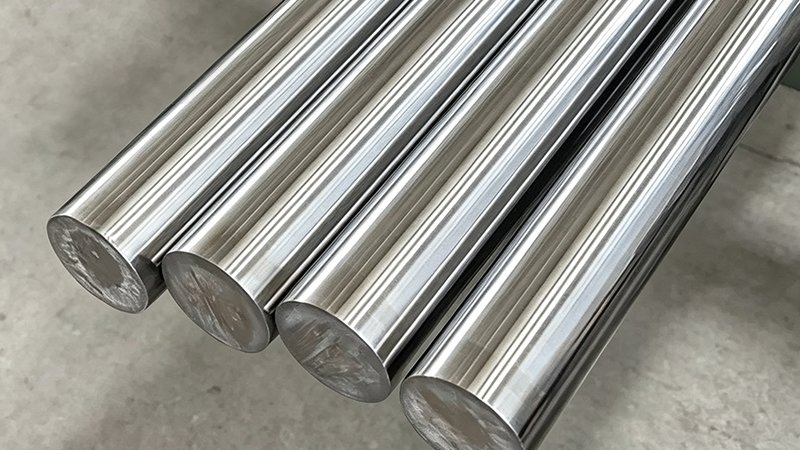
42CrMo: The Alloy for Demanding Duty
42CrMo (42CrMo4, roughly the European equivalent of AISI 4140) is a chromium-molybdenum alloy steel designed for quenching and tempering to high strength with good toughness. The chromium and molybdenum give it far better hardenability than plain-carbon steel, so it develops high, uniform strength even in larger diameters—the core is strong, not just the skin. Its published quenched-and-tempered properties, tensile strength, yield, and hardness across size ranges are documented in material datasheets such as the 42CrMo4 (1.7225) datasheet.
That translates into practical advantages where they count: higher resistance to bending and buckling on long-stroke rods, better fatigue life under cyclic and vibrating loads, and greater resistance to surface indentation and side load in the bushing. Rods for truck-mounted and crawler cranes, long-stroke lifting, heavy construction and mining, and fatigue-critical applications like continuously micro-cycling actuators are natural homes for a 42CrMo base.
The trade-off is cost and, sometimes, lead time. 42CrMo is more expensive than CK45, and specifying it where a plain-carbon base would serve is simply paying for capability the application will never use.
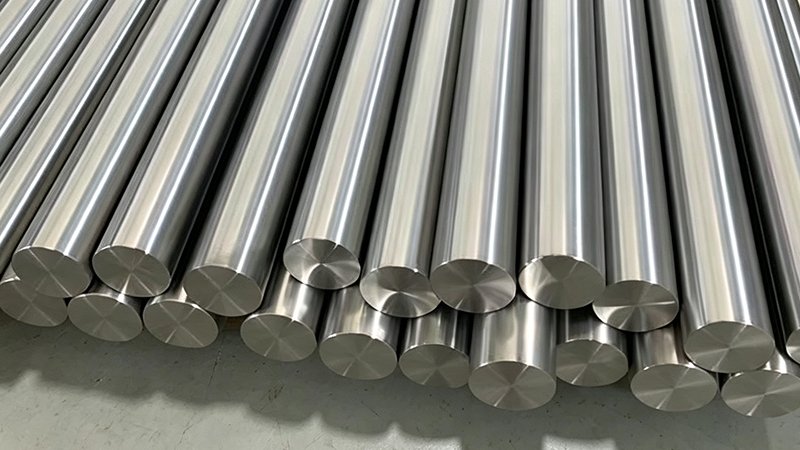
How to Choose: Match Base to Load, Not to Habit
The decision hinges on a few questions. What is the rod diameter, and is it large enough that hardenability and core strength become an issue? CK45 may harden adequately in a small rod but fall short at the core of a large one, where 42CrMo keeps its strength through-section. What is the length-to-diameter ratio, and therefore the risk of buckling and bending? Long, slender rods reward the higher strength of alloy steel. What are the side loads from the mounting and duty? Cranes, booms, and misaligned installations impose bending that a stronger base resists better. And is the duty fatigue-driven, with millions of cycles? Alloy steel’s superior fatigue strength pays off over the machine’s life.
A useful way to frame it: CK45 is the correct answer until the mechanical duty gives you a specific reason to upgrade—large diameter, long stroke, high side load, or fatigue-critical cycling. When one or more of those applies, 42CrMo stops being an indulgence and becomes the engineering-correct choice.
The Base Also Affects the Chrome’s Success
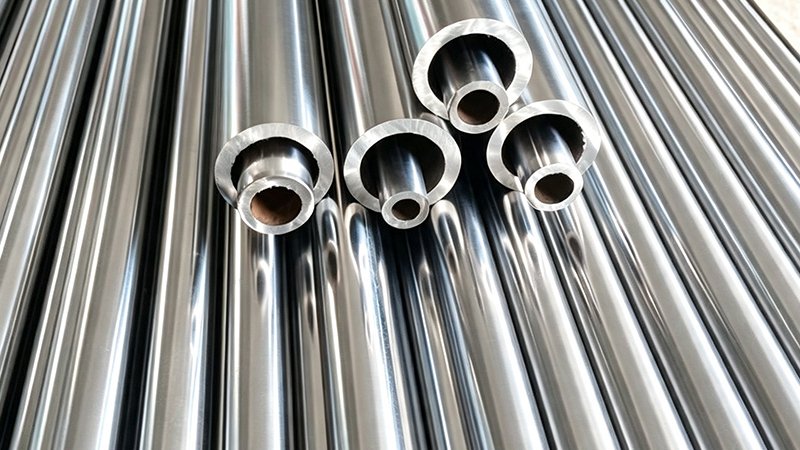
There is a second, quieter reason base steel matters: the base influences the plating result and the rod’s straightness in service. A base that is properly heat-treated, straight, and dimensionally consistent gives the chrome a stable foundation. If the base bows or yields under load, the chrome—being hard and relatively brittle—can crack at the point of deformation, opening a corrosion path even though the chrome itself was sound. So choosing a base with adequate strength for the duty protects the coating, not just the rod. A rod that stays straight keeps its chrome intact; a rod that bends betrays it.
Related Reading
- Chrome Plated Rod Diameter Tolerance: f7 vs f8 vs g6
- Chrome Plated Rod for Truck-Mounted and Crawler Cranes
- Chrome Plated Rod for Offshore and Marine Deck Equipment
Specify the Base Steel Your Duty Demands
Chrome protects the surface; the base steel carries the load. Choosing CK45 where it fits and 42CrMo where the duty demands it is how you get rods that stay straight, resist fatigue, and keep their chrome intact.
What We Offer
- Chrome plated rod on both CK45 and 42CrMo bases, matched to your mechanical duty
- Proper heat treatment and straightness control so the base supports both load and coating
- Guidance on base steel selection by diameter, stroke length, side load, and fatigue demand
- Mill certificates and full traceability for engineering-critical rod applications
Contact EAST AI (eastai-tech.com) Email: marketdi@east-ai.cn Phone: +86 13382202696 Address: No. 108, Lunan Road, Wuxi, Jiangsu, China.
Written by Alex, Production Engineer at EAST AI