
Published: 2026-10-21 | Last Updated: 2026-10-21
Not every wear problem needs a harder surface. Sometimes it needs cleaner fluid. The two solutions get confused constantly, and induction hardening gets specified as a default precaution far more often than the actual wear mechanism justifies it.
What the Process Actually Changes
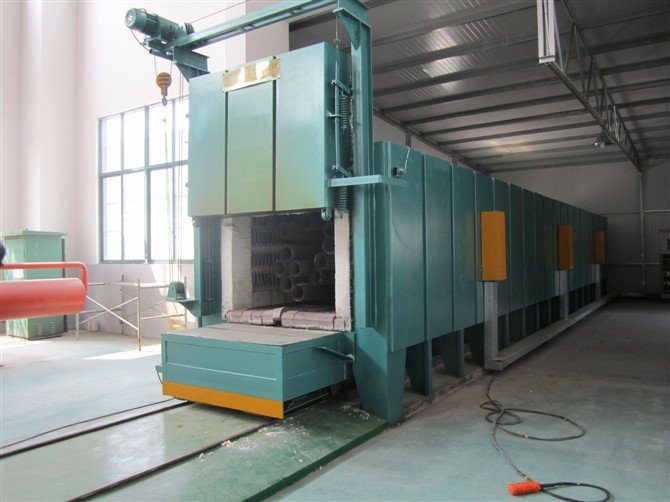
Induction hardening heats the bore surface rapidly and locally, then quenches it — producing a hardened case at the bore while the bulk of the tube wall stays at its original, more ductile hardness. That’s different from through-hardening the whole wall, which would sacrifice the toughness needed to resist cracking under pressure cycling. The result: meaningfully better resistance to abrasive wear and scoring from contamination, with the wall’s overall toughness for pressure containment left intact.
When It’s Actually Worth the Added Cost
| Application Characteristic | Induction Hardening Justification |
|---|---|
| Clean fluid, well-filtered, low-cycle duty | Low — standard honed surface usually adequate |
| High-cycle duty with excellent fluid cleanliness | Moderate — cycle count alone often doesn’t require it |
| Moderate contamination (construction, mining, agricultural equipment) | Moderate to high, depending on actual exposure |
| Heavy contamination combined with high-cycle duty | High — this combination is where it shows clear benefit |
Cycle count alone, or contamination alone, frequently doesn’t justify the cost. Both together, at meaningful levels, is where induction hardening consistently earns its place.
Sometimes Better Filtration Solves the Same Problem for Less
Much of the wear induction hardening protects against comes from abrasive particles in the fluid scoring the bore during normal piston travel. An application with genuinely excellent filtration and contamination control can sometimes achieve adequate wear life on a standard honed surface even at high cycle counts. Facing a marginal hardening decision? Check whether upgrading filtration spec is the cheaper path to the same wear life — addressing the contamination source directly sometimes beats hardening the surface to tolerate contamination better filtration could have reduced in the first place.
Sequencing Matters More Than People Expect
Hardening has to happen before final honing, not after. The hardening process introduces minor dimensional changes that honing is specifically positioned to correct afterward, bringing the bore back to final tolerance and finish. A supplier who hardens after final honing — or doesn’t adjust pre-hardening dimensional targets to account for hardening’s effects — can execute both steps correctly and still miss final spec, simply because the sequence and planning didn’t account for how the two operations interact.
Case Depth Matters as Much as the Hardness Number
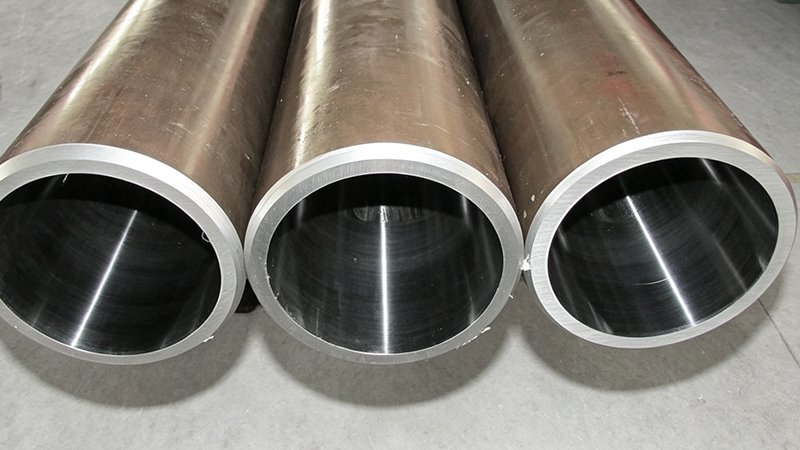
A surface hardness reading alone doesn’t tell the whole story. Depth matters — a thin hardened layer wears through faster under aggressive conditions, exposing softer base material sooner than a deeper case would. Specify both target surface hardness and minimum case depth. Hardness value alone is an incomplete specification for an application where wear life actually depends on how long the hardened layer persists.
What Verification Should Actually Look Like
A general process confirmation from the supplier isn’t enough. Verify actual surface hardness and case depth on a batch sample, using a cross-sectional hardness profile rather than relying on a surface reading alone. This confirms the specification was met throughout the hardened layer’s depth, not just at the immediate surface — and it should be a standard part of batch acceptance for any genuinely wear-critical application, not a step skipped because hardening “already got specified.”
Hardening the Tube Doesn’t Fix a Contamination Problem Elsewhere
A recurring bore wear problem sometimes gets treated with induction hardening before anyone checks whether the real root cause is an under-filtered hydraulic system letting excessive contamination into the whole circuit. Hardening treats the symptom on one component. It does nothing for the seals, valves, and other parts that same contamination is also damaging. A thorough response examines the complete system’s contamination control first — a contamination source severe enough to justify hardening the tube is usually damaging other things hardening won’t touch.
It’s Not the Only Option on the Table
Other approaches exist for improving wear resistance beyond a standard honed finish — different base material selection with inherently higher wear resistance, for instance — and these may suit a specific application’s cost and performance balance better than induction hardening does. Evaluate alongside these alternatives rather than defaulting to whichever treatment happens to be most familiar.
Track What Actually Happens After You Change the Spec
Introducing induction hardening based on a theoretical wear risk analysis is only half the job. Track actual field performance against the prior non-hardened baseline afterward. This closes the loop — confirming the expected service life improvement actually materialized, or revealing the wear problem had another contributing cause hardening alone didn’t fully address. Either finding is worth having.
First Time Specifying This? Add Extra Verification
A design team with no established track record evaluating hardened tube performance should apply more verification rigor than a team with years of successful experience doing it — unfamiliarity itself is a risk factor that trial testing and batch verification can offset. This extra caution is a reasonable, temporary cost, relaxed once enough successful experience has accumulated to trust the specification process with the same confidence applied elsewhere.
A Second Opinion on the Borderline Cases
Not every hardening decision falls cleanly into obviously-needed or obviously-unnecessary. A genuinely marginal case benefits from a second technical opinion — a colleague, or the supplier’s own engineering team — rather than resolving the ambiguity alone under time pressure. This isn’t about lacking confidence in the first analysis. A borderline decision, by definition, could reasonably go either way, and a second perspective sometimes surfaces a consideration the first pass missed.
Write the Specification So There’s No Room to Interpret It Loosely
A specification that simply states “induction harden the bore” without further detail leaves real room for a supplier to interpret target hardness, case depth, and which zones require hardening differently than intended — producing a part that technically received hardening without meeting the actual performance intent behind the request. Specify the exact hardness range, minimum case depth, and which portions of the tube length require it — the full working stroke, for instance, not just a vague reference to “the bore.” This removes ambiguity and ensures the supplier produces what the application actually needs, not a technically compliant but underspecified interpretation.
Price It by Service Life Delivered, Not Just Sticker Cost
Evaluating induction hardening purely on its added upfront cost, without weighing that against the actual service life extension for a genuinely wear-sensitive application, produces an incomplete picture. A modest cost increase that meaningfully extends time between overhauls can represent strong value on a total cost of ownership basis, even though it looks like a pure addition at the point of purchase. Frame the decision in terms of cost per unit of service life delivered, not cost per tube — this reframing often changes the apparent economics, and an engineer comparing only sticker price to sticker price risks declining a genuinely cost-effective specification simply because the benefit doesn’t show up until later in the product’s life.
What a Design Team Learns From Their First Hardening Specification That Changes the Second One
A design team specifying induction hardening for the first time often discovers, after the fact, that their original hardness and case depth targets were either more conservative or less conservative than actually necessary once real field performance data comes in from the hardened design. This is a normal and expected part of building internal expertise with a less familiar specification, and the right response isn’t to treat the first specification as a mistake if it turns out to have been overly cautious, but to use that field data to calibrate the next hardening decision more precisely. A team that captures this learning systematically — comparing the originally specified targets against the field performance actually observed — builds genuine internal expertise over successive designs, rather than treating each new hardening decision as an isolated judgment call made without reference to what was learned from the last one.
Why a Supplier Relationship With Deep Hardening Experience Is Worth More Than Comparing Quotes Alone
An equipment manufacturer choosing between suppliers for an induction-hardened tube specification should weigh the supplier’s actual depth of experience with this specific process alongside the quoted price, since a supplier newer to induction hardening may quote competitively while carrying more execution risk on a process that genuinely requires tight control over heating, quenching, and the subsequent honing step to deliver consistent results. A lower quote from a less experienced hardening supplier can end up costing more in total if inconsistent execution produces batch-to-batch variation that the equipment manufacturer’s own inspection process then has to catch and reject, which is a cost that doesn’t show up anywhere on the original quote comparison but shows up clearly in actual total cost once a few batches have gone through the process.
Why a Simple Internal Reference Sheet on Past Hardening Decisions Saves Repeated Analysis
An engineering team that has worked through the induction hardening decision for several past applications accumulates real, usable knowledge about which combinations of cycle count and contamination exposure justified the added cost and which didn’t — knowledge that’s easy to lose if each new application gets evaluated from scratch without reference to what was learned on similar past decisions. Keeping a simple internal reference summarizing past hardening decisions and their outcomes turns individual case-by-case analysis into a cumulative body of institutional knowledge, reducing the analysis burden on each new application that resembles one already evaluated before and giving newer engineers a faster path to a sound decision.
Bottom Line
Hardening fixes a wear problem driven by surface contact and abrasion. It doesn’t fix a contamination problem the fluid system should be solving instead. Know which one you’re actually looking at before specifying the fix, and verify the specification was actually met once the parts arrive.
Related Reading
- Why Does Honed Tube Wear Faster in Some Cylinders Than Others Running the Same Nominal Pressure?
- How Should an Equipment Manufacturer Decide Whether a Honed Tube Needs Internal Stress Relief Before Machining?
- Why Does a Honed Tube That Passed Receiving Inspection Fail in the Field Within Weeks?
Discuss Induction Hardening for a High-Wear Application
Specifying a cylinder barrel for a high-cycle or contaminated-fluid application and weighing induction hardening against a standard honed finish? Contact our team to review your actual wear risk profile.
What We Offer
- Induction hardening capability with verified surface hardness and case depth documentation
- Technical guidance comparing hardening against fluid filtration improvements and alternative treatments
- Process sequencing expertise ensuring correct dimensional targeting across hardening and final honing
- Batch-level hardness and case depth verification for wear-critical applications
Contact EAST AI (eastai-tech.com) Email: marketdi@east-ai.cn Phone: +86 13382202696 Address: No. 108, Lunan Road, Wuxi, Jiangsu, China.
Written by Alex, Production Engineer at EAST AI