
A quality inspector rejected a batch of chrome plated rod for being “bent,” citing a runout reading on a lathe. The supplier pushed back: the rods measured straight on vee-blocks. Both were right, and both were measuring something real, they were just measuring two different geometric properties and calling them by the wrong names. Runout and straightness are not the same thing, they are caused by different problems, measured by different methods, and matter for different reasons. Confusing them leads to wrong rejections, wrong acceptances, and arguments that go nowhere.
This article is for engineers and quality staff who inspect and specify chrome plated rod, and it draws a clear line between runout and straightness, so specifications and measurements actually mean what they say.
Straightness: Deviation of the Axis
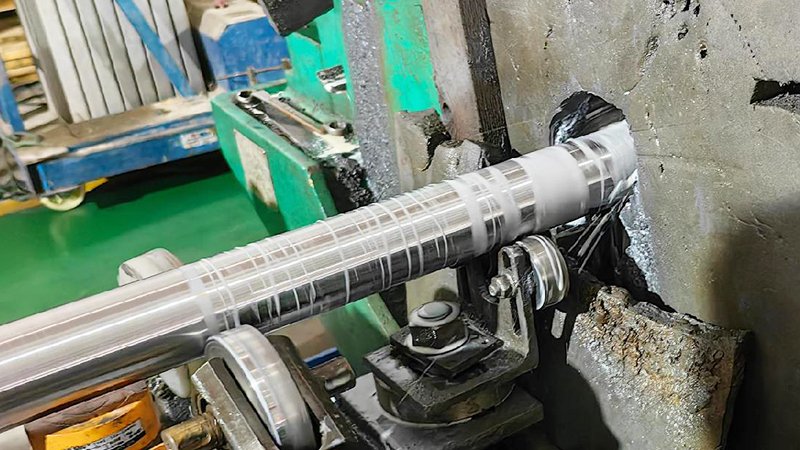
Straightness describes how much the rod’s central axis deviates from a perfectly straight line. A rod with poor straightness is bent or bowed, its axis curves along its length. Straightness is a property of the axis itself and does not depend on rotating the part; a bent rod lying on a surface plate is bent whether or not you spin it.
Straightness is usually quantified as the maximum deviation of the axis from a straight reference, either over the total length of the rod or as a local deviation over a specified shorter length. The distinction matters: a rod can have acceptable local straightness everywhere yet a significant total bow, or a sharp local kink within an otherwise straight rod. A good straightness specification states both the allowable deviation and the length over which it applies.
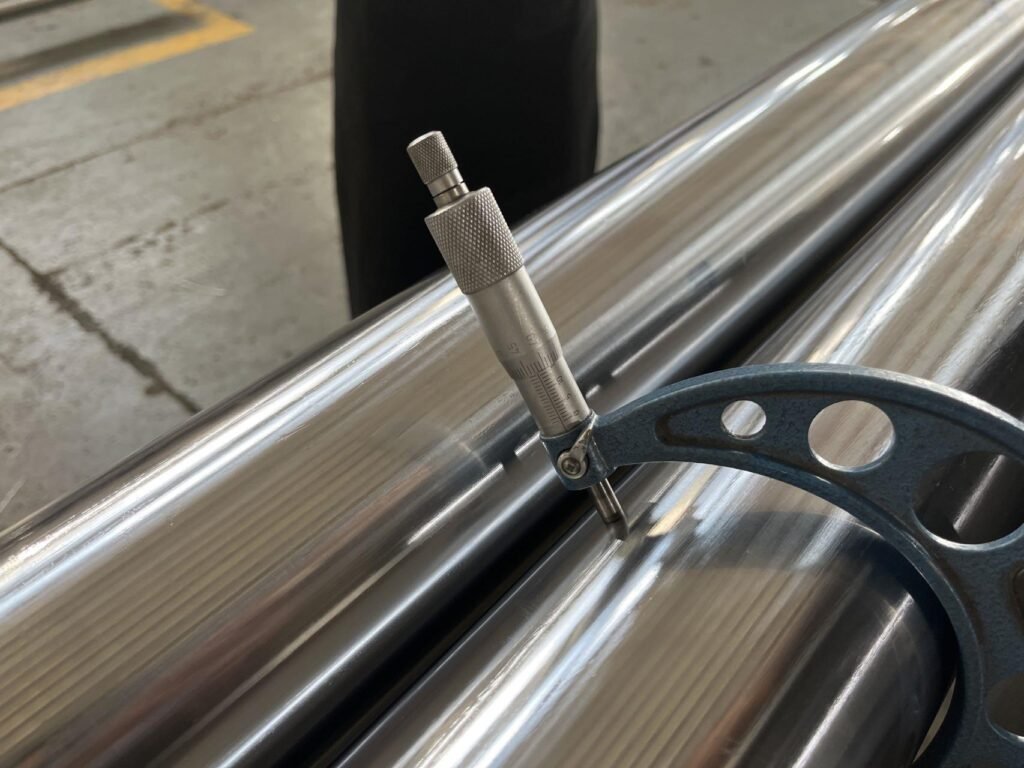
Straightness is measured with the rod supported and not rotated: laid on vee-blocks or a surface plate with a dial indicator traversed along it, or measured optically with a laser alignment system. These methods assess the axis directly.
Runout: Deviation During Rotation
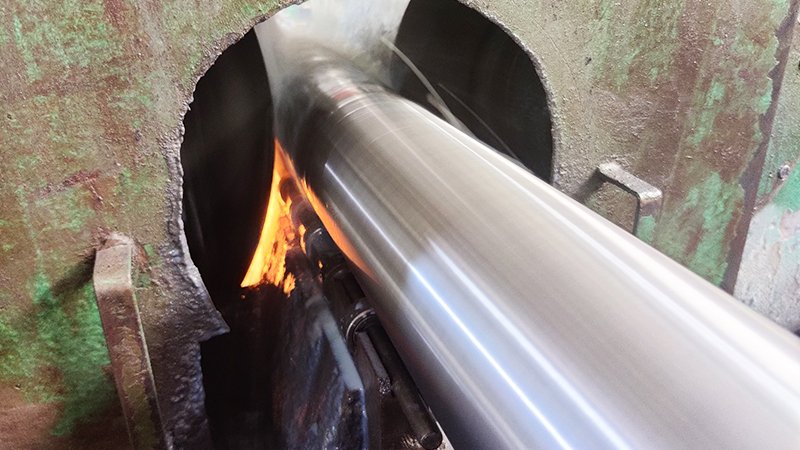
Runout is a different concept. It describes how much a surface moves toward and away from a fixed reference as the part is rotated about an axis, and it is measured as total indicator reading (TIR) with the rod turning between centers or in a chuck while a dial indicator rests on the surface. Runout captures the combined effect of several things at once: the part being bent (straightness error), the surface being out of round, and the surface being eccentric to the rotational axis.
This is the key insight: runout is not a pure measure of bend. A rod that is perfectly straight but slightly out of round, or whose surface is slightly eccentric to the centers it is turned on, will show runout even though its axis is straight. Conversely, the way a rod is mounted for a runout check, which centers or datums it rotates on, affects the reading. This is why the inspector’s lathe-mounted runout and the supplier’s vee-block straightness disagreed: they were measuring different things, and the runout reading included effects that straightness does not.
Why the Distinction Matters in Service
The two errors matter for different reasons, so specifying the wrong one controls the wrong risk.
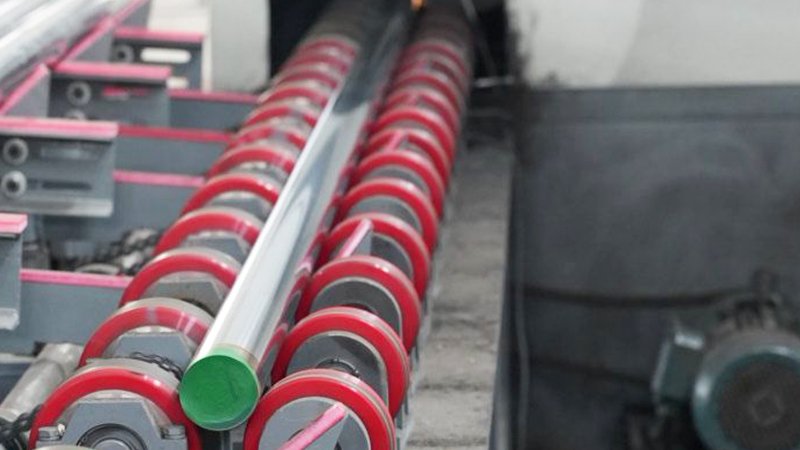
Straightness is what governs how a rod behaves in a cylinder over its stroke. A bent rod entering and exiting the gland and bushing imposes cyclic side loads, causes uneven seal contact and wear, and can bind. For a long-stroke cylinder rod, straightness is critical, which is why long crane and lifting rods carry tight straightness requirements. Straightness is the property that determines whether the rod runs true through the seals along its whole travel.
Runout matters where the rod, or a feature on it, must run true about a rotational axis, or where it is used as a machining or assembly datum. It also serves as a combined quick check in production because it catches several errors at once, but that same combining quality makes it a poor way to isolate a single cause. If you reject a rod on runout, you have not established whether the problem is bend, ovality, or mounting eccentricity, you have only established that something is off.
Specifying Correctly
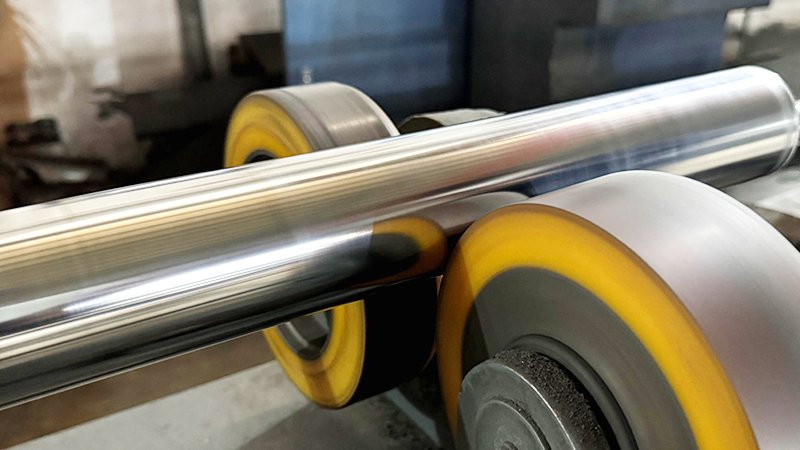
Because they measure different things, the specification should call out the property that actually matters for the application, with its measurement method. For a cylinder rod, the functionally important property is usually straightness, expressed as deviation over total length and over a local length, measured with the rod supported and unrotated. Specifying “straightness” and then inspecting by lathe runout invites exactly the dispute above, because the runout reading will include ovality and mounting effects the straightness spec never intended to capture.
If runout is genuinely the requirement, for instance for a feature that rotates, then the specification must state the datum axis the runout is measured about, since runout is meaningless without defining what it is relative to. An unqualified “runout” number is ambiguous because the same rod gives different readings depending on how it is mounted.
Resolving Disputes on the Floor
When a runout rejection and a straightness acceptance collide, the resolution is to measure the intended property by the intended method. If the concern is bend, measure straightness on vee-blocks or by laser, with the rod unrotated, over the specified length. If the concern is rotational trueness about a defined axis, measure runout about that stated datum. Separating the two almost always dissolves the dispute, because it reveals whether the rod is actually bent, merely out of round, or simply being mounted off-center for the runout check.
The broader lesson is that precise language in a specification prevents expensive arguments. “Straight,” “true,” and “runout” are not interchangeable, and a rod that fails one may pass another legitimately. Naming the right property, with its method and its datum or length, is what makes a chrome rod specification enforceable and fair to both buyer and supplier.
Related Reading
- Chrome Plated Rod for Truck-Mounted and Crawler Cranes: Long-Stroke Straightness
- Chrome Plated Rod Diameter Tolerance: f7 vs f8 vs g6
- Chrome Plated Rod for Offshore and Marine Deck Equipment
Measure the Property You Actually Mean
Runout and straightness answer different questions. Specify the one your application needs, with its method and datum, and you replace floor disputes with clear, enforceable acceptance.
What We Offer
- Chrome plated rod with straightness controlled and verified to your total and local specification
- Clear measurement methods, vee-block, laser, or defined-datum runout, matched to your requirement
- Guidance on writing enforceable geometric specifications for rod
- Full material traceability for demanding cylinder rod applications
Contact EAST AI (eastai-tech.com) Email: marketdi@east-ai.cn Phone: +86 13382202696 Address: No. 108, Lunan Road, Wuxi, Jiangsu, China.
Written by Alex, Production Engineer at EAST AI