
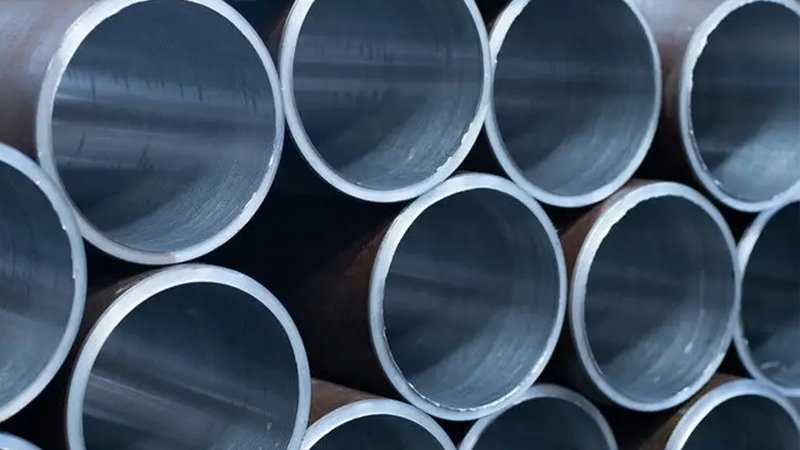
Here is a scenario that frustrates service providers more than almost any other. A batch of honed tube arrives dead straight, checks out perfectly on the bench, and gets stacked ready for a job. Then the saw comes out, a long tube is cut into shorter lengths, and one or more of the cut pieces slowly bends into a visible bow within hours. Nothing was done wrong at the saw, yet the tube is now out of straightness. The culprit is residual stress, and understanding it changes how you buy and process tube.
This is a genuinely technical problem, and it is worth treating it as one, because the people who cut and re-machine honed tube for a living lose real money to it. A bowed cut length may be unusable for a long-stroke cylinder, has to be re-straightened or scrapped, and undermines confidence in an otherwise good batch. The good news is that the mechanism is well understood and can be controlled at the specification stage.
What residual stress is and where it comes from
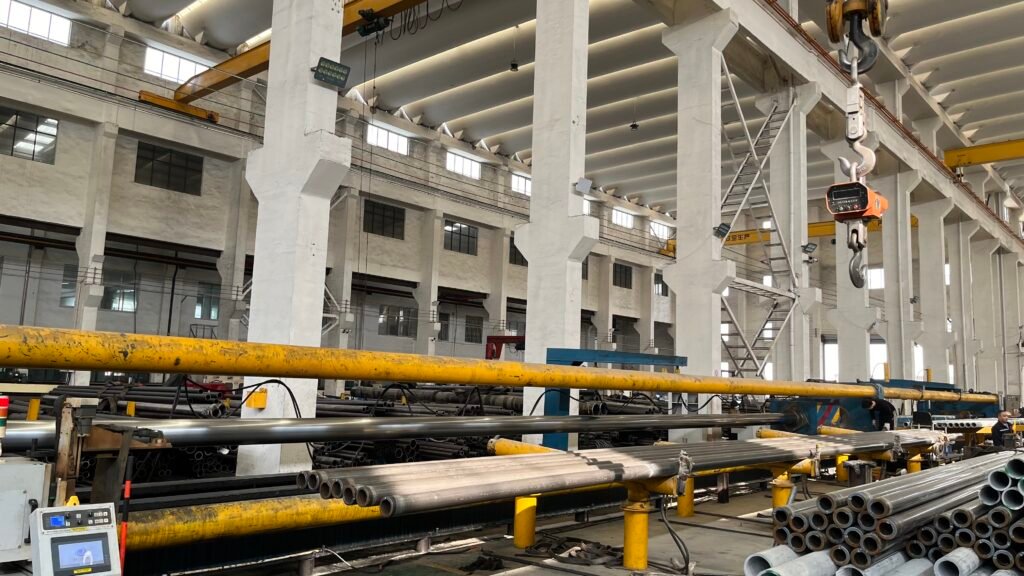
Residual stresses are internal stresses locked into a component that persist even when no external load is applied. They exist because different regions of the material were plastically deformed by different amounts during manufacture and are now pulling against each other in a balanced state. As long as that balance is undisturbed, the tube looks and behaves as if it were stress-free.
In honed tube, the dominant source of residual stress is cold working, particularly cold drawing. When a tube is drawn through a die to achieve its dimensions, the outer and inner layers deform differently, leaving a stress field frozen into the wall. Straightening operations, which bend the tube back and forth to correct it, add their own layer of residual stress on top. The finished straight tube is straight because these stresses are in equilibrium, not because they are absent.
Honing itself removes only a thin layer from the bore and does not relieve the bulk stresses in the wall. So a honed tube can leave the mill perfectly straight while carrying a substantial locked-in stress field. That field is a bow waiting to happen, held in check only by the tube’s own balanced geometry.
Why cutting releases the bow
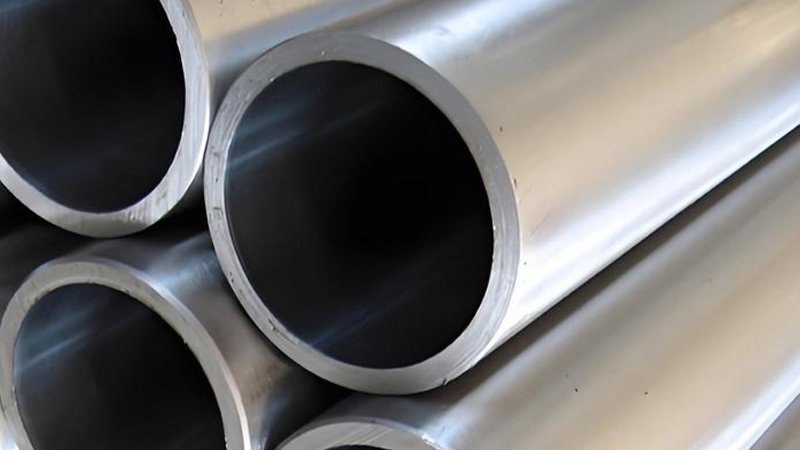
The moment you cut a tube, you break the equilibrium that was holding the residual stresses in balance. Removing material at the cut, and separating one length from the rest of the bar, lets the internal stresses redistribute to find a new balance, and the tube deforms until it reaches it. If the stress field is uneven around the circumference or along the length, the new equilibrium is a curved shape, and the tube bows.
This is why the bow often appears only after cutting and not before. The uncut bar was long enough and balanced enough to stay straight, but each cut piece has a different stress balance and finds its own new shape. Longer cut lengths and thinner walls tend to show the effect more, because they are more flexible and the same stress imbalance produces a larger deflection.
Machining has the same effect as cutting. Boring, turning, or removing metal unevenly from one side of the tube unbalances the stress field and lets the part distort. Service providers who bore honed tube to a finished outer diameter sometimes see the part move during machining for exactly this reason, which then throws off concentricity between bore and outer surface.
Stress relief: the real fix
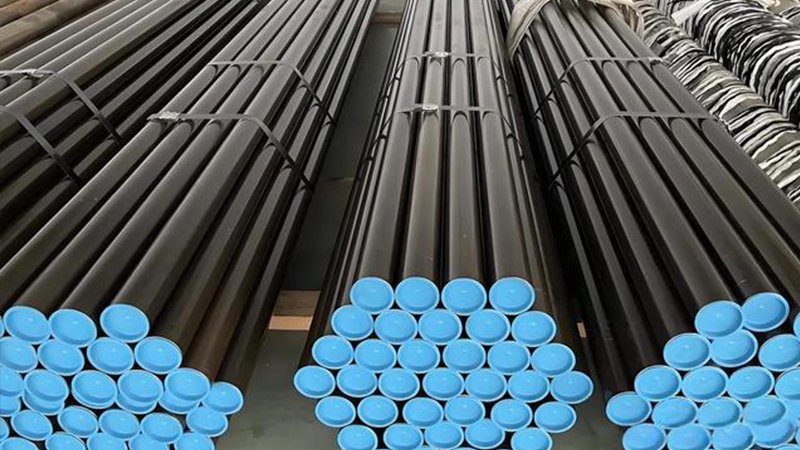
The reliable cure for residual-stress distortion is a stress-relief heat treatment. In stress relieving, the tube is heated to a temperature high enough to let the locked-in stresses relax through microscopic plastic flow, then cooled slowly and uniformly so that new stresses are not reintroduced. The result is a tube whose internal stress field is largely discharged, so cutting and machining no longer trigger a large bow.
The important point for buyers is that stress relief has to happen at the right stage of manufacture, typically after the major cold-working and straightening operations, so that the stresses those operations create are the ones being relieved. A tube that is stress-relieved and then heavily re-straightened has had fresh stress reintroduced. This is why stress relief is a process-sequence issue, not just a box to tick, and why it belongs in the conversation with your tube maker.
Stress relief does carry a modest cost and can slightly affect surface condition, so it is not automatically applied to every commodity tube. That is precisely why service providers who cut long tubes into demanding cut lengths need to ask for it explicitly rather than assuming it is included. The cost of specifying stress-relieved tube is far lower than the cost of scrapped, bowed cut pieces.
How to specify tube that stays straight
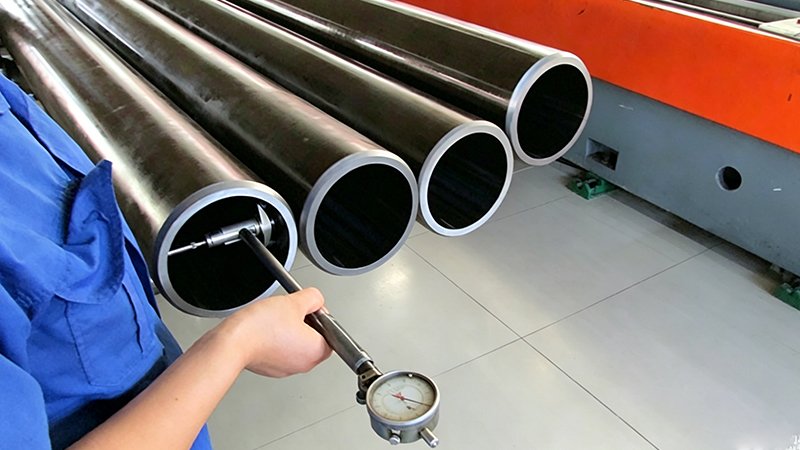
The first step is to tell your supplier how you will use the tube. If you are cutting long bars into long-stroke cut lengths, or boring the tube after receipt, say so, because that tells the maker that dimensional stability after processing matters as much as straightness on delivery. A good supplier can then choose a manufacturing route and stress-relief step suited to that use.
Second, specify straightness in a way that reflects real use, for example as a maximum deviation over a defined length such as 0.5 mm per 1000 mm, and ask whether that straightness is guaranteed after cutting for stress-relieved tube. A straightness figure that only applies to the full uncut bar is of limited value to someone who cuts. Making the requirement explicit gives you a basis to reject tube that does not perform.
Finally, treat your own process as part of the solution. Cutting tube in a way that keeps it supported, taking balanced machining cuts rather than removing all the metal from one side, and allowing tube to normalise to workshop temperature before final machining all reduce distortion. Combine a stress-relieved tube with disciplined processing and the mysterious post-cut bow largely disappears, which is exactly what a service provider needs to quote long-stroke work with confidence.
Related Reading
- Honed Tube for Crane and Lifting Equipment: Long-Stroke Straightness Requirements: https://eastai-tech.com/honed-tube-for-crane-and-lifting-equipment-long-stroke-straightness-requirements/
- Honed Tube for Oil & Gas Drilling Equipment: Material Traceability and High-Pressure Wall Thickness Requirements: https://eastai-tech.com/honed-tube-for-oil-gas-drilling-equipment-material-traceability-and-high-pressure-wall-thickness-requirements/
Specify Tube That Holds Its Shape
If your shop cuts or bores long honed tube, dimensional stability after processing is not a luxury; it is the difference between a saleable cut length and scrap. EAST AI has manufactured honed tube since 2006, and we work with fabricators to supply stress-relieved tube that stays straight through the saw and the boring bar.
What we offer:
- Honed tube with controlled residual stress and optional stress-relief treatment
- Straightness specified and held for demanding long-stroke cut lengths
- Guidance on cutting and machining sequence to minimise distortion
- Consistent bore and wall so post-machining concentricity stays within tolerance
Tell us how you process tube, and we will spec it to stay straight. Email: marketdi@east-ai.cn | Phone: +86 13382202696 Address: No. 108, Lunan Road, Wuxi, Jiangsu, China.
Written by Alex, Production Engineer at EAST AI