
A machine shop bought cold-drawn tube, cut it to length, and began machining features on the ends, only to watch the lengths bow and twist as material came off, throwing every dimension out. The steel was sound and the tube was straight when it arrived. What sabotaged the shop was locked-in residual stress from the cold-drawing process, released the moment machining disturbed the balance. This is one of the most common and most preventable problems with precision tube, and the cure is a step that happens long before the machine shop ever sees it: stress relief.
This article is for engineers, machinists, and cylinder builders who work with honed tube made from cold-drawn steel, and it explains where residual stress comes from, why stress relief before machining matters, and what happens when it is skipped.
Where Residual Stress Comes From
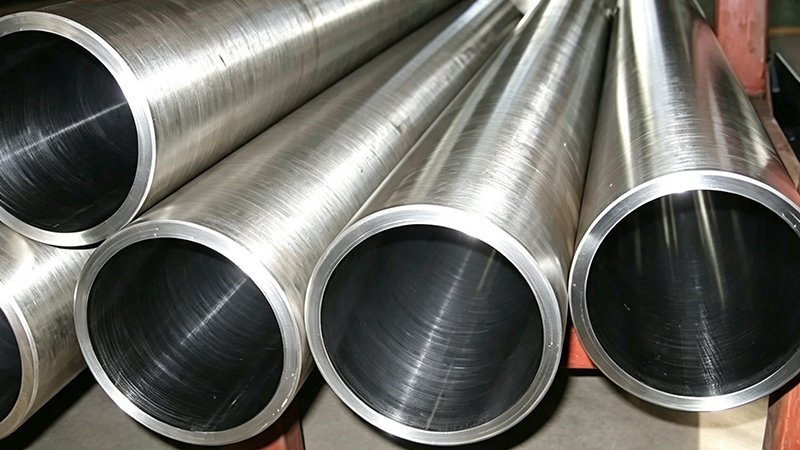
Cold drawing is how seamless tube is brought to precise dimensions and good surface finish: the tube is pulled through a die at room temperature, plastically deforming the steel to size. That cold working is exactly what gives cold-drawn tube its accuracy and strength, but it comes with a hidden cost. The deformation is not uniform through the wall, the outer and inner surfaces and the mid-wall are worked differently, so the material ends up with internal stresses locked in and balanced against each other even though no external load is applied. The tube looks and measures fine because these residual stresses are in equilibrium.
That equilibrium is fragile. As long as the tube is left intact, the stresses stay balanced and the tube stays straight and stable. But the moment you remove material, by machining, cutting, or heavy honing, you remove some of the stressed material and upset the balance. The remaining stresses redistribute to find a new equilibrium, and the tube physically moves, bending, bowing, or changing diameter, to accommodate the shift. That movement is the bow and twist the machine shop watched in dismay.
What Stress Relief Does
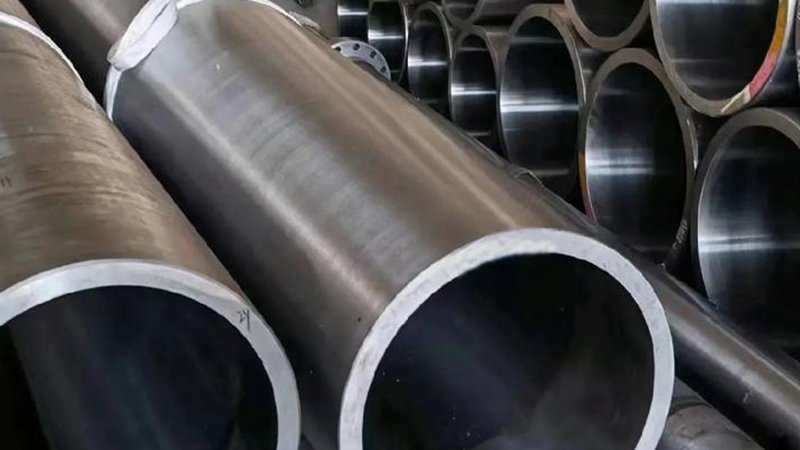
Stress-relief annealing is a heat treatment that heats the tube to a temperature high enough to let the locked-in stresses relax and dissipate, but below the point that would alter the steel’s basic structure or undo the dimensional work of drawing. Held at temperature and cooled in a controlled way, the tube emerges with its internal stresses greatly reduced, while keeping its dimensions and the strength benefits of cold working largely intact.
The payoff comes downstream. A stress-relieved tube stays dimensionally stable when it is machined, because there is little locked-in stress left to redistribute. The machine shop can cut, thread, and bore the ends and see the tube hold its shape and size. Dimensional stability during and after machining is precisely what stress relief buys, and it is why a properly stress-relieved honed tube is so much easier and more reliable to work with than one that skipped the step.
Why It Must Happen Before Final Honing and Machining
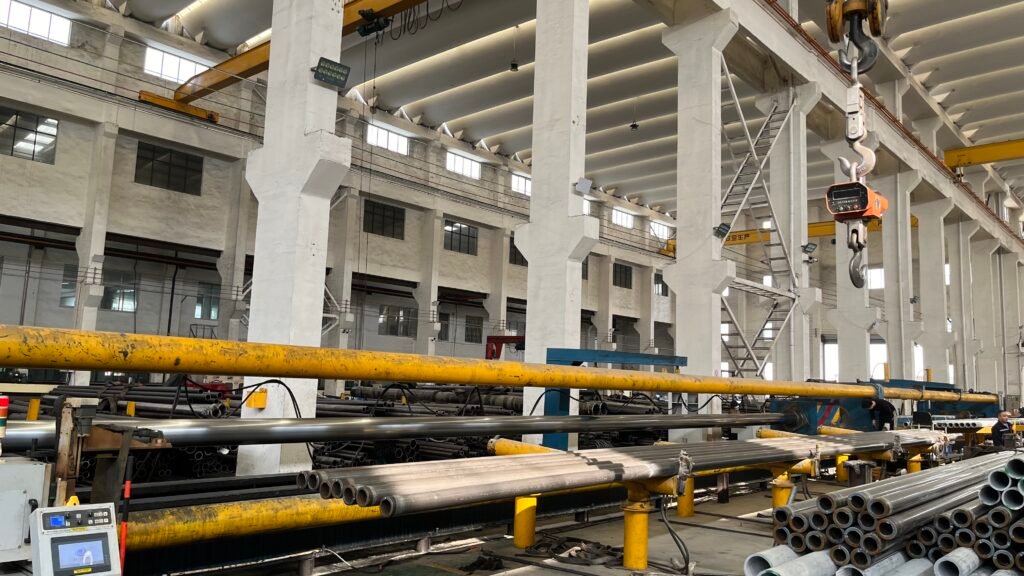
The sequence matters. Stress relief has to occur before the operations that depend on stability. If a tube is honed to a precise bore and then still carries significant residual stress, later machining, welding, or cutting can distort the carefully honed bore as the stresses release, undoing the honing work. Doing the stress relief earlier in the process, so that subsequent honing and the customer’s machining both happen on a stable tube, ensures the precision achieved is the precision retained.
This is also why stress relief is a supplier-side responsibility built into how the tube is made, not something the end user can easily add later. By the time a distributor or machine shop has the tube, the cost-effective window for stress-relieving the raw material has passed. A tube supplier who stress-relieves as part of the process delivers material that behaves predictably; one who skips it to save cost passes the instability, and the downstream scrap, to the customer.
The Symptoms of Skipped Stress Relief
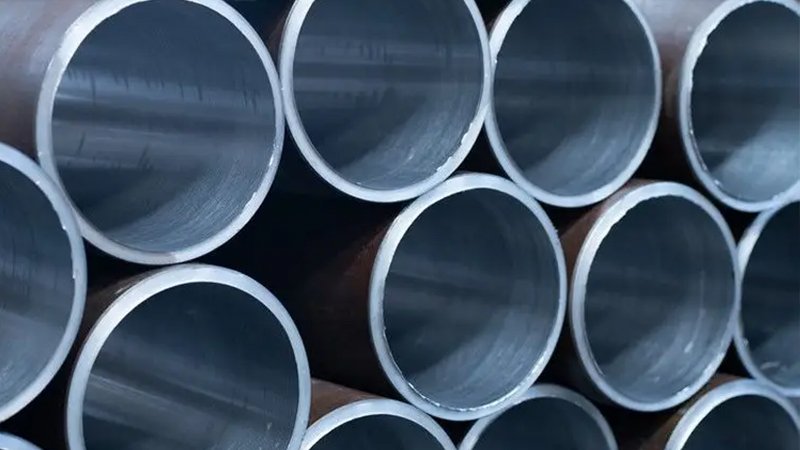
The signature of inadequate stress relief is movement during or after machining: a rod or tube that bows as it is turned, ends that go out of square after facing, bores that change diameter after material is removed, or lengths that develop a bend after cutting. Because the tube was straight and in tolerance before machining, the cause is easy to misattribute to the machining itself or to the machinist, when the real culprit is residual stress released by an otherwise correct cut. When a tube reliably distorts as soon as it is machined, insufficient stress relief in the source material is the prime suspect.
The problem compounds with thin-wall tube and long lengths, which have less stiffness to resist the redistributing stresses and therefore move more. It also compounds with asymmetric machining, removing material from one side or one region, because that upsets the stress balance unevenly and produces a pronounced bend toward the machined side.
Specifying Stress-Relieved Tube
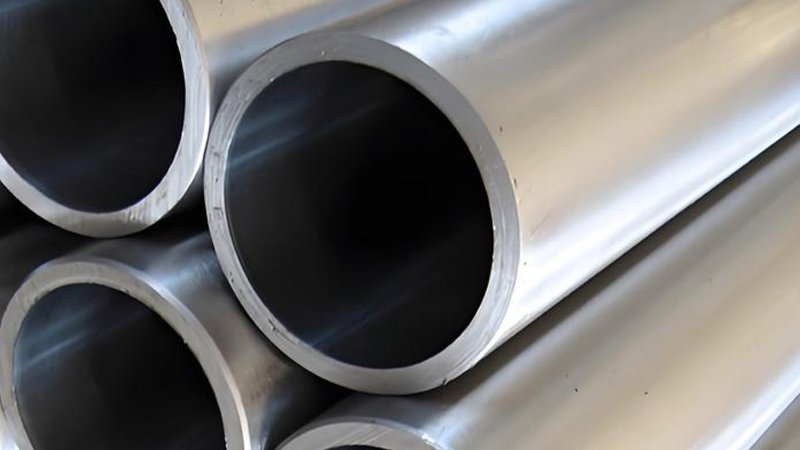
For any application that involves machining the tube, and especially for precision cylinder work, it is worth confirming that the honed tube is properly stress-relieved. This is part of the material specification, not an afterthought, and it directly affects the yield and quality of everything the customer does downstream. A tube that arrives dimensionally stable saves the machine shop from chasing moving dimensions, reduces scrap, and protects the honed bore through subsequent operations.
The broader point is that stability is a property you pay for in the material, not one you can machine in later. The best surface finish and tightest bore tolerance are of little use if the tube warps the moment it is worked. Sourcing honed tube from a process that includes proper stress relief is what makes the precision usable, turning a length of accurate tube into a component that stays accurate through fabrication and into service.
Related Reading
- Honed Tube for Oil & Gas Drilling Equipment: Material Traceability and Wall Thickness
- Honed Tube for Crane and Lifting Equipment: Long-Stroke Straightness
- Honed Tube for Injection Molding Machine Clamping Cylinders
Buy Stability, Not Just Straightness
A tube that moves when you machine it was never truly stable, only balanced. Specify properly stress-relieved honed tube, and the precision you inspect on arrival survives cutting, machining, and service.
What We Offer
- Honed tube made from properly stress-relieved cold-drawn material for dimensional stability
- Correct process sequencing so honed bores stay true through downstream machining
- Stable behavior on thin-wall and long lengths where residual stress bites hardest
- Full material traceability and support for machining-intensive cylinder builds
Contact EAST AI (eastai-tech.com) Email: marketdi@east-ai.cn Phone: +86 13382202696 Address: No. 108, Lunan Road, Wuxi, Jiangsu, China.
Written by Alex, Production Engineer at EAST AI