
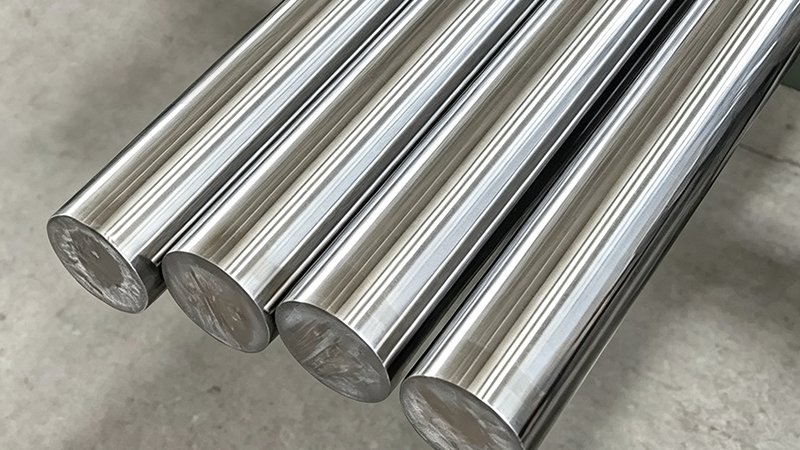
Every rod repair shop faces the same tempting question when a chrome plated rod comes in with a bow: can we just straighten it and put it back to work? Sometimes the answer is yes, and straightening is a legitimate, money-saving repair. But the honest answer for many rods is more complicated, because the hard chrome layer that makes the rod work is also the part most likely to be damaged by the very process meant to save it. Knowing the difference protects both your customer and your reputation.
This is a topic where a little metallurgy goes a long way, and the engineers and senior buyers who specify rod deserve the full picture. Straightening is not a neutral operation; it deliberately introduces stress and plastic deformation to reverse a bend, and the thin, hard, brittle chrome layer responds to that in ways that are not always visible to the eye. Understanding what happens inside the chrome tells you when re-straightening is safe and when it is quietly setting up the next failure.
The nature of the hard chrome layer
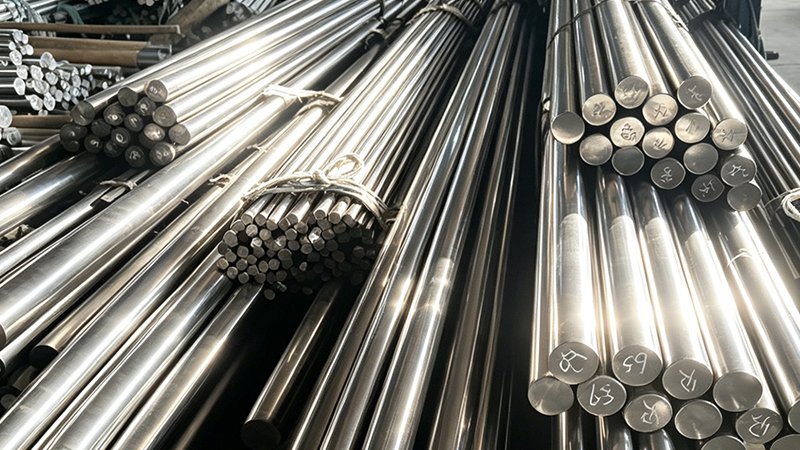
Hard chrome plating is not a smooth, continuous skin. Electrodeposited hard chrome forms with a characteristic network of fine micro-cracks running through the layer, an inherent feature of the way the deposit grows and relieves its own internal stress. On a well-made rod these cracks are numerous, fine, and evenly distributed, and the corrosion protection relies on the base and any underlayer as much as on the chrome being crack-free.
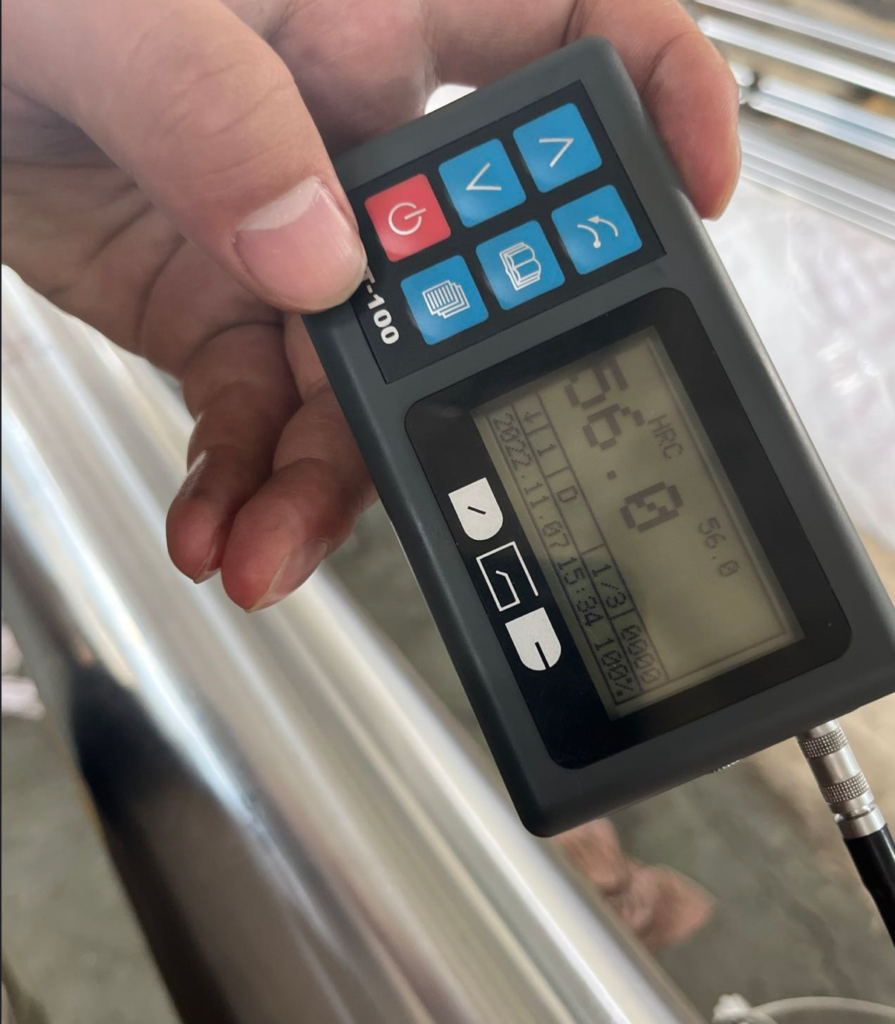
The layer is also very hard, typically in the region of 800 to 1000 HV, which is what gives the rod its excellent wear and scratch resistance. But hardness comes with brittleness. The chrome layer has little ability to deform plastically; where the ductile steel beneath it can stretch and bend, the chrome tends to crack rather than flow. This mismatch between a ductile base and a hard, brittle surface is central to what happens during straightening.
Under normal service, this arrangement works beautifully: the base carries the load and flexes elastically within its limits, and the chrome rides on top providing a hard, low-friction surface. Problems begin only when the rod is deformed beyond the small elastic movements it was designed for, which is precisely what a bow, and its correction, involve.
What happens to the chrome when you straighten
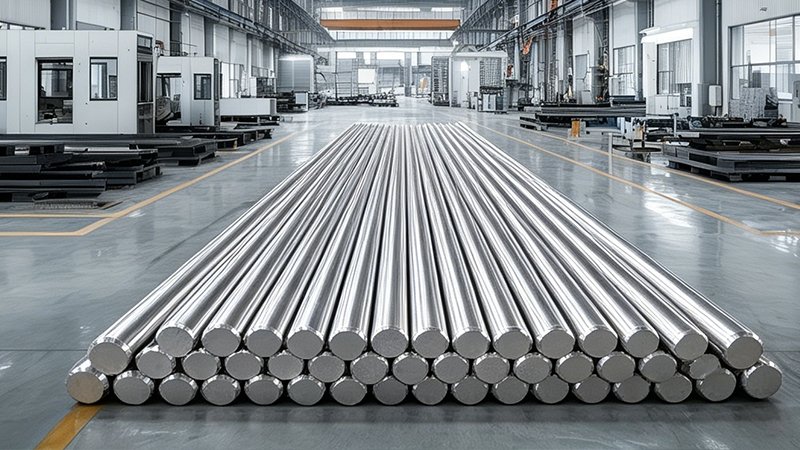
Straightening a bent rod means bending it plastically in the opposite direction until it returns to straight. That requires taking the surface material past its elastic limit, and on the outer, stretched side of the bend the brittle chrome is asked to stretch with a base steel that is yielding. Because the chrome cannot accommodate that strain, its existing micro-cracks tend to widen and new, coarser cracks can open through the layer.
Widened and coarsened cracks matter because they change the corrosion behaviour of the rod. The fine natural micro-crack network is part of a system designed to limit corrosion penetration; coarse cracks driven by straightening are direct, open pathways to the base steel. A rod that is straightened aggressively can therefore look fine and still have a compromised corrosion barrier, which shows up months later as pitting along the once-bent region.
Straightening also leaves behind its own residual stress, superimposed on whatever stress was already in the rod. This new stress field can encourage the rod to move again in service or under temperature change, and in a rod that is later cut or machined it contributes to distortion in the same way discussed for tube. So even a visually successful straightening can leave the rod less stable and less protected than it looks.
Judging when a rod can be saved
None of this means straightening is always wrong; it means it must be judged. The key variables are how severe the bow is, how large the rod diameter is, and how demanding the service will be. A slight bow in a robust rod destined for moderate, dry-service duty is a good straightening candidate, because the correction requires only modest deformation and the consequences of a small corrosion risk are low.
A severe bow, a large-diameter rod, or a rod headed back into a corrosive or high-cycle application is a different matter. The deformation needed to correct a severe bow is more likely to coarsen the crack network badly, and a corrosive or fatigue-critical application is least tolerant of the resulting damage. In those cases the sound engineering decision is often to reject the rod and replace it, because the cost of a repeat failure far exceeds the cost of new rod.
There is also a middle path: straighten the base and re-plate. For valuable large rods, stripping the old chrome, straightening the bare steel, and re-plating restores a fresh, intact layer without asking the original chrome to survive deformation. It costs more than a simple straighten, but for a high-value rod it can be far cheaper than replacement while avoiding the crack-damage problem entirely.
Inspection and specification for straightened rod
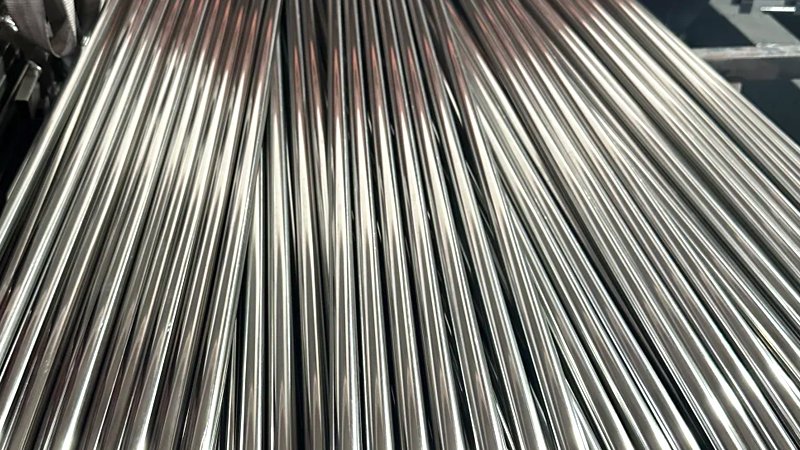
If a rod is to be straightened and returned to service, inspection should follow. A visual and low-magnification check along the corrected region can reveal coarse cracking or chrome flaking, and dye-penetrant inspection can highlight cracks that the eye misses. A straightness re-check under support confirms the correction held and did not spring back. These steps turn straightening from a gamble into a controlled repair.
For buyers specifying new rod, the lesson is to start with rod that resists bending in the first place, because a rod that stays straight is never a straightening candidate. Adequate diameter for the stroke, an appropriate base grade for the load, and good delivered straightness all reduce the chance of a bow developing. Bending resistance is designed in, not added later.
The practical guidance we give customers is simple: treat straightening as a considered repair for the right rods, not a routine fix for all of them, and never assume a straightened rod carries the same corrosion life as a new one. Match that judgement with rod specified for its duty from the start, and the whole question of whether to straighten arises far less often.
Related Reading
- Chrome Plated Rod for Truck-Mounted and Crawler Cranes: Long-Stroke Straightness and Bending Resistance: https://eastai-tech.com/chrome-plated-rod-for-truck-mounted-and-crawler-cranes-long-stroke-straightness-and-bending-resistance/
- Chrome Plated Rod Diameter Tolerance: f7 vs f8 vs g6, How to Choose the Right Fit: https://eastai-tech.com/chrome-plated-rod-diameter-tolerance-f7-vs-f8-vs-g6-how-to-choose-the-right-fit/
Start With Rod That Stays Straight
The best way to win the straightening debate is to rarely have it, by specifying rod with the base strength and delivered straightness to resist bending in service. EAST AI has plated and finished hydraulic rod since 2006, and we help engineers specify rod that holds its shape and its corrosion barrier.
What we offer:
- Hard chrome plated rod with a controlled, fine micro-crack structure
- Base grades matched to load and stroke for genuine bending resistance
- Tight delivered straightness to reduce in-service bowing
- Re-plating and technical support for high-value rod repair decisions
Talk to us before you straighten, or before you buy. Email: marketdi@east-ai.cn | Phone: +86 13382202696 Address: No. 108, Lunan Road, Wuxi, Jiangsu, China.
Written by Alex, Production Engineer at EAST AI