
A procurement engineer once asked us to quote the same bore and wall specification in both honed tube and skived and roller burnished tube, expecting the second to be a cheaper compromise. When the numbers came back close together and the specifications both met his tolerance and finish requirements, he asked the obvious question: if they end up in the same place, why do both processes exist? The honest answer is that they do not always end up in the same place, and knowing where each process has the edge lets a buyer choose correctly instead of assuming one is simply the budget version of the other.
This article is for engineers and technical procurement staff specifying cylinder-grade tube, and it explains how skiving and roller burnishing differs from honing, where each process has a genuine advantage, and how to decide which one suits a given bore.
Two Different Ways to Reach the Same Tolerance
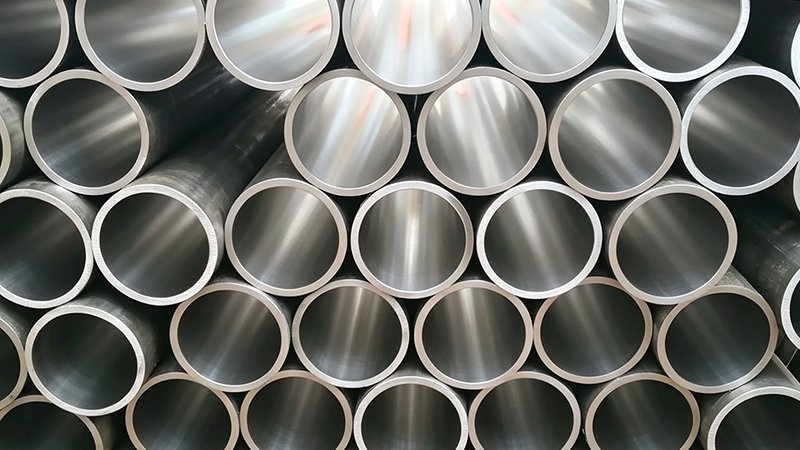
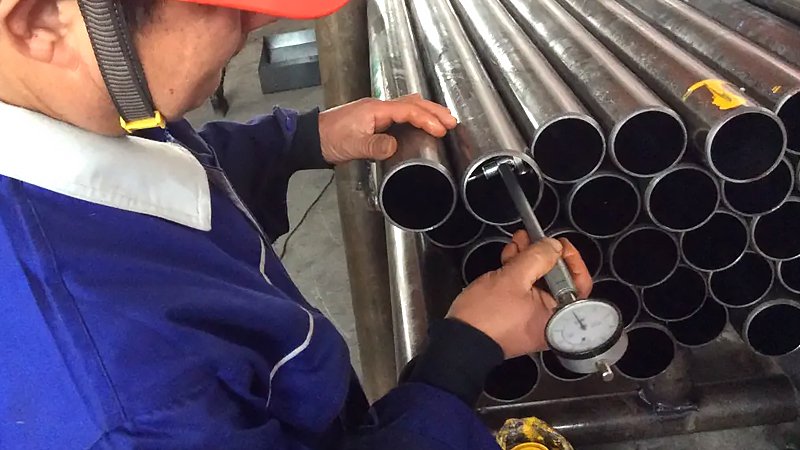
Both processes take cold-drawn seamless tube and turn its bore into a finished cylinder-grade surface, typically held to H8 or H9, but they get there differently. Honing uses abrasive stones that rotate and reciprocate simultaneously, removing material to correct size, roundness, and straightness while cutting the characteristic cross-hatch finish. It is a subtractive, abrasive process capable of very fine finish control.
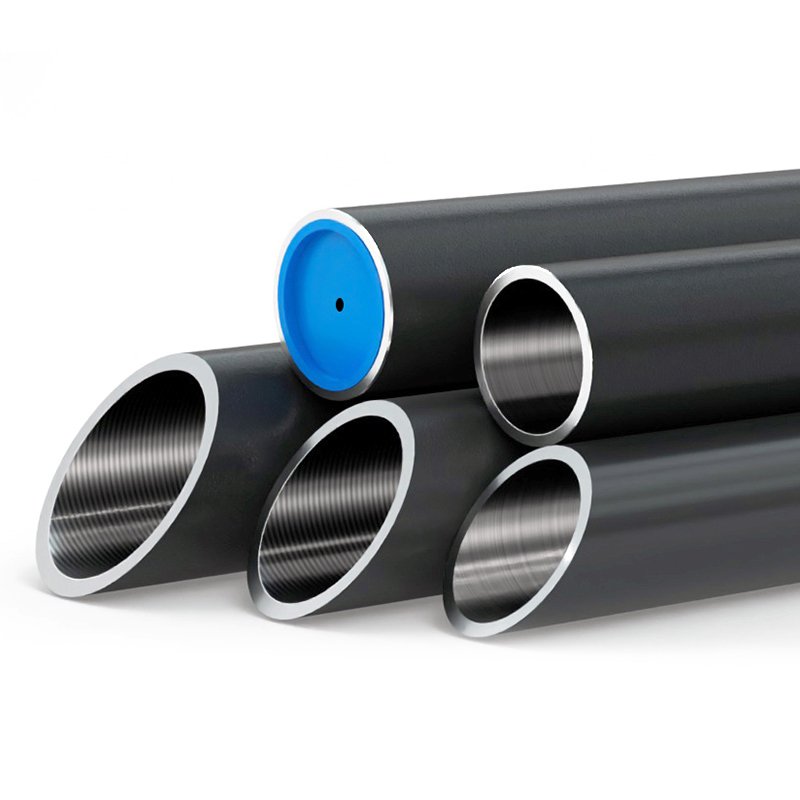
Skiving and roller burnishing is a two-step mechanical process. Skiving uses a cutting tool to shave the bore to a precise diameter, removing scale and correcting rough dimensions in a single pass, and roller burnishing follows by pressing hardened rollers against the bore, plastically deforming and work-hardening the surface to its final size and finish rather than cutting it away. The surface is effectively cold-worked smooth rather than abraded smooth.
Where Skiving and Roller Burnishing Has the Edge
The roller burnishing step work-hardens the near-surface material, which can improve the bore’s fatigue resistance and wear characteristics compared with an as-drawn or simply bored surface. For long production runs of standard sizes, the process is often faster than honing, because skiving removes material efficiently in one pass and burnishing finishes quickly, which can translate into a cost advantage on high-volume, standard-diameter tube.
The process also tends to leave residual compressive stress at the surface from the burnishing action, which can be beneficial for fatigue life in cyclic-pressure applications, a genuine mechanical advantage over a purely abrasive finish in some duty profiles.
Where Honing Has the Edge
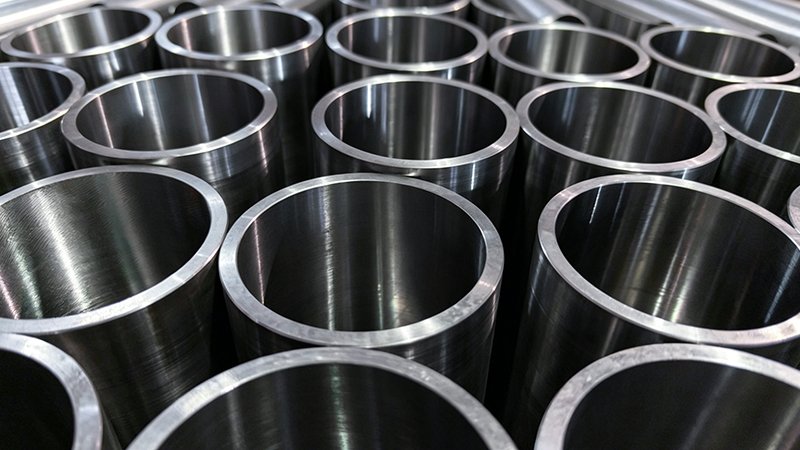
Honing remains the preferred process where the bore geometry itself needs correction, not just a smooth finish. Because honing stones follow and correct the existing bore rather than working from a fixed roller diameter, honing is generally better suited to correcting out-of-round or irregular starting bores, and to achieving very tight roundness and straightness on demanding applications. It also offers more direct control over the cross-hatch angle and plateau finish discussed for oil-film retention, which matters where the customer has specified a particular finish character for a specific seal type rather than simply a roughness number.
For large-diameter, thick-wall, or less common size combinations, honing capacity is often more flexible than the tooling investment skiving and roller burnishing requires for every distinct diameter, since roller burnishing tooling is size-specific in a way that a honing stone set can accommodate with somewhat more range.
Surface Character Is Not Identical
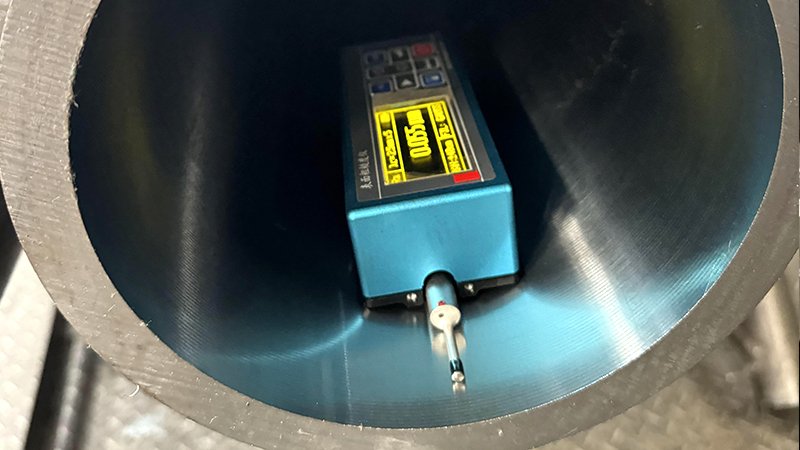
Even when both processes hit the same Ra number, the surface character differs. A honed surface has the crossing helical grooves that hold oil, discussed at length in relation to seal lubrication. A skived and roller-burnished surface is smoother and more work-hardened, with a different oil-retention behavior because it lacks the same deliberate crossing groove network unless specifically processed to introduce one. For seal types and duty cycles where cross-hatch oil retention is the deciding factor, this is a real functional difference, not just a manufacturing preference, and it is worth discussing directly with the seal designer rather than assuming the two finishes are interchangeable at the same roughness value.
Choosing Between Them
The practical decision starts with the bore’s starting condition and the finish character the seal needs. If the raw tube’s roundness and straightness are already good and the application benefits from a work-hardened, fatigue-resistant surface at standard sizes, skived and roller burnished tube is a strong, often more economical choice. If the bore needs geometric correction, the size is less common, or the seal design specifically depends on cross-hatch oil retention, honing is the more reliable route to the required result.
Neither process is a lesser substitute for the other; they are different tools suited to different starting conditions and different functional requirements. A supplier who offers both, and who asks about your seal type, duty cycle, and bore condition before recommending one, is giving you an engineering answer rather than simply quoting whichever line has capacity that week.
Related Reading
- Honed Tube ID Cross-Hatch Angle and Oil Film Retention
- Honed Tube vs Ordinary Seamless Tube: What Cylinder Repairers Should Buy
- Stress Relief in Cold-Drawn Honed Tube: Why It Matters Before Machining
Choose the Process, Not Just the Number
Honing and skiving-plus-roller-burnishing can both deliver an H8 bore, but they get there differently and suit different bores and seals. Specify the process that matches your starting material and your seal’s real requirement.
What We Offer
- Both honed and skived and roller burnished tube on the same cylinder-grade tolerance
- Technical guidance on which process suits your bore condition, size, and seal type
- Controlled cross-hatch finish where oil retention is the deciding factor
- Full material traceability and mill certificates for both product lines
Contact EAST AI (eastai-tech.com) Email: marketdi@east-ai.cn Phone: +86 13382202696 Address: No. 108, Lunan Road, Wuxi, Jiangsu, China.
Written by Alex, Production Engineer at EAST AI