
A supplier quotes two-week delivery on a honed tube order that competitors are quoting at six weeks. The instinct is to treat this as a win — better availability, faster inventory replenishment, a tighter production schedule accommodated. The two-week quote is worth examining before accepting, because the gap between two weeks and six weeks rarely reflects a supplier with meaningfully more production capacity. It more often reflects a supplier who is working from existing finished goods stock, is miscalculating their own production timeline, or is quoting optimistically to win the order and will manage the delivery problem later.
Each of these scenarios has a different implication for what actually arrives at your dock and when, and distinguishing between them before placing the order avoids the most common consequences: material that arrives on time but doesn’t match the specification you approved, or a delivery that was confirmed at two weeks and arrives at five.
Published: 2026-11-02 | Last Updated: 2026-11-02
The Three Reasons a Lead Time Quote Is Significantly Shorter Than Competitors
Understanding which of the three mechanisms is driving a compressed lead time quote lets you evaluate the offer accurately rather than accepting it at face value or dismissing it unnecessarily.
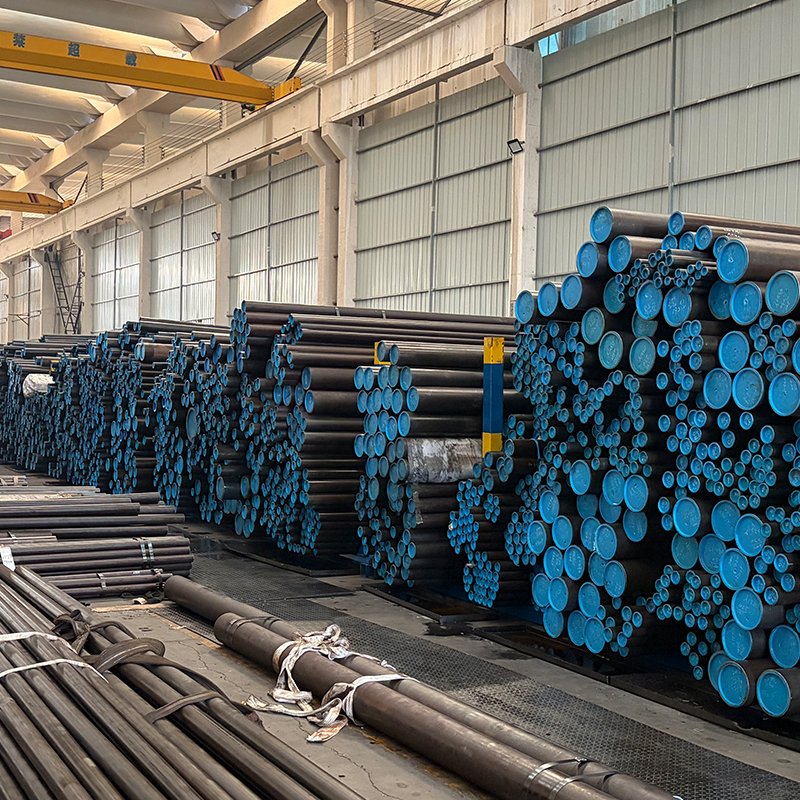
Before accepting a lead time that is more than thirty percent shorter than competing quotes on the same specification, ask the supplier explicitly where the material will come from: existing finished goods inventory, semi-finished material awaiting plating or honing, or a fresh production run. The answer determines everything about the risk profile of the short lead time.
Finished goods inventory is the cleanest scenario: the material exists, has been inspected, and can ship almost immediately. The risk is whether the existing inventory exactly matches your specification — bore diameter, wall thickness, surface finish, and length — or whether the supplier is planning to offer you a “close enough” substitute.
Semi-finished material is a middle scenario: the raw tube exists and is queued for honing, which takes days rather than weeks. The risk is the same specification match question, plus the quality consistency of material that wasn’t originally produced for your specific order.
Fresh production is the concerning scenario when the quoted lead time is very short: it means the supplier is either miscounting the time required or has a very different production process than their competitors, both of which deserve follow-up questions.
| Reason for Short Lead Time | Risk Level | Key Verification Question |
|---|---|---|
| Finished goods in stock, exact spec match | Low | “Is the existing stock identical to our approved specification?” |
| Finished goods in stock, close but not exact | Medium | “What specific dimensions differ and are they within our tolerance?” |
| Semi-finished material, queued for processing | Medium | “When does production actually complete, not ship?” |
| Optimistic fresh production estimate | High | “What is your typical production cycle time for this specification?” |
| Lead time overstated to win order | High | Consistent late delivery on previous orders is the indicator |
The Specification Substitution Risk in Short Lead Time Orders
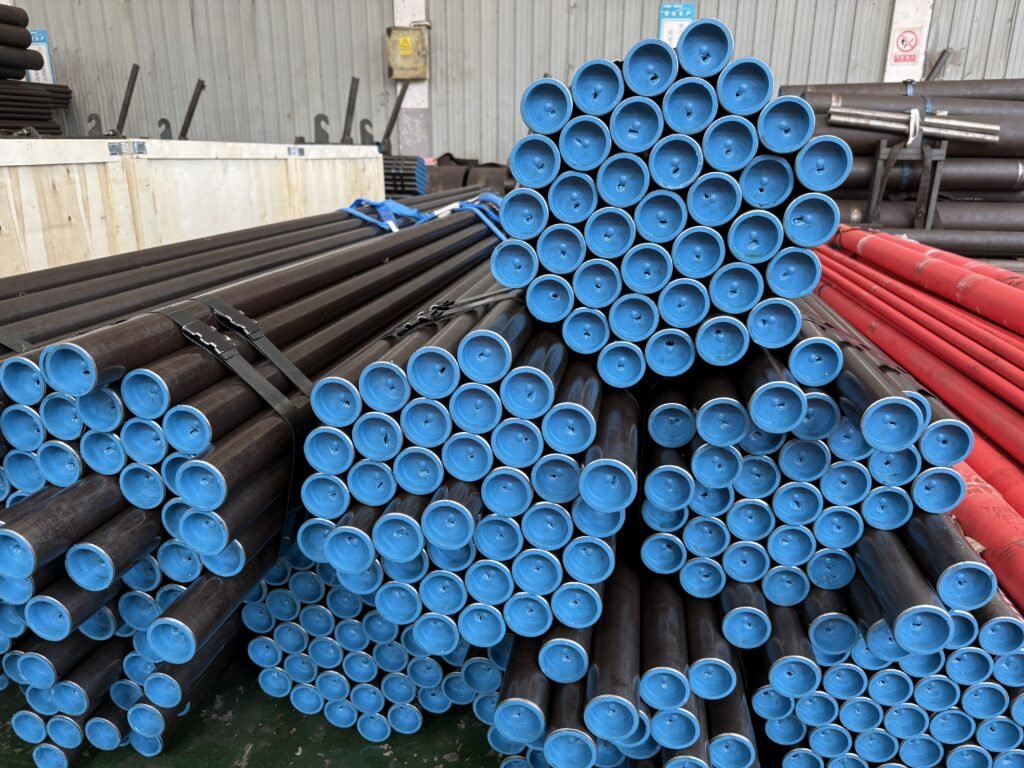
The most common quality problem with short lead time fulfillment isn’t obvious defects — it’s subtle specification mismatches that pass a casual inspection but create problems downstream. A supplier fulfilling a short lead time from existing inventory will sometimes ship material that is within the general specification range but doesn’t match the specific dimensional profile of your approved sample.
When accepting a short lead time offer based on existing inventory, explicitly request the inspection records for the specific stock that will be shipped — not a generic certificate, but the dimensional data for the actual pieces — before confirming the order.
This request is easy for a supplier with well-documented inventory to fulfill and impossible for one whose stock management is informal. The inspection records reveal whether the existing stock matches your approved sample’s bore diameter distribution, surface finish measurements, and OD profile, or whether it represents a different production batch with subtly different characteristics.
| Specification Variable | Why It Matters for Existing Stock | Verification Method |
|---|---|---|
| Bore diameter mean and distribution | Affects seal fit and cylinder performance consistency | Request lot-level dimensional data |
| Surface roughness (Ra) | Affects seal break-in and long-term wear | Request surface finish measurement records |
| OD profile (tolerance class) | Affects assembly clearance | Request OD measurement data |
| Wall thickness | Affects pressure rating | Request wall thickness measurements |
| Length accuracy | Affects installation fit | Request length measurement data |
How to Protect Delivery Date Commitments on Short Lead Time Orders
A two-week delivery commitment that slips to four weeks creates more production disruption than a six-week quote that delivers on schedule, because the short delivery was the specific reason the planning decision was made and the buffer that would have been built around a longer lead time doesn’t exist.
Get the delivery commitment in writing with a specific ship date — not a delivery window — and confirm what the supplier’s protocol is if the ship date is missed: partial shipment, expedited shipping at their cost, or notification with a revised date. A supplier who commits to a specific ship date in writing has made a documented obligation; one who provides a delivery window is giving themselves room to manage within the window.
For orders where the delivery date is genuinely critical — tied to a customer ship date, a production start, or a maintenance window — the protection goes further. A small premium for confirmed expedited production or a capacity reservation may be worth paying to get a committed ship date rather than an estimated one.
Evaluating a Supplier’s Track Record on Short Lead Time Delivery
Past performance on short lead time quotes is the most reliable predictor of whether a new short lead time quote will be honored. Before placing a first order with a supplier on the basis of a short lead time quote, ask for two references from buyers who have placed short lead time orders and ask specifically whether the delivery date was met.
Reference checks are underused in industrial raw material procurement, partly because they take time and partly because most procurement teams feel awkward asking. But a reference check on delivery reliability for short lead time orders takes about ten minutes and reveals information that no quote sheet, capability statement, or sales conversation can provide. A supplier who can provide two satisfied references for short lead time delivery has demonstrated the capability; one who cannot provide references, or whose references give qualified answers, has told you something important.
When your production schedule requires a short lead time on honed tube and you want to understand what we actually have in finished goods inventory for your specification, EAST AI’s team can provide specific stock confirmation with dimensional data before you commit. Contact us at marketdi@east-ai.cn or +86 13382202696.
What to Do When the Short Lead Time Quote Turns Out to Be Late
Even with all the verification steps completed, a supplier who committed to two weeks occasionally delivers in four. How you respond to this outcome matters for both the immediate disruption and the longer-term supplier management relationship.
When a committed delivery date is missed, issue a written notification to the supplier within twenty-four hours of the missed date — not a complaint, but a factual record that the committed date was not met, the current expected revised date, and any production impact the delay is creating on your side. This documentation serves two purposes: it creates a formal record of the missed commitment that protects your negotiating position on any cost impact, and it signals to the supplier that your production system does actually depend on committed dates rather than treating them as rough estimates.
A supplier who receives this kind of structured response to a missed delivery learns that your team tracks commitments precisely and responds formally when they are missed. Over time, this pattern — where missed dates consistently produce documented consequences rather than informal complaints — tends to produce more reliable performance from the same supplier, because the consequences of optimistic quoting are visible and consistent.
How to Use Short Lead Time Performance Data in Annual Supplier Reviews
A supplier’s track record on short lead time orders is one of the most useful performance metrics for annual reviews, yet it’s one that most procurement teams don’t explicitly track. The reason is that short lead time delivery performance often gets mixed into general delivery performance metrics, where it gets averaged out by the much larger volume of standard lead time orders.
Track short lead time orders — those where the supplier quoted more than thirty percent below the typical market lead time — as a separate performance category, and calculate the on-time delivery rate for this subset specifically at annual review. A supplier who delivers standard orders reliably but consistently struggles with short lead time commitments has a specific capacity or process limitation that affects how much you should rely on their availability claims when your production schedule is compressed.
| Lead Time Category | Tracking Method | Annual Review Question |
|---|---|---|
| Standard lead time orders | General OTD metric | Are delivery commitments met consistently? |
| Short lead time orders (>30% below typical) | Separate OTD metric | Do compressed commitments actually hold? |
| Emergency or urgent orders | Separate tracking | Is the supplier responsive when you need acceleration? |
This segmented analysis often reveals patterns that aggregate metrics conceal. A supplier at ninety-three percent on-time delivery overall may be at seventy-five percent on short lead time orders — meaning their availability claims for compressed schedules are genuinely unreliable even though their general delivery performance looks acceptable.
When a Short Lead Time Quote Is Genuinely Reliable
Not every short lead time quote reflects the risks described above. Some suppliers genuinely maintain more finished goods inventory, have faster production processes for specific specifications, or have invested in spare capacity specifically to serve urgent demand. The way to distinguish a genuinely fast supplier from one making optimistic claims is to check the history: ask for the last five short lead time orders they fulfilled for buyers with similar specifications and ask specifically whether each shipped on the committed date. A supplier who can quickly provide this history, and whose references confirm the dates, has demonstrated the capability that the quote implies.
Suppliers who specialize in stocking common bore sizes and maintain documented, real-time inventory systems are the most reliable source of genuinely short lead times. Their speed doesn’t come from production capacity but from inventory management, and their quoted lead time reflects the actual time to pick, inspect, and ship rather than a production estimate. Asking a potential supplier directly whether their short lead time quote is based on finished goods inventory or on a fresh production run is the fastest way to assess which type of supplier you’re dealing with.
Related Reading
- When a Honed Tube Supplier Claims “In Stock”: What Buyers Should Actually Verify
- Honed Tube Sample Approval Passed. Then Bulk Quality Dropped. Now What.
- Honed Tube Products
Written by Mike, Technical Director at EAST AI