
An engineer once rejected a batch of our honed tube on paper because the Ra reading was slightly higher than his drawing called for, then called back a week later puzzled, because a competitor’s tube with a lower Ra was giving worse seal life in his cylinders. The paradox made perfect sense once we looked at the actual surface profiles. His single Ra number was hiding the thing that really mattered, the shape of the surface, and specifically whether it had been plateau honed. It is one of the most common misunderstandings in specifying honed tube bore finish.
Bore surface finish is routinely specified with a single roughness average, Ra, as though that one number captured everything about how the surface will perform. It does not. Two surfaces can share the same Ra and behave completely differently against a seal, because Ra says nothing about the shape of the peaks and valleys that make up the surface. For engineers and senior buyers who want reliable, long-lived seals, understanding plateau honing and the parameters beyond Ra is essential.
The limitation of Ra as a single number
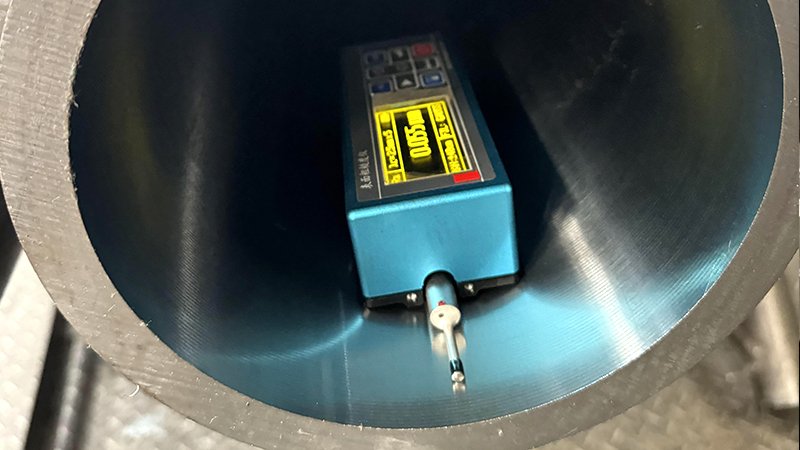
Ra is the arithmetic average roughness, the average deviation of the surface from its mean line over the measured length. It is simple, universally quoted, and genuinely useful as a first indicator, but it is only an average. It treats a surface with a few deep scratches the same as a surface with uniform gentle texture, as long as the average deviation works out the same. That averaging hides exactly the features that determine how a surface interacts with a seal.
Consider what a piston seal actually needs from a bore. It needs peaks that are not sharp and abrasive, because sharp peaks act like tiny cutting edges that wear the seal, and it needs valleys that retain a lubricating oil film, because that film separates the seal from the metal and prevents dry contact. A surface can have a perfectly acceptable Ra while having sharp peaks that shred seals, or while lacking the valleys needed to hold oil. Ra cannot distinguish these cases.
This is why relying on Ra alone leads to the paradox the engineer experienced. His lower-Ra competitor tube had sharper peaks that abraded the seal, while our slightly higher-Ra plateau-honed tube had smooth load-bearing plateaus and deep oil-retaining valleys that gave the seal a longer life. The number on the drawing did not tell the real story; the surface shape did.
What plateau honing actually does
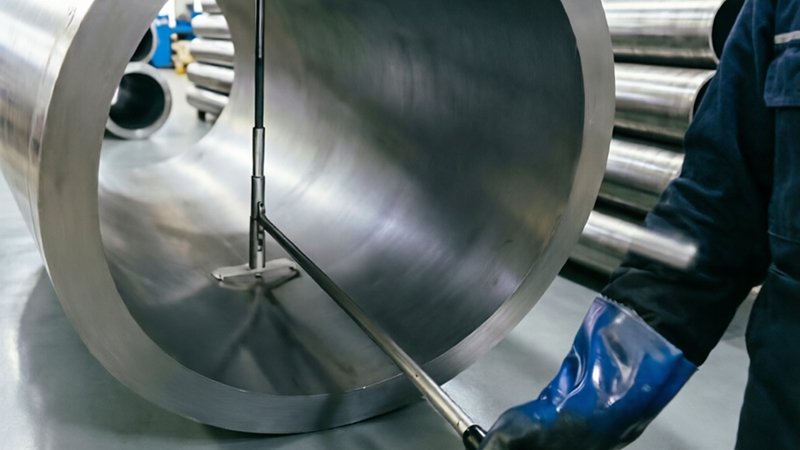
Plateau honing is a two-stage process designed to create a specific, favourable surface shape rather than just a low average roughness. The first stage is a coarser honing that cuts the deep, oil-retaining valleys and the cross-hatch pattern into the bore. The second stage is a finer honing that removes only the sharp tips of the peaks left by the first stage, flattening them into smooth plateaus while leaving the deep valleys intact.
The result is a surface with two distinct features working together: broad, smooth plateaus that carry the seal and provide a gentle bearing surface, and deep valleys between them that hold a reservoir of lubricating oil. The seal rides on the plateaus, protected by the oil film drawn from the valleys, so it sees low friction and low wear. This is a fundamentally better surface for sealing than a random rough finish of the same Ra, because it is engineered for its job.
The cross-hatch angle produced by the honing motion matters too, because it controls how oil is distributed and retained along the bore. A well-controlled cross-hatch, typically at a moderate angle, holds oil across the surface and helps the seal maintain a film as it strokes. Plateau honing preserves this cross-hatch in the valleys while removing the aggressive peaks, giving the best of both: oil retention and a gentle bearing surface.
The parameters that describe a plateau surface
To specify and verify a plateau-honed surface, engineers use parameters beyond Ra, and the most useful come from the material ratio, or bearing area, curve. This family of parameters, often written as Rk, Rpk, and Rvk, separates the surface into its functional zones. Rpk describes the height of the peaks that will wear away early in service, Rk describes the core roughness of the load-bearing plateaus, and Rvk describes the depth of the valleys that retain oil.
For a good plateau-honed bore, you want a low Rpk, meaning few sharp peaks to abrade the seal, a controlled Rk giving a stable bearing surface, and an adequate Rvk providing oil-retaining valleys. Specifying these values, rather than Ra alone, tells the manufacturer what surface shape you actually need and gives you a basis to verify it. It is the difference between describing the surface’s average height and describing its function.
The material ratio curve itself is worth understanding because it visualises this directly: it plots how much bearing area exists at each depth into the surface. A plateau-honed surface shows a characteristic shape with a quickly rising bearing area near the top, from the flat plateaus, and deep valleys below. Reading this curve, or its derived Rk parameters, tells you whether a surface will support a seal well long before you ever run a cylinder. It is the honest picture that Ra alone cannot give.
Specifying honed tube finish that seals and lasts
The practical lesson for specification is to move beyond a lone Ra value when seal life matters. Calling out a target for the functional parameters, a low Rpk to protect the seal and an adequate Rvk to retain oil, alongside the Ra, tells your tube supplier that you understand and require a plateau-honed surface. A supplier who can honing to and verify these parameters is one who can deliver consistent seal performance.
It also pays to specify the cross-hatch and to discuss the seal type in the same conversation, because the ideal surface depends on the seal. Softer elastomeric seals tolerate a rougher surface, while harder, low-friction seals demand smoother plateaus and cleaner valleys. Matching the plateau surface to the seal, rather than specifying a generic Ra, is what produces cylinders that seal reliably and last, which is the whole point of honing precisely in the first place.
Finally, treat surface finish as a functional requirement inspected on real tube, not a number copied from an old drawing. A supplier who measures the material ratio parameters and can show you the surface profile is proving that the bore is genuinely fit for sealing, not just nominally within an Ra band. When you specify the shape of the surface and not just its average, the paradox of the low-Ra tube that seals badly disappears, and you get bores that do exactly what your seals need.
Related Reading
- Honed Tube for Injection Molding Machine Clamping Cylinders: Precision and Repeatability at High Cycle Rates: https://eastai-tech.com/honed-tube-for-injection-molding-machine-clamping-cylinders-precision-and-repeatability-at-high-cycle-rates/
- Honed Tube for Crane and Lifting Equipment: Long-Stroke Straightness Requirements: https://eastai-tech.com/honed-tube-for-crane-and-lifting-equipment-long-stroke-straightness-requirements/
Specify the Surface, Not Just a Number
Seal life is decided by the shape of the bore, not by Ra alone. EAST AI has honed hydraulic tube since 2006, and we plateau hone to controlled functional parameters so your seals ride on smooth plateaus over oil-retaining valleys.
What we offer:
- Plateau-honed bore with low Rpk, controlled Rk, and adequate Rvk
- Consistent cross-hatch finish for reliable oil retention
- Surface profiles and material-ratio verification on request
- Technical support matching bore finish to your seal type and duty
Tell us your seal and we will hone the surface to suit it. Email: marketdi@east-ai.cn | Phone: +86 13382202696 Address: No. 108, Lunan Road, Wuxi, Jiangsu, China.
Written by Alex, Production Engineer at EAST AI