
Published: 2026-10-21 | Last Updated: 2026-10-21
More capability sounds like a safer choice. It isn’t, not when the extra capability comes with twice the sealing interfaces and no clear functional need behind it. A double rod end design — rod extending from both sides of the piston instead of one — should earn its place on specific functional grounds, not general caution.
What You Actually Get With a Second Rod End
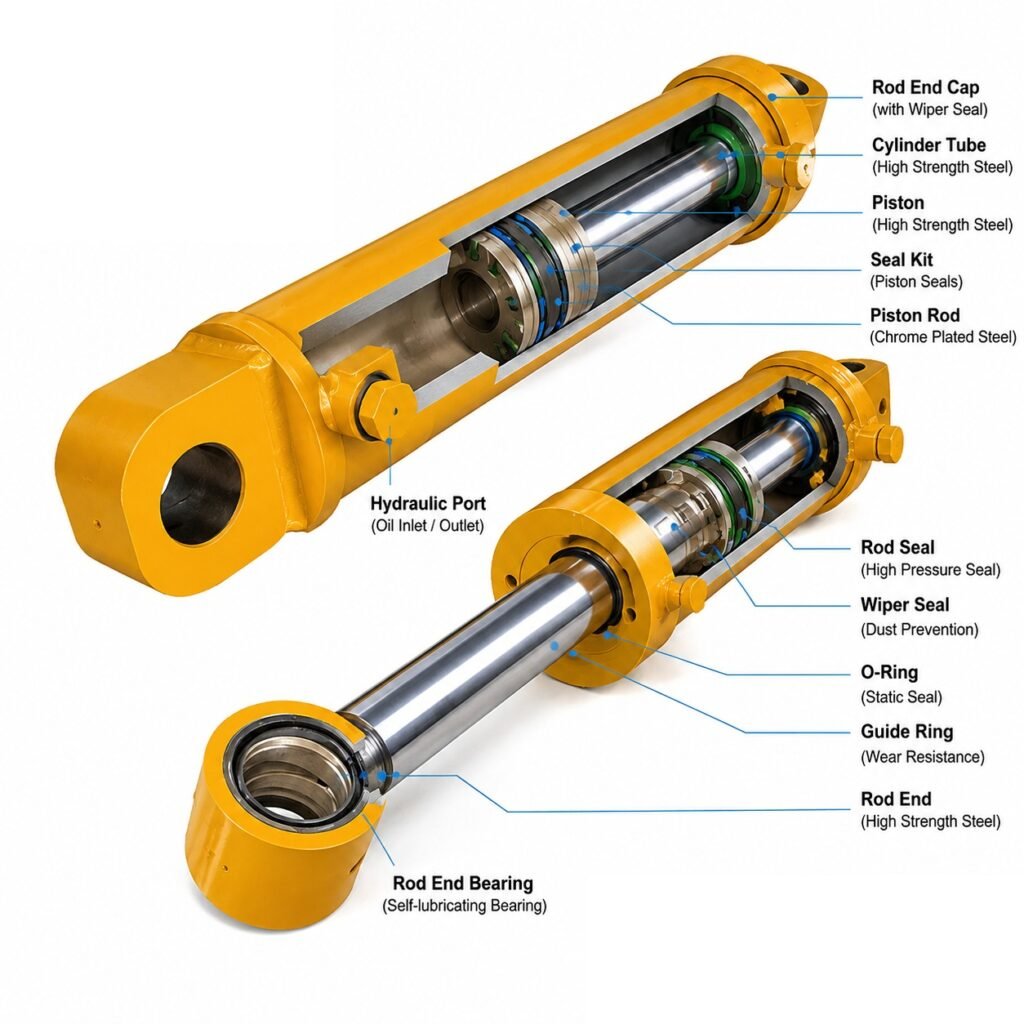
A double rod end cylinder provides equal effective piston area on both sides, useful for applications needing identical force and speed in both directions of travel. It also opens up the second rod end for mounting a position sensor, a mechanical linkage, or a synchronized connection to another mechanism, without touching the primary working end. A single rod design, by contrast, has unequal piston areas on each side because of the rod’s own cross-sectional area — producing different force and speed in extension versus retraction. Functionally irrelevant for many applications. Significant for ones requiring genuine symmetry.
When the Configuration Is Actually Justified
| Application Need | Double Rod End Relevance |
|---|---|
| Symmetric force and speed required in both directions | Directly addresses this — primary justification |
| Mount a position sensor without affecting the primary rod | Can justify it, though external mounting is often simpler |
| Mechanical synchronization linkage to another mechanism | Can be a genuine requirement |
| General preference for “more capability” | Does not justify the added cost |
The pattern is clear: double rod end designs earn their place with a specific, identifiable functional requirement. Not as a general-purpose upgrade without a concrete reason behind it.
The Cost Isn’t Just an Extra Rod
A double rod end cylinder needs rod seals and wiper seals at both ends instead of one — doubling the sealing interfaces that can leak or wear over the cylinder’s service life. Both ends of the barrel need to accommodate rod passage and sealing, adding manufacturing complexity. Weigh this real, ongoing reliability trade-off against the specific functional benefit actually gained. A design that doesn’t genuinely need symmetric performance or a functional second end is accepting this complexity for nothing in return.
External Sensing Often Does the Same Job More Simply
Wanting a double rod end primarily to make room for a position sensor, without touching the working end? An externally mounted linear position sensor — tracking cylinder position from outside the pressure boundary entirely — can achieve the same practical outcome, avoiding both the added sealing complexity and any internal design changes an integrated sensor would otherwise require. This matters specifically when position sensing, not genuine symmetric force, is the real driver behind the proposal.
Check Whether “Symmetric” Is Still True, or Just Inherited
An application specified as needing symmetric force and speed sometimes carries that requirement forward from an earlier design generation or a general template, without the current team confirming the current application genuinely still needs true symmetry. Revisit this assumption explicitly. A standard single rod design sometimes performs entirely adequately once someone actually checks, avoiding the added cost and complexity for a requirement that doesn’t hold up under closer examination.
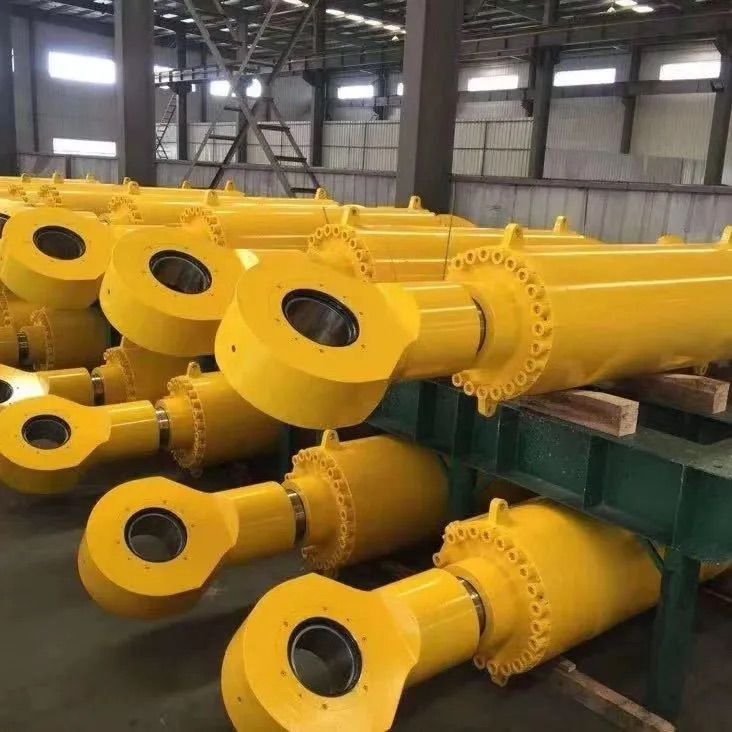
A double rod end cylinder’s mounting approach usually differs from a single rod end design, since the equipment needs to accommodate rod extension and connection at both ends. This has structural implications for the surrounding equipment that should be considered early, not resolved after the cylinder spec is already locked.
Both Rod Ends, Specification Questions Twice Over
A double rod end design needs chrome plated rod specification and verification for extension at both ends. If the two ends serve genuinely different functions — one primary working connection, one sensor mount or secondary linkage — their specification requirements might reasonably differ. Work through whether both ends genuinely need identical specification, or whether a lighter-duty requirement on a less demanding secondary end provides a more cost-effective overall design.
Seals Don’t Have to Match Just Because the Ends Look Similar
A double rod end’s two sealing locations don’t necessarily need identical seal specifications, particularly if one end faces a different environmental exposure or mechanical duty than the other — a primary working end exposed to the full external environment versus a secondary end serving a protected sensor mount, for instance. Evaluating each end’s actual exposure independently can reveal an opportunity to specify a lighter seal package on the less demanding end.
If the Secondary Function Disappears, Reconsider the Whole Design
A manufacturer who specified a double rod end to support a specific secondary function — a sensor mount, a linkage — should recognize that if a later revision eliminates that function, carrying the double rod end design forward out of inertia means keeping its added complexity with no functional benefit left to justify it. Revisit the decision whenever the secondary function changes or disappears.
Test It Before You Commit to Production Tooling
Because a double rod end design introduces more sealing interfaces and a less common configuration than most manufacturers’ standard platforms, building and testing a prototype under representative conditions before committing to production tooling confirms the design actually performs as intended — particularly around failure modes a team with mostly single rod end experience might not immediately anticipate. This matters most for a first double rod end design, less for a team with established experience in the configuration.
Pull In Assembly and Service Early, Not After the Fact
Design engineers evaluating a double rod end proposal benefit from input not just on the functional requirement but from whoever will actually assemble and later service the finished cylinder. A double rod end’s practical assembly sequence and field serviceability can differ meaningfully from a single rod end design in ways that aren’t obvious from a purely functional perspective. Involve these teams during design, not after the configuration is already finalized and in production.
Document why the double rod end was chosen — the specific functional requirement behind it. This costs little at the time and protects the design from being questioned or inadvertently simplified later by someone who sees only the added cost without the context that originally justified it.
The Mounting Implications Reach Beyond the Cylinder Itself
A double rod end design means the equipment needs to accommodate rod presence and movement at both ends, which has structural implications for the surrounding equipment that extend well past the cylinder’s own design. Involve the broader equipment design team in this decision early, rather than treating mounting and clearance as a detail to resolve after the cylinder specification is already finalized — a double rod end’s footprint and clearance needs are not something that bolts on cleanly after the fact if the surrounding structure wasn’t designed with it in mind from the start.

Why a First-Time Design Deserves a Longer Validation Runway
A design team with no prior double rod end experience should budget more time for prototype testing and design iteration than a team with an established track record in this configuration, since the failure modes a double-sealed, dual-end design can introduce aren’t always obvious to engineers whose intuition was built entirely around single rod end platforms. Treating a first double rod end project on the same validation timeline as a routine single rod end variant underestimates how much genuinely new ground is being covered, even when individual components — the rod, the tube, the seals — are each individually familiar and well understood.
Why Cost Modeling Should Compare the Full Lifecycle, Not Just the Initial Build Cost
Comparing a double rod end design against a single rod end alternative purely on initial manufacturing cost misses a meaningful part of the real comparison, since the double rod end’s additional sealing interfaces also mean more potential maintenance and seal replacement events over the product’s service life, each carrying its own labor and downtime cost for the end customer. An equipment manufacturer building a genuine cost comparison between the two configurations should model expected service life maintenance events alongside the initial build cost difference, since a design that looks only modestly more expensive to build can look considerably more expensive once the full service life maintenance burden of the additional sealing interfaces is factored into the comparison.
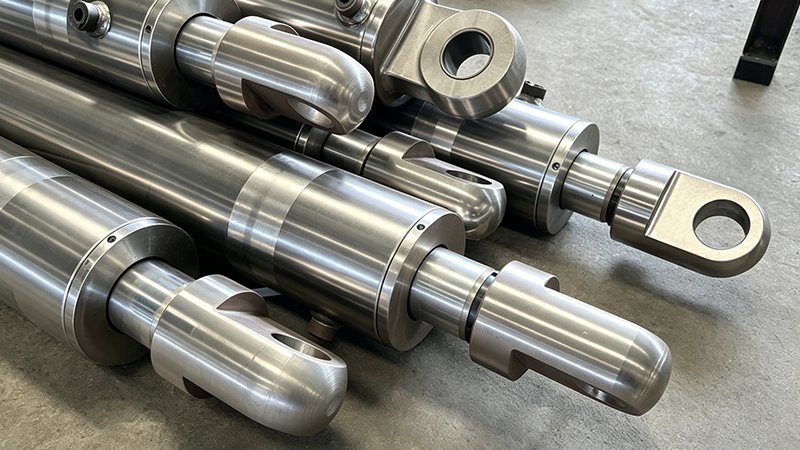
What a Competitor’s Use of Double Rod End Designs Should and Shouldn’t Tell You
Seeing a competitor’s product use a double rod end configuration on what appears to be a similar application can create pressure to match that design choice without independently verifying whether the competitor’s underlying functional requirement actually matches your own application’s needs. A competitor’s design choice reflects their own specific functional requirements, possibly including considerations not visible from the outside, and matching it without first confirming your own application genuinely has the same symmetric force or secondary function need risks importing someone else’s design complexity without importing the functional justification that made it the right choice for their specific product.
Why a Design Review Checklist Item for Rod End Configuration Prevents Default Assumptions
Building a specific checklist item into the standard design review process — explicitly asking whether a double rod end is justified by a documented functional requirement, rather than letting the configuration choice pass through review as an unquestioned assumption — catches cases where a double rod end was carried forward from a template or a prior design without anyone actually re-confirming the justification still applies. This kind of explicit checklist prompt costs almost nothing to implement and protects against a design configuration decision slipping through review simply because reviewers assumed someone earlier in the process had already confirmed the justification.
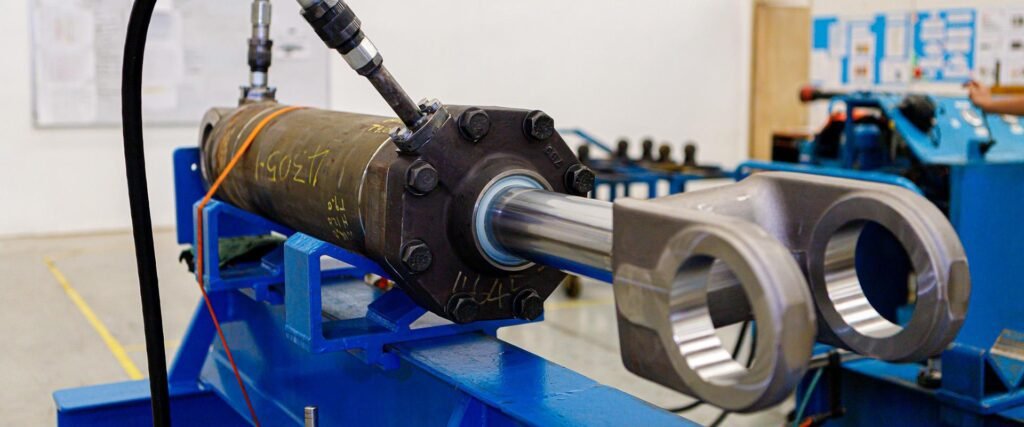
The Decision in One Line
A double rod end earns its place when a specific function needs it. It doesn’t earn its place as a default upgrade chosen out of general caution, and recognizing the difference is most of the decision.
Related Reading
- How Does a Hydraulic Cylinder Builder Decide What Rod End Configuration to Specify on New Chrome Plated Rod?
- How Should an Equipment Manufacturer Decide Whether a Hydraulic Cylinder Needs a Position Sensor Integrated Into the Design?
- How Should an Equipment Manufacturer Decide Whether a Hydraulic Cylinder Needs a Stop Tube on a Long-Stroke Design?
Discuss Whether Your Design Actually Needs a Double Rod End
Considering a double rod end configuration and want help confirming whether your application’s requirement justifies it? Contact our team to review your functional requirements and alternatives.
What We Offer
- Technical consultation on double rod end versus single rod end with external sensing alternatives
- Rod specification support for differentiated dual-end designs with different functional roles
- Prototype and validation testing support for first-time double rod end designs
- Honed tube and chrome plated rod supply matched to both primary and secondary rod end requirements
Contact EAST AI (eastai-tech.com) Email: marketdi@east-ai.cn Phone: +86 13382202696 Address: No. 108, Lunan Road, Wuxi, Jiangsu, China.
Written by Alex, Production Engineer at EAST AI