
Published: 2026-10-19 | Last Updated: 2026-10-19
An engineer designing a new hydraulic cylinder who defaults to adding an integrated position sensor because the end customer’s application sounds sophisticated, without working through whether the control system actually needs continuous position feedback or could function adequately with simpler end-of-stroke sensing, is adding cost and design complexity that may not be justified by the actual control requirement. Position sensing requirements split cleanly into a few categories, and matching the sensor type to the actual category needed avoids both under-specifying a system that needs real feedback and over-specifying one that doesn’t.
What Different Levels of Position Feedback Actually Provide
| Feedback Need | Typical Solution | Added Cost and Complexity |
|---|---|---|
| Simple end-of-stroke confirmation | Limit switches or proximity sensors at stroke ends | Low |
| Multi-position confirmation (not continuous) | Multiple discrete position switches along stroke | Low to moderate |
| Continuous position feedback for closed-loop control | Integrated linear position transducer (magnetostrictive, LVDT, or similar) | Moderate to high |
| High-precision continuous feedback for servo applications | High-resolution integrated transducer with fast update rate | High |
Why Continuous Feedback Is Necessary for Some Applications and Overkill for Others
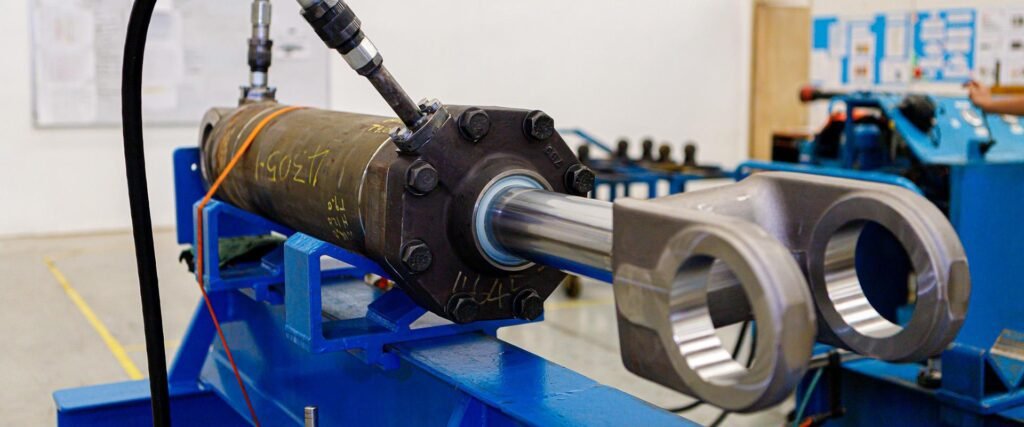
A cylinder controlling a simple two-position function — fully extended or fully retracted, with nothing meaningful happening in between from a control perspective — genuinely doesn’t benefit from continuous position feedback, because the control system never needs to know anything beyond “has it reached the end” at either extreme. A cylinder performing proportional positioning, where the control system needs to know and actively manage intermediate positions, cannot function as designed without continuous feedback, making an integrated transducer a functional requirement rather than an optional upgrade. The mistake in either direction — adding unnecessary continuous feedback to a simple two-position application, or omitting it from a true proportional positioning application — comes from not clearly identifying which category the actual control requirement falls into before specifying the cylinder.
How Integrated Sensing Affects Cylinder Design Beyond Just Adding a Part
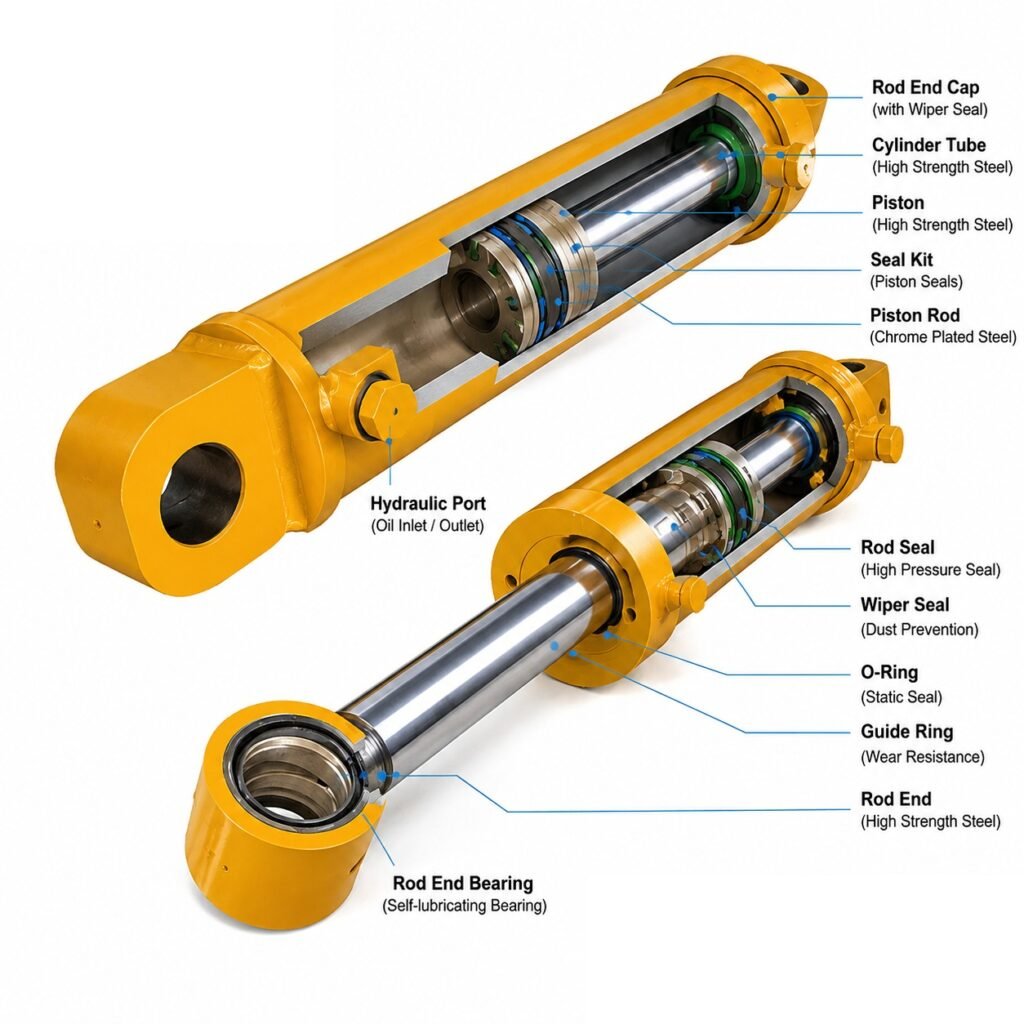
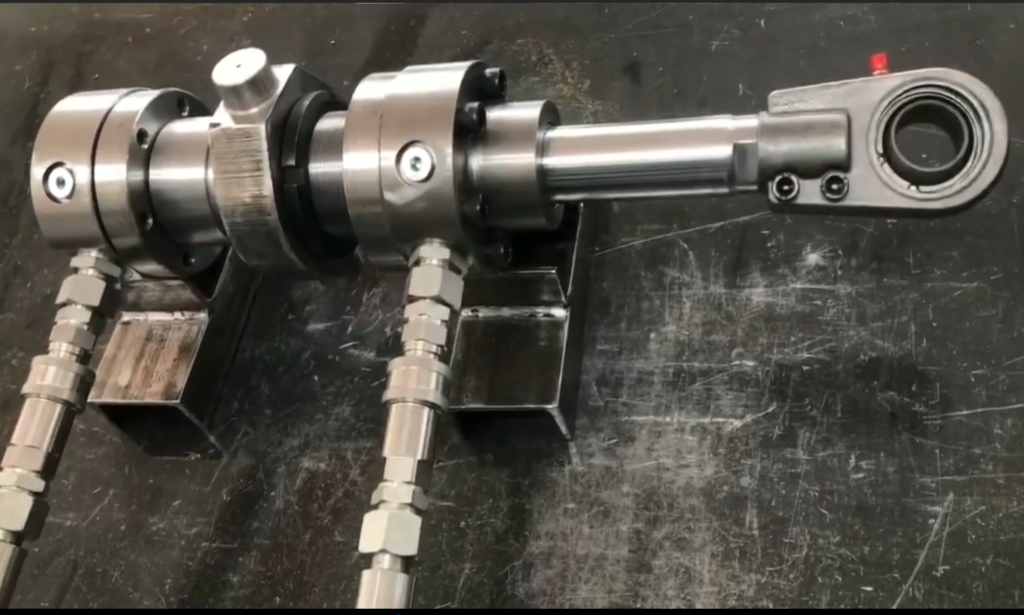
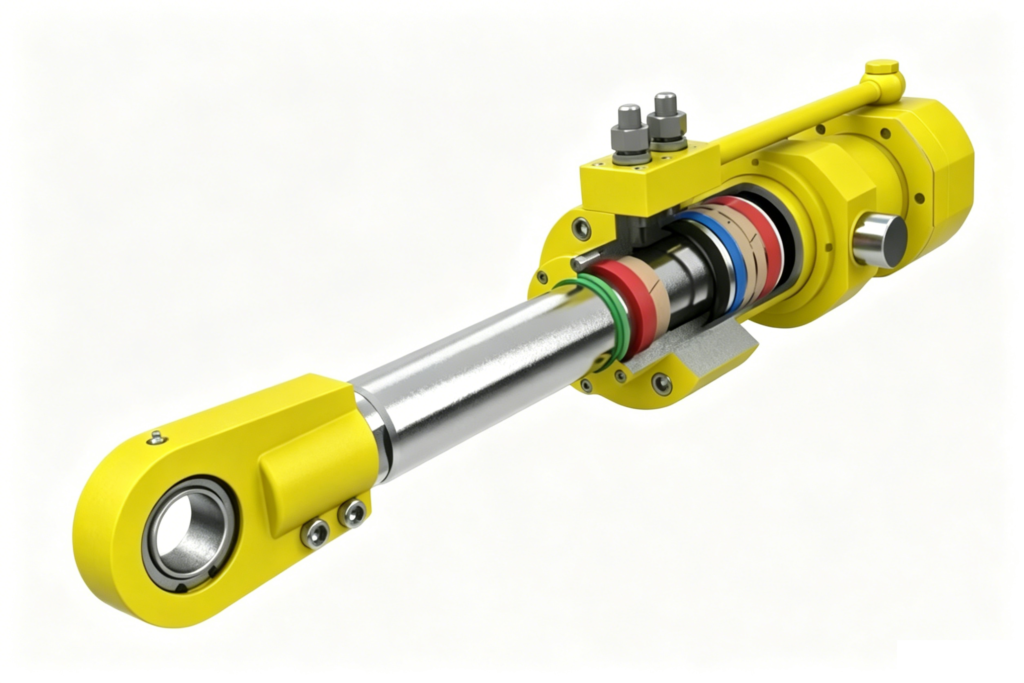
Integrating a position transducer isn’t simply bolting a sensor onto an otherwise unchanged cylinder — it typically requires a hollow rod or a sensor rod running through the piston, modified end cap design to accommodate sensor electronics and connectors, and careful attention to how the sensing mechanism interacts with the cylinder’s pressure boundary and seal arrangement. These design changes have knock-on effects for honed tube and chrome plated rod specification as well, since a hollow rod design changes the rod’s structural calculation compared to a solid rod of the same outer diameter, and the bore may need additional machined features to accommodate sensor mounting at the rod end.
Externally Mounted vs Internally Integrated Sensing Trade-Offs
An externally mounted linear sensor, tracking cylinder position from outside the pressure boundary rather than integrated inside the rod, avoids some of the internal design complexity described above but introduces its own considerations: exposure to the external environment (contamination, impact risk, weather), and a less rigid mechanical connection to the actual piston position compared to an internally integrated sensor reading the rod directly. Applications in harsh external environments often favor internal integration specifically to protect the sensor, while applications with easier access and lower environmental exposure may reasonably use external sensing to simplify the cylinder’s internal design and reduce cost.
Sensor Resolution and Update Rate: Matching to the Actual Control Loop
Beyond the basic decision of whether continuous feedback is needed at all, the required sensor resolution and update rate should match the actual control loop’s precision and speed requirements — a slow-moving, coarse-positioning application doesn’t need the same resolution and update rate as a fast servo-hydraulic positioning loop, and specifying beyond what the control system actually uses adds cost without improving real-world performance. This is a conversation that benefits from involving whoever is designing the control system alongside whoever is specifying the cylinder, since the cylinder designer alone may not have full visibility into what the control loop’s actual bandwidth and precision requirements are.
Planning for Sensor Integration Early in the Design Process
Because integrated position sensing affects rod and bore design decisions that are expensive to change late in a design cycle, determining the feedback requirement early — ideally before finalizing honed tube and chrome plated rod specifications — avoids costly redesign compared to discovering a sensing requirement after the base cylinder mechanical design is already locked in. A cylinder design that accounts for potential future sensor integration from the start, even if the initial product doesn’t require it, can also provide useful flexibility for future product variants that do need position feedback, without requiring a full mechanical redesign at that later point.
How Sensor Choice Interacts With Cylinder Sealing Strategy
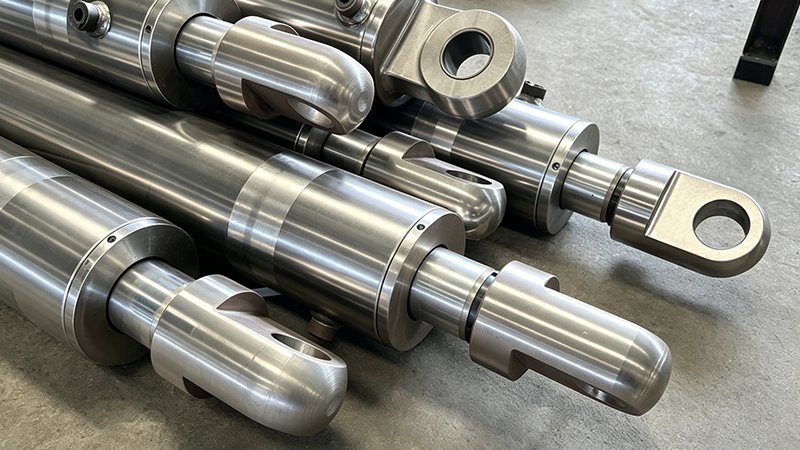
A hollow rod carrying an internal sensor element introduces an additional sealing interface — between the sensor housing and the rod bore — that doesn’t exist on a solid-rod cylinder, and this interface needs its own sealing strategy independent of the main piston and rod seals that handle the hydraulic pressure boundary. Engineers new to sensor-integrated cylinder design sometimes focus sealing attention entirely on the primary hydraulic seals while underspecifying the sensor interface seal, which can become a separate failure point — a small internal leak path around the sensor housing — that a design review focused only on the primary pressure boundary can miss. Treating the sensor interface as its own sealing zone requiring explicit design attention, rather than an afterthought bolted onto an otherwise complete sealing design, avoids this gap.
Why Retrofit Sensor Addition Is Harder Than Designing It in From the Start
An equipment manufacturer who ships a cylinder design without position sensing, then later needs to add it to an existing fielded design — because a customer’s control upgrade now requires feedback that wasn’t originally planned — faces a substantially harder problem than designing it in from the start, since the existing rod and bore geometry, seal arrangement, and end cap design were all finalized around a solid-rod, non-sensing configuration. Retrofitting typically means a genuinely new rod and possibly new bore machining rather than a simple addition, which is part of why the earlier recommendation to consider future sensor flexibility during initial design — even for a first product variant that doesn’t need it — pays off disproportionately if a sensing requirement does emerge later in that product line’s life, compared to treating the original design as sensor-incompatible by default.
Cost Comparison Across the Main Sensor Technology Options
Magnetostrictive sensors, LVDT-based sensors, and other linear position technologies differ meaningfully in cost, resolution, response speed, and environmental robustness, and the right choice depends on matching these characteristics to the actual application rather than defaulting to whichever technology a design team has used before. Magnetostrictive sensors generally offer strong resolution and robustness for integrated hydraulic cylinder applications and have become a common default for this reason, but engineers should still confirm that the specific resolution, update rate, and environmental rating match the application’s actual control loop requirements rather than assuming any integrated sensor technology automatically fits the need.
How Electrical Connector and Cable Routing Decisions Get Overlooked
The sensor element itself gets most of the design attention, but the electrical connector type, cable routing path, and strain relief at the connection point determine a meaningful share of real-world sensor reliability — a sensor with excellent specifications can still fail prematurely in service if the cable connection wasn’t designed to survive the vibration, flexing, and environmental exposure the actual application involves. Engineers specifying integrated position sensing should give the connector and cable routing design the same attention as the sensor element selection itself, particularly for mobile equipment applications where cylinder movement and machine vibration put real mechanical stress on cable connections that a stationary industrial application wouldn’t experience to the same degree.
Why Testing the Complete Sensing System, Not Just the Sensor Component, Matters
Validating a new sensor-integrated cylinder design should test the complete assembled system — sensor, cylinder, cabling, and the actual control system reading the signal — under representative operating conditions, rather than validating the sensor component in isolation on a test bench and assuming the complete system will perform identically once integrated. Interaction effects between the sensor, the hydraulic fluid, electromagnetic interference from nearby equipment, and thermal cycling in the actual application environment can all affect real-world sensor performance in ways that isolated component testing doesn’t reveal, which is why a full prototype validation cycle under realistic conditions remains an important step even when every individual component has been separately validated to its own specification.
Weighing Sensor Integration Cost Against the Value of the Feedback It Provides
The ultimate decision on integrated sensing should return to a straightforward cost-benefit framing: what does the application actually gain from continuous position feedback, in terms of control precision, process quality, or functionality the end customer values, against what the integration genuinely costs in component price, design complexity, and potential new failure points. An engineer who can articulate this trade-off clearly to the rest of the design team — rather than treating sensor integration as an assumed default or an automatic exclusion — makes a more defensible specification decision, one that holds up under later scrutiny if a cost reduction review or a field performance question eventually revisits why the cylinder was designed the way it was.
Why Supplier Input Early in the Decision Pays Off
A honed tube and chrome plated rod supplier with experience across many sensor-integrated cylinder designs has practical knowledge about which hollow rod and bore configurations have worked well and which have caused downstream problems, and bringing that supplier into the sensing decision early — rather than finalizing the mechanical design in isolation and presenting it as a fixed specification — often surfaces practical considerations an engineering team focused primarily on the control system side might not anticipate. This collaborative approach tends to produce a more manufacturable and reliable final design than treating the component supplier purely as an order-taker for a specification handed down without input.
How a Product Line Strategy Can Simplify This Decision Across Multiple Variants
An equipment manufacturer offering both a sensed and a non-sensed variant of the same base cylinder platform benefits from designing the base mechanical platform to accommodate sensing from the start, even on the variant that ships without it, rather than maintaining two genuinely separate mechanical designs that diverge at the rod and bore level. This shared-platform approach trades a small upfront design cost on the non-sensed variant for substantially simplified tooling, inventory, and supply chain management across the product line, since both variants can draw from largely the same honed tube and chrome plated rod specifications rather than requiring the OEM to qualify and stock two distinct component sets for what is otherwise the same cylinder.
Related Reading
- How Should an Equipment Manufacturer Decide Whether a Hydraulic Cylinder Needs Cushioning at All?
- Hydraulic Cylinder Dynamic Seal Friction: Breakout Force and Why It Matters More Than Steady-State Friction
- How Does a Hydraulic Cylinder Builder Decide What Rod End Configuration to Specify on New Chrome Plated Rod?
Discuss Position Sensing Requirements for a New Cylinder Design
Working through whether your next cylinder design needs integrated position feedback? Contact our team to discuss how sensing requirements affect rod and bore specification.
What We Offer
- Hollow rod and sensor-compatible honed tube and chrome plated rod specification support
- Technical consultation on matching sensor type to actual control loop requirements
- Design support for both internally integrated and externally mounted sensing arrangements
- Early-stage design input to avoid costly late-cycle rod and bore redesign
Contact EAST AI (eastai-tech.com) Email: marketdi@east-ai.cn Phone: +86 13382202696 Address: No. 108, Lunan Road, Wuxi, Jiangsu, China.
Written by Alex, Production Engineer at EAST AI