
A crane builder once rejected a shipment of long chrome plated rod as “bent,” while the supplier insisted every rod met the straightness specification. Both were partly right, and the dispute came down to something neither had pinned down: how straightness was defined and measured. The supplier had measured a local deviation over a short length; the builder cared about the total bow over the full length. They were measuring different things and calling both “straightness,” and until they agreed on a definition, no amount of argument could resolve it. Straightness is only meaningful when everyone measures it the same way.
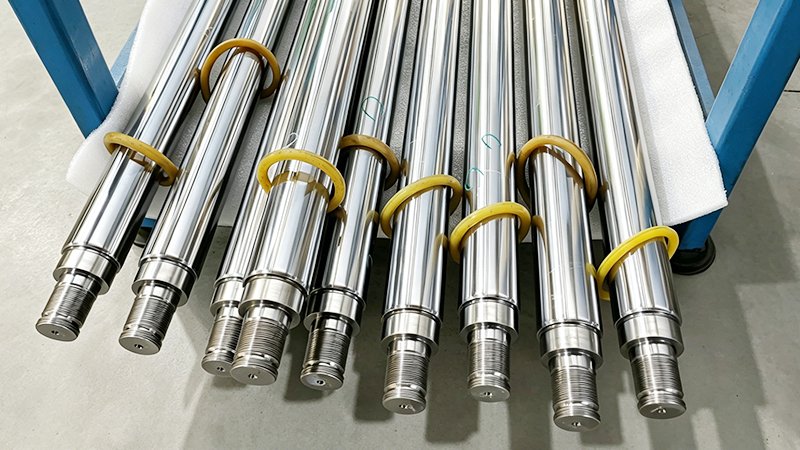
Straightness is one of the most important properties of chrome plated rod, especially for long-stroke applications, yet it is also one of the most loosely specified and most often disputed. A rod that is too far from straight causes side loading, uneven seal wear, and in extreme cases interference in the bore. For engineers and senior buyers, understanding how straightness is defined, measured, and specified is essential to avoiding disputes and, more importantly, to getting rod that performs.
What straightness actually means
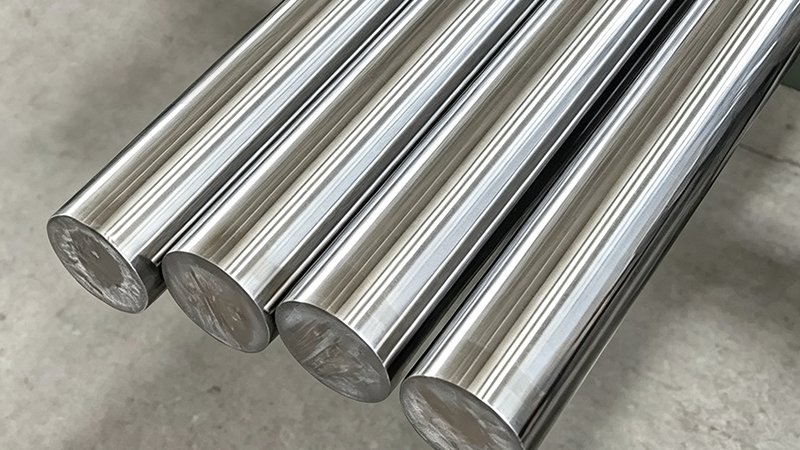
Straightness describes how much a rod deviates from a perfectly straight line, but that simple idea hides an important choice: deviation measured over what length. The most common and useful way to express it for hydraulic rod is as a maximum deviation per unit length, for example a certain number of millimeters of bow per meter or per 1000 millimeters of rod. This normalises the measurement so that rods of different lengths can be compared on the same basis.
The subtlety, and the source of the crane builder’s dispute, is the difference between local and total straightness. A local straightness figure limits the bow over any short length of the rod, catching sharp kinks, while a total straightness figure limits the overall bow across the entire rod length. A rod can meet a per-meter local specification everywhere yet still accumulate a large total bow over a long length if the small deviations all curve the same way, which is exactly what can make a long rod look bent while technically meeting a local spec.
For this reason, a complete straightness specification often needs to address both: a limit on local deviation to prevent kinks, and, for long rods, a limit on total deviation to control overall bow. Specifying only one leaves the other uncontrolled, and which one matters most depends on the application. A long-stroke cylinder is sensitive to total bow, so for such rods the total straightness over the full length is the figure that governs performance.
How straightness is measured
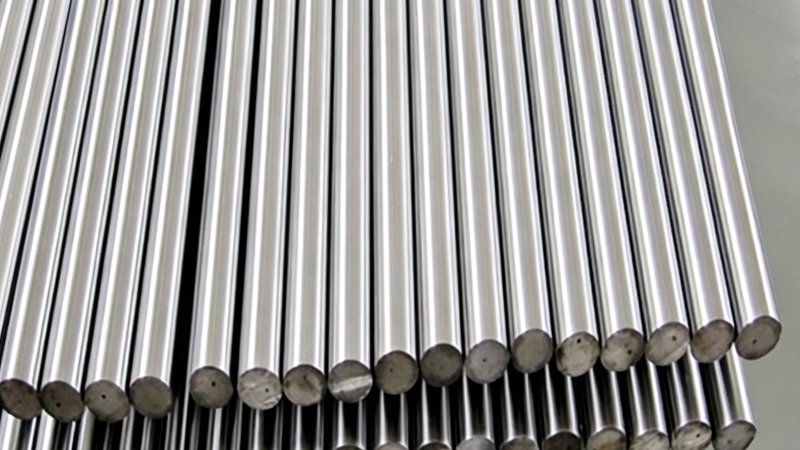
The classic method of measuring rod straightness is with vee-blocks and a dial indicator. The rod is supported on two vee-blocks and rotated, and a dial indicator bearing on the surface reads the total runout, which for a round rod relates directly to its bow at that point. Taking readings along the length maps the rod’s straightness and reveals both local deviations and the overall shape. It is a simple, widely available, and reliable method for most rod.
Support conditions during measurement matter enormously, and this is a common source of measurement error and dispute. A long rod supported at only two points will sag under its own weight, adding an apparent bow that is not a property of the rod itself, so the number of support points and their spacing affect the reading. To measure the rod’s true straightness rather than its gravitational sag, long rods need multiple, appropriately spaced supports, and the measurement method should be agreed between supplier and buyer so both measure the same way.
For higher precision or automated measurement, optical and laser methods are used, projecting a straight reference line along the rod and measuring deviation from it. These methods can measure straightness quickly and without the rod-handling variability of vee-blocks, and they are common in production settings. Whatever the method, the key for avoiding disputes is that the supplier and buyer agree on the technique, the support conditions, and whether local, total, or both are being measured, so that a rod measured as straight by one is measured as straight by the other.
Why long rods bow
Understanding why rods deviate from straight helps in both specifying and handling them. As discussed in the context of residual stress, chrome plated rod carries internal stresses from the drawing and straightening of its base bar, and these can cause a rod to move over time or when it is cut or machined. A rod that leaves the plant straight can develop a bow later as those stresses redistribute, particularly in long, slender rods that are more flexible and more sensitive to any imbalance.
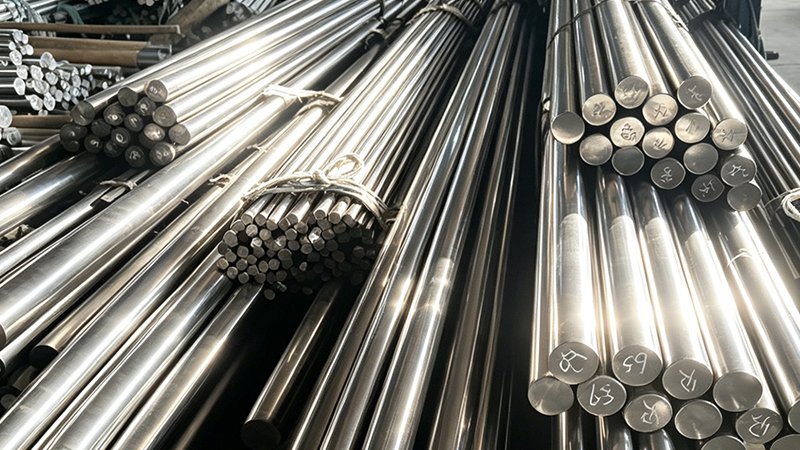
Gravity and handling are the other major causes, and they act most on long, slender rods. A long rod stored unsupported, leaned in a corner, or supported at too few points will slowly take a permanent set under its own weight, because the sustained bending stress causes the steel to creep into a curved shape. This is why storage and handling practices, keeping long rods well supported and horizontal, are as important to straightness as the manufacturing, and why a rod can arrive straight yet bow in the customer’s own racks.
The slenderness of the rod ties all this together: the longer and thinner the rod relative to its diameter, the more any residual stress, handling load, or gravitational sag translates into visible bow. This is why long-stroke rods are the ones where straightness is most critical and most fragile, and why the same absolute deviation that is trivial on a short, thick rod is serious on a long, slender one. Specifying straightness appropriately for the rod’s length-to-diameter ratio reflects this physical reality.
Specifying straightness that avoids disputes
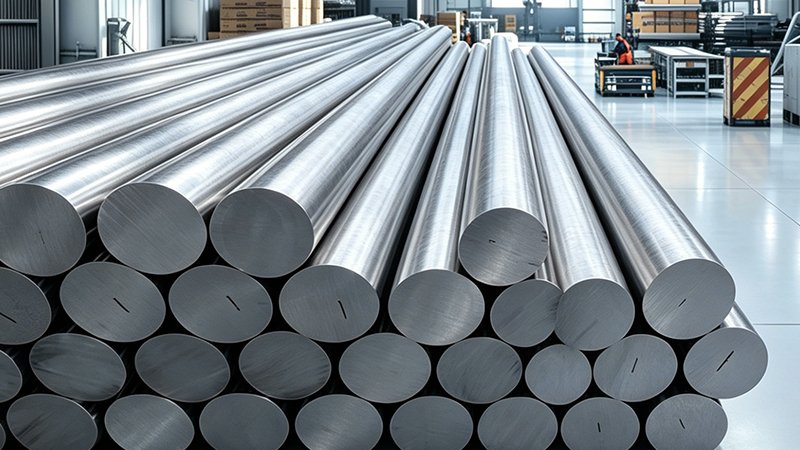
The practical conclusion is to specify straightness precisely and completely, leaving no room for the definitional dispute that caught the crane builder. State the straightness as a maximum deviation per unit length, specify whether it is local, total, or both, and for long rods give the total deviation over the full length that the application can tolerate. This turns straightness from a vague adjective into a measurable, enforceable requirement.
Just as importantly, agree the measurement method and support conditions with the supplier, because a specification is only meaningful if both parties measure it the same way. Documenting that straightness is measured on vee-blocks with a defined support arrangement, or by a laser method, and that it is checked in a specified way, removes the ambiguity that leads to rejected shipments. When the definition and the method are pinned down, a rod that passes at the supplier passes at the customer.
Finally, match the straightness requirement to the application rather than over-specifying every rod. A short, robust rod for a low-side-load cylinder does not need the tight total straightness of a long crane rod, and demanding it everywhere adds cost without benefit. Specifying tight straightness where it matters, for long-stroke and side-load-sensitive rods, and relaxing it where it does not, gives you performance where you need it and value everywhere else. That is the mark of a well-engineered specification.
Related Reading
- Chrome Plated Rod for Truck-Mounted and Crawler Cranes: Long-Stroke Straightness and Bending Resistance: https://eastai-tech.com/chrome-plated-rod-for-truck-mounted-and-crawler-cranes-long-stroke-straightness-and-bending-resistance/
- Chrome Plated Rod Diameter Tolerance: f7 vs f8 vs g6, How to Choose the Right Fit: https://eastai-tech.com/chrome-plated-rod-diameter-tolerance-f7-vs-f8-vs-g6-how-to-choose-the-right-fit/
Straightness You Can Agree On
Straightness disputes vanish when the definition and measurement are pinned down. EAST AI has plated and straightened hydraulic rod since 2006, and we specify and measure straightness clearly so the rod that passes at our plant passes at yours.
What we offer:
- Chrome plated rod with specified local and total straightness
- Defined measurement method and support conditions for repeatable results
- Tight straightness for long-stroke and side-load-sensitive rods
- Technical support matching straightness requirements to your application
Send us your stroke and straightness needs, and we will spec rod to suit. Email: marketdi@east-ai.cn | Phone: +86 13382202696 Address: No. 108, Lunan Road, Wuxi, Jiangsu, China.
Written by Alex, Production Engineer at EAST AI