
Published: 2026-10-20 | Last Updated: 2026-10-20
An engineer reviewing chrome plating options for a new rod design occasionally encounters a dual-layer plating proposal — a nickel underlayer beneath the chrome, rather than chrome plated directly onto the base steel — and has to decide whether the added process complexity and cost is justified for the application, or whether it’s a solution to a corrosion problem the design doesn’t actually have. The decision comes down to the specific corrosion environment and service life expectation, not a general sense that more layers must mean better protection.
What Each Plating Approach Actually Provides
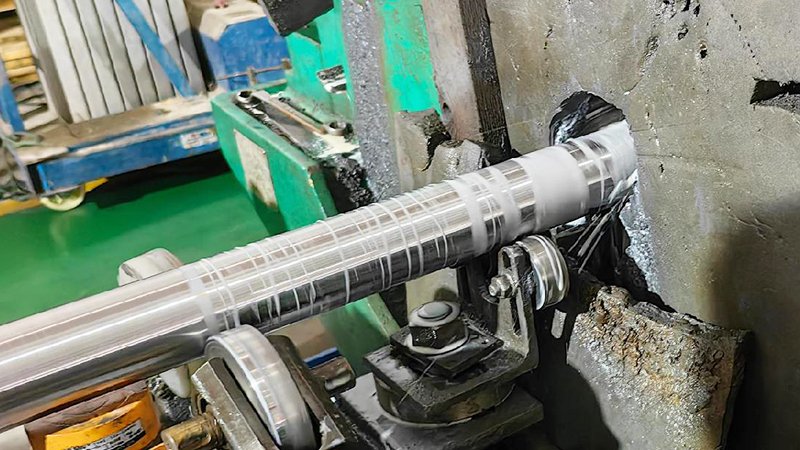
A single-layer chrome plating applied directly to properly prepared base steel provides good wear resistance and reasonable corrosion protection for most standard industrial and mobile equipment environments, relying on the chrome layer’s own hardness and the quality of the base steel preparation beneath it. A dual-layer system with a nickel underlayer beneath the chrome adds a corrosion-resistant barrier layer that provides additional protection specifically against corrosive attack reaching the base steel through microporosity in the chrome layer, which chrome plating inherently has at a microscopic level regardless of plating quality.
Comparing the Two Approaches Across Key Decision Factors
| Factor | Single-Layer Chrome | Dual-Layer (Nickel + Chrome) |
|---|---|---|
| Wear resistance | Excellent — chrome surface hardness drives this | Equivalent — same chrome surface, same wear performance |
| Corrosion protection in standard environments | Good, adequate for most applications | Better, but often more than standard environments need |
| Corrosion protection in aggressive/corrosive environments | May be insufficient over extended service life | Meaningfully improved barrier protection |
| Process cost and lead time | Lower | Higher — additional plating step and process control |
| Typical application fit | Standard industrial, mobile equipment, moderate exposure | Marine, chemical processing, extended outdoor exposure, washdown environments |
The wear resistance is essentially identical between the two approaches since both present the same chrome surface to the mating seal — the decision is specifically about corrosion protection margin, not wear performance, which is a distinction some specification discussions lose track of.
Why Chrome Plating’s Inherent Microporosity Is the Real Issue Dual-Layer Addresses
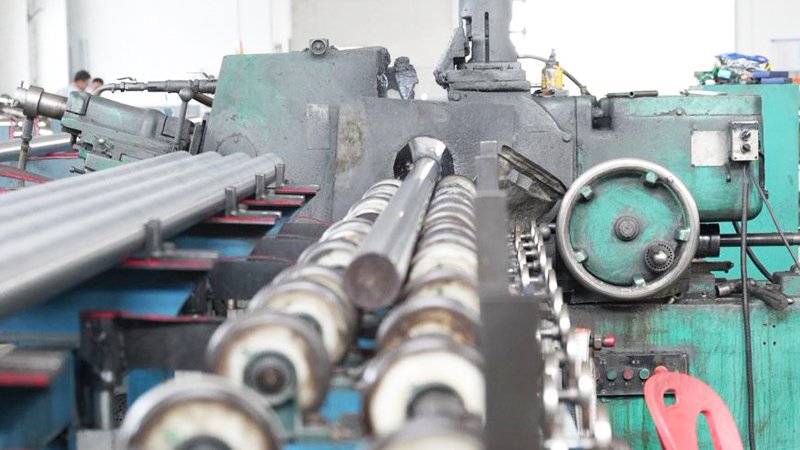
Chrome plating, even when applied with excellent process control, has a degree of microporosity at the microscopic level that can provide a path for corrosive media to reach the base steel underneath over time, particularly in environments with aggressive chemical exposure or prolonged moisture contact. A nickel underlayer doesn’t eliminate this microporosity in the chrome layer itself, but it provides a second barrier that corrosive media has to penetrate before reaching the base steel, meaningfully extending the time before corrosion actually reaches a point that compromises the rod — this is a probabilistic protection improvement, not an absolute guarantee against corrosion under any condition.
How to Determine Whether a Specific Application’s Corrosion Environment Justifies Dual-Layer
Applications involving marine exposure, chemical processing environments, frequent washdown with cleaning chemicals, or extended outdoor service in humid or coastal climates represent the kind of sustained corrosive exposure where dual-layer protection’s additional cost is more likely to be justified by meaningfully extended service life. Applications in standard indoor industrial environments, typical mobile equipment duty with normal weather exposure, or shorter expected service life before planned replacement are less likely to see enough practical benefit from dual-layer plating to justify its added cost — the corrosion environment, not a general preference for “better” protection, should drive this decision.
Why Expected Service Life Interacts With the Corrosion Protection Decision
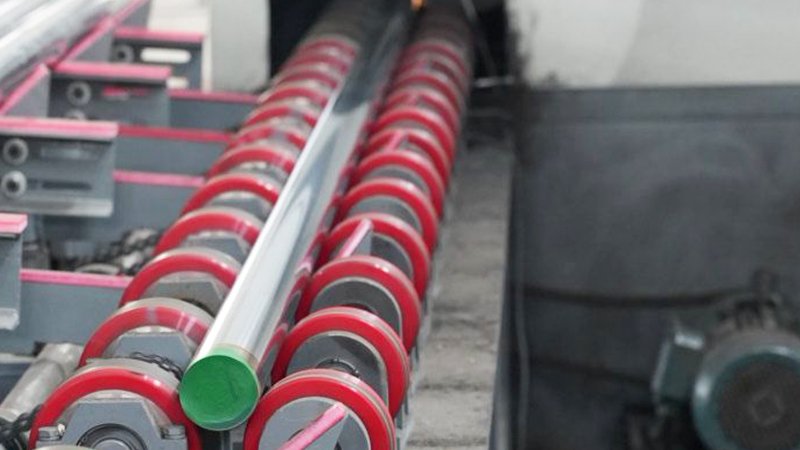
A rod expected to remain in service for only a few years before a planned equipment overhaul or replacement has less time for microporosity-driven corrosion to actually become a problem, compared to a rod expected to remain in service for a decade or more under the same corrosion exposure. An engineer should weigh the dual-layer decision against the application’s actual expected service life, not just its corrosion environment in isolation, since a short expected service life can make single-layer chrome adequate even in an environment that would eventually show a corrosion problem on a longer-lived application.
How Base Steel Selection Interacts With the Plating Layer Decision
A rod’s corrosion resistance depends on both the plating approach and the base steel grade beneath it, and in some cases improving the base steel’s own corrosion resistance — through alloy selection or a different heat treatment — can achieve a meaningful improvement in overall corrosion performance at lower cost than adding a dual-layer plating system. Evaluating base steel grade alongside the plating layer decision, rather than treating plating as the only lever available for improving corrosion performance, sometimes reveals a more cost-effective path to the actual protection level the application needs.
Why Plating Thickness Still Matters Independently of the Layer Structure Decision
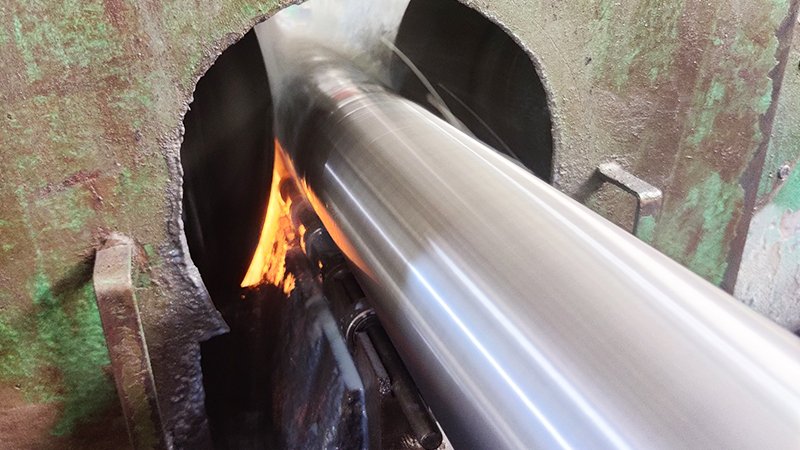
Choosing between single-layer and dual-layer plating is a separate decision from specifying adequate chrome plating thickness, and a dual-layer system with inadequate chrome thickness on top doesn’t automatically outperform a well-executed single-layer system with properly specified thickness — the two decisions, layer structure and plating thickness, both need to be addressed rather than assuming one compensates for underspecifying the other. An engineer who adds a nickel underlayer but doesn’t separately verify the chrome layer thickness is still adequate for the application’s wear requirement hasn’t actually solved the complete specification problem, since wear resistance and corrosion resistance both need their own adequate specification.
What Dual-Layer Plating Means for Lead Time and Supplier Selection
Not every chrome plating supplier offers dual-layer processing as a standard capability, since it requires additional process control, equipment, and quality verification beyond standard single-layer chrome plating — which means specifying dual-layer plating can narrow the available supplier base and potentially extend lead time compared to a standard single-layer specification that more suppliers can readily provide. Confirming a specific supplier’s actual dual-layer plating capability and quality track record before committing a design to that specification avoids discovering a sourcing constraint only after the design has already been finalized around an assumption that any chrome plating supplier can provide it.
How to Validate the Decision Through Accelerated Corrosion Testing Rather Than Assumption
For a new design in a genuinely uncertain corrosion environment, accelerated corrosion testing — comparing single-layer and dual-layer samples under a standardized salt spray or cyclic corrosion test protocol — gives an engineer actual comparative data specific to the application’s conditions, rather than relying entirely on general industry guidance about which environments justify dual-layer protection. This kind of validation testing is a worthwhile investment specifically when the corrosion environment is genuinely borderline between justifying single-layer and dual-layer protection, since it replaces an uncertain judgment call with actual comparative performance data for the specific conditions involved.
Why Field History From Similar Applications Is Often the Most Practical Decision Input
An equipment manufacturer facing a genuinely uncertain plating structure decision for a new application often has the most relevant data sitting in their own field service and warranty records from similar prior applications, if those records have tracked corrosion-related failures with enough detail to distinguish plating-related corrosion from other failure modes. Reviewing field history from the closest comparable prior application — even if it wasn’t an exact match in corrosion exposure — often provides more directly useful decision input than general industry guidance alone, since it reflects the equipment manufacturer’s own actual field conditions rather than a generic environmental category that may not precisely describe how the equipment is actually used and maintained in the field.
How Maintenance Practices in the Field Interact With the Plating Structure Decision
A rod’s actual corrosion exposure depends not just on the nominal operating environment but on how well field maintenance practices protect it — regular cleaning, proper storage during idle periods, and prompt attention to any coating damage all extend effective corrosion life regardless of which plating structure was specified. An equipment manufacturer whose end customers have historically maintained equipment well might reasonably accept single-layer plating in a borderline environment that would otherwise justify dual-layer protection for a less diligently maintained fleet — though relying on this assumption carries real risk if the equipment manufacturer doesn’t have strong visibility into actual field maintenance practices across their full customer base, since specifying for optimistic maintenance behavior that doesn’t actually occur transfers the risk onto the customer experiencing premature corrosion.
Why This Decision Should Be Documented as Part of the Design Record
Whatever conclusion an engineering team reaches on single-layer versus dual-layer plating for a specific application, documenting the reasoning — the corrosion environment assessment, the expected service life, and any supporting test data — creates a reference that protects against the decision being second-guessed or silently reversed by someone without the original context during a later design revision or cost reduction review. A design decision made with good technical reasoning but never written down is vulnerable to being overturned by a future team member who sees only the added cost of dual-layer plating without access to the original corrosion analysis that justified it, which is a preventable loss of institutional knowledge that a short documented rationale avoids entirely.
Why a Mid-Life Plating Upgrade Is Sometimes a Reasonable Alternative to an Upfront Dual-Layer Decision
For a product line where the corrosion environment is uncertain at launch, some equipment manufacturers start with single-layer plating and plan to evaluate a shift to dual-layer protection based on actual field corrosion data collected after the product has been in service for a meaningful period, rather than committing to the more expensive option before real-world performance data exists. This phased approach trades some early-life risk for better-informed later decision-making, and works best when the equipment manufacturer has a genuine mechanism for collecting field corrosion data and a product platform flexible enough to incorporate a plating change without a full redesign — it’s not the right approach for every situation, particularly where early corrosion failure would be unacceptable regardless of how useful the resulting data might be.
Related Reading
- How Should a Cylinder Builder Decide How Much Chrome Thickness Is Actually Needed?
- How Should an Equipment Manufacturer Decide Whether Chrome Plated Rod Needs Post-Plating Grinding?
- Why Does the Same Chrome Plated Rod Specification Perform Differently Across Two Suppliers With Identical Paper Specs?
Discuss Plating Structure for a Corrosive Service Environment
Specifying chrome plated rod for a demanding corrosion environment and weighing single-layer versus dual-layer protection? Contact our team to review your application’s exposure and service life needs.
What We Offer
- Technical guidance comparing single-layer and dual-layer chrome plating for specific corrosion environments
- Dual-layer nickel-chrome plating capability for marine, chemical, and washdown applications
- Base steel grade consultation as a complementary lever alongside plating structure decisions
- Accelerated corrosion test support to validate plating structure decisions with real comparative data
Contact EAST AI (eastai-tech.com) Email: marketdi@east-ai.cn Phone: +86 13382202696 Address: No. 108, Lunan Road, Wuxi, Jiangsu, China.
Written by Alex, Production Engineer at EAST AI