
Published: 2026-10-16 | Last Updated: 2026-10-16
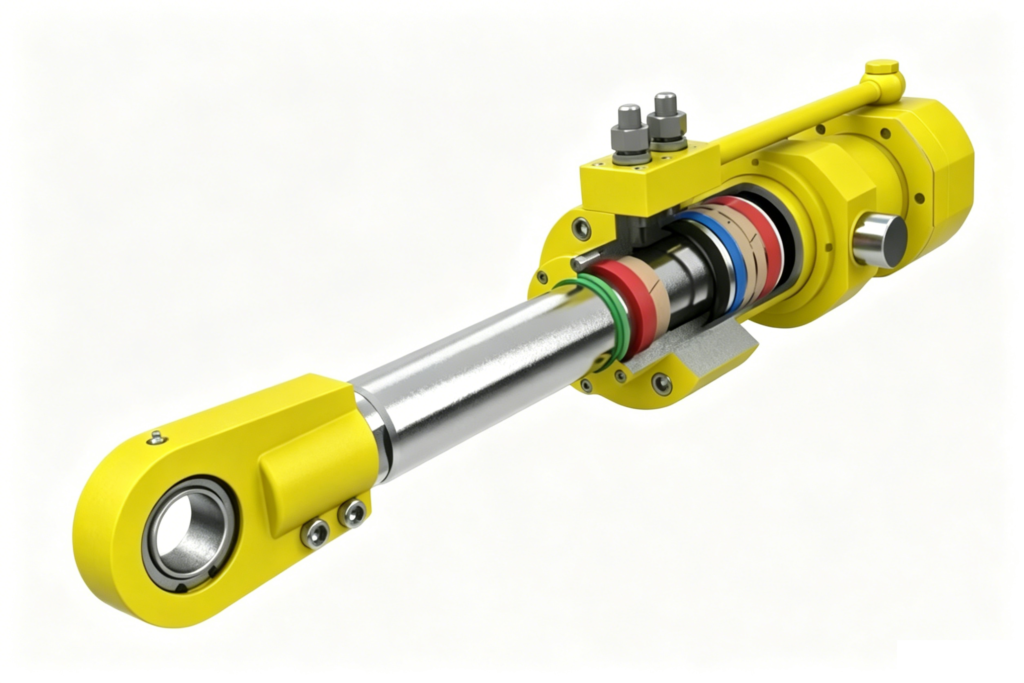
An engineer finalizing a new hydraulic cylinder design who selects rod seal material based on whatever the previous design used, without reconsidering whether that material actually fits this application’s temperature range, fluid type, and pressure profile, is carrying forward a decision that may not transfer. Seal material selection is one of the most consequential and most frequently defaulted decisions in a cylinder design, because a seal that’s wrong for the application fails in ways that look like a bore or rod quality problem but actually trace back to a mismatched polymer.
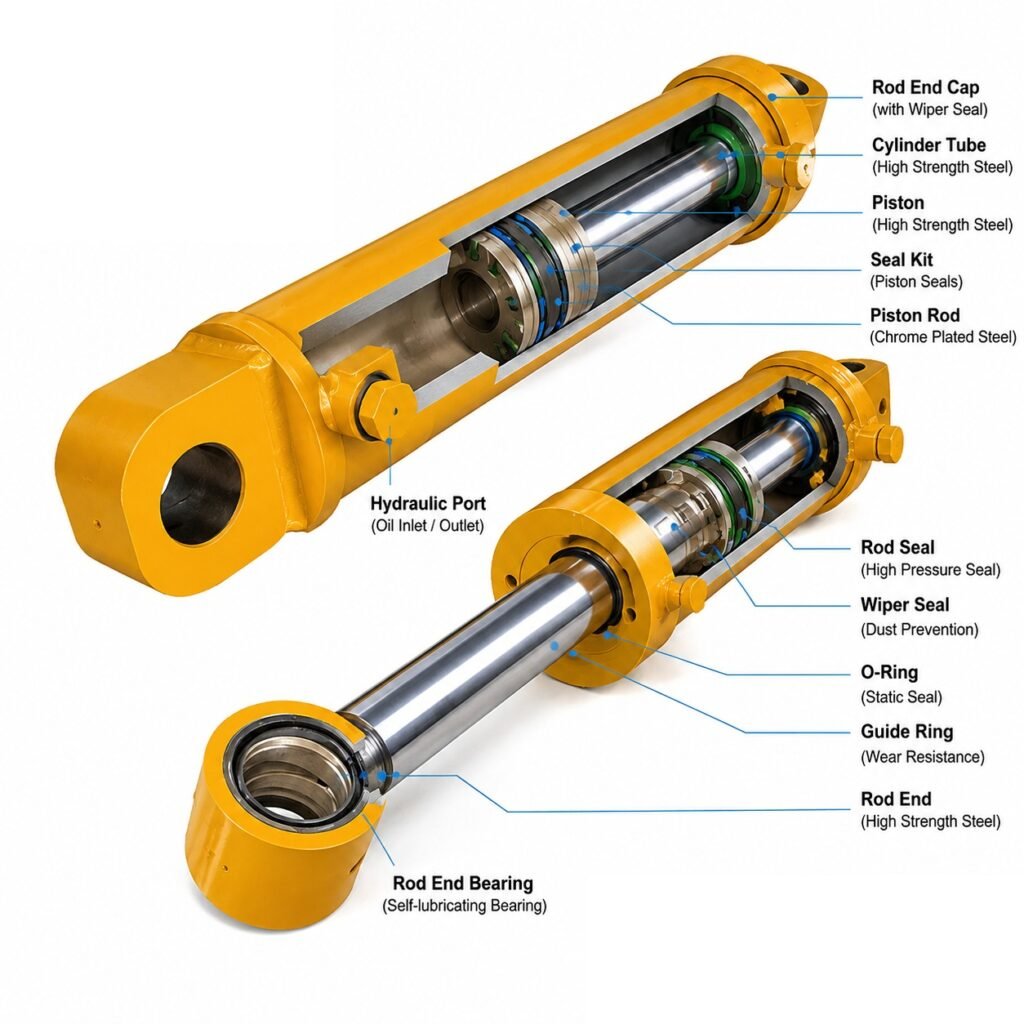
Nitrile (NBR) seals remain the default for standard mineral oil hydraulic systems at moderate temperatures, and for good reason — they’re cost-effective and perform reliably across the temperature and pressure range most general industrial and mobile equipment applications operate within. The mistake is assuming NBR’s broad applicability means it’s appropriate for every application, when temperature extremes, fluid compatibility, or abrasive contamination can each independently push a design outside NBR’s comfortable operating window.
High-temperature applications — equipment operating in foundries, near engines, or in high-ambient environments — need polyurethane or fluorocarbon (FKM) seals that maintain their sealing properties and wear resistance at temperatures where NBR starts to degrade and lose elasticity. Using NBR in a high-temperature application doesn’t cause immediate failure; it causes accelerated degradation that shows up as seal leakage months earlier than the design life would suggest, and that failure pattern often gets misdiagnosed as a bore finish or rod surface problem because the actual cause — seal material heat degradation — isn’t visually obvious without specifically inspecting the seal itself.
Matching Seal Material to Application Conditions
| Operating Condition | Material Likely to Underperform | Material Better Suited |
|---|---|---|
| Sustained high temperature (above ~80C) | Standard NBR | Polyurethane or FKM |
| Fire-resistant or synthetic hydraulic fluid | Standard NBR | FKM, or application-specific compound |
| Heavy abrasive contamination | Standard NBR wiper | Polyurethane wiper with higher abrasion resistance |
| Low-temperature cold climate startup | Standard NBR (stiffens, loses sealing contact) | Low-temperature compound NBR or FKM blend |
| High-speed, high-cycle reciprocating duty | Standard NBR (heat buildup from friction) | Low-friction compound or PTFE-based design |
The fluid type matters as much as temperature. Fire-resistant hydraulic fluids and certain synthetic fluids are chemically incompatible with standard NBR compounds, causing swelling or degradation that looks identical in symptom to a seal simply wearing out, but that actually stems from the seal material dissolving or softening in contact with a fluid it was never designed to handle. A design transferred from a mineral-oil system to a fire-resistant-fluid system without revisiting seal material is a common and avoidable source of early failures.
The practical discipline is treating seal material selection as a deliberate decision tied to the actual operating envelope of the new design — temperature range, fluid type, contamination level, cycle rate — rather than a default carried forward from whatever seal happened to be specified on a previous, possibly quite different, application.
Why Seal Material Problems Get Misdiagnosed as Component Quality Issues
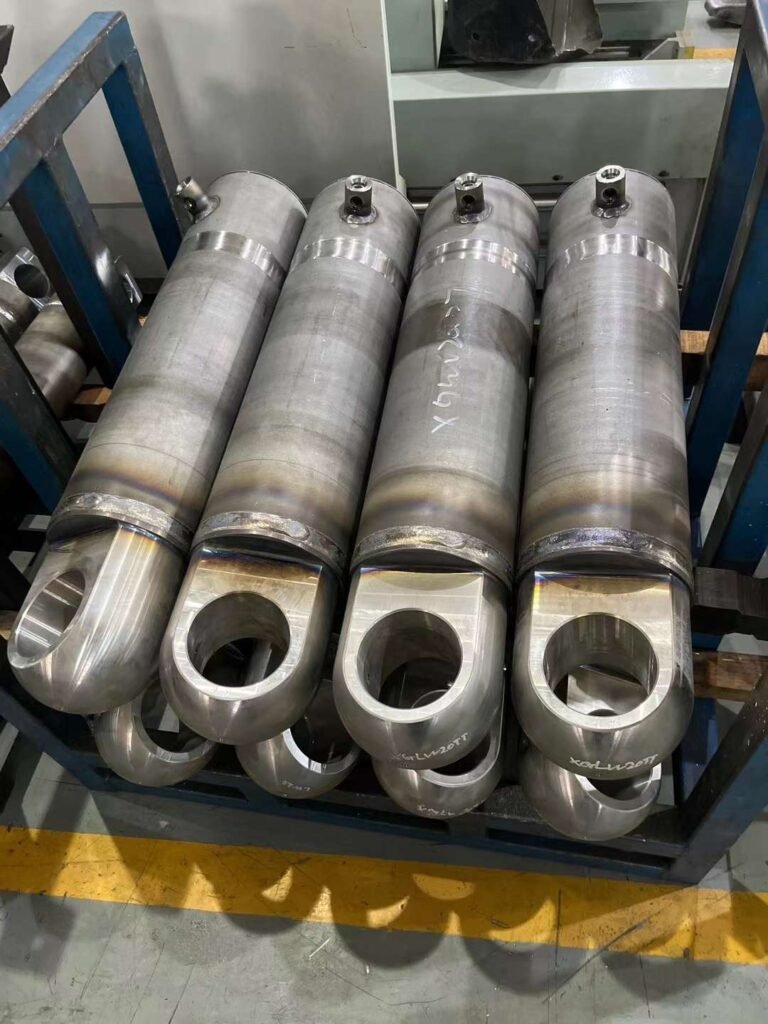
A cylinder exhibiting premature leakage gets investigated, understandably, by checking the components most associated with sealing performance — rod surface finish, bore condition, seal installation quality. This investigation sequence often skips seal material compatibility entirely, because the seal looks physically intact rather than obviously degraded, and the assumption defaults to a surface finish or installation problem rather than a material mismatch. A seal that’s chemically incompatible with the hydraulic fluid in use can show swelling, softening, or hardening that’s subtle enough to miss on a casual visual inspection but significant enough to compromise sealing performance under pressure cycling.
The diagnostic step that catches this — comparing the seal’s actual hardness (durometer reading) against its as-manufactured specification — is simple but frequently skipped, because it requires removing and testing the seal specifically rather than just inspecting the rod and bore it was sealing against. A seal that’s measurably softer or harder than its original specification, despite looking visually intact, points directly to chemical incompatibility or thermal degradation rather than a mechanical wear problem, and catching this early prevents a cylinder builder from chasing rod and bore finish adjustments that won’t actually solve a problem rooted in seal material selection.
Coordinating Seal Material Choice With Rod and Bore Surface Finish
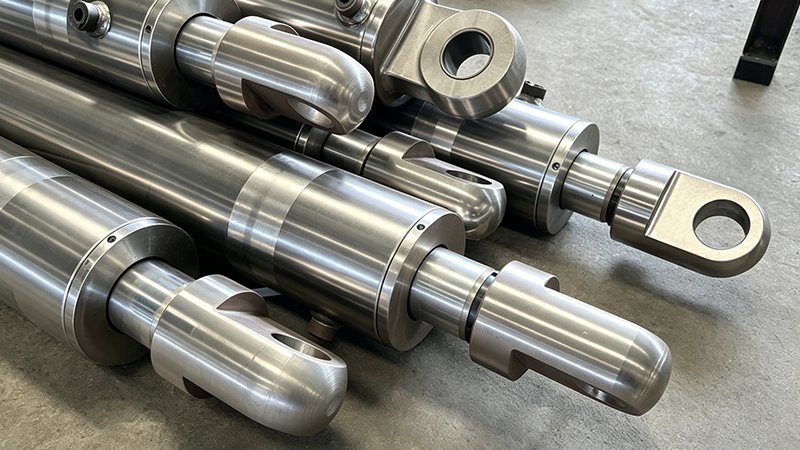
Seal material selection doesn’t happen in isolation from the rod and bore finish it’s sealing against — different seal compounds have different friction and wear characteristics against a given surface roughness, and a seal material change sometimes calls for a corresponding adjustment to the mating surface finish to perform as intended. A low-friction seal compound paired with a rod surface finish optimized for a different, higher-friction seal material may not achieve the friction reduction the seal change was intended to deliver, because the surface characteristics the seal was designed to work against don’t match what it’s actually running on.
This interaction matters most when switching seal families — moving from NBR to a PTFE-based low-friction design, for example, rather than just adjusting within the NBR family. Engineers making this kind of seal material change should coordinate with their tube and rod supplier on whether the current surface finish specification still makes sense for the new seal material, rather than treating the seal change as an isolated decision. A supplier experienced across multiple seal material families can usually flag this interaction quickly, but only if the seal material change is actually communicated at the specification stage rather than discovered later when field performance doesn’t match expectations.
Building Seal Material Decisions Into the Design Review Process Formally
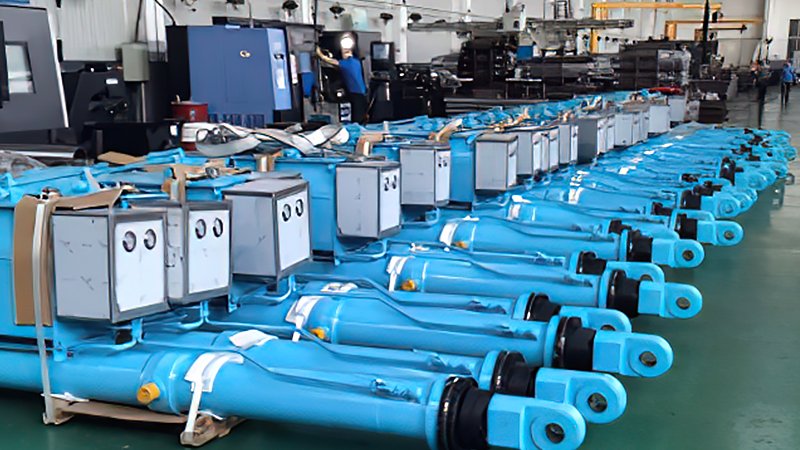
Many equipment manufacturers have a formal design review process for structural and performance-critical decisions, but seal material selection sometimes gets treated as a lower-level detail resolved by whoever is finalizing the bill of materials, without the same scrutiny applied to decisions perceived as more consequential. Given how directly seal material mismatch translates into field failures, and how easily those failures get misdiagnosed as other component problems, seal material selection deserves a specific checkpoint in the design review process — explicitly confirming temperature range, fluid type, and contamination profile against the proposed seal material before a design is finalized, rather than assuming the default carried over from a previous design is adequate.
This doesn’t need to be an elaborate process. A simple checklist item requiring the design engineer to state the operating temperature range, fluid type, and contamination exposure alongside the proposed seal material selection, reviewed by someone not involved in the original seal choice, catches the majority of mismatches before they reach production — because the act of explicitly stating these parameters, rather than assuming them, is often enough to surface a mismatch that would otherwise go unnoticed until a field failure forces the question to be asked retroactively, at a much higher cost than catching it during design review.
Why Supplier Seal Recommendations Need the Same Scrutiny as Any Other Specification
Equipment manufacturers who don’t have deep in-house seal material expertise often rely heavily on the seal supplier’s recommendation for a given application, which is a reasonable starting point but shouldn’t be the final word without some independent verification. A seal supplier’s recommendation is based on the information the OEM provided about the application — if that information is incomplete or inaccurate, the recommendation will be optimized for the wrong operating envelope, regardless of how technically sound the seal supplier’s own expertise is.
The OEM’s responsibility in this relationship is providing an accurate and complete description of the actual operating conditions — not just nominal temperature and pressure, but realistic worst-case conditions, actual fluid type including any additives or contamination the system might see, and the real duty cycle rather than an idealized one. A seal recommendation is only as good as the application data behind it, and OEMs that treat the seal supplier conversation as a quick formality rather than a genuine technical exchange often end up with a recommendation that technically satisfies the stated requirements while missing real-world conditions that weren’t communicated clearly during the selection process.
Related Reading
- How Should an Equipment Manufacturer Decide Whether a Hydraulic Cylinder Needs Cushioning at All?
- Hydraulic Cylinder Dynamic Seal Friction: Breakout Force and Why It Matters More Than Steady-State Friction
- How Does a Hydraulic Cylinder Builder Decide What Rod End Configuration to Specify on New Chrome Plated Rod?
What We Offer
- Application-matched rod and bore surface finish recommendations alongside seal material guidance
- Engineering consultation covering temperature, fluid, and contamination profile review
- Compatibility data across common hydraulic fluid types for component surface finishes
- Direct support reviewing field failure patterns that may trace back to seal-material mismatch
Reviewing seal material choices for a new or existing cylinder design? Reach our team at marketdi@east-ai.cn.
— Alex, EAST AI