
Published: 2026-10-16 | Last Updated: 2026-10-16
An engineer designing a new cylinder who defaults to a standard honed tube bore diameter and finish specification, because standard sizes are faster to source and typically cheaper, is making the right call more often than not — but not always, and not checking whether this specific application is one of the exceptions is how avoidable performance gaps end up baked into a new design. Standard specifications exist because they cover the duty profile of most applications well; the question worth asking is whether this particular application actually sits inside that “most” or outside it.
Standard bore finish specifications — typically a defined Ra roughness range and a conventional cross-hatch honing pattern — are tuned to balance oil film retention against seal friction for general hydraulic duty. This balance works well across a wide range of pressure, speed, and contamination conditions, which is exactly why it became the standard in the first place. It stops being the right choice when an application sits at an extreme on one of those dimensions — very high cycle rates where seal friction heat becomes a real factor, very contaminated environments where oil film retention needs to be more aggressive, or very low-speed, high-dwell applications where a different cross-hatch angle improves sealing at near-zero velocity.
A custom specification costs more to source, in both unit price and qualification time, because it usually means a dedicated honing setup rather than running on a line already configured for a standard spec. That cost is worth paying when the performance gap from a standard spec would show up as a real field problem — shortened seal life, excessive friction-related heat buildup, or stick-slip motion at low speed. It’s not worth paying when the application sits comfortably within standard-spec territory and a custom bore would just be solving a problem that doesn’t actually exist for this duty cycle.
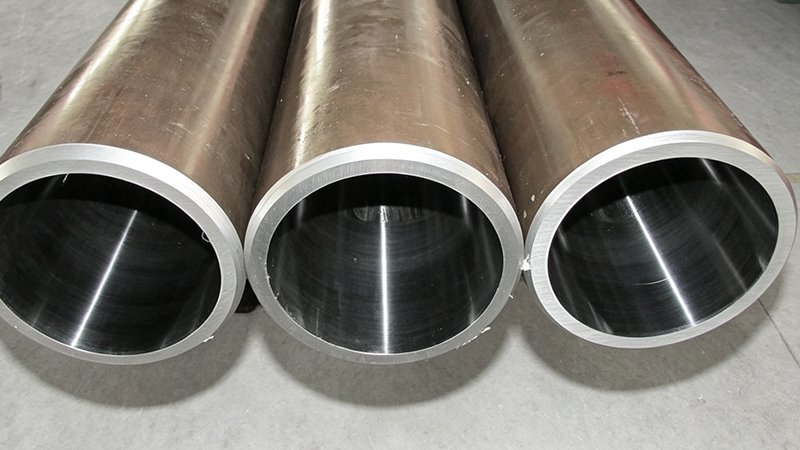
A Framework for the Standard vs Custom Decision
| Application Characteristic | Standard Spec Usually Sufficient | Custom Spec Worth Considering |
|---|---|---|
| Cycle rate | Moderate, typical industrial duty | Very high cycle rate with friction heat concerns |
| Contamination exposure | Filtered, controlled hydraulic system | Heavy external contamination, agricultural or mining duty |
| Speed profile | Consistent mid-range velocity | Very low speed with long dwell, or highly variable speed |
| Cost sensitivity | High — standard spec minimizes unit cost | Lower — performance gain justifies added cost |
| Volume | High volume favors standard spec sourcing | Lower volume where custom tooling cost amortizes differently |
The practical starting point for most engineers should be the standard specification, with a deliberate check against this kind of framework rather than an assumption either way. Specifying custom by default adds unnecessary cost and lead time to applications that don’t need it, while defaulting to standard without checking leaves genuine performance gaps unaddressed in the applications that do. A conversation with the tube supplier about the actual duty cycle — not just the nominal pressure rating — is usually enough to settle which side of that line a given design falls on.
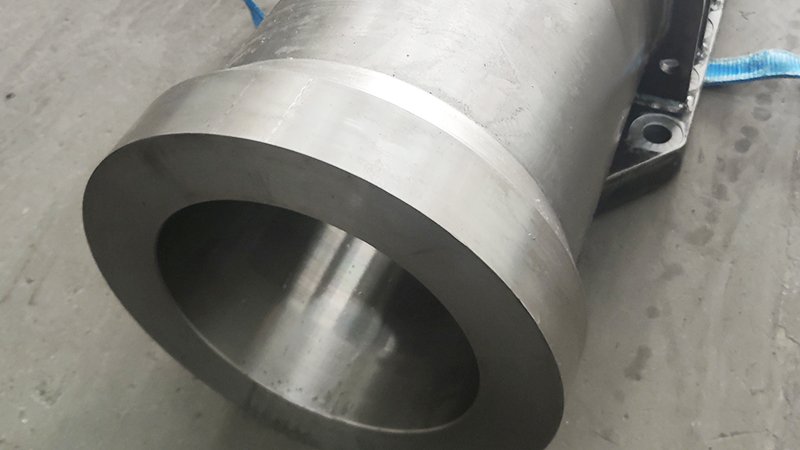
The Qualification Burden a Custom Specification Actually Creates
Choosing a custom bore specification isn’t just a sourcing decision — it changes the qualification and documentation burden for the rest of the cylinder’s production life. A custom finish typically means the supplier is running a dedicated setup that isn’t shared across other customers’ standard orders, which affects both minimum order quantities and how quickly a replacement batch can be produced if there’s a supply interruption. An engineer evaluating whether a custom spec is worth it should weigh this operational rigidity alongside the direct cost premium, because a custom specification that solves a real performance problem can still create a new risk around supply flexibility that a standard specification wouldn’t carry.
This matters especially for equipment manufacturers who expect to need the same tube specification for years across multiple production runs. A custom specification locks the OEM into a tighter relationship with whichever supplier qualified that exact finish, because requalifying an equivalent custom process at a second supplier means repeating much of the original qualification effort — a cost that doesn’t apply in the same way to a standard specification available from multiple qualified sources. For a design expected to run at high volume over a long product life, this single-source exposure is worth factoring into the standard-versus-custom decision alongside the immediate performance and cost comparison.
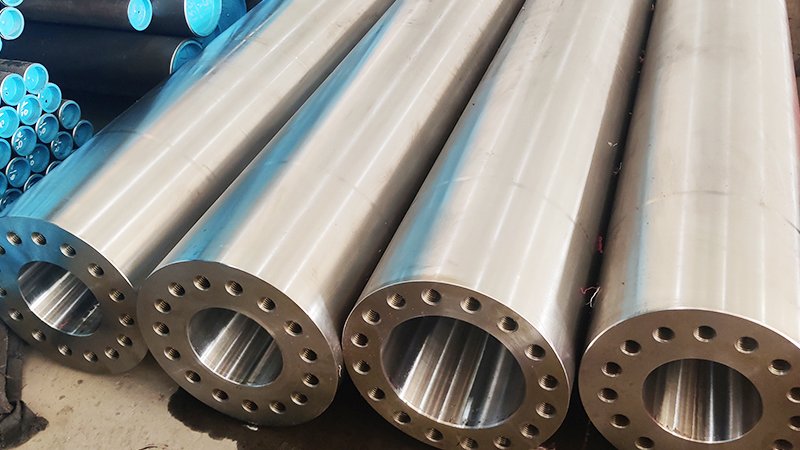
A Middle Ground Worth Considering Before Committing to Fully Custom
Between a fully standard specification and a fully custom one, there’s often a middle option worth exploring: a standard bore diameter and base finish process with a single adjusted parameter — a slightly different cross-hatch angle, or a tightened roughness range within the same honing process — rather than a wholesale custom specification. This kind of targeted adjustment can solve a specific performance gap without triggering the full cost and qualification burden of a completely custom process, because it stays within the supplier’s existing production capability rather than requiring a dedicated setup.
Raising the specific performance concern with the supplier — rather than jumping straight to requesting “a custom specification” — often surfaces this middle option, because an experienced supplier can usually identify which single parameter is actually driving the performance gap in a given application. Engineers who specify a fully custom solution without first having this conversation sometimes pay for complexity that a smaller, targeted adjustment would have resolved just as effectively, at a fraction of the cost and qualification time.
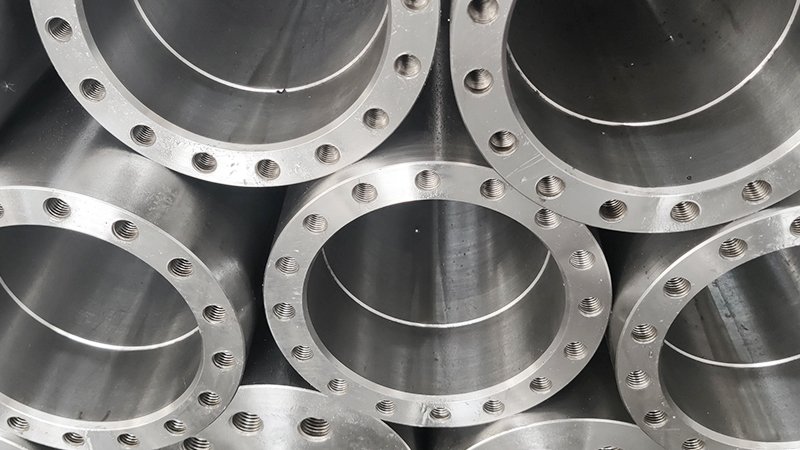
How to Validate That a Custom Specification Actually Solved the Problem
A custom bore specification gets adopted on the theory that it will solve a specific performance gap, but this theory needs to be validated with actual field or test data after implementation, not just assumed because the specification changed. Running the custom-specified tube through the same functional test that revealed the original performance gap — not just a dimensional comparison against the new drawing — confirms whether the change actually closed the gap or whether the real driver of the original problem was something else entirely that happened to correlate with the bore finish.
This validation step matters because bore finish is rarely the only variable affecting the kind of performance issues that typically prompt a custom specification request — seal condition, contamination control, and operating pressure all interact with bore finish rather than acting independently. An engineering team that implements a custom bore specification, sees the original symptom improve, and declares success without controlling for these other variables risks attributing the improvement to the wrong cause, which matters if a future design change elsewhere in the system reintroduces the same symptom and the team incorrectly rules out bore finish as a contributing factor based on an improperly validated prior fix.
When a Custom Specification Becomes a De Facto Standard Worth Formalizing
Some custom specifications, once qualified and proven across a few applications, end up getting reused across multiple designs within the same OEM’s product line, even though each individual design decision to use it was made somewhat informally. At this point, it’s worth formally re-evaluating whether what started as a one-off custom specification has effectively become a new internal standard for a defined category of application, and documenting it as such rather than leaving it as an ad hoc specification that gets copied from drawing to drawing without a clear record of why it was chosen or what performance range it was validated against.
Formalizing this kind of de facto standard has practical benefits beyond documentation tidiness. It makes qualification and sourcing more efficient for future designs that fall into the same application category, because the engineering team can reference an established specification with known performance characteristics rather than re-deriving the custom requirement from scratch, and it gives the supplier relationship more stability since they can plan around a recurring, defined specification rather than treating every custom request as a one-time exception to their standard production flow.
Related Reading
- How Should a Cylinder Builder Decide Between Honed Tube and Skived and Roller Burnished Tube for a New Design?
- Hydraulic Cylinder Dynamic Seal Friction: Breakout Force and Why It Matters More Than Steady-State Friction
- Why Does Honed Tube Wear Faster in Some Cylinders Than Others Running the Same Nominal Pressure?
What We Offer
- Standard and custom honed tube bore specifications from the same production line
- Engineering consultation to evaluate whether a design actually needs a custom spec
- Trial-length production runs for custom specifications before full qualification
- Direct comparison data on oil film retention and friction across finish options
Evaluating a standard vs custom bore spec for a new cylinder design? Reach our team at marketdi@east-ai.cn.
— Alex, EAST AI