
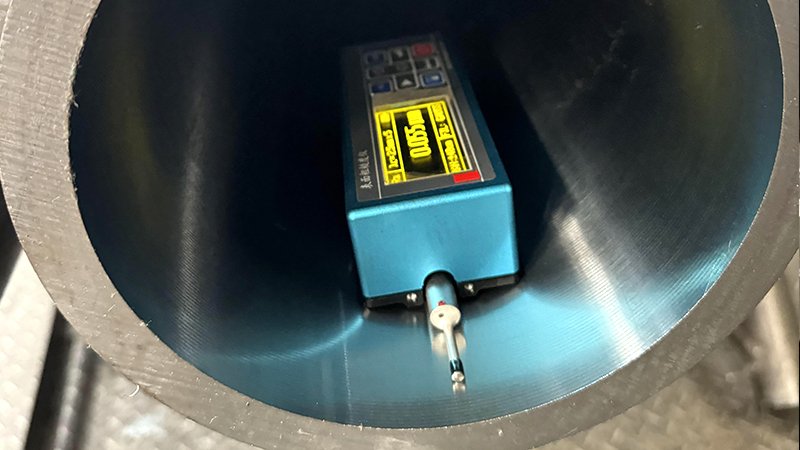
A hardness reading taken at the bore surface, which is where almost every incoming check happens, tells you about the bore surface. It doesn’t necessarily tell you much about how that hardness changes as you move deeper into the wall, and for certain hardening processes, that gradient matters more than people checking a single surface number realize.
Induction hardening, flame hardening, and other surface-hardening processes produce a hardness profile that decreases with depth, by design. This is the entire point of case hardening — a hard, wear-resistant surface layer over a tougher core. The question worth asking is whether that gradient is controlled and predictable, or whether it varies inconsistently batch to batch in ways a single surface reading would never reveal.
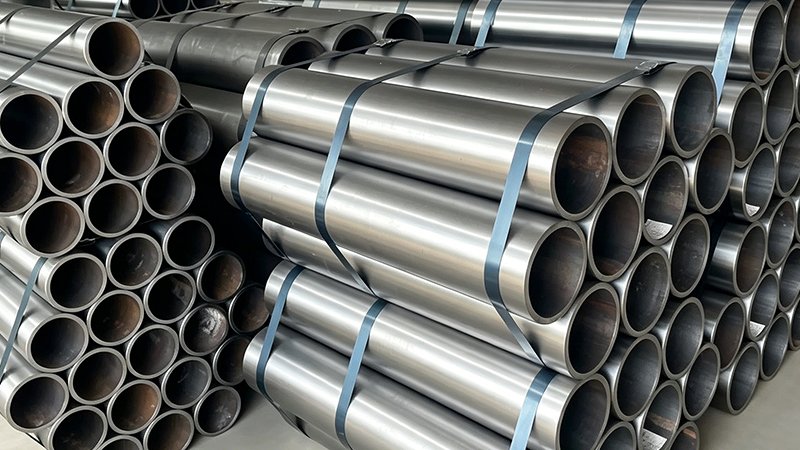
Why Gradient Consistency Matters as Much as Surface Number
Two tubes can both read identically at the surface and still behave differently in service if one has a gradual, well-controlled transition from hard case to tough core while the other has an abrupt transition or an inconsistent case depth along its length. The abrupt-transition tube is more prone to the hard case spalling or cracking away from the softer core under impact or fatigue loading, a failure mode that a surface hardness check alone would never predict, because the surface reading on both tubes looked identical going into service.
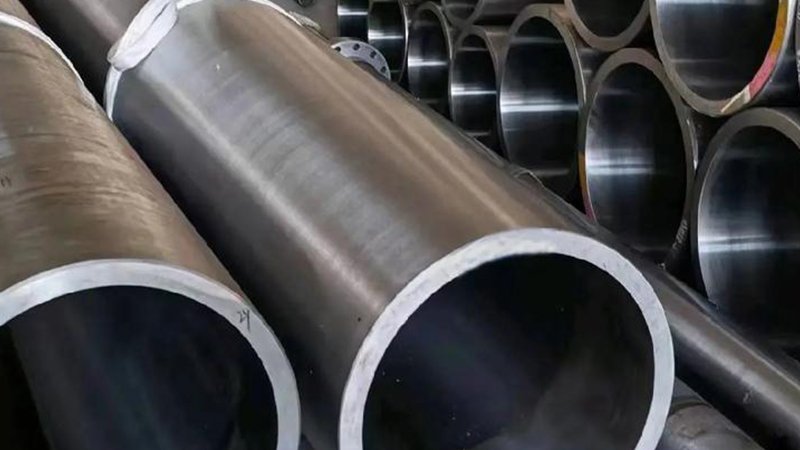
What Controls the Gradient
The hardening process parameters — induction frequency and power for induction hardening, flame travel speed and fuel mixture for flame hardening, quench rate and method for either — directly determine how deep the hardened case extends and how gradually or abruptly hardness transitions to the core value. A well-controlled process produces a consistent, repeatable gradient from batch to batch; a poorly controlled process can produce surface hardness that reads consistently while the underlying gradient varies in ways that only show up under destructive cross-section testing.
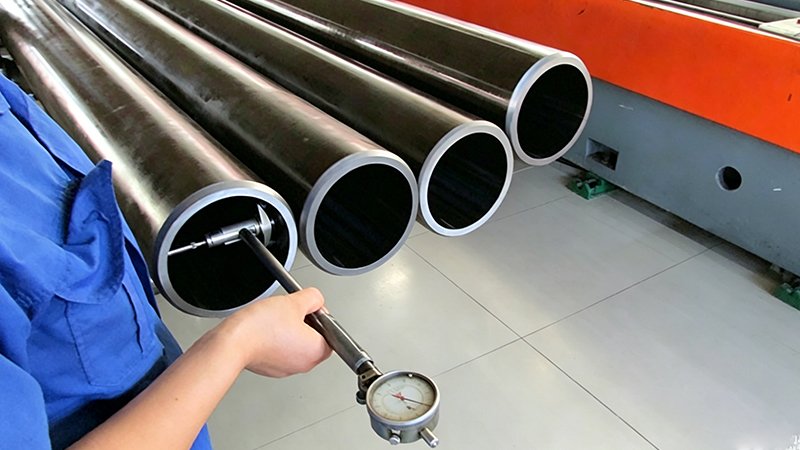
How This Gets Verified Properly
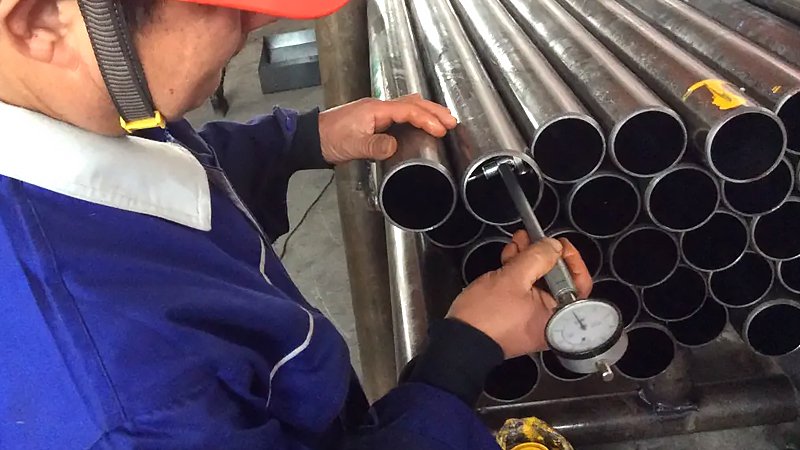
Verifying the actual gradient, rather than assuming it from a surface reading, requires a destructive test — cross-sectioning a sample tube and taking hardness readings at several depths from surface toward core. This isn’t something you do on every production piece, but doing it periodically on a representative sample from each hardening process setup, and whenever a process parameter changes, confirms that the gradient you’re actually getting matches what the process was designed to produce, rather than relying on surface hardness alone as a proxy for the whole picture.
Why This Matters More for High-Impact or High-Fatigue Applications
For applications with relatively gentle, steady loading, gradient consistency matters less because the stress levels involved rarely approach what would expose a poorly controlled transition zone. For applications with genuine impact loading or significant fatigue cycling — exactly the kind of duty that benefits from case hardening in the first place — gradient consistency becomes a real factor in whether the part performs as intended over its expected service life or fails earlier than a surface-hardness-only specification would predict.
Asking the Right Question When Specifying Case-Hardened Tube
For buyers specifying case-hardened honed tube for demanding applications, asking a supplier not just for surface hardness specification but for case depth and gradient control information — and whether that’s periodically verified through destructive testing on representative samples — gets at a dimension of quality that a standard specification sheet focused on surface hardness alone doesn’t address.
At EAST AI, hardening process parameters for case-hardened tube are controlled and periodically verified through cross-section testing on representative samples, giving customers confidence in the gradient, not just the surface number.
Related Reading
- Honed Tube Case Hardening: When Through-Hardened Base Steel Isn’t the Right Default
- Honed Bore Surface Defects: Scratches, Pits, and Chatter Marks Explained
- Honed Tube for Steel Mill and Continuous Casting Equipment
What We Offer
- Case-hardened honed tube with controlled, periodically verified hardness gradient
- Destructive cross-section testing on representative samples for gradient confirmation
- Technical consultation on case depth requirements for impact and fatigue-prone applications
- Full material traceability from base steel heat through finished hardened condition
Contact EAST AI (eastai-tech.com) Email: marketdi@east-ai.cn Phone: +86 13382202696 Address: No. 108, Lunan Road, Wuxi, Jiangsu, China.
Written by Alex, Production Engineer at EAST AI