
A pressure-test failure once sent a cylinder builder hunting for a flaw in his welds when the real problem was in the tube. His barrels were bursting or bulging at pressures below their rated capacity, always in the same way, and the tube all met its nominal wall thickness on the certificate. When we sectioned a failed barrel, the answer was plain: the bore and the outer diameter were not concentric, so one side of the wall was much thinner than the other. The tube had the right average wall but a dangerously thin spot, and that thin spot was where it failed.
Concentricity, the alignment of the bore with the outer diameter, is one of the least-discussed but most important properties of honed tube, and its opposite, eccentricity or wall thickness variation, quietly undermines pressure capacity and machining. A tube can pass every nominal dimension check and still be structurally compromised if its wall is off-centre. For engineers and senior buyers, understanding concentricity is essential to specifying tube that actually holds the pressure the calculation promises.
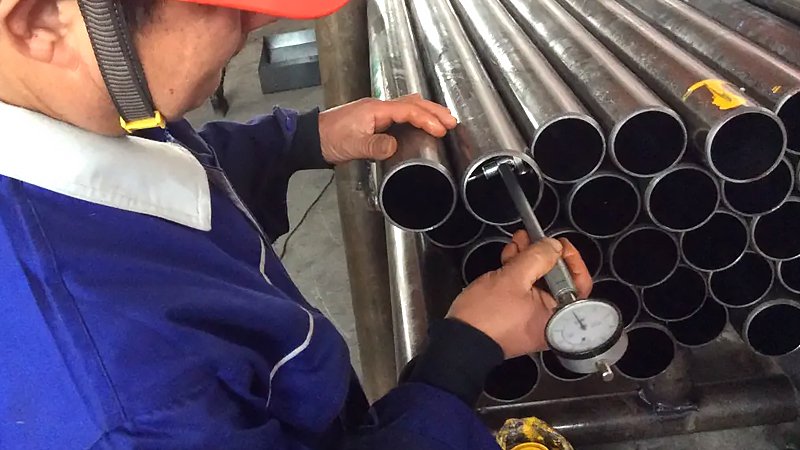
What concentricity and eccentricity mean
Concentricity describes how well the centre of the bore lines up with the centre of the outer diameter along the tube. In a perfectly concentric tube, the wall thickness is the same all the way around at any cross-section. In an eccentric tube, the bore is offset from the outer diameter, so the wall is thicker on one side and thinner on the other, even though the average wall thickness may be exactly on specification.
This distinction matters because wall thickness is usually specified as a nominal value with a tolerance, and it is easy to assume that a tube meeting its nominal wall is uniform. It need not be. A tube can have an average wall thickness within tolerance while having significant eccentricity, meaning a thick side and a thin side that average out to the right number. The certificate’s single wall figure hides this, exactly as a single Ra hides surface shape.
Eccentricity arises from the manufacturing process, particularly from how the tube is formed and drawn, and from any misalignment between the operations that create the bore and the outer surface. Some eccentricity is present in all real tube; the question is how much, and whether it is controlled. A well-made tube keeps eccentricity small; a poorly controlled one can have a thin side well below the nominal wall, which is where trouble starts.
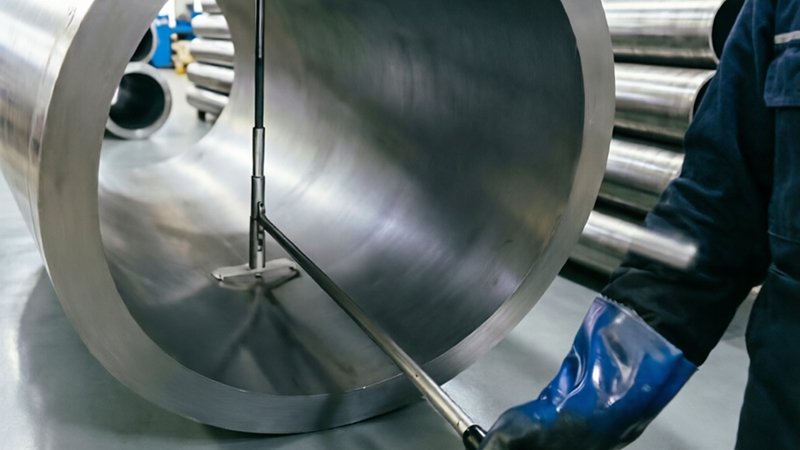
Why a thin side wrecks pressure capacity
A hydraulic cylinder barrel is a pressure vessel, and its ability to contain pressure depends on the hoop stress in the wall, which for a given pressure and diameter is inversely related to wall thickness. The thinnest part of the wall carries the highest hoop stress, so it is the thin side of an eccentric tube that governs the tube’s real pressure capacity, not the average wall. A tube is only as strong as its thinnest section.
This is why the builder’s barrels failed below their rated pressure. The rating had been calculated from the nominal wall thickness, assuming a uniform wall, but the eccentric tube’s thin side carried a much higher stress than the calculation assumed and yielded or burst first. The average wall was fine, but averages do not carry pressure; the thin spot does. An eccentric tube effectively has a hidden reduced wall thickness for pressure purposes.
The implication for design is important: when pressure capacity matters, the wall thickness that should be used in the stress calculation is the minimum wall, not the nominal, and the minimum wall depends directly on concentricity. A tube with poor concentricity needs a larger nominal wall to guarantee an adequate minimum, or, better, needs its concentricity controlled so the minimum wall is close to the nominal. Ignoring eccentricity means over-estimating the tube’s real strength.
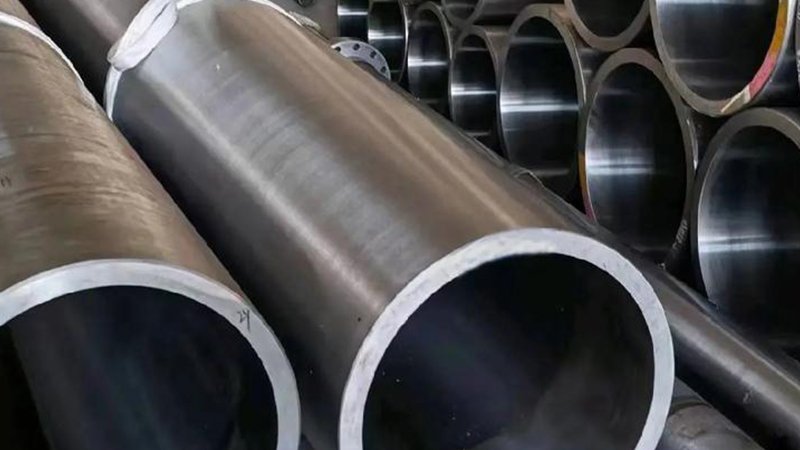
The effect on machining and finished cylinders
Concentricity does not only affect raw strength; it affects what happens when the tube is machined, which matters greatly to cylinder builders. Many builders receive honed tube and machine the outer diameter to their finished dimension. If the bore and the incoming outer diameter are eccentric, turning the outer diameter concentric to the machine axis will not make it concentric to the bore, and the finished barrel can end up with an even more uneven wall than it started with.
This can produce a finished cylinder whose wall is thin on one side despite careful machining, because the machining referenced the wrong surface. A builder who does not check concentricity can unknowingly manufacture a weakened barrel from tube that looked fine on receipt. The problem compounds when the outer diameter is machined significantly, because removing material from an already off-centre tube can leave very little wall on the thin side.
Eccentricity also affects concentricity between the bore and features like end threads or mounting bores that are machined referencing the outer diameter. If the bore is off-centre relative to those features, the piston and rod may not run true to the barrel, introducing side loading and uneven seal wear. So concentricity influences not just pressure strength but the mechanical alignment of the whole cylinder, which affects seal life and smooth operation.
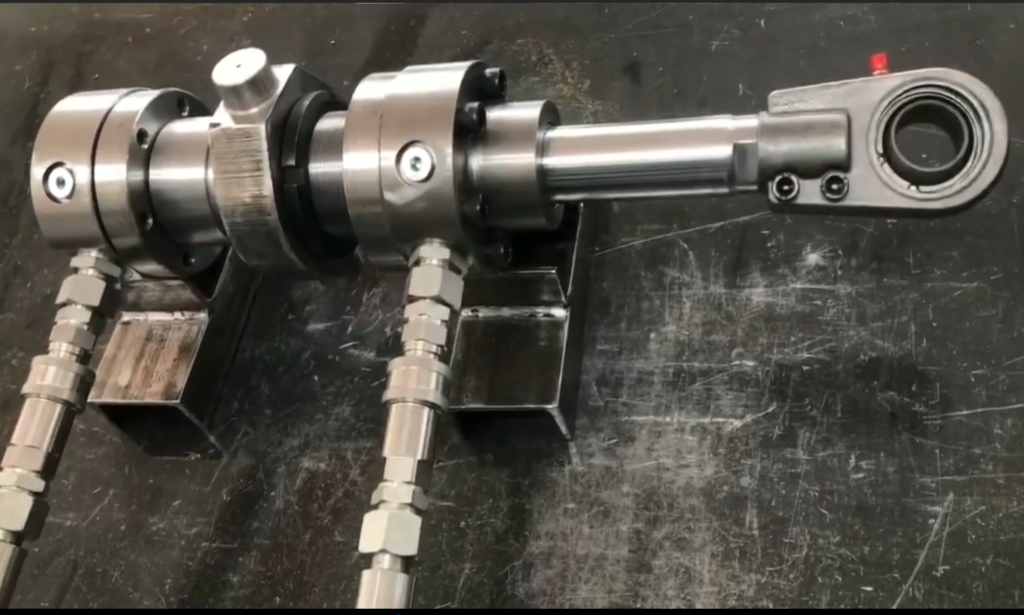
Measuring and specifying concentricity
Because the certificate’s nominal wall does not capture eccentricity, concentricity has to be specified and measured as its own requirement. It can be expressed as a maximum permissible wall thickness variation, or as a maximum eccentricity, at any cross-section. Measurement is done by taking wall thickness readings around the circumference, often with an ultrasonic wall gauge that can measure without cutting the tube, and comparing the maximum and minimum.
For specification, the key is to state a wall thickness variation limit alongside the nominal wall, so the supplier is committed to controlling the thin side, not just the average. For pressure-critical cylinders this is essential, because it is what guarantees the minimum wall used in your stress calculation actually exists in every tube. A tube specified only by nominal wall, with no concentricity limit, offers no such guarantee. Tightening the concentricity requirement is often more valuable than tightening the nominal wall tolerance.
The practical guidance we give customers is to treat concentricity as a first-class property whenever the tube is a pressure member or will be significantly machined. Ask the supplier what wall variation they can hold, specify a limit that gives you the minimum wall your design needs, and, if machining the outer diameter, reference the bore where possible so the finished wall stays uniform. Control concentricity this way and the mysterious below-rating burst, and the unevenly worn cylinder, both disappear.
Related Reading
- Honed Tube for Oil & Gas Drilling Equipment: Material Traceability and High-Pressure Wall Thickness Requirements: https://eastai-tech.com/honed-tube-for-oil-gas-drilling-equipment-material-traceability-and-high-pressure-wall-thickness-requirements/
- Honed Tube for Crane and Lifting Equipment: Long-Stroke Straightness Requirements: https://eastai-tech.com/honed-tube-for-crane-and-lifting-equipment-long-stroke-straightness-requirements/
Strength Lives in the Thin Side
A tube is only as strong as its thinnest wall, and that depends on concentricity, not the nominal figure. EAST AI has manufactured honed tube since 2006, and we control wall concentricity so the minimum wall your design relies on is really there.
What we offer:
- Honed tube with controlled bore-to-OD concentricity and wall variation limits
- Ultrasonic wall verification for pressure-critical tube
- Consistent wall so machined barrels stay uniform and true
- Technical support specifying concentricity for your pressure and machining needs
Send us your pressure rating and we will spec the wall to hold it. Email: marketdi@east-ai.cn | Phone: +86 13382202696 Address: No. 108, Lunan Road, Wuxi, Jiangsu, China.
Written by Alex, Production Engineer at EAST AI