
A stockist supplied a batch of honed tube cut to a customer’s lengths, exactly as ordered. Days later the customer called: seals on their first assemblies were being sliced during installation, and one bore had a fresh score running from the end. The tube itself was fine. What went wrong lived entirely at the cut ends—a sharp internal burr left by the parting operation, invisible unless you looked for it, lethal to a seal sliding past it. For anyone who cuts precision tube to length, deburring and edge condition is not a finishing nicety. It is a functional requirement.
This article is for stockists and service providers who offer cut-to-length honed tube, and for the cylinder builders who receive it, and it explains why cut-end condition matters, what a good edge looks like, and how to specify it.
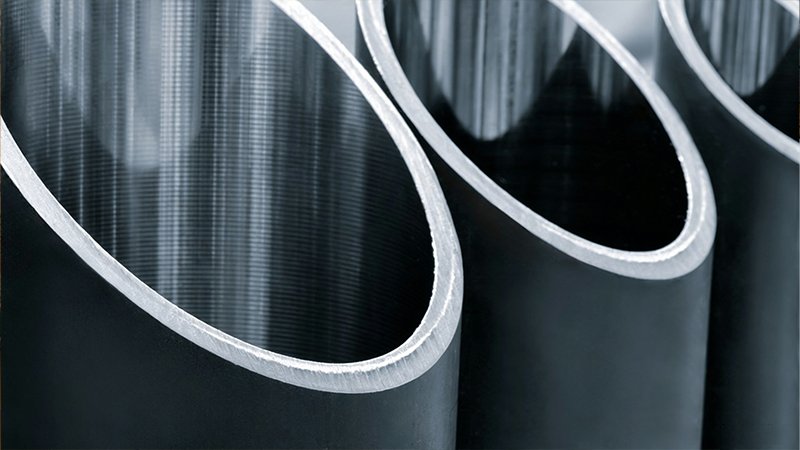
Why the Cut End Is a Problem Zone
Cutting a tube to length—by saw, by parting tool, by any method—leaves a fresh edge where the blade exits the material. On the inside diameter, this almost always raises a burr: a thin, sharp remainder of material pushed inward, sitting proud of the finished honed bore. Because the bore is precisely the surface a seal must slide across during cylinder assembly and every subsequent stroke, a burr at the mouth of the bore is directly in the seal’s path.
The damage takes two forms. During assembly, a sharp internal burr can cut or nick the seal as it is pushed into the bore, creating an instant leak path that shows up as a weeping cylinder on first test. During service, if debris breaks off the burr, it becomes contamination circulating in the fluid, scoring the bore and abrading seals over time. Either way, a defect measured in tenths of a millimetre at the tube end undermines the value of the whole precision bore.
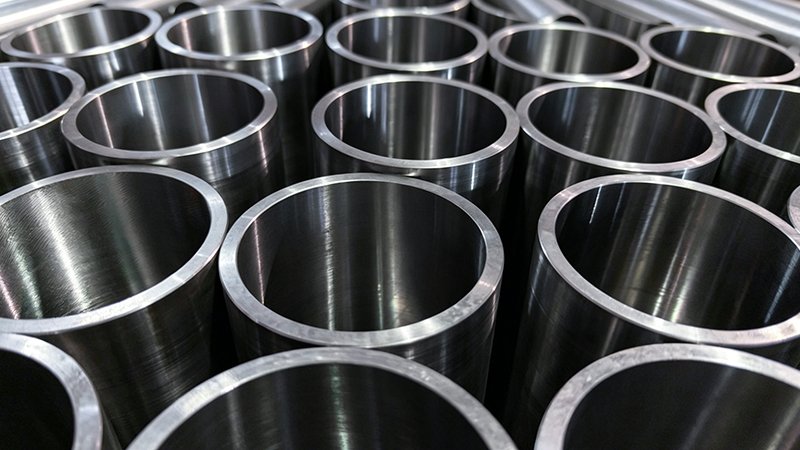
What Good Edge Condition Looks Like
A properly prepared cut end has three characteristics. First, it is free of burrs—no proud material on either the inside or outside edge. Second, it carries a light, controlled chamfer or radius at the bore mouth, so that a seal has a smooth lead-in rather than a square corner to catch on during assembly. Third, the end face is reasonably square to the tube axis, so that end-mounted components seat evenly.
The lead-in chamfer deserves emphasis. A well-formed chamfer at the bore entrance is not just deburring; it is the ramp that lets an assembler push a seal home without shaving it. Many cylinder assembly problems that get blamed on the seal or the assembler are actually the absence of a proper lead-in chamfer at the bore mouth.
The concept of controlling edge condition—whether an edge should be burr-free, may carry a burr of limited size, or requires a defined break—is formalized in ISO 13715, Technical product documentation — Edges of undefined shape. It provides the symbology engineers use to specify exactly what edge condition they require rather than leaving it to chance.
The Cost of Skipping It
Deburring is cheap; skipping it is expensive. An un-deburred end costs the receiving shop time to catch and correct, or worse, it escapes into assembly and becomes a leaking cylinder that must be torn down, re-sealed, and re-tested. For a stockist offering cut-to-length, delivering tubes with sharp internal burrs is one of the fastest ways to convert a satisfied customer into a complaint, because the customer experiences it as a quality failure of the tube even though the tube’s bore was perfect. The end condition is, in the customer’s eyes, part of the tube.
Specifying Edge Condition on a Cut-to-Length Order
Because “cut to length” says nothing about edge condition, it should be specified explicitly. A sound cut-to-length specification states: ends deburred inside and out; a lead-in chamfer at the bore mouth of a defined size and angle where the tube feeds seals; squareness of the end face to the axis within a stated tolerance; and no loose debris or chips left in the bore. For high-volume or seal-critical work, referencing an edge condition standard removes ambiguity about how sharp is too sharp.
The chamfer specification matters because too little defeats the purpose and too much removes useful bore length or creates a step. A modest, consistent chamfer sized to the seal being installed is the goal. When the tube’s end use is known—which seal, which assembly method—the chamfer can be tuned to it.
Deburring Without Harming the Bore
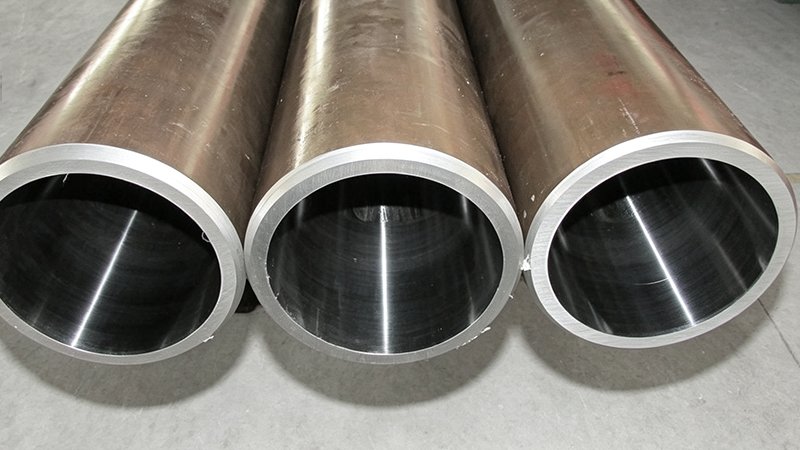
There is a right and a wrong way to deburr a precision bore. The honed surface near the end must not be damaged in the process. Aggressive, careless deburring can score the bore, round it unevenly, or leave grinding debris—trading one defect for another. Good practice removes the burr and forms the chamfer with tooling and control appropriate to a finished bore, then cleans the tube so no chips remain. The end result should look intentional: a clean, square face, a smooth chamfer, and a bore that is as pristine at the mouth as it is in the middle.
Cleanliness Is Part of Edge Preparation
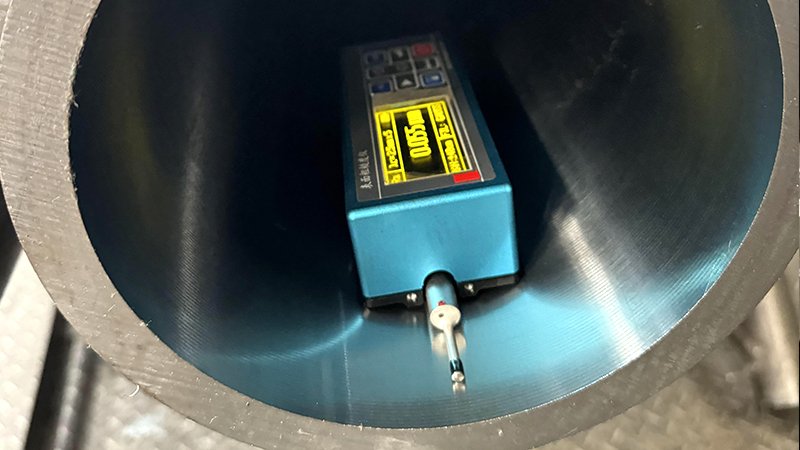
Finally, deburring is not finished until the tube is clean. The act of cutting and deburring generates chips and fine debris, and a honed bore is an efficient trap for it. A tube delivered with a perfect chamfer but a bore full of cutting swarf simply relocates the contamination problem to the customer’s cylinder. Cut-to-length service that takes edge condition seriously ends with flushing or cleaning the bore and protecting the ends so they arrive as prepared as they left. This closes the loop between a good cut and a good assembly.
Related Reading
- Honed Tube for Oil & Gas Drilling Equipment: Material Traceability and Wall Thickness
- Honed Tube for Injection Molding Machine Clamping Cylinders
- Honed Tube for Crane and Lifting Equipment: Long-Stroke Straightness
Deliver Ends That Are Ready to Assemble
A precision bore deserves precision ends. Deburred, chamfered, square, and clean—cut-to-length done right means the tube is ready to seal, not a seal-slicing hazard waiting at the customer’s bench.
What We Offer
- Cut-to-length honed tube with ends deburred inside and out and a controlled lead-in chamfer
- Edge condition specified to your seal and assembly method, referencing recognized standards
- Bore protected and cleaned of chips and debris before shipment
- Consistent, square end faces and full traceability for seal-critical cylinder builds
Contact EAST AI (eastai-tech.com) Email: marketdi@east-ai.cn Phone: +86 13382202696 Address: No. 108, Lunan Road, Wuxi, Jiangsu, China.
Written by Alex, Production Engineer at EAST AI