
A materials-handling OEM once brought me a cylinder that was cracking its end caps in service, and they were sure the castings were weak. When we put the machine on a data logger, the truth was different: the cylinder was slamming into its end stops at nearly full speed on every cycle, and the shock was breaking the cap. The cylinder had no effective cushioning, so all the kinetic energy of the moving load was being dumped into the steel at the end of each stroke. The fix was not a stronger cap; it was proper end-of-stroke cushioning.
Cushioning is one of those features that is invisible when it works and catastrophic when it does not. Its job is to decelerate the piston and its load over the last part of the stroke so the cylinder reaches the end smoothly instead of hammering. For the engineers and senior buyers who specify cylinders, understanding how cushioning works, and how the honed tube bore contributes to it, is essential for any application that moves real mass at real speed.
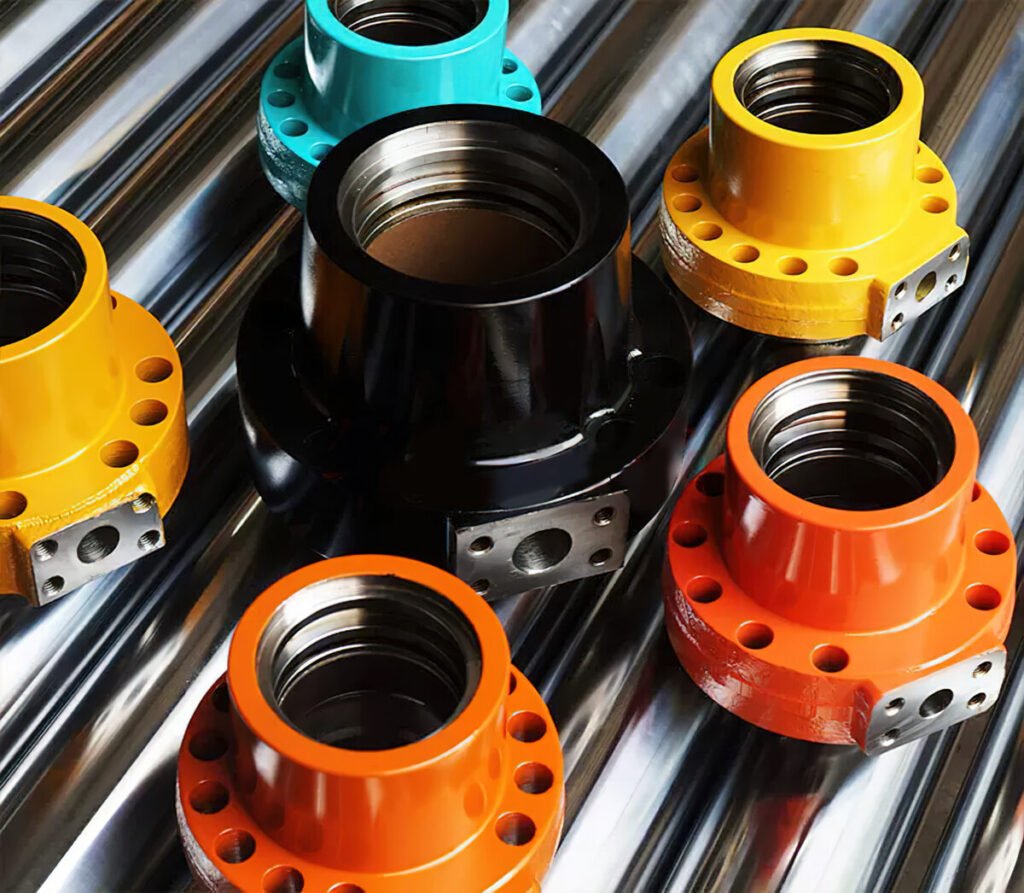
Why deceleration at the end of stroke matters
A moving piston carries kinetic energy proportional to the mass it drives and the square of its velocity. When the piston reaches the end of its travel, that energy has to go somewhere. Without cushioning, it is absorbed abruptly by the end cap, the rod gland, or the mounting, as a mechanical shock. Repeated thousands of times, that shock cracks castings, loosens fasteners, batters bearings, and fatigues welds, exactly the failure the materials-handling OEM was seeing.
The severity scales sharply with speed because energy grows with velocity squared. A cylinder that is perfectly happy at low speed can become destructive when the same load is driven faster, which is why cushioning problems often appear after a machine’s cycle rate is increased for productivity. Doubling the speed roughly quadruples the impact energy, so a modest push for faster cycles can quietly move a cylinder from safe to self-destructive.
Cushioning solves this by trapping oil at the end of the stroke and forcing it to escape through a restricted path, converting the piston’s kinetic energy into heat and pressure in a controlled way. Done well, the load coasts to a smooth stop; done poorly, the cylinder either still slams or, at the other extreme, bounces and stalls short of full stroke. The design target is a controlled deceleration that fits the load and speed.
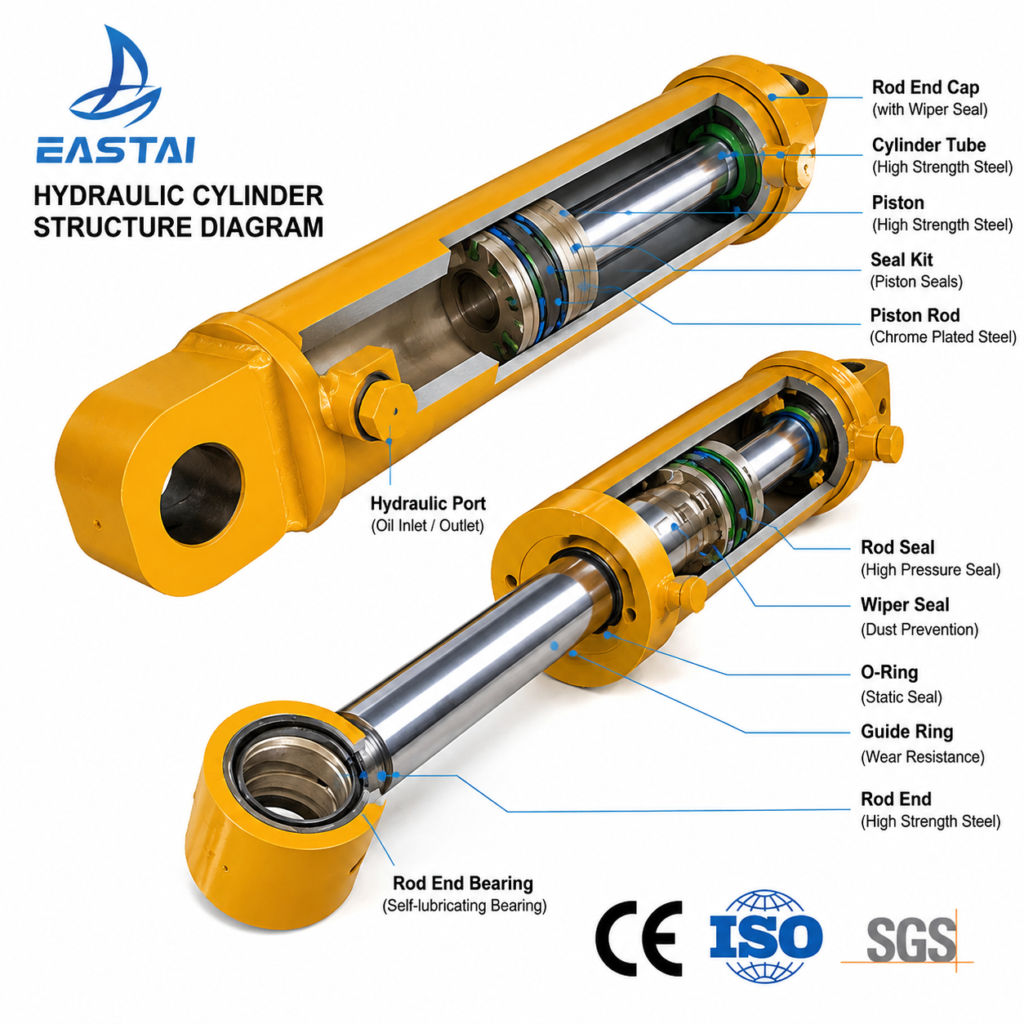
How a cushion actually works
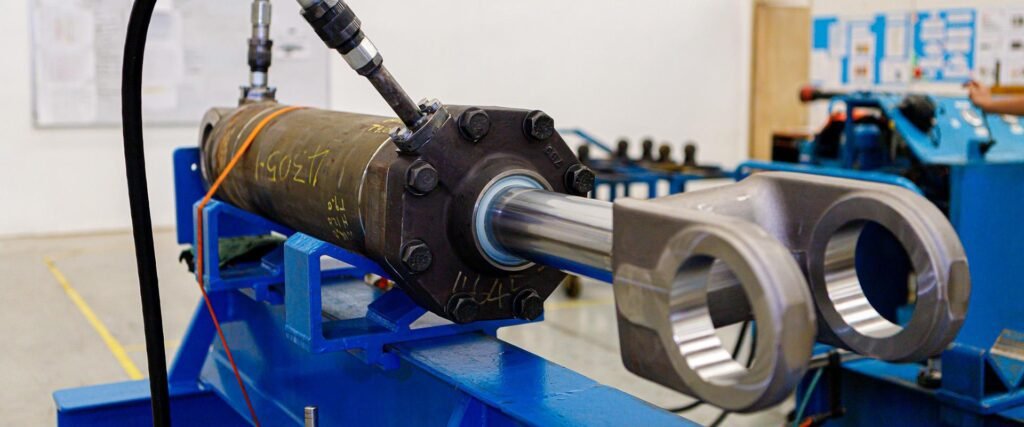
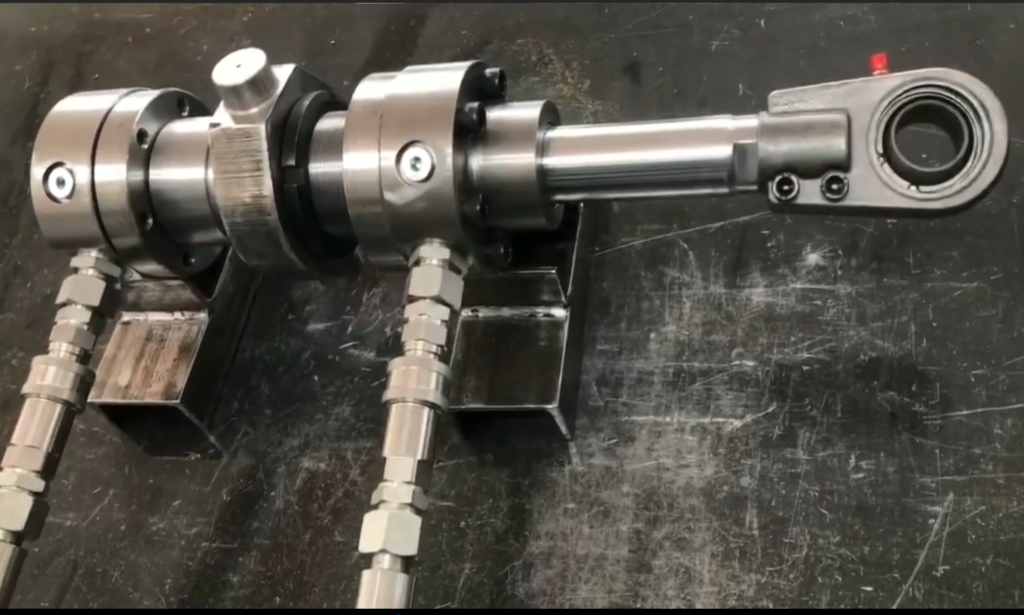
The most common cushioning arrangement uses a cushion spear, or collar, on the piston that enters a matching cushion bore or bush near the end of the cylinder as the piston approaches the end of stroke. Once the spear enters, it closes off the main flow path, and the trapped oil can only escape through a small, often adjustable, orifice. That restriction generates a back-pressure that pushes against the piston and decelerates it over the cushion length.
The clever part is that many cushion designs are progressive. As the spear moves deeper, the escape path can be shaped, by a taper or a series of grooves, so the restriction increases smoothly, producing a rising deceleration rather than a single sharp spike. A well-shaped cushion keeps the peak pressure within safe limits while still stopping the load in the available length, which is a balance between cushion geometry and orifice size.
An adjustable needle valve on the cushion orifice lets the deceleration be tuned in the field for the actual load and speed. This adjustability matters because the same cylinder may be used with different loads, and a fixed cushion optimised for one condition can be wrong for another. The trade-off is that an adjustable cushion adds parts and cost, so simple fixed cushions are used where the duty is well defined and constant.
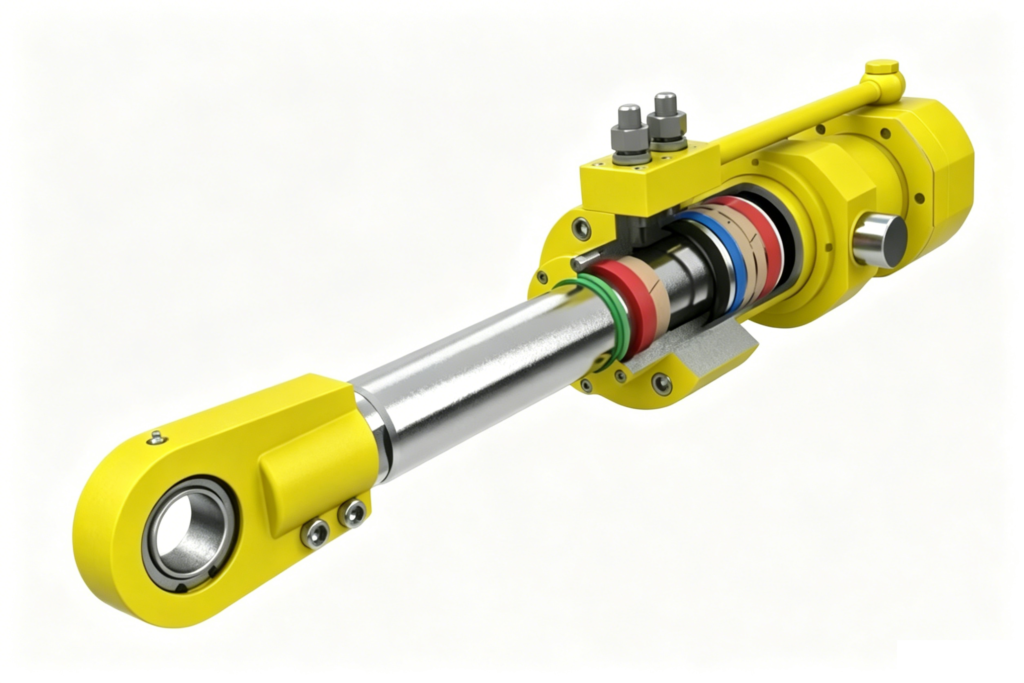
Where the honed tube bore comes in
Cushioning is not just a piston feature; it depends on the bore, and this is where honed tube quality directly affects cushion performance. The cushion works by trapping oil, and how well it traps depends on the clearance between the cushion spear and the cushion bore. If that clearance is too large or inconsistent, oil leaks past instead of being forced through the orifice, and the cushion is weak or erratic. The dimensional precision of the bore is therefore part of the cushion design.
The main bore’s roundness and diameter consistency matter too, because the piston and its seal must maintain their seal right up to the point where the cushion takes over. A bore that is oval or that varies along its length changes the piston-to-bore relationship near the ends, which can alter where and how strongly the cushion engages. A tube held to a tight inner-diameter tolerance and good roundness gives the cushion a repeatable environment to work in, cylinder after cylinder.
Surface finish plays a supporting role. The honed cross-hatch finish that helps the main piston seal also matters in the cushion region, because a rough or scored surface can damage the cushion bush or leak past it. Where the cushion bore is part of the honed tube itself rather than a separate bush, the finish and dimensional control of the honed tube become directly responsible for cushion consistency. This is why cushioned cylinders reward tube that is precise not just on average but along its whole length.
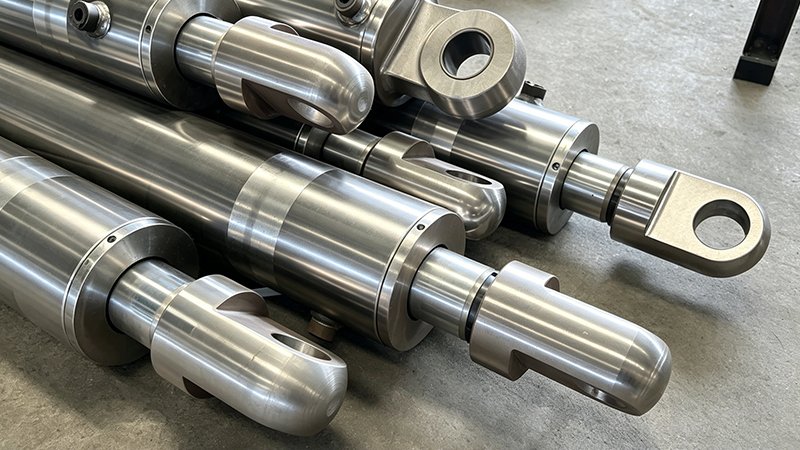
Cushion length, clearance, and geometry trade-offs
Designing a cushion is a balance of length, clearance, and orifice geometry against the load and speed. A longer cushion has more distance over which to decelerate the load, so it can stop a given energy with a lower peak pressure, which is gentler on the cylinder. But cushion length consumes stroke or overall length, so designers cannot make cushions arbitrarily long; they size them to the energy that must be absorbed.
Clearance between the spear and cushion bore sets how much oil escapes around the spear versus through the orifice, and it is a genuine design parameter, not a manufacturing accident. Too tight and the cushion can hydraulically lock or become over-sensitive; too loose and it barely cushions. This clearance depends on holding both the spear and the bore to tight tolerances, which again ties cushion behaviour back to the precision of the honed tube and the machined piston.
Orifice or groove geometry shapes the deceleration curve. A single fixed orifice gives a simple deceleration that starts strong and eases as the piston slows; tapered spears or grooved profiles let the designer flatten the peak and spread the deceleration more evenly. For high-energy applications, the difference between a crude and a shaped cushion is the difference between a pressure spike that stresses the cylinder and a smooth stop that does not. Getting this right is where cushion design becomes real engineering.
Specifying cushioned cylinders and their tube
For a buyer, the first step is to be honest about the duty: the moving mass, the velocity at the end of stroke, and the cycle rate. Those three numbers determine the energy the cushion must absorb and therefore how much cushioning the cylinder needs. A cylinder specified without this information may arrive with a token cushion that cannot handle the real load, which is how the slamming-cap problem begins.
The second step is to recognise that cushion performance is only as good as the bore it relies on, and to specify honed tube accordingly. Tight inner-diameter tolerance, good roundness along the full length, and a controlled finish give the cushion the consistent geometry it needs, and they matter most in high-cycle applications where any inconsistency is repeated endlessly. Specifying a precise tube is buying cushion reliability, not just seal reliability.
Finally, for demanding or variable duties, favour adjustable cushioning and validate it under real conditions rather than trusting a nominal calculation. Cushioning interacts with load, speed, oil temperature, and system back-pressure, so field adjustment and testing close the gap between theory and the machine. Approach cushioning as a system of piston, bore, orifice, and load, and the end of stroke stops being where cylinders quietly beat themselves to death.
Related Reading
- Honed Tube for Injection Molding Machine Clamping Cylinders: Precision and Repeatability at High Cycle Rates: https://eastai-tech.com/honed-tube-for-injection-molding-machine-clamping-cylinders-precision-and-repeatability-at-high-cycle-rates/
- Honed Tube for Crane and Lifting Equipment: Long-Stroke Straightness Requirements: https://eastai-tech.com/honed-tube-for-crane-and-lifting-equipment-long-stroke-straightness-requirements/
Cushion the Load, Not the Castings
Effective cushioning protects a cylinder only when the bore gives it a precise, repeatable environment to work in. EAST AI has manufactured the honed tube behind cushioned cylinders since 2006, and we supply tube with the dimensional control that consistent cushioning demands.
What we offer:
- Honed tube with tight inner-diameter tolerance and roundness held along the full length
- Controlled cross-hatch finish for reliable seal and cushion performance
- Batch-to-batch consistency for high-cycle cushioned applications
- Technical support on matching tube precision to cushion design
Tell us your load, speed, and cycle rate, and we will spec the tube to suit. Email: marketdi@east-ai.cn | Phone: +86 13382202696 Address: No. 108, Lunan Road, Wuxi, Jiangsu, China.
Written by Alex, Production Engineer at EAST AI