
A crane manufacturer once measured chrome thickness on a long lifting cylinder rod at both ends and in the middle, expecting a consistent number across the length. The ends came back within specification. The middle came back noticeably thinner. The rod had not been damaged in transit or handling; it had simply been plated in a tank where the electrical field driving the chrome deposition was not uniform along its length, a common and predictable effect on long rods that a plater who understands the physics can control, and one who does not will pass on to the customer without knowing it happened.
This article is for engineers and quality staff specifying or verifying chrome plated rod, particularly longer rods, and it explains why plating thickness can vary along a rod’s length even when the process nominally targets a single specification, and what a plater does to control it.
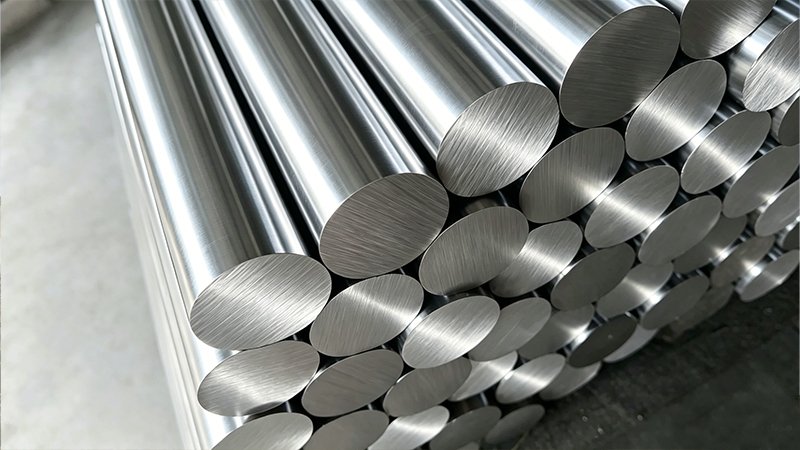
Why Electroplating Is Not Automatically Uniform
Hard chrome plating deposits chrome onto a rod through an electrochemical process, where current density, the amount of plating current per unit of surface area, governs how fast chrome builds up at any given point. Current density is not automatically equal everywhere on a long workpiece. It depends on the geometry of the rod relative to the anode, the distance between them, and the shape of the electrical field in the plating tank, all of which can vary along the rod’s length if the tank and anode arrangement is not specifically designed to compensate.
On a long rod, the middle section, further from the tank’s edges and from anode connections, is often exposed to a different current density than the ends, unless the anode is positioned and shaped specifically to correct for this. Left uncorrected, this produces exactly the kind of thickness variation described above: ends within spec, middle thinner, all from a single plating run that the operator believed was uniform.
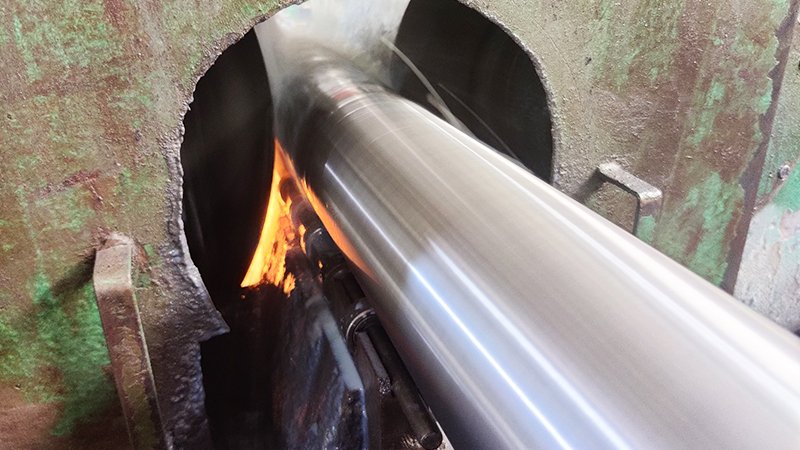
How Anode Design Controls Uniformity
Experienced platers address this with conforming or shaped anodes, positioned and profiled to maintain a more consistent distance and field strength relative to the rod along its full length, rather than a single fixed anode that inevitably produces stronger fields near its own ends. For very long rods, multiple anode sections or auxiliary anodes positioned specifically to reinforce current density in the middle of the rod compensate for the natural tendency of a simple setup to under-plate that section.
Robbers and shields, additional conductive or insulating elements placed strategically in the tank, are another tool platers use to redirect current density away from areas that would otherwise plate too thickly and toward areas that would otherwise plate too thin, evening out the deposition rate along complex or long geometries.
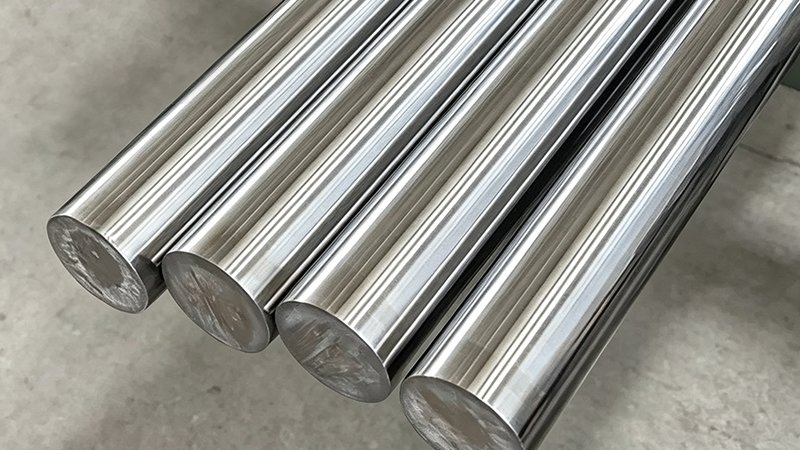
Why This Matters More as Rods Get Longer
Thickness variation from field non-uniformity tends to become more pronounced as rod length increases relative to tank and anode dimensions, which is why a short rod may show negligible variation while a long rod on the same line, plated without additional compensation, shows a measurable difference between its ends and its middle. For customers ordering long chrome plated rod, particularly for lifting, crane, or long-stroke applications, asking a supplier how they control uniformity on long parts, rather than assuming a stated thickness applies equally everywhere, is a reasonable and useful question.
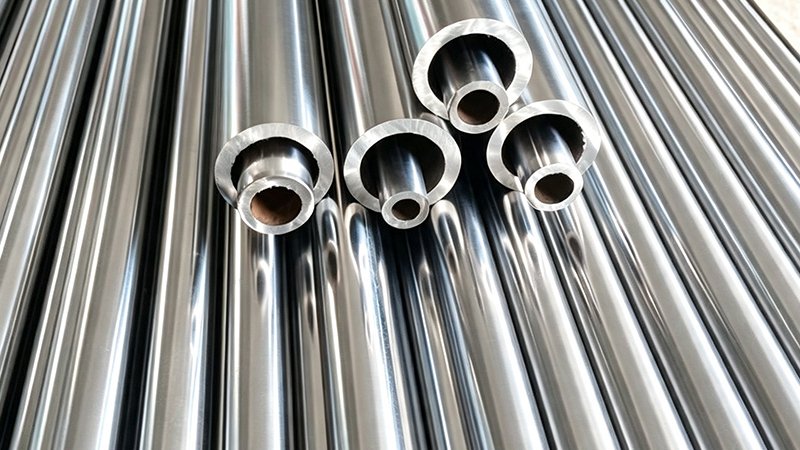
Verifying Uniformity, Not Just a Single Reading
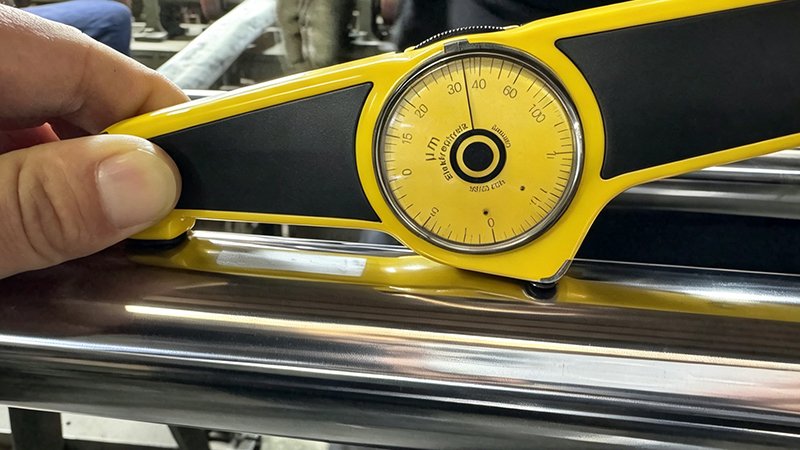
The practical implication for incoming inspection is that a single chrome thickness measurement near one end of a long rod is not sufficient evidence of uniform plating. Measuring at multiple points along the length, including the middle section where non-uniformity is most likely to appear, gives a true picture of the plating and catches exactly the kind of variation that a limited inspection would miss entirely. This is a natural extension of the multi-point thickness measurement practice worth applying to any coating verification, but it carries particular weight on long rods where the plating physics itself makes mid-length variation a known risk rather than a random defect.
What a Well-Controlled Process Looks Like
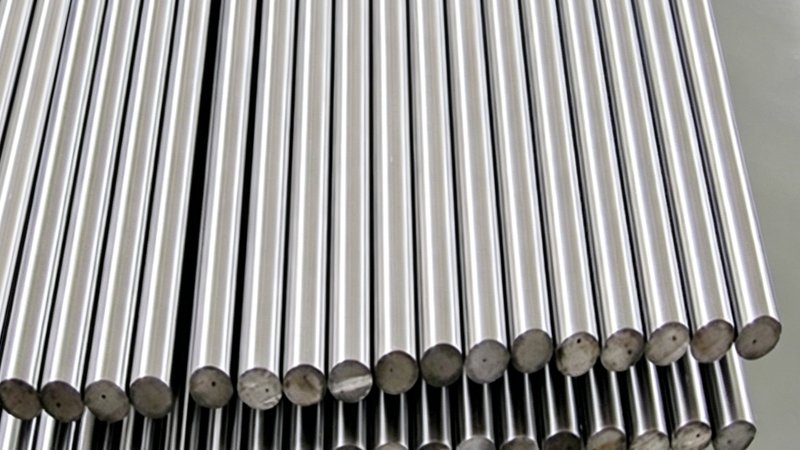
A plater with well-designed tooling for long rods, appropriate anode shaping or positioning, and a documented process for verifying thickness at multiple points along the length, should be able to demonstrate consistent chrome thickness from end to end on request. Asking for that evidence before a large order of long rod, rather than after a customer reports uneven wear months into service, is the more useful time to have the conversation.
At EAST AI, chrome plating on longer rods is controlled with appropriate anode arrangement for the rod length, and thickness verification includes multiple points along the rod rather than a single check near one end.
Related Reading
- Chrome Plating Thickness Measurement: Magnetic, Microscopic, and Coulometric Methods
- Chrome Rod Diameter Consistency: Taper and Barreling Along the Length
- Chrome Rod Runout vs Straightness: Two Different Geometric Errors
One Reading Near the End Is Not the Whole Rod
Long chrome rod can plate thinner in the middle than at the ends, a predictable result of field geometry, not a random defect. Measure thickness at multiple points, and ask how your supplier controls uniformity on long parts.
What We Offer
- Chrome plated rod with anode arrangement controlled for uniform thickness on long parts
- Multi-point thickness verification along the full rod length, not just at one end
- Technical guidance on specifying and verifying plating uniformity for long-stroke rods
- Full material traceability for crane, lifting, and long-stroke rod applications
Contact EAST AI (eastai-tech.com) Email: marketdi@east-ai.cn Phone: +86 13382202696 Address: No. 108, Lunan Road, Wuxi, Jiangsu, China.
Written by Alex, Production Engineer at EAST AI