
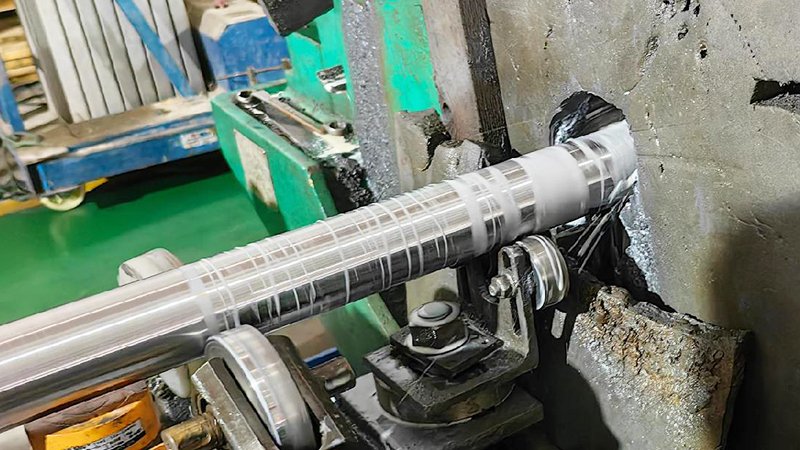
A cylinder operating next to a furnace kept failing rods. The chrome plated rod would come back with a surface that had lost its hardness, discolored, and begun to corrode where it never had before. The rod was a correct, standard hard chrome specification that performed perfectly on every other machine in the plant. The one that killed it was heat. Standard chrome plated rod has real temperature limits, and pushing it past them quietly undermines the very properties, hardness and corrosion resistance, that the chrome is there to provide.
This article is for engineers specifying chrome plated rod for hot environments, and it explains what heat does to a plated rod, where the practical limits lie, and what alternatives exist when the application runs too hot for standard chrome.
What Heat Does to Hard Chrome
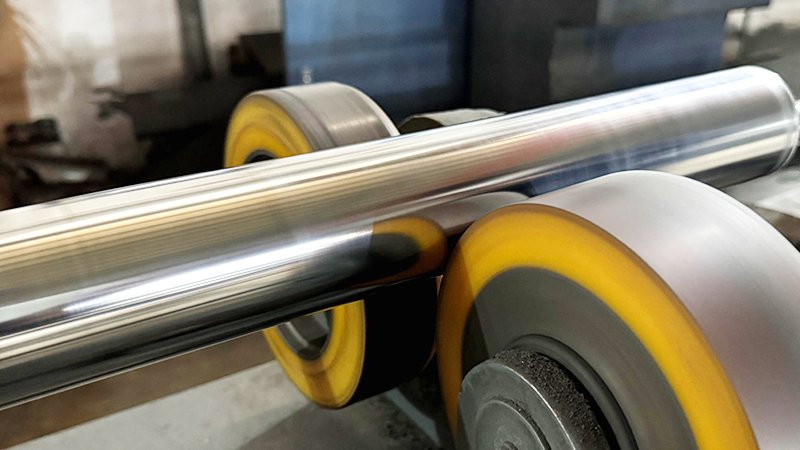
Hard chrome owes its value to two properties: high surface hardness, typically in the HV 800–1000 range, and corrosion resistance. Both are affected by temperature. As service temperature rises, hard chrome begins to lose hardness through a tempering-like softening of the deposit, and at higher temperatures the surface can oxidize and discolor. A softer chrome surface wears faster and resists scoring less, so the rod’s wear life drops even though the coating is still present.
The international specification for engineering chromium coatings, ISO 6158, Electrodeposited coatings of chromium for engineering purposes, frames chrome as an engineering coating with defined properties, and those properties are characterized at normal service conditions. Operating well above ambient moves the coating outside the envelope where its rated hardness and behavior can be assumed. In short, the chrome you specified is not the chrome you get once it is hot enough.
The Base Steel Has Its Own Limit
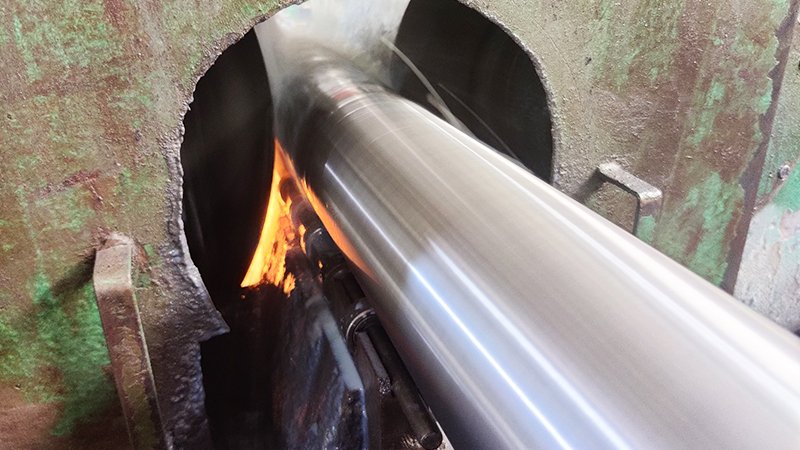
The chrome is only part of the story. The base steel under the chrome is usually a quenched-and-tempered or induction-hardened steel whose strength depends on its heat-treated microstructure. If the rod runs at a temperature approaching or exceeding the base steel’s tempering temperature, the base itself begins to soften, losing yield strength and hardness. A rod can therefore fail in a hot application not only at its chrome surface but in its core, bending or yielding under loads it once carried easily, because the heat has drawn the temper out of the steel.
This dual vulnerability, chrome softening at the surface and the base tempering in the core, is why high-temperature service is genuinely limiting for standard plated rod, and why it cannot be solved simply by adding more chrome. More chrome does not raise the temperature at which either the coating or the base softens.
Where the Practical Limits Lie
Standard hard chrome plated rod on a conventional base steel is well suited to normal ambient and moderately warm service. As continuous operating temperature climbs into the range where the base steel’s temper and the chrome’s hardness are threatened, the rod’s reliability falls off. The exact threshold depends on the base steel’s tempering temperature and the duty, but the principle is firm: the higher and more sustained the temperature, the less a standard plated rod can be relied on to keep its hardness, strength, and corrosion resistance.
Radiant and conducted heat both count. A rod does not have to be in a furnace to run hot; proximity to hot processes, hot hydraulic fluid, poor cooling, or heat soak in an enclosed space can all raise the rod’s temperature beyond what the specifier assumed from ambient. Assessing the actual rod temperature in service, not just the room temperature, is the first step in deciding whether standard chrome will survive.
Alternatives for Hot Service
When an application runs too hot for standard chrome plated rod, several routes exist.
The first is to choose a base steel with a higher tempering temperature, an alloy grade whose heat treatment holds up better at the service temperature, so the core retains its strength. This addresses the base-softening failure mode and is often combined with the other measures.
The second is to consider alternative surface treatments engineered for elevated temperature, such as coatings and surface technologies that retain hardness and corrosion resistance at temperatures where electrodeposited hard chrome softens. These are specialized solutions selected to match the specific temperature and wear demands of the application, and they trade cost for high-temperature capability.
The third, and often the most practical, is thermal management of the installation: shielding the rod from radiant heat, providing cooling, or repositioning components so the rod runs cooler and a standard, cost-effective plated rod remains within its limits. Sometimes the cheapest fix is not a different rod but a heat shield.
Specifying for Heat: Ask the Right Questions
The recurring mistake is specifying a rod for a hot application as if it were a normal one, using the standard chrome-on-Q&T-steel default without accounting for temperature. Avoiding it means asking, at the specification stage: What is the actual sustained rod temperature in service, including radiant and conducted heat? Does that temperature approach the base steel’s tempering temperature or the range where chrome hardness degrades? Is the duty wear-driven, corrosion-driven, or load-driven, since that determines which property loss matters most? And can the installation be thermally managed to keep a standard rod viable, or does the temperature genuinely demand an alternative?
With those answers, the right solution, higher-temperature base steel, an alternative surface treatment, thermal management, or a combination, becomes clear. Specifying blind and discovering the limit through repeated field failures, as the furnace-side cylinder did, is the expensive way to learn it.
Related Reading
- Chrome Plated Rod for Offshore and Marine Deck Equipment
- Chrome Plated Rod for Wind Turbine Pitch and Yaw Cylinders
- Chrome Plated Rod Diameter Tolerance: f7 vs f8 vs g6
Specify for the Temperature the Rod Actually Sees
Heat softens both the chrome and the steel beneath it. Assess the real service temperature, and choose the base steel, surface treatment, or thermal management that keeps the rod within its limits.
What We Offer
- Chrome plated rod on base steels selected for your service temperature and load
- Guidance on where standard hard chrome’s limits lie and when an alternative is warranted
- Support in matching base steel, coating, and thermal management to hot applications
- Full material traceability and specifications tied to recognized coating standards
Contact EAST AI (eastai-tech.com) Email: marketdi@east-ai.cn Phone: +86 13382202696 Address: No. 108, Lunan Road, Wuxi, Jiangsu, China.
Written by Alex, Production Engineer at EAST AI