
Most hydraulic cylinder specifications assume axial loading — force applied straight along the rod’s centerline, with the mounting and guiding structure outside the cylinder handling anything off-axis. That assumption breaks down on guided-load applications, where the cylinder itself absorbs genuine side load as part of normal operation, and it changes what “adequate” actually means for bore and rod tolerance.
Side load concentrates wear asymmetrically. When a cylinder carries side load, the piston presses harder against one side of the bore than the other throughout the stroke, rather than running centered. This asymmetric contact accelerates wear specifically on the loaded side, both at the piston seal and at the rod bushing, in a pattern that a cylinder designed purely for axial load never develops. A bore and rod combination that would give years of service under pure axial load can wear through meaningfully faster under sustained side load of the same magnitude.
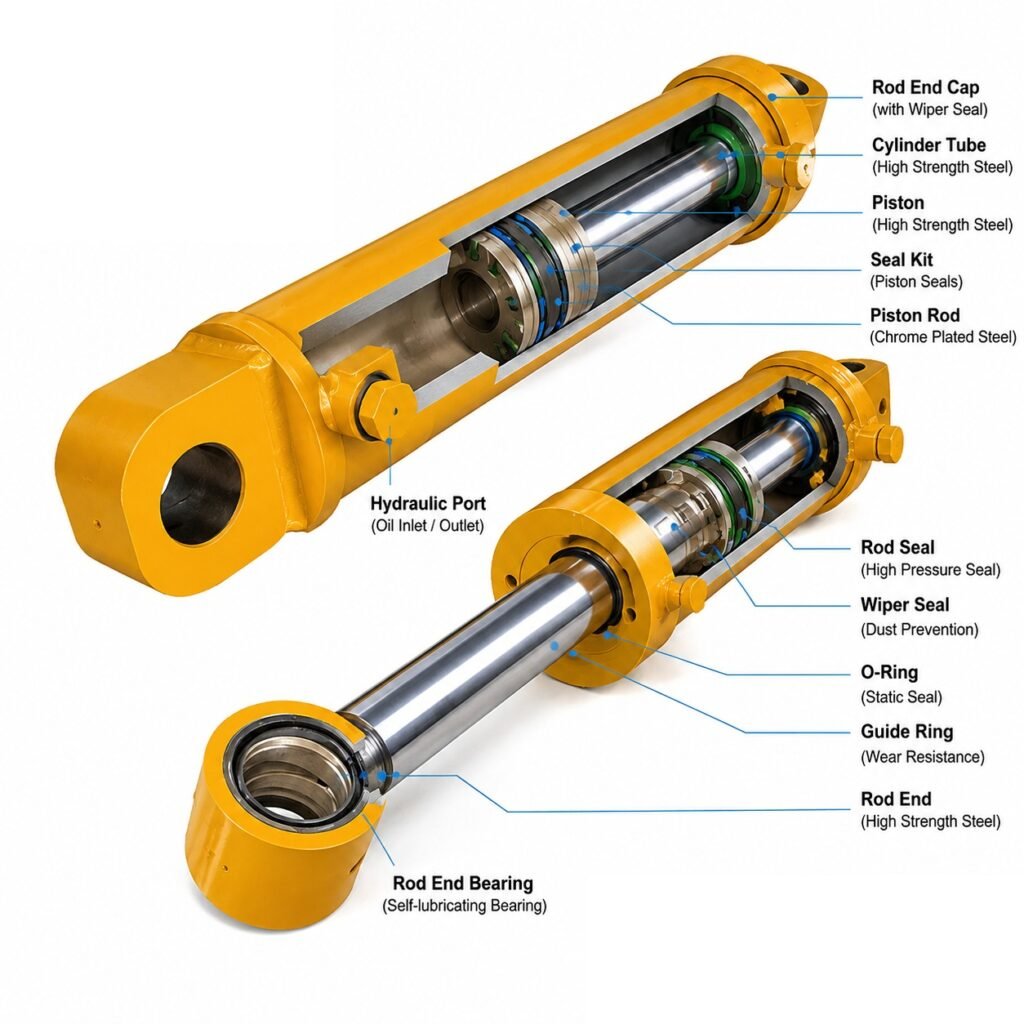
Where Side Load Shows Up in Real Equipment
Guided-load applications are more common than people initially assume once you start looking for them: linear actuators integrated into guided slide mechanisms, cylinders mounted where the load path isn’t perfectly aligned with the rod axis due to overall machine geometry constraints, and any application where the cylinder itself is expected to provide some lateral stability to the load rather than purely linear force. Press equipment, certain material handling configurations, and some specialized industrial automation all fall into this category more often than a quick glance at the application would suggest.
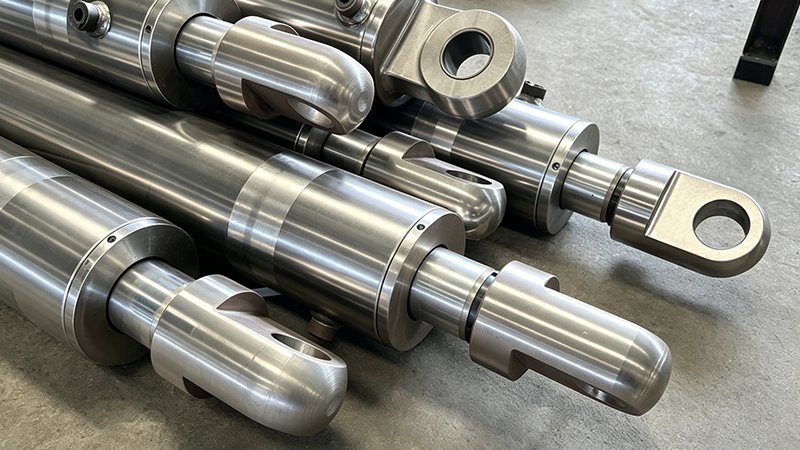
Rod Bushing Becomes the First Point of Concern
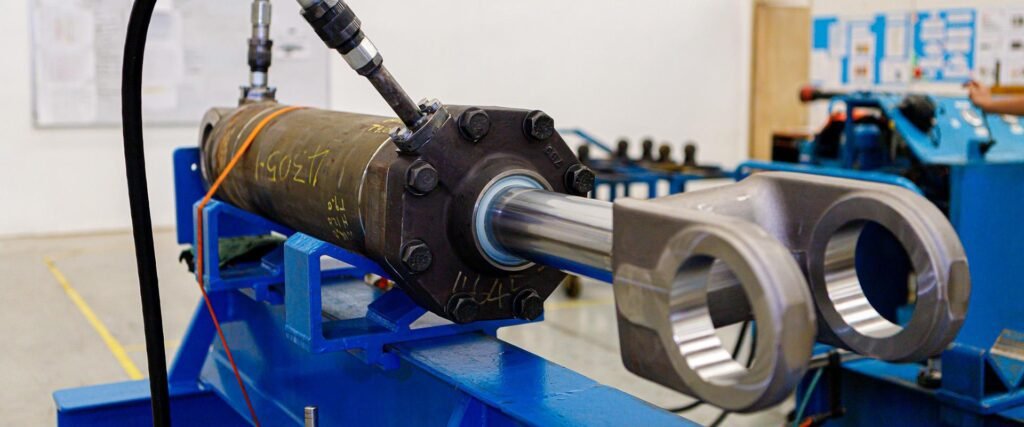
Under genuine side load, the rod bushing, which guides the rod as it extends and retracts, bears load it wasn’t designed to carry on a purely axial application. Bushing wear accelerates, and as bushing clearance increases from that wear, the rod itself can develop additional play that compounds the side load problem further — a feedback loop that starts slow and accelerates as clearance grows. Specifying a bushing material and length appropriate to the actual anticipated side load, rather than a standard axial-duty bushing, interrupts this feedback loop before it starts.
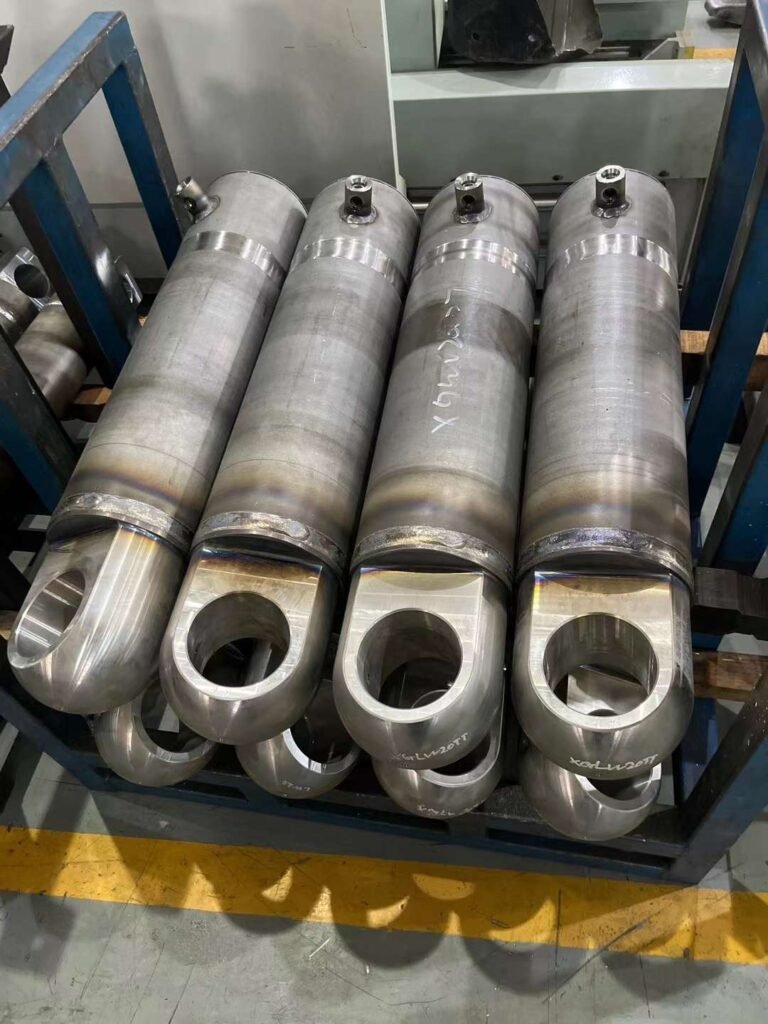
Piston Seal Wear Pattern Tells the Story
A piston seal wearing unevenly around its circumference, rather than uniformly, is a strong indicator of side load in a system that wasn’t designed to expect it. This diagnostic sign is worth checking on any cylinder with a wear complaint that doesn’t match the expected cycle count or load for pure axial duty — if the wear is asymmetric rather than uniform, side load is a more likely explanation than a simple material defect.
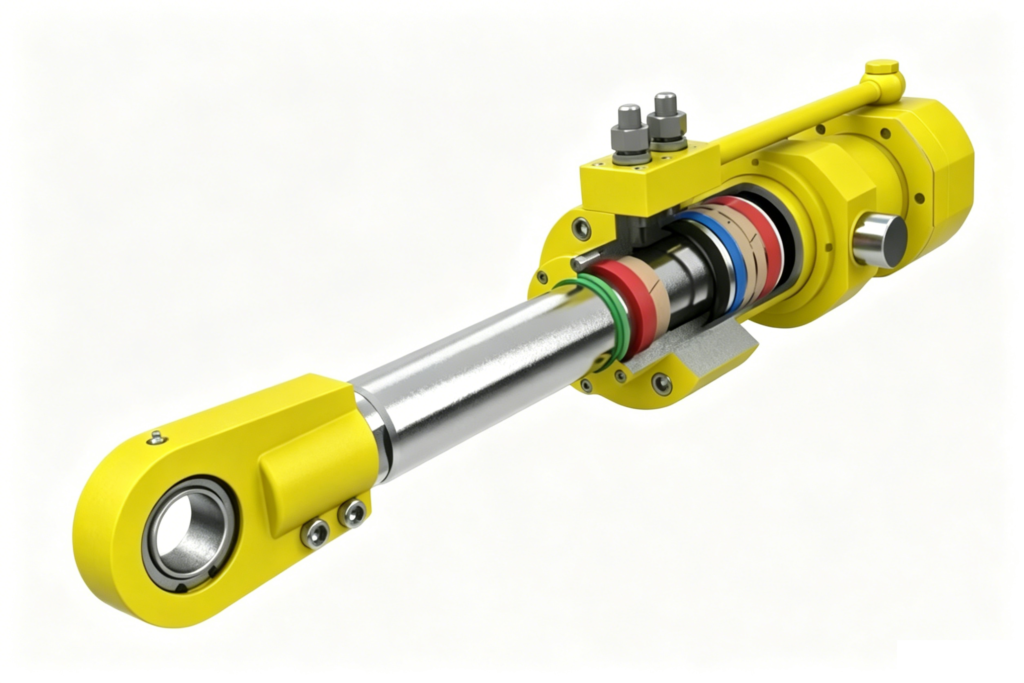
Specifying for Actual Geometry, Not Assumed Geometry
The practical fix starts with an honest assessment of the actual machine geometry: is the load genuinely axial, or does the mounting and linkage arrangement introduce a side component that the cylinder has to absorb? Where side load is real and unavoidable by redesigning the mounting geometry, specifying a longer piston bearing length, a more robust rod bushing, and in some cases a bore and rod material combination with better tolerance for asymmetric contact gives the cylinder a realistic chance of meeting its expected service life under the load it will actually see, rather than the idealized axial load the standard specification assumed.
Related Reading
- Hydraulic Cylinder Trunnion and Clevis Mounting: Load Path and Pin Wear Considerations
- Hydraulic Cylinder Rod Buckling: Euler Column Strength and Stroke Length Limits
- Honed Bore Surface Defects: Scratches, Pits, and Chatter Marks Explained
What We Offer
- Honed tube and chrome plated rod specified for applications with genuine side load conditions
- Technical consultation on bushing and bearing length selection for guided-load cylinders
- Diagnostic guidance for distinguishing side-load wear patterns from material defects
- Full material traceability supporting equipment designers specifying non-axial duty cylinders
Contact EAST AI (eastai-tech.com) Email: marketdi@east-ai.cn Phone: +86 13382202696 Address: No. 108, Lunan Road, Wuxi, Jiangsu, China.
Written by Alex, Production Engineer at EAST AI