
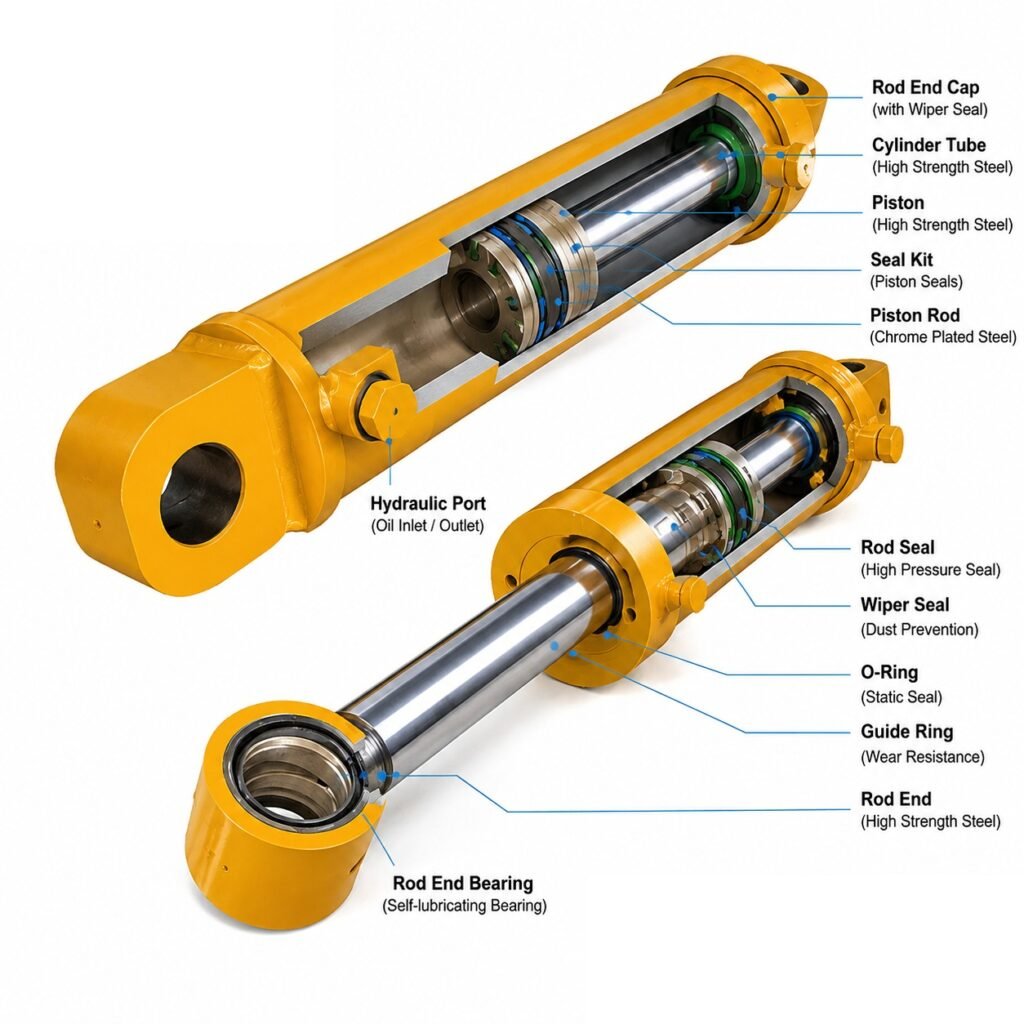
An equipment designer once specified a long-stroke cylinder using a rod diameter that comfortably handled the calculated axial load, only to watch the rod bow visibly under full extension during the first test, well below the load the diameter was supposedly rated for. The rod had not failed in simple compression; it had buckled, a mode of failure governed not primarily by stress but by geometry, specifically the relationship between the rod’s unsupported length at full extension and its diameter. A rod perfectly adequate in cross-sectional strength can still buckle if it is too slender for its extended length, and no amount of material strength alone fixes a problem that is fundamentally about geometry.
This article is for hydraulic engineers and cylinder designers, and it explains how Euler column buckling applies to hydraulic cylinder rods, why long-stroke cylinders need a buckling check separate from a simple stress calculation, and how to specify rod diameter correctly for long-stroke applications.
Why Buckling Is a Different Failure Mode Than Compression
A simple compressive stress calculation checks whether a rod’s cross-sectional area can carry an applied axial load without exceeding the material’s yield strength. Buckling is an entirely different phenomenon: a slender column under compressive load can become unstable and bow sideways at a load far below what the material’s compressive strength would suggest, purely because of the column’s geometry, specifically its unsupported length relative to its diameter and the end-fixing conditions. A rod that passes a compressive stress check with a comfortable margin can still buckle, because buckling load and compressive strength are governed by entirely different relationships.
The Euler Buckling Relationship
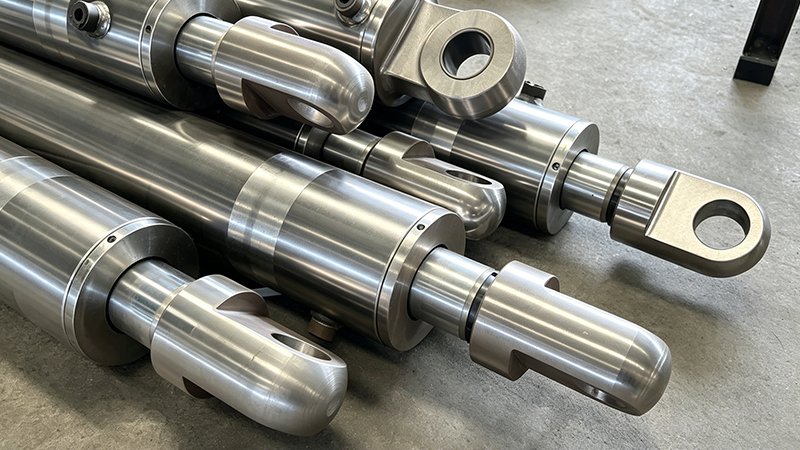
Euler’s column formula, the classical engineering model for this failure mode, calculates the critical buckling load as a function of the material’s elastic modulus, the column’s moment of inertia (which depends on diameter for a round rod), the unsupported length, and a factor describing how the ends are fixed or restrained. The relationship is highly sensitive to length: critical buckling load decreases with the square of the unsupported length, meaning a cylinder with twice the stroke, all else equal, has only a quarter of the buckling resistance, a far steeper penalty than most designers intuitively expect from a straightforward stress calculation.
This is why long-stroke cylinders, those with a large ratio of stroke length to rod diameter, require explicit buckling verification rather than relying on a compressive stress check alone, since the stress check can show an enormous margin while the buckling check shows the design is marginal or inadequate.
End-Fixing Conditions Change the Answer Significantly
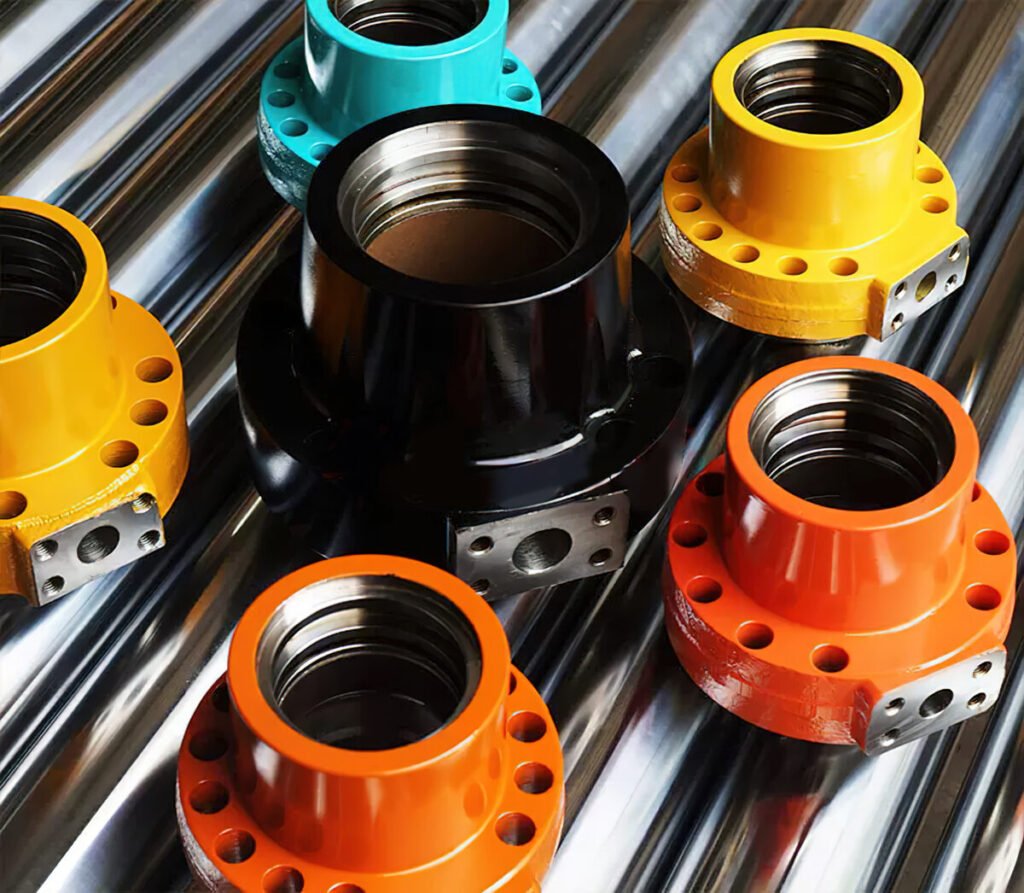
The buckling formula’s end-fixing factor accounts for how the rod is restrained at each end, a pinned connection at both ends, fixed connections, or one of each, and this factor changes the effective length used in the calculation substantially. A cylinder mounted with trunnion or clevis connections that behave as pinned joints at both ends has a different, generally more conservative, effective length than one with a more rigid mounting arrangement, and using the wrong assumption about end fixing can produce a dangerously optimistic buckling calculation. Confirming the actual mounting and connection geometry, not just assuming a textbook end condition, is essential for a realistic result.
Side Load and Combined Loading
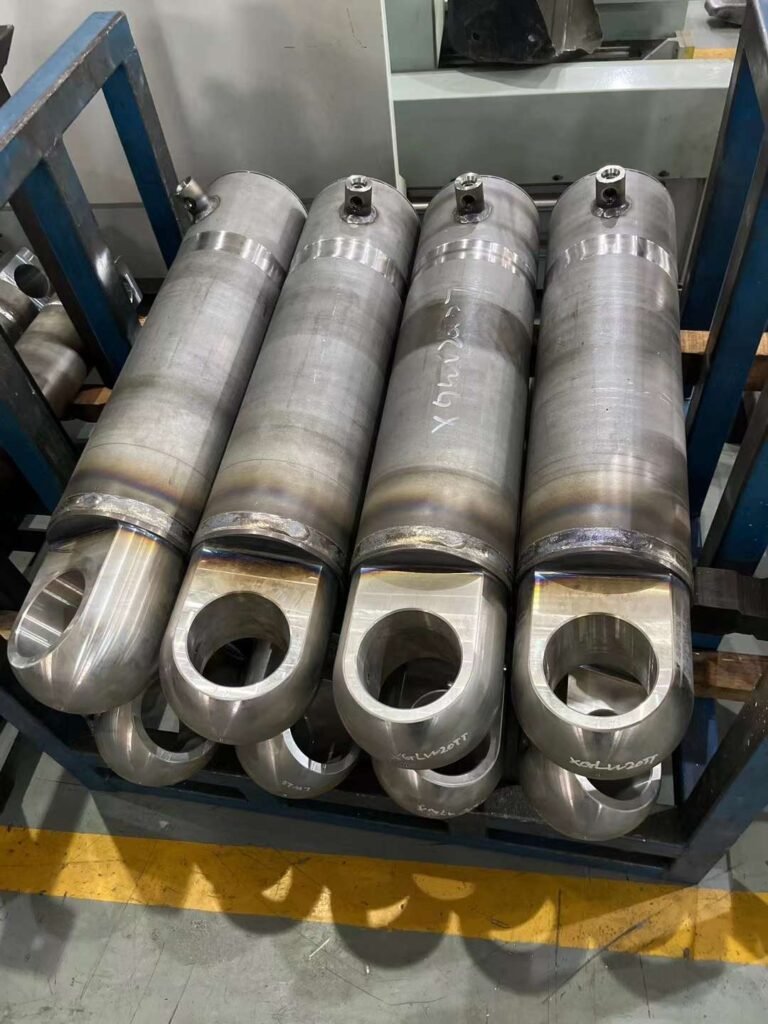
Real cylinders rarely experience pure, perfectly axial compressive load; side load from misalignment, off-axis mounting, or the application itself combines with axial compression to reduce the effective buckling resistance below the pure-axial Euler prediction. Designs operating close to their calculated buckling limit under ideal, perfectly axial assumptions have little margin left once realistic side load is considered, which is why experienced designers build a meaningful safety factor into the buckling calculation rather than treating the Euler load as a hard limit to design right up against.
Addressing Buckling in Design
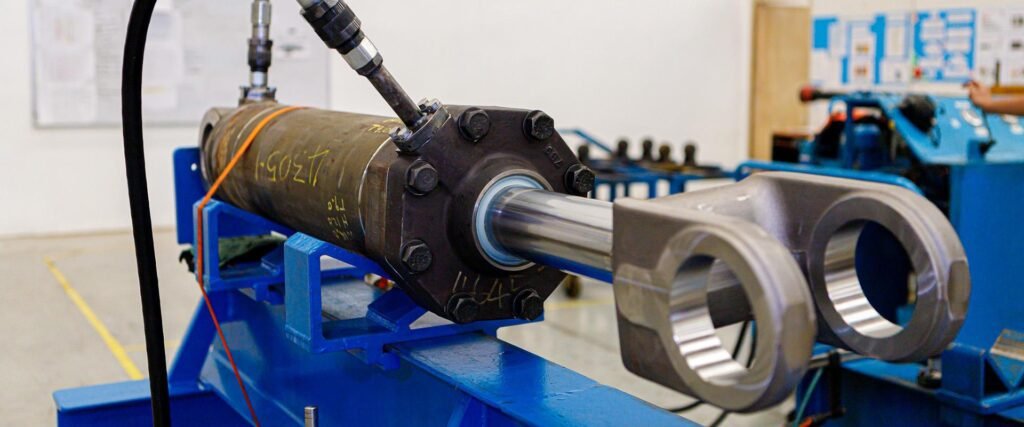
Where a buckling check reveals inadequate margin, the available remedies are to increase rod diameter, which increases the moment of inertia and buckling resistance substantially since the relationship scales with diameter to a high power, to reduce the unsupported length through a stop tube or by reconsidering the stroke requirement, or to change the end-fixing arrangement to a stiffer mounting if the application allows it. Increasing rod diameter is often the most direct fix but adds weight, cost, and may require a correspondingly larger bore and seal package, so a buckling-driven redesign should be checked against the overall cylinder specification rather than adjusted in isolation.
Checking Buckling Early in the Design Process
The practical lesson for cylinder designers is to perform a buckling check alongside, not instead of, a compressive stress check, particularly for any cylinder where stroke length is large relative to rod diameter. Catching an inadequate buckling margin on the drawing board, as the Euler relationship predicts it, avoids discovering the problem the way the example above did, with a rod visibly bowing on the test bench after the diameter had already been committed to tooling and procurement.
Related Reading
- Stop Tube in Long-Stroke Hydraulic Cylinders: Why It Extends Life
- Chrome Rod Diameter Consistency: Taper and Barreling Along the Length
- Honed Tube for Aerial Work Platform Cylinders: Safety-Critical Precision
Stress Checks Alone Miss Buckling
A rod can pass a compressive stress check with margin to spare and still buckle, because buckling is governed by geometry, not strength alone. Run an Euler buckling check for any long-stroke design, and verify your end-fixing assumptions against the real mounting.
What We Offer
- Chrome plated rod and honed tube in diameters suited to long-stroke, buckling-sensitive designs
- Technical guidance on rod sizing for Euler buckling and combined side-load conditions
- Base steel and heat treatment options supporting higher-strength, smaller-diameter rod solutions
- Full material traceability for hydraulic engineers and cylinder designers
Contact EAST AI (eastai-tech.com) Email: marketdi@east-ai.cn Phone: +86 13382202696 Address: No. 108, Lunan Road, Wuxi, Jiangsu, China.
Written by Alex, Production Engineer at EAST AI