
A builder of long-stroke lift cylinders measured incoming chrome plated rod at both ends with a micrometer, found both readings inside the f7 tolerance, and approved the batch. In service, several cylinders developed a small leak that appeared only at mid-stroke and disappeared when the rod was fully extended or retracted. When the rods came back, a micrometer walked along the full length showed the problem: the middle of each rod was several microns smaller than the ends. The ends were in tolerance, the middle was at the bottom edge of it, and the rod seal, already near the end of its compression range, lost contact exactly where the rod was thinnest. The rod was not bent and not out of round. Its diameter simply changed along its length.
This article is for engineers, QC staff, and technical buyers who specify and inspect chrome plated rod. It explains taper and barreling, how they arise, why they matter for seals and bushings, and how to measure and specify longitudinal diameter consistency.
Size Along the Length Is Its Own Property
Rod diameter is usually specified by a tolerance class such as f7, f8, or g6, and most inspection checks the diameter at one or two points. But the tolerance applies everywhere on the working surface, and the diameter can vary along the length while every single reading still falls inside the band. Two common patterns are:
Taper: the diameter changes steadily from one end to the other, so one end is larger than the other.
Barreling and its opposite, a waisted or hourglass shape: the middle of the rod is larger (barreling) or smaller (waisting) than the ends.
These are distinct from straightness, which concerns the axis, and from roundness, which concerns the shape of one cross-section. A rod can be perfectly straight and round and still taper or barrel along its length.
Where Taper and Barreling Come From
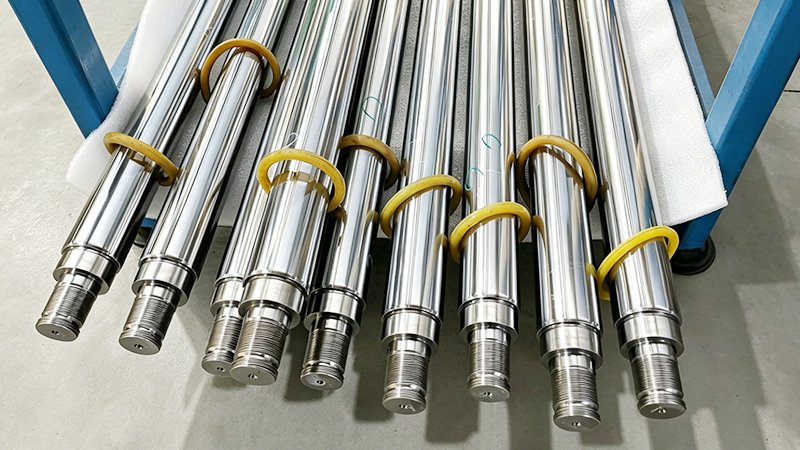
Longitudinal diameter variation is introduced mainly during grinding, plating, and polishing. In centerless or cylindrical grinding, machine alignment, wheel wear, and the way a long rod is supported can grind one end differently from the other or remove more material in the middle. A long, slender rod that deflects under grinding forces tends to be ground to a slightly larger diameter in the middle, where it bends away from the wheel, producing barreling.
Chrome plating adds its own pattern. Current density is naturally higher near the ends of a rod, so plating tends to build more chrome there. Without effective shielding and process control, the result is a rod with thicker chrome at the ends and a waisted profile in the middle. Post-plating grinding and polishing can correct this if done well, or add further variation if the process is not controlled.
Why It Matters in the Cylinder
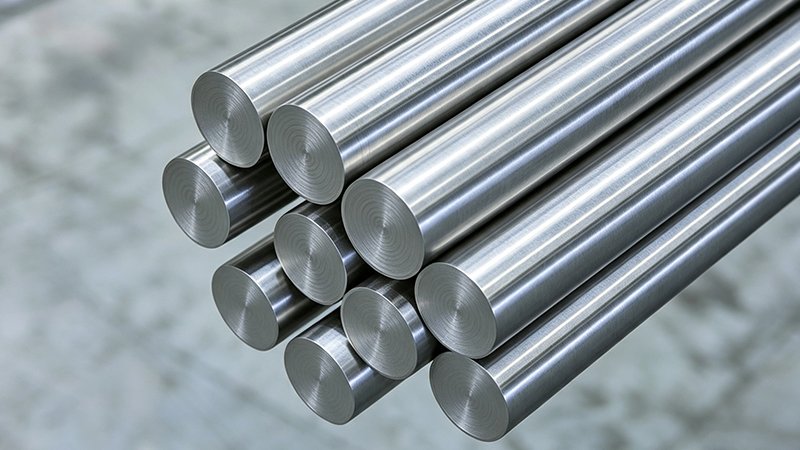
A rod seal is designed to work within a specific compression range, which depends on the rod diameter. As the rod strokes, every section of the working length passes through the seal. If the diameter varies along the length, seal compression varies with stroke position. Where the rod is at the small end of the tolerance, seal contact drops and leakage can appear; where it is at the large end, friction and heat increase. On long-stroke cylinders the variation is spread over more length and becomes more likely to show up.
The guide bushing is affected in a similar way. Clearance between rod and bushing changes as the rod strokes, which alters the support the rod receives and can increase wear under side load. In precision and servo applications, variations in friction along the stroke can also affect motion smoothness.
Measuring Longitudinal Consistency
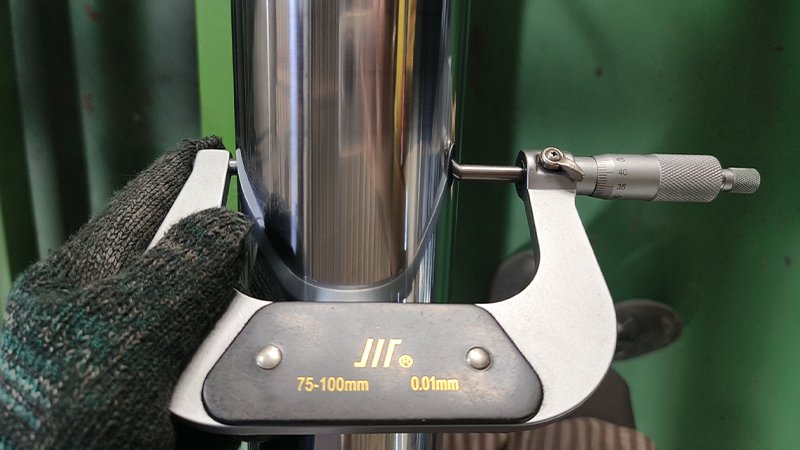
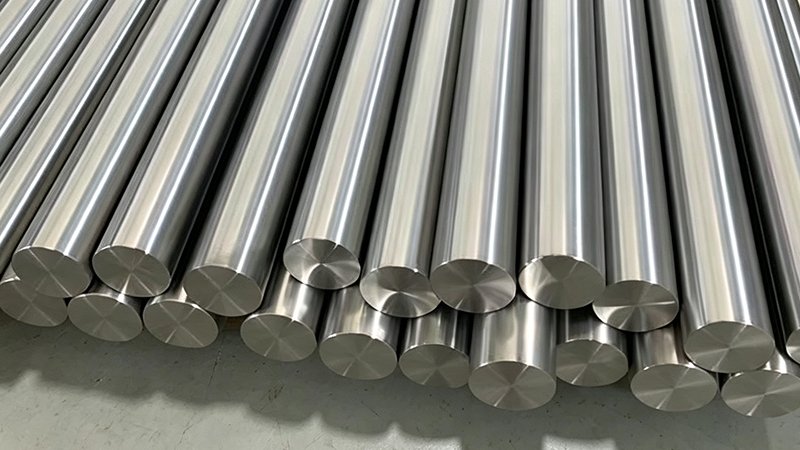
Catching taper and barreling requires measuring at several positions along the length, not just at the ends. A practical routine is to measure at defined intervals along the working length, for example near each end, at the middle, and at quarter points, and at two orientations 90 degrees apart at each position to separate longitudinal variation from ovality. A micrometer or snap gauge is adequate for most checks, provided it is used carefully and at stable temperature.
For higher-volume or tighter-tolerance work, laser micrometers or scanning measurement systems can map the diameter continuously as the rod moves through, revealing the full profile. Plotting diameter against position makes taper and barreling obvious at a glance.
Specifying Diameter Consistency
A tolerance class alone permits the full band anywhere on the rod. When a cylinder is sensitive to seal compression, it is sensible to add a maximum diameter variation along the length, for example a stated limit on the difference between the largest and smallest readings over the working length, together with the measurement positions. This does not require a tighter overall tolerance; it simply prevents the rod from using the whole band in a way that makes the seal’s job harder.
It also helps to state the working length that must meet the requirement, since ends that will be machined for threads or shoulders do not need the same control. Communicating the seal type and stroke length allows the supplier to target grinding and polishing control where it matters.
What Good Process Control Delivers
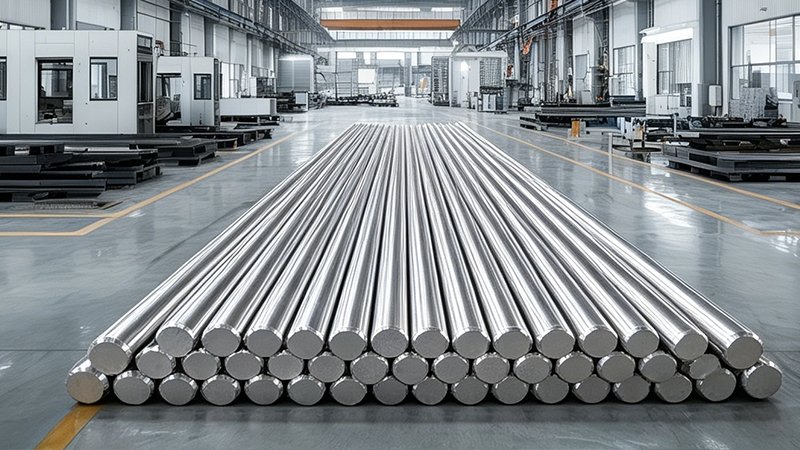
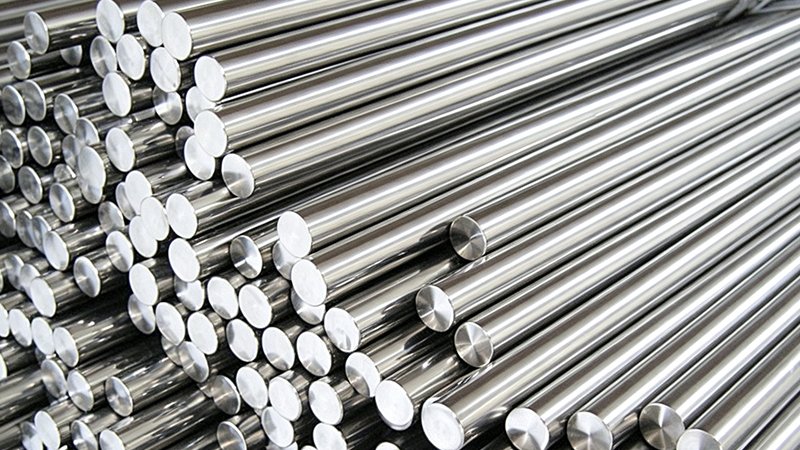
Consistent diameter along the length is the result of well-aligned grinding equipment, adequate support for long rods, controlled plating with appropriate shielding, and finishing that corrects rather than adds variation. At EAST AI, piston rod outer diameter detection is part of our testing routine, and long rods are measured at multiple positions so the diameter the seal sees at mid-stroke is the same diameter it sees at the ends.
Related Reading
- Chrome Plated Rod Diameter Tolerance: f7 vs f8 vs g6
- Chrome Rod Runout vs Straightness: Two Different Geometric Errors
- Chrome Plated Rod for Truck-Mounted and Crawler Cranes
Check the Whole Rod, Not Just the Ends
A rod that is in tolerance at both ends can still lose its seal in the middle. Measure along the length, specify longitudinal variation, and source rod from a process that holds diameter end to end.
What We Offer
- Chrome plated rod in f7, f8, and g6 with diameter controlled along the full working length
- Multi-position outer diameter inspection for long-stroke rods
- Controlled grinding, plating, and polishing to limit taper and barreling
- Mill certificates, inspection records, and full traceability
Contact EAST AI (eastai-tech.com) Email: marketdi@east-ai.cn Phone: +86 13382202696 Address: No. 108, Lunan Road, Wuxi, Jiangsu, China.
Written by Alex, Production Engineer at EAST AI