
An engineer designing cylinders for a steel-mill application once could not understand why cylinders that worked perfectly on the test bench were seizing in service. The bench was at room temperature; the mill floor was hot. As the cylinders heated up, the clearances that were correct at twenty degrees changed, and at operating temperature the fits had tightened enough to bind. Nothing was wrong with the parts as measured; they were simply measured and assembled at a temperature far from where they worked. Thermal expansion had quietly changed every critical clearance, and the design had never accounted for it.
Steel expands when heated and contracts when cooled, and in a hydraulic cylinder the bore, the rod, the piston, and the seals all change dimension with temperature. In moderate conditions this is negligible, but in hot or cold service, or across a wide operating range, thermal expansion changes the critical fits and clearances enough to affect sealing, friction, and even function. For engineers specifying cylinders for demanding thermal environments, understanding these effects is essential to designs that work at temperature, not just on the bench.
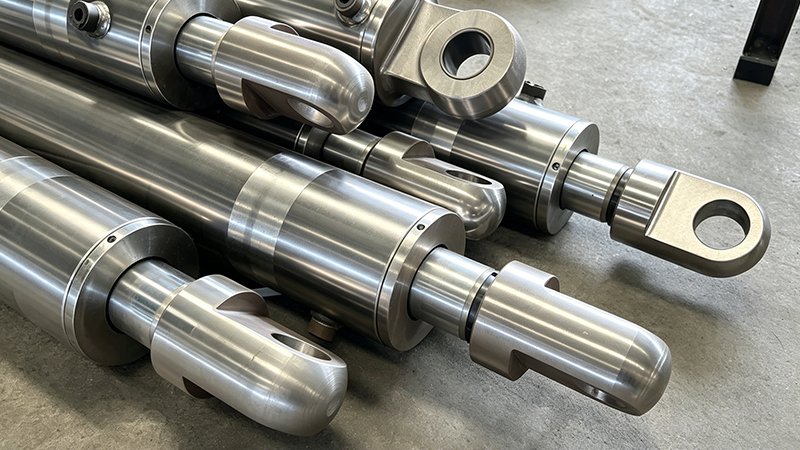
The physics of thermal expansion in steel
Steel has a coefficient of thermal expansion that describes how much it grows per degree of temperature rise, and while the number is small, it acts on every dimension and accumulates over larger sizes and larger temperature changes. A bore, a rod diameter, and a length all expand in proportion to their size and the temperature change, so the larger the component and the wider the temperature swing, the larger the absolute dimensional change. This is why thermal effects that are trivial in a small cylinder at moderate temperature become significant in a large cylinder across a wide range.
The important point for cylinder design is that different components expand, and the fit between them depends on their relative expansion. When two steel parts of similar material heat up together, they expand at similar rates, so a steel rod in a steel bore changes less in relative fit than parts of dissimilar materials would. But the seals, bushings, and any non-steel components have different, often much larger, expansion coefficients, so the fits involving those parts change more with temperature than the steel-to-steel fits.
Temperature also does not act uniformly or instantly. A cylinder heating up may have its outer parts hotter than its core for a time, and different components may reach temperature at different rates, creating transient differential expansion during warm-up and cool-down. These transient effects can momentarily tighten or loosen fits more than the steady-state condition, which is why some cylinders bind during warm-up or leak during cool-down even if they are fine once fully at temperature. Designing for the thermal range means considering both the steady extremes and the transients.
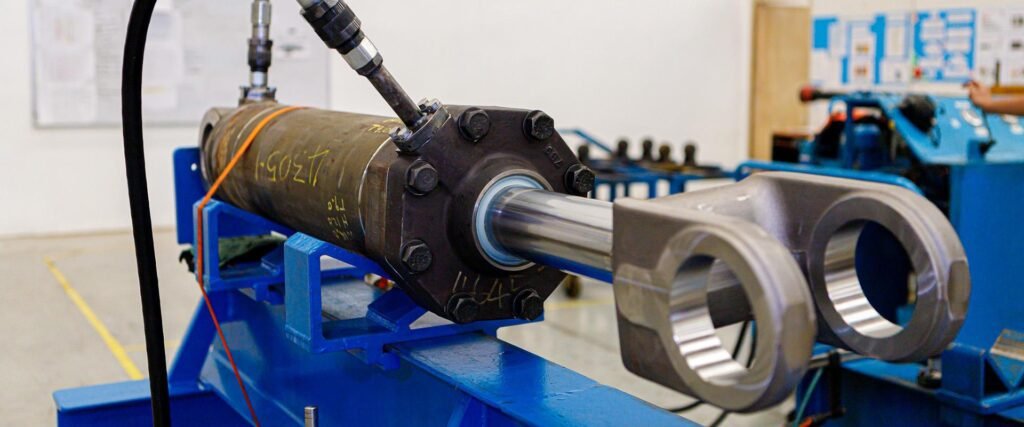
How clearances change when hot
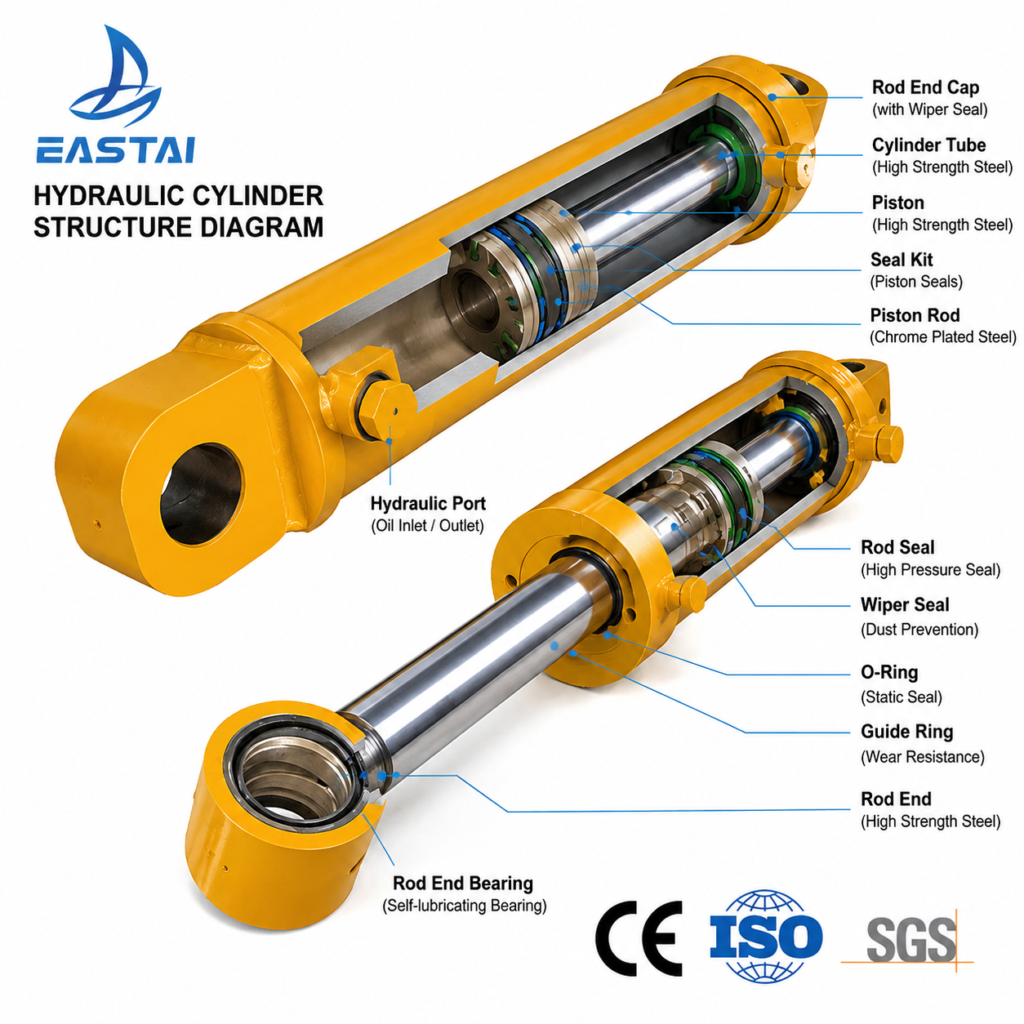
When a cylinder heats up, the bore diameter increases and the rod and piston diameters increase, and the net effect on clearance depends on how these changes compare. For the piston-to-bore and rod-to-bushing fits, the key is the difference in expansion between the moving part and its housing. Where both are steel and heat together, the clearance changes relatively little; where a component such as a bushing or seal has a much higher expansion coefficient, the clearance can change substantially, tightening as the higher-expansion part grows faster.
This is what caught the steel-mill engineer: the non-steel bearing and sealing components, and any differential heating, tightened the working clearances at operating temperature until the cylinder bound. A clearance set correctly at room temperature became too tight when hot, because the parts that close the clearance expanded faster than the parts that open it. The lesson is that clearances must be set for the operating temperature, allowing for the differential expansion, not simply for the assembly temperature.
Seal compression is affected in the same way and matters greatly for sealing. A seal’s squeeze against the bore or rod depends on the gap it fills, and as temperature changes that gap, the squeeze changes too. Heating can increase seal compression as surrounding parts expand inward against the seal, raising friction and potentially over-compressing the seal, while cooling can reduce compression and risk leakage. Because seal materials themselves expand and soften or stiffen with temperature, the thermal behaviour of the seal must be matched to the operating range for reliable sealing.
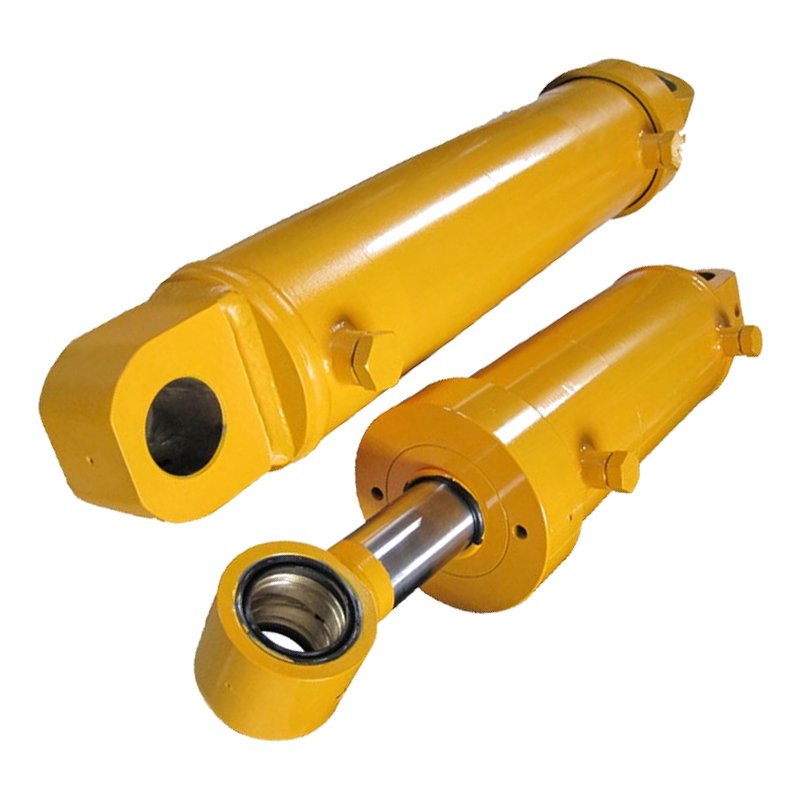
How clearances change when cold
Cold service brings the opposite problem and its own hazards. As a cylinder cools, the bore, rod, and other components contract, and again the net effect on fits depends on the relative contraction of the parts. Fits that were correct when warm can loosen when cold as parts shrink, potentially reducing seal compression and allowing leakage, or, where differential contraction goes the other way, tightening a fit and risking binding at low temperature.
Seals are especially sensitive to cold, because many seal materials stiffen and lose elasticity as temperature drops, in addition to contracting. A seal that is compliant and seals well at warm temperature can become hard and lose its ability to conform at low temperature, and combined with a loosening clearance from contraction, this can cause leakage in cold conditions. This is why cold-service cylinders need seal materials rated for low temperature and clearances that account for cold contraction, so the seal still seals when the cylinder is cold.
Cold also interacts with the material behaviour of the steel, though that is more about toughness than fit. While thermal contraction changes dimensions, very low temperatures also affect the steel’s fracture behaviour, a separate consideration from expansion. For fit and clearance purposes, the key cold-service point is that contraction changes the clearances and seals stiffen, so a cylinder must be designed with fits and seals appropriate for its lowest operating temperature, not just for room temperature assembly.
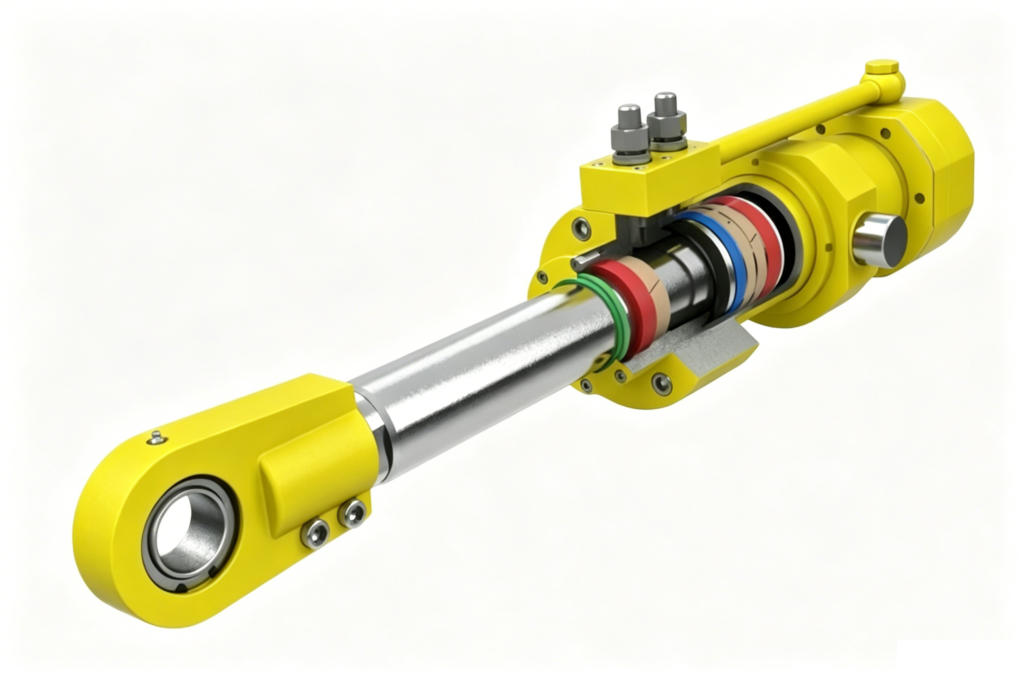
Designing and specifying for the temperature range
The practical conclusion is to design fits and clearances for the actual operating temperature range, not for the convenient room temperature at which parts are measured and assembled. This means calculating how the critical clearances, piston-to-bore, rod-to-bushing, and seal compression, change across the temperature range, using the expansion coefficients of the actual materials, and setting the room-temperature dimensions so the clearances are correct when hot and when cold. The bench condition is just one point on the range, and often not the critical one.
Material selection is part of the solution, because matching expansion coefficients where possible reduces differential expansion. Using bushing and component materials whose expansion is compatible with the steel, and choosing seals rated and sized for the temperature range, keeps the fits stable across temperature. Where dissimilar materials are unavoidable, the design must explicitly allow for their differential expansion in the clearance calculation, so the fit stays within limits at both extremes.
For specifying the honed tube and rod, the implication is that the bore and rod tolerances should be considered together with the thermal range, so that the assembled clearances land correctly at operating temperature. Telling the tube and rod supplier the operating temperature range, along with the fits you need, lets them help ensure the dimensions and tolerances suit the application. A cylinder designed and specified for its real thermal environment works at temperature, not just on the bench, which is exactly what the steel-mill engineer’s cylinders needed and initially lacked.
Related Reading
- Honed Tube for Injection Molding Machine Clamping Cylinders: Precision and Repeatability at High Cycle Rates: https://eastai-tech.com/honed-tube-for-injection-molding-machine-clamping-cylinders-precision-and-repeatability-at-high-cycle-rates/
- Honed Tube for Oil & Gas Drilling Equipment: Material Traceability and High-Pressure Wall Thickness Requirements: https://eastai-tech.com/honed-tube-for-oil-gas-drilling-equipment-material-traceability-and-high-pressure-wall-thickness-requirements/
Design for the Temperature It Runs At
Cylinders that pass on a warm bench can seize when hot or leak when cold. EAST AI has supplied honed tube and chrome rod since 2006, and we help engineers specify bore and rod so clearances land right across the operating range.
What we offer:
- Honed tube and chrome plated rod with tolerances suited to your thermal range
- Technical support on clearance and seal compression across temperature
- Consistent dimensions so your thermal calculations hold in production
- Guidance on matching fits and seals to hot or cold service
Tell us your operating temperature range, and we will spec fits that work at it. Email: marketdi@east-ai.cn | Phone: +86 13382202696 Address: No. 108, Lunan Road, Wuxi, Jiangsu, China.
Written by Alex, Production Engineer at EAST AI