
Written by Alex, Production Engineer at EAST AI
One of the most consequential numbers on a honed tube specification is also one of the most frequently misunderstood, and that is the wall thickness. We regularly receive enquiries that specify a bore diameter and a surface finish in great detail while treating wall thickness as an afterthought, or as something to be minimized to save weight and cost. That approach works right up until a pressure spike finds the margin that was never there, and by then the failure is a burst tube rather than a line item on a quotation, which is a far more expensive way to learn the lesson.
Wall thickness is where the honed tube stops being a surface-finish problem and becomes a pressure-vessel problem, because the wall is what actually contains the hydraulic force. Sizing it correctly means understanding the working pressure, the transient spikes above that pressure, the strength of the chosen material, and the safety margin the application demands. None of that is exotic engineering, but it does require treating the wall as a load-bearing element rather than as leftover metal around the bore, and that shift in mindset is what separates a reliable tube from a marginal one.
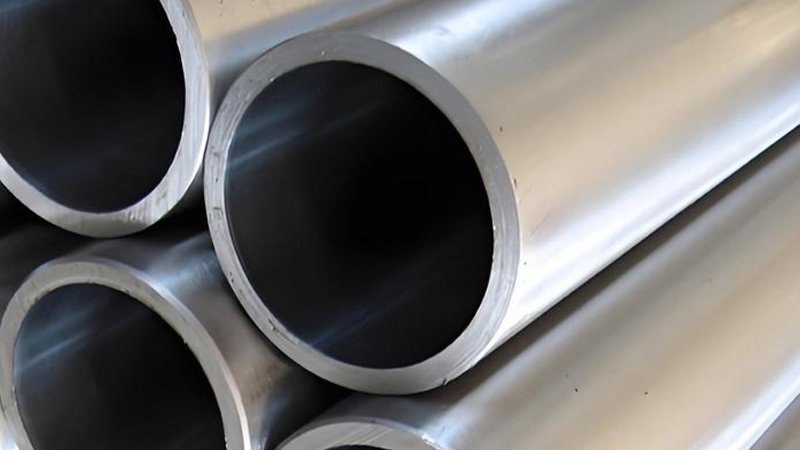
Hoop Stress Is the Governing Load
When a hydraulic cylinder is pressurized, the internal pressure pushes outward on the tube wall in every direction, and the dominant effect is the hoop stress that tries to split the tube along its length like an over-inflated balloon. That hoop stress is a function of the internal pressure, the bore diameter, and the wall thickness, and it grows as pressure and bore increase and as wall thickness decreases. Sizing the wall is fundamentally about keeping that hoop stress comfortably below the yield strength of the tube material, with margin to spare.
The relationship has important consequences that are not always intuitive. A larger bore at the same pressure needs a thicker wall, because the same pressure acting over a larger diameter generates more force trying to open the tube. Likewise, a higher working pressure at the same bore needs a thicker wall in proportion. This is why wall thickness cannot be copied from one cylinder to another without checking the bore and pressure, and why a tube that was perfectly safe in one design can be dangerously thin in another that looks superficially similar.
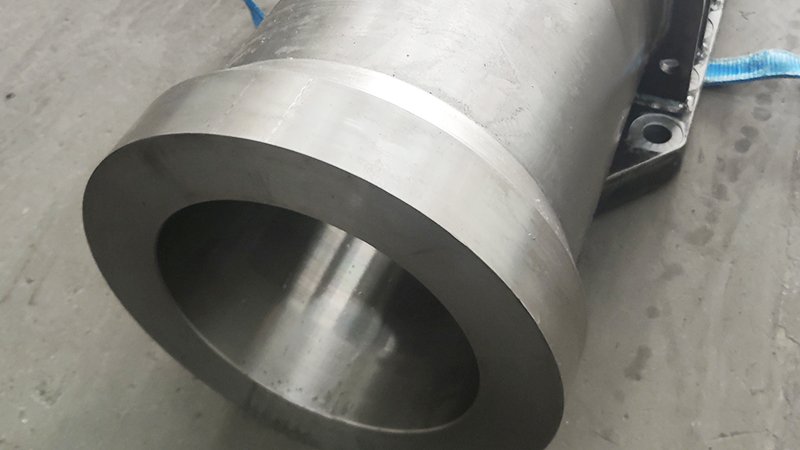
Working Pressure Versus Peak Pressure
The single most common wall-thickness mistake is sizing for the nominal working pressure while ignoring the pressure spikes that real systems generate. A cylinder rarely lives at a smooth, constant pressure; it sees transient spikes when a load is stopped abruptly, when a directional valve shifts, or when an external shock is transmitted back into the cylinder. Those spikes can substantially exceed the nominal working pressure, and because they define the worst case the tube must survive, they are the pressure the wall really has to be sized against.
This is why responsible wall sizing starts from the peak pressure the system can actually generate, not from the pressure written on the pump nameplate. In applications where spikes are frequent and severe, such as construction, mining, and impact tooling, the gap between nominal and peak pressure can be large, and a wall sized only for nominal pressure is an accident waiting for the first hard cycle. Understanding the real pressure profile, including the transients, is the prerequisite for a wall thickness that will not be surprised in service.
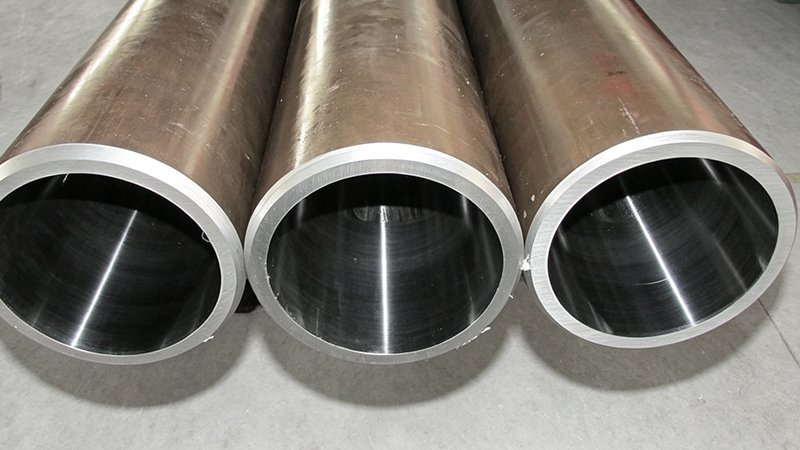
Material Strength Changes the Math
Wall thickness and material strength trade off directly against one another, because a stronger steel can tolerate higher hoop stress and therefore support a given pressure with a thinner wall. A higher-strength tube material such as a quenched-and-tempered grade allows a designer to hit a pressure rating with less wall, saving weight and often cost, while a lower-strength structural grade needs more wall to reach the same rating. This is one reason material selection and wall sizing have to be done together rather than in sequence.
The interaction is not purely about strength, though, because weldability, machinability, and cost all enter the decision alongside the raw yield number. A very strong steel that is difficult to weld may be the wrong choice for a welded cylinder even if it would allow a thinner wall, while a more forgiving structural grade with a slightly thicker wall may be the better overall answer. The wall thickness that ends up on the drawing is therefore the product of a material decision and a pressure decision made together, which is exactly why we prefer to have that conversation with the customer rather than receive a wall number in isolation.
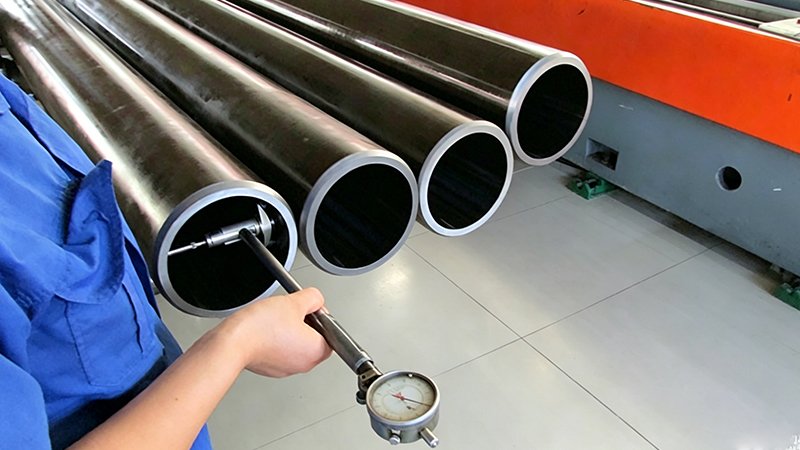
Safety Margin and Fatigue Over Life
A tube that merely survives its peak pressure once is not adequate, because a hydraulic cylinder is expected to endure millions of pressure cycles over its service life without fatiguing. Safety margin exists precisely to cover the gap between a single static survival and long-term cyclic durability, along with the real-world variability in material properties, manufacturing tolerances, and operating conditions. Sizing the wall with a sensible margin above the calculated minimum is not timidity; it is the recognition that the tube has to work reliably for years, not just pass one test.
The appropriate margin depends on the consequence of failure and the severity of the duty, which is why high-consequence applications such as oil and gas or heavy mining warrant more conservative walls than a lightly loaded indoor actuator. A burst tube in a drilling rig or a mining shovel is a safety event and a major downtime cost, so the margin there is deliberately generous, while a low-consequence application can be sized closer to the calculated minimum. Matching the margin to the consequence is a core part of engineering the wall, and it is a judgment that benefits from experience with the specific application.
Getting the Wall Right Before Production
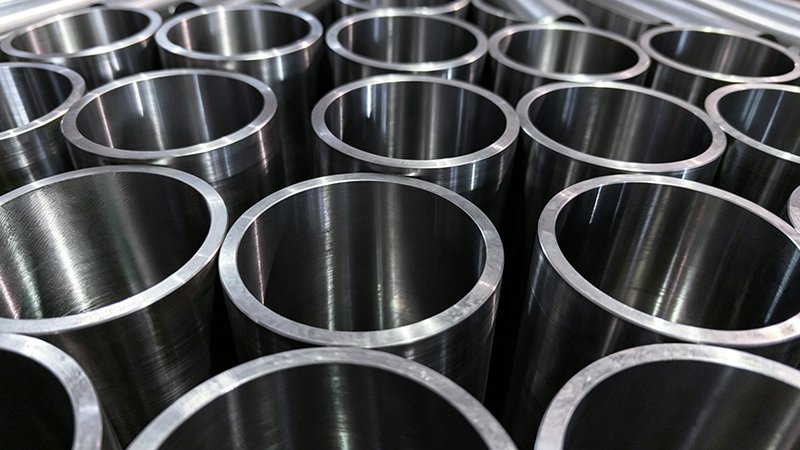
The clean way to arrive at a wall thickness is to work forward from the real load case: establish the peak pressure including transients, choose the bore, select the material with its strength and manufacturing properties, and then size the wall to keep hoop stress below yield with a margin appropriate to the consequence of failure. Done this way the wall thickness is a defensible engineering result rather than a guess, and it will survive the duty the cylinder actually sees rather than the duty someone assumed. It also finishes correctly, because the same tube is honed to H8 or H9 bore tolerance with a controlled Ra 0.4 to 0.8 micron surface once the wall is right.
The alternative of minimizing wall to save cost or copying a wall from an unrelated design is a false economy that pressure eventually exposes, usually at the worst possible moment. We would far rather work through the pressure and material decision with a customer at the specification stage than diagnose a burst tube afterward, because the cost of getting the wall right up front is trivial compared with the cost of getting it wrong in the field. That is the whole argument for treating wall thickness as the pressure-vessel decision it actually is.
Related Reading
- Honed Tube for Oil & Gas Drilling Equipment: Material Traceability and High-Pressure Wall Thickness Requirements
- Honed Tube for Injection Molding Machine Clamping Cylinders: Precision and Repeatability at High Cycle Rates
- Honed Tube for Crane and Lifting Equipment: Long-Stroke Straightness Requirements
External Reference
- ISO 286-1 — ISO code system for tolerances on linear sizes (basis for the H8/H9 bore tolerance grades cited above): https://www.iso.org/standard/45975.html
Size Your Tube Wall on Engineering, Not Guesswork
An under-sized tube wall does not announce itself until a pressure spike splits it, and by then the cost dwarfs anything you saved by shaving the wall. At EAST AI we size honed tube wall thickness from the real peak-pressure load case and the material’s true strength, with a safety margin matched to your application’s consequence of failure, so the tube you receive is engineered for the duty rather than for the quotation.
What We Offer
- Wall thickness sized from real peak pressure, including transient spikes, not just nominal
- Material selection across CK45, ST52, E355 and 42CrMo matched to your pressure rating
- H8 / H9 bore tolerance with Ra 0.4–0.8 μm controlled finish on correctly sized walls
- Safety margins matched to the consequence of failure in your specific application