
A cylinder manufacturer once ran into a run of scrapped barrels that baffled his shop. He had specified the honed tube’s inner diameter carefully, but when his machinists turned the outer diameter to the finished dimension, some tubes cleaned up fine and others broke through into the bore or left a wall too thin to weld a port onto. The inner diameter was perfect; the problem was that he had never properly specified the outer diameter and wall tolerance, so the machining allowance varied unpredictably from tube to tube. It is a classic case of specifying half the tube and hoping for the rest.
Honed tube buyers naturally focus on the inner diameter, because it is the sealing surface, but the outer diameter and wall thickness tolerances are just as important for anyone who machines the tube or welds features onto it. These tolerances determine how much material a machinist has to work with, whether weld-on bosses have sound metal beneath them, and whether the finished barrel has a uniform wall. This article looks at OD and wall tolerance from the perspective of the builder who has to turn, bore, and weld the tube.
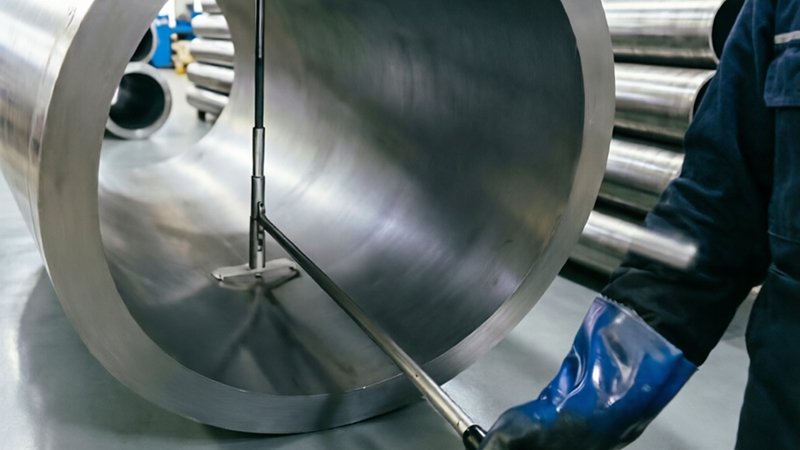
Why OD and wall tolerance matter as much as the bore
The inner diameter tolerance defines the sealing surface, but the outer diameter and wall define the structure and the machining stock. A cylinder builder rarely uses the honed tube’s as-supplied outer diameter directly; more often they turn it down to a finished outer diameter, or they leave it and machine features into it. In either case, the amount of material between the bore and the outer surface, and how consistent that amount is, governs what they can safely do.
Outer diameter tolerance tells the machinist the range of starting diameters they must accommodate. If the outer diameter can vary widely, the machining setup has to handle the largest and smallest tubes in the batch, and the finished dimension has to be reachable from the smallest one. A loose outer diameter tolerance means the machinist cannot predict how much stock they will find, which is exactly the uncertainty that led to the manufacturer’s scrapped barrels.
Wall thickness tolerance ties the two diameters together and determines the actual material available. A tube can have an acceptable bore and outer diameter individually while having a wall that is thinner than expected because both happened to fall toward each other within their tolerances. For structural and machining purposes, it is the wall, and specifically the minimum wall, that matters, so specifying wall tolerance, not just the two diameters, is what guarantees the metal is there.
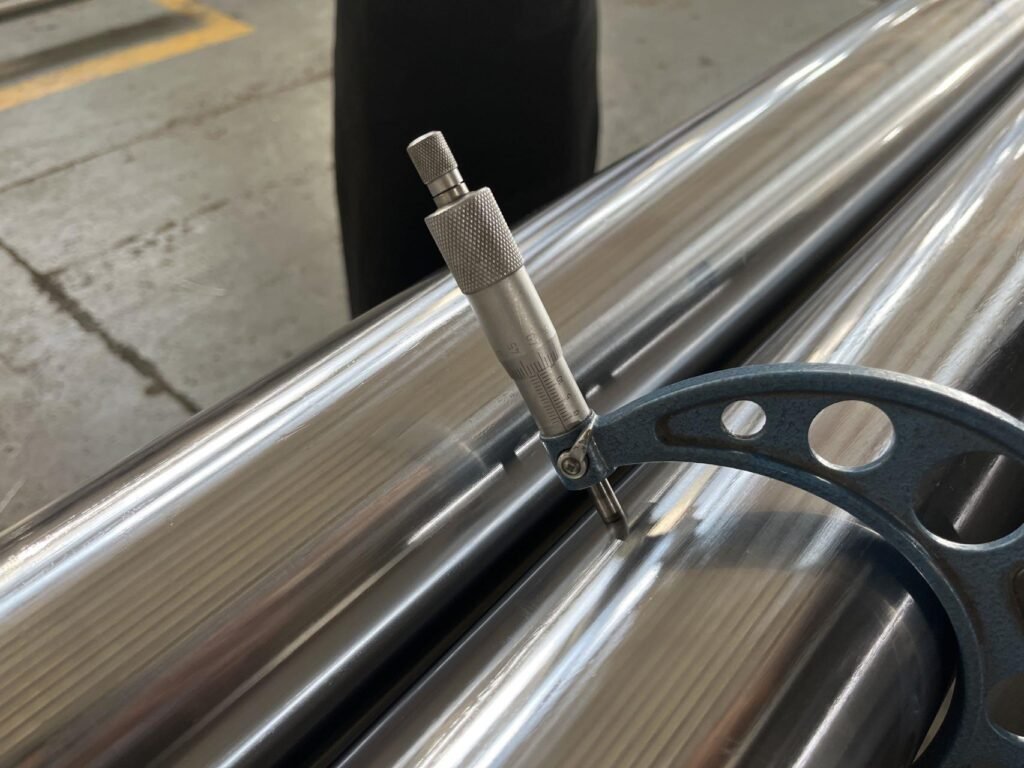
Calculating machining allowance for the finished OD
When a builder turns the honed tube’s outer diameter to a finished dimension, they need a machining allowance: enough material to clean up the as-supplied surface and reach the finished diameter concentric to the bore. Calculating this allowance correctly requires knowing the outer diameter tolerance and the concentricity of the tube, because the worst case, not the nominal, determines whether every tube in the batch will clean up. Designing to the nominal and ignoring the tolerance is how the occasional tube fails to clean up.
The allowance has to cover several things at once: the variation in the incoming outer diameter, any surface imperfections or scale to be removed, and any eccentricity between the bore and the outer surface. If the tube is eccentric, turning the outer diameter true to the machine will not center it on the bore, so extra allowance is needed to ensure the thin side still cleans up without breaking through. This is why concentricity and machining allowance are linked, and why a builder should know both before setting the cut.
For a builder, the practical approach is to specify the tube so that the guaranteed minimum wall, after machining the outer diameter to the finished dimension at the worst-case tolerance and eccentricity, still meets the structural requirement. Working backward from the finished barrel to the tube specification, rather than forward from a nominal tube, ensures every tube in the batch is usable. Communicating the intended finished outer diameter to the tube supplier lets them supply tube with an appropriate and consistent allowance.
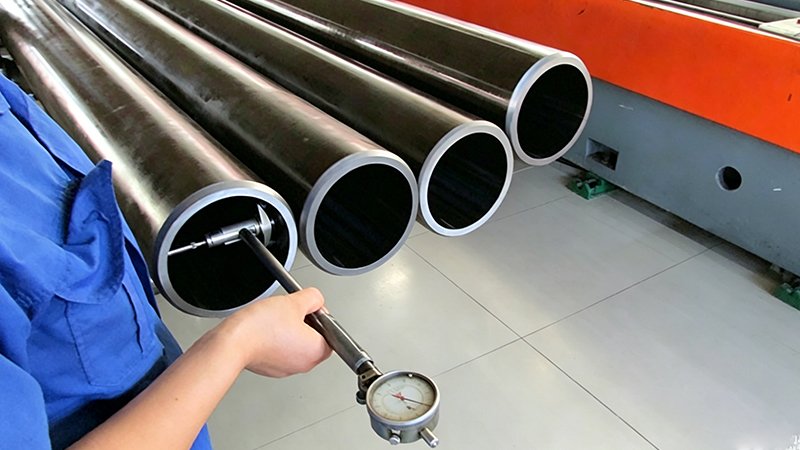
Weld-on bosses, ports, and wall integrity
Many cylinders have ports, mounting bosses, or brackets welded onto the barrel, and these features depend on there being sound, adequate wall thickness where they attach. Welding a port onto a wall that is thinner than expected risks burn-through, a weak joint, or distortion that pulls the bore out of shape. The integrity of a weld-on feature is only as good as the wall beneath it, which brings the wall thickness tolerance directly into play.
Welding also introduces heat that can distort the tube and, near the bore, affect the honed surface, so wall thickness and the location of welds have to be considered together. A thicker, consistent wall tolerates welding heat with less distortion, while a thin or variable wall is more prone to burn-through and to pulling the bore out of round in the weld zone. For barrels with welded features, specifying an adequate and consistent wall is part of ensuring the welds are sound and the bore survives them.
Concentricity matters here again, because a weld applied over the thin side of an eccentric tube has even less material to work with and is more likely to burn through or distort. A builder planning welded features should therefore specify not only a minimum wall but a concentricity limit, so that the wall under every weld, wherever it lands around the circumference, is adequate. Treating the wall as a controlled, uniform structure rather than a nominal average is what makes welded barrels reliable.
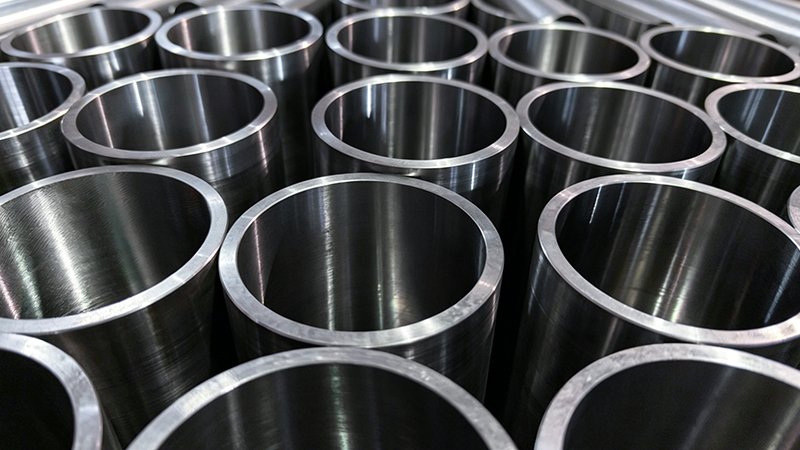
Specifying OD and wall for the whole barrel
Bringing it together, a complete honed tube specification for a machined and welded barrel covers the inner diameter and its tolerance for sealing, the outer diameter and its tolerance for machining setup, the wall thickness and its tolerance for structure and machining allowance, and a concentricity limit to guarantee the minimum wall exists all around. Specifying all of these, rather than just the bore, is what gives the builder a tube they can machine and weld with confidence.
It also helps to tell the supplier how the tube will be used, because the intended finished outer diameter, the machining approach, and the welded features all inform the right tube dimensions and tolerances. A supplier who knows you will turn the outer diameter to a specific finished size can supply tube with a suitable allowance and consistent wall, whereas one working from a bare set of nominal dimensions cannot anticipate your needs. The conversation about intended use is part of getting the specification right.
The payoff is the elimination of the scrapped-barrel problem: when the outer diameter, wall, and concentricity are specified and controlled, every tube in the batch cleans up to the finished diameter, has sound wall under its welds, and produces a uniform, strong barrel. Specifying the whole tube, not just the bore, turns machining and welding from a source of scrap into a predictable, repeatable process, which is exactly what a production cylinder shop needs.
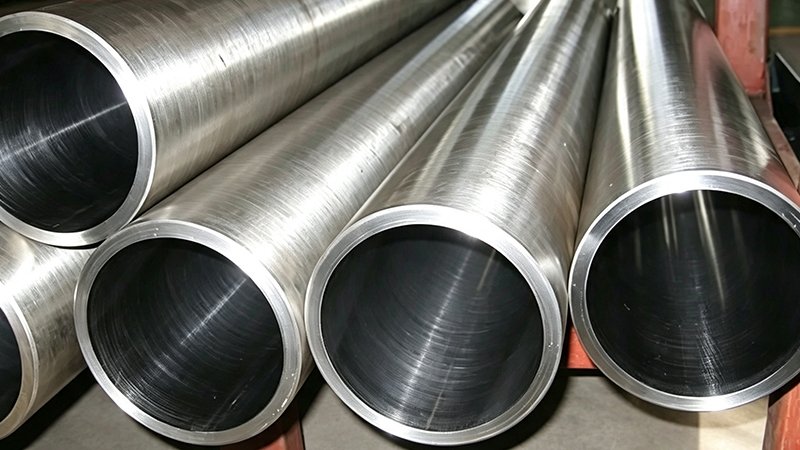
Related Reading
- Honed Tube for Oil & Gas Drilling Equipment: Material Traceability and High-Pressure Wall Thickness Requirements: https://eastai-tech.com/honed-tube-for-oil-gas-drilling-equipment-material-traceability-and-high-pressure-wall-thickness-requirements/
- Honed Tube for Injection Molding Machine Clamping Cylinders: Precision and Repeatability at High Cycle Rates: https://eastai-tech.com/honed-tube-for-injection-molding-machine-clamping-cylinders-precision-and-repeatability-at-high-cycle-rates/
Specify the Whole Tube, Not Just the Bore
Machining and welding go wrong when only the bore is specified. EAST AI has manufactured honed tube since 2006, and we control outer diameter, wall, and concentricity so every tube in your batch machines and welds predictably.
What we offer:
- Honed tube with specified OD, wall, and concentricity tolerances
- Consistent machining allowance for turning to a finished outer diameter
- Adequate, uniform wall for sound weld-on ports and bosses
- Technical support translating your finished barrel into a tube specification
Tell us your finished barrel and we will spec the tube to machine right. Email: marketdi@east-ai.cn | Phone: +86 13382202696 Address: No. 108, Lunan Road, Wuxi, Jiangsu, China.
Written by Alex, Production Engineer at EAST AI