
A cylinder builder called me last year with an odd complaint: the same seal, from the same maker, was leaking in one batch of cylinders and performing perfectly in another. The seals were identical and the assembly was identical. The difference, once we measured it, was the bore. One batch of honed tube sat at the tight end of its tolerance and the other at the loose end, and that spread was enough to move the seal from correctly compressed to under-compressed. The bore tolerance grade, something many buyers treat as boilerplate, had quietly decided whether the cylinder leaked.
Honed tube inner-diameter tolerance is specified using the ISO system of limits and fits, most commonly as grade H8 or H9. These are not interchangeable labels; they define how much the actual bore is allowed to vary from nominal, and that variation feeds directly into how a piston seal is compressed. For engineers and senior buyers specifying tube, understanding the difference between H8 and H9, and matching it to the seal, is the difference between a robust design and an intermittent leak.
What the H grades actually mean
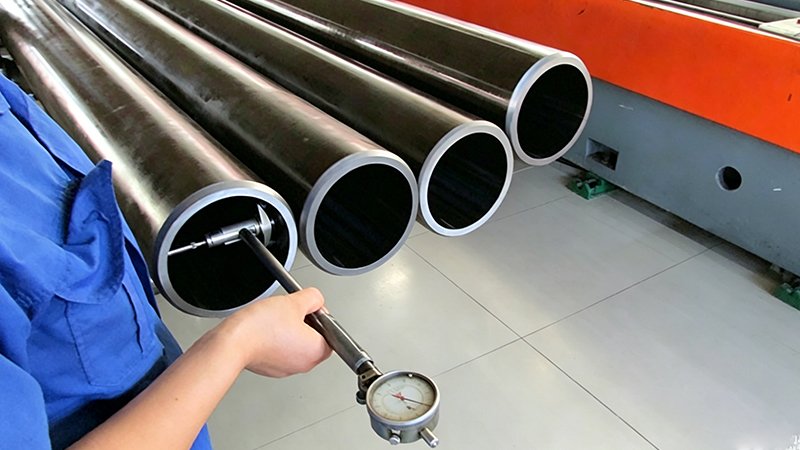
In the ISO system of limits and fits, the letter H denotes a hole (here, the bore) whose lower deviation is zero, meaning the bore is never smaller than nominal and can only be larger by the tolerance amount. The number that follows, 8 or 9, is the tolerance grade, and it sets the width of that allowable band. A larger grade number means a wider band, so H9 permits a greater spread of actual bore diameters than H8 for the same nominal size.
Because the band widens with size, the tolerance is not a fixed number of micrometers but scales with the bore diameter. For a mid-size bore, the practical point is that H8 holds the bore within a tighter window than H9, and the H8 window is a subset of what H9 allows. A tube supplier working to H8 is therefore committing to a more consistent bore than one working to H9, which has cost and process implications at the mill.
It is worth being precise here because the grades are sometimes quoted loosely. H8 and H9 both start at nominal and open outward; neither allows the bore to go undersize. So the design question is really how much oversize you are willing to tolerate at the loose extreme, because that loose extreme is the condition under which a seal is least compressed and most likely to leak.
How bore tolerance controls seal compression
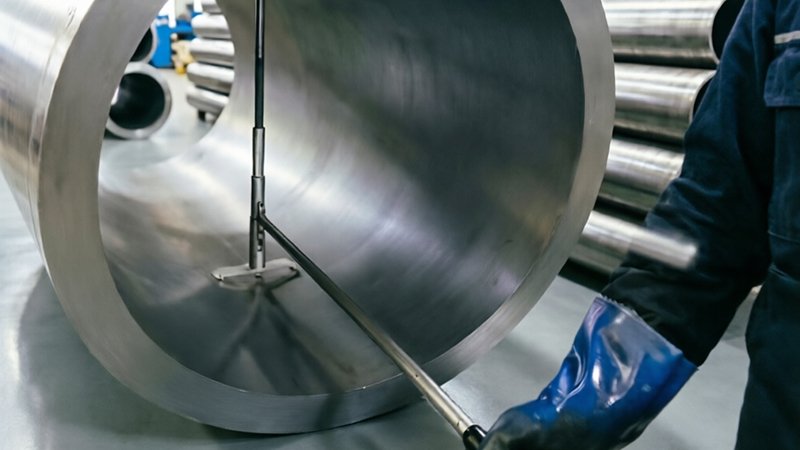
A piston seal works by being compressed between the piston groove and the bore, and that compression, often called squeeze, is what generates the sealing contact pressure. The seal is sized so that at nominal bore it has the correct squeeze. If the actual bore is at the loose end of its tolerance, the radial gap is larger, the squeeze is reduced, and the sealing contact pressure drops. Push that far enough and the seal leaks, especially at low system pressure where the seal relies most on its built-in squeeze.
At the tight end of the tolerance the opposite happens: squeeze is higher, contact pressure is higher, and friction and wear rise. A little extra squeeze is usually tolerable, but excessive squeeze shortens seal life and increases breakout friction, which matters for cylinders needing smooth low-speed motion. The seal designer picks a seal for a target squeeze, and the bore tolerance determines how far the real cylinder strays from that target in either direction.
This is why the tolerance grade is really a seal-reliability parameter in disguise. A wider H9 band means the squeeze can vary more from cylinder to cylinder, so the seal must tolerate a broader range of conditions to work reliably across the whole production spread. A tighter H8 band keeps every cylinder closer to the design squeeze, which is exactly what the leaking-batch story above turned on.
Matching tolerance to seal type
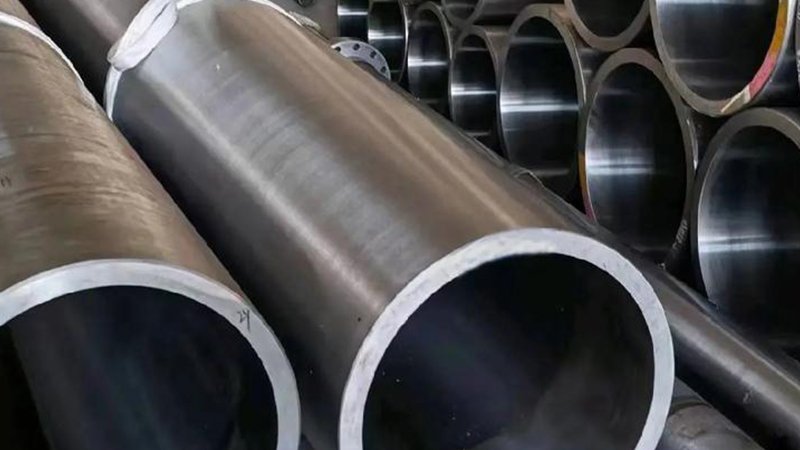
Different seal types have different tolerance appetites, and matching them is the core of good specification. Elastomeric and polyurethane piston seals are relatively forgiving; their rubber-like compliance lets them accommodate a wider spread of squeeze, so they often work well with an H9 bore. For general mobile and industrial cylinders using such seals, H9 honed tube is frequently adequate and more economical.
Harder, less compliant seals demand more from the bore. PTFE-based seals and PTFE-faced seal elements, valued for low friction and high-pressure capability, have far less elastic give than an elastomer, so they are more sensitive to squeeze variation and generally benefit from a tighter H8 bore. Specifying a low-friction PTFE seal against a loose H9 bore is a common mismatch that produces marginal sealing, particularly at low pressure.
High-performance and high-pressure cylinders, where leakage is least acceptable, are therefore usually the ones that justify H8 tube, while general-service cylinders with compliant seals can live happily with H9. The right approach is to start from the seal type and the pressure the cylinder must hold reliably, then choose the bore tolerance that keeps the seal within its working squeeze across the whole tolerance band, not just at nominal.
Writing a specification that seals reliably
A robust tube specification does more than name a grade. It should state the nominal bore, the tolerance grade, the surface finish range, and the roundness and straightness limits, because a bore that is within diametral tolerance but out of round can still ruin seal contact. Specifying finish alongside tolerance matters too: a honed cross-hatch around Ra 0.4 to 0.8 micrometers gives the seal a surface that holds oil without abrading, and it should be called out explicitly.
It also helps to specify from the worst case rather than the nominal. Ask yourself whether the seal you have chosen will still seal at the loose extreme of the bore tolerance and still run acceptably at the tight extreme, because production will produce both. Designing so that both extremes work is what turns a tolerance from a source of intermittent leaks into a controlled, reliable parameter. If only the nominal works, the batch that drifts loose will leak, exactly as in the opening story.
Finally, agree the tolerance with your tube supplier as a real, inspected requirement rather than a nominal wish. A maker who inspects and certifies bore tolerance to H8 or H9 on every batch gives you the consistency your seal selection assumes. When the tube’s bore is genuinely held to grade and the seal is matched to that grade, the whole cylinder becomes predictable, and the mysterious leaking batch becomes a problem you have designed out.
Related Reading
- Chrome Plated Rod Diameter Tolerance: f7 vs f8 vs g6, How to Choose the Right Fit: https://eastai-tech.com/chrome-plated-rod-diameter-tolerance-f7-vs-f8-vs-g6-how-to-choose-the-right-fit/
- Honed Tube for Injection Molding Machine Clamping Cylinders: Precision and Repeatability at High Cycle Rates: https://eastai-tech.com/honed-tube-for-injection-molding-machine-clamping-cylinders-precision-and-repeatability-at-high-cycle-rates/
Match the Bore to the Seal, Every Time
A seal is only as reliable as the bore it runs in. EAST AI has manufactured honed tube since 2006, and we hold bore tolerance to H8 or H9 as a genuine, inspected specification so your seal selection behaves the same in every cylinder you build.
What we offer:
- Honed tube certified to H8 or H9 bore tolerance to suit your seal type
- Controlled cross-hatch finish (Ra 0.4–0.8 μm) for reliable seal performance
- Roundness and straightness held so seal contact stays even
- Technical support on matching bore tolerance to seal and pressure
Tell us your seal and pressure, and we will spec the bore to match. Email: marketdi@east-ai.cn | Phone: +86 13382202696 Address: No. 108, Lunan Road, Wuxi, Jiangsu, China.
Written by Alex, Production Engineer at EAST AI