
Written by Alex, Production Engineer at EAST AI
A cylinder builder supplying equipment for a northern mining project once asked us why a tube that had performed for years in temperate installations was cracking on machines shipped to a site where winter temperatures fell far below freezing. The tube met its room-temperature strength specification, the walls were correctly sized for the pressure, and nothing about the hydraulic design had changed, yet the tubes were failing in a way they never had before. The answer had nothing to do with strength and everything to do with toughness, which is a different material property that most tube specifications never mention and cold service ruthlessly exposes.
Low-temperature service is one of the few conditions that can defeat a honed tube which is otherwise correctly engineered, because steel that behaves in a tough, ductile manner at room temperature can turn brittle as the temperature drops. For the engineers specifying cylinders destined for cold climates, high-altitude sites, or refrigerated and cryogenic-adjacent processes, understanding this transition is essential, because the parameter that keeps the tube safe is impact toughness rather than tensile or yield strength. This article works through why steel embrittles in the cold, how toughness is measured, and what material choices keep a honed tube reliable when the temperature falls.
Strength and Toughness Are Different Properties
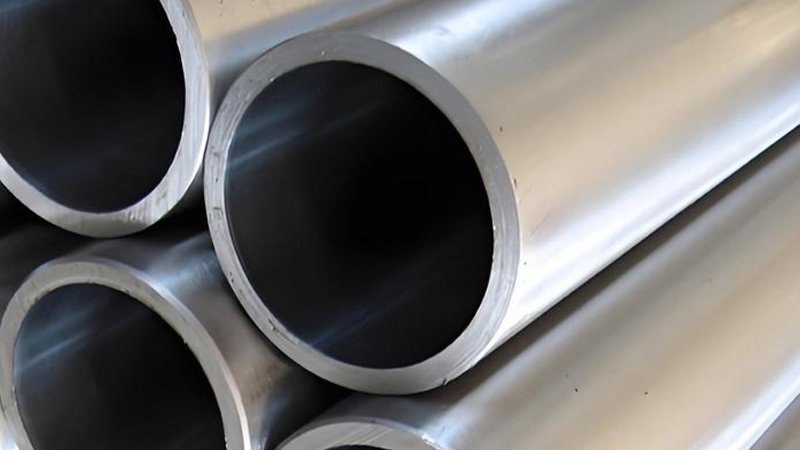
The first distinction to make clear is that strength and toughness measure different things, and a tube can have ample strength while lacking the toughness that cold service demands. Strength, expressed as yield and tensile values, describes the stress a material can carry before it deforms or breaks, and it is what governs the wall thickness sizing for pressure. Toughness describes the material’s ability to absorb energy and resist crack propagation, particularly under sudden impact or shock loading, and it is a largely independent property that can be high or low regardless of the strength number.
The reason this matters is that a hydraulic cylinder in the field experiences not just steady pressure but impact and shock, and a tube that is strong but not tough can crack suddenly when a stress concentration meets a brittle material. At room temperature many structural steels are comfortably tough, so the distinction rarely bites, and a specification that addresses only strength appears to work. Cold service removes that safety margin, because the toughness of common steels falls as temperature drops while the strength stays roughly constant, and a tube that was tough enough at twenty degrees can be dangerously brittle at minus thirty.
The Ductile-to-Brittle Transition
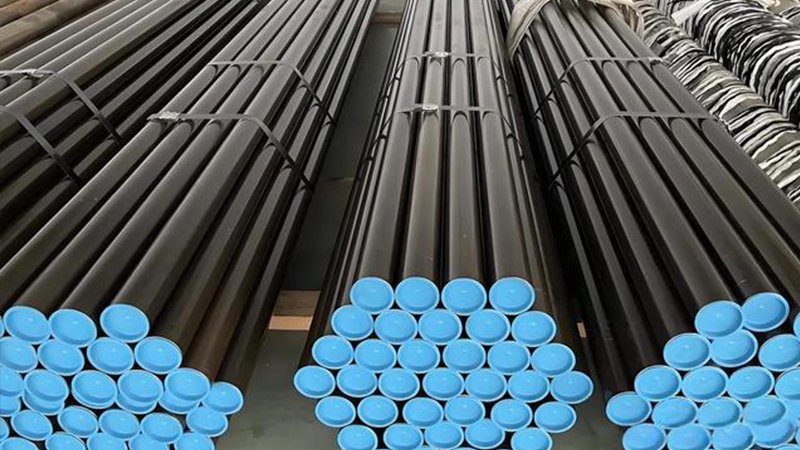
The physical phenomenon behind cold embrittlement is the ductile-to-brittle transition, a characteristic of body-centered-cubic steels in which the fracture behavior changes over a range of falling temperature. Above the transition range the steel fails in a ductile manner, absorbing substantial energy and tearing rather than snapping, giving warning and tolerating stress concentrations. Below the transition range the same steel fails in a brittle manner, absorbing little energy and fracturing suddenly from a crack initiation site, often with no warning and at stresses well below what the ductile material would tolerate.
The transition does not occur at a single temperature but over a band, and its position on the temperature scale depends strongly on the steel’s chemistry, grain size, and processing. A steel with a high transition temperature becomes brittle in merely cool conditions, while a steel engineered for low transition temperature stays ductile far into the cold. This is why specifying a honed tube for low-temperature service is fundamentally about selecting a steel whose transition temperature sits comfortably below the minimum service temperature, with margin, so that the tube remains on the ductile side of the transition throughout its operating range.
Measuring Toughness With the Charpy Test
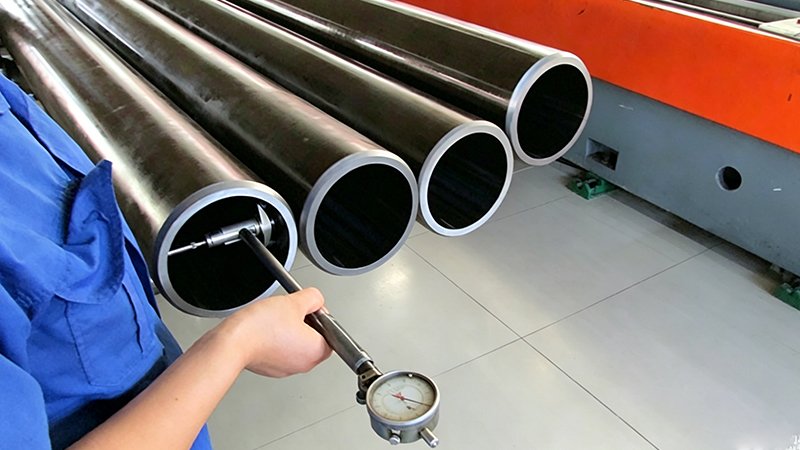
Toughness for low-temperature service is quantified by the notched-bar impact test, most commonly the Charpy V-notch test, which measures the energy absorbed when a pendulum fractures a notched specimen at a specified temperature. Running the test at a range of temperatures maps the transition curve, showing the energy absorbed falling from a high, ductile shelf through the transition band to a low, brittle shelf as temperature decreases. Specifications for cold service typically require a minimum absorbed energy at the minimum service temperature, which guarantees the steel is still on or near its ductile shelf where it matters.
For the specifying engineer, the practical consequence is that a low-temperature honed tube requirement should state a Charpy impact requirement at the relevant temperature, not merely a strength grade. A tube supplied against a strength specification alone carries no guarantee of cold toughness, and two steels of identical strength can have transition temperatures dozens of degrees apart. Requiring documented Charpy values at the service temperature, and verifying them through material certificates, is what turns cold-service toughness from an assumption into a specified, auditable property that the tube demonstrably meets.
Why 20MnV6 Suits the Cold
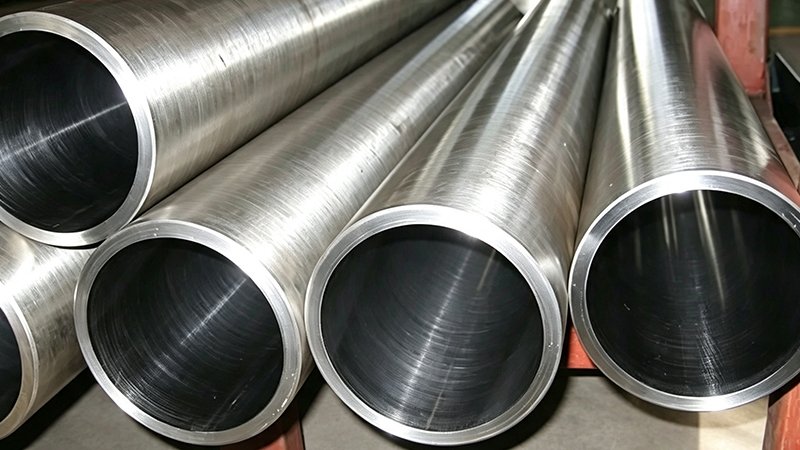
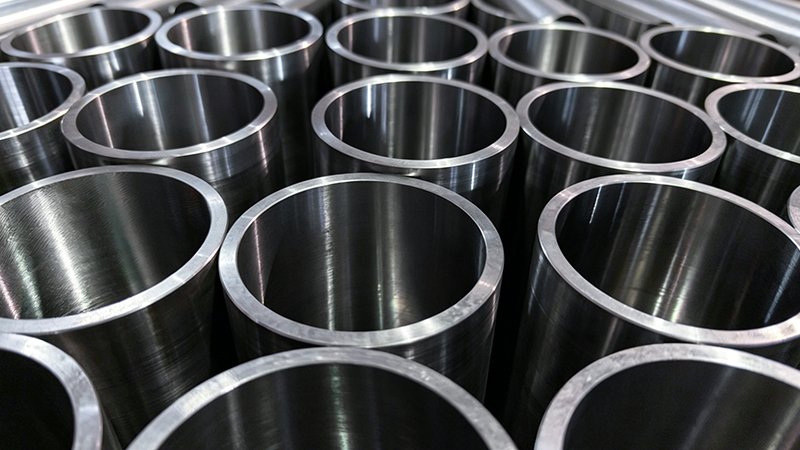
Among the materials we supply, 20MnV6 stands out for low-temperature honed tube and rod applications because its chemistry and fine-grained microstructure give it a low transition temperature and strong impact toughness in the cold. It is a micro-alloyed steel in which vanadium and controlled manganese, combined with a fine grain size, deliver a good combination of strength and toughness, so it retains ductile behavior at temperatures where plainer carbon steels would already have embrittled. That combination makes it a natural choice for cylinders destined for cold climates and demanding low-temperature duty.
The value of a fine grain structure in this context is worth emphasizing, because grain refinement is one of the few metallurgical levers that improves strength and toughness simultaneously rather than trading one for the other. A finer grain both raises yield strength and lowers the ductile-to-brittle transition temperature, which is precisely the combination cold high-pressure service needs. Choosing a steel like 20MnV6 for low-temperature honed tube is therefore not about paying for a premium grade for its own sake, but about selecting the microstructure that keeps the tube tough and strong exactly where ordinary steels fail.
Specifying a Cold-Service Tube Correctly
Bringing it together, a honed tube for low-temperature service should be specified with the minimum service temperature stated explicitly, a Charpy impact requirement defined at or below that temperature, and a steel selected whose transition temperature sits safely below the requirement with margin. The wall is still sized for the peak pressure and the bore is still finished to H8 or H9 tolerance with the usual Ra 0.4 to 0.8 micron cross-hatch, but the material decision now carries an added, non-negotiable toughness dimension that the temperate specification never had to consider. The finish serves the seal, the wall serves the pressure, and the toughness serves survival in the cold.
For the mining builder whose tubes were cracking, the resolution was to move the cold-shipped machines onto a tube specified with documented low-temperature impact toughness, and the field cracking stopped. Nothing about the pressure or the dimensions had been wrong; the missing parameter had simply been toughness at temperature, and once it was specified and verified the problem disappeared. That is the whole lesson of cold-service tube: strength keeps the tube from yielding, but toughness keeps it from shattering, and only a specification that addresses both survives a hard winter in the field.
Related Reading
- Honed Tube for Oil & Gas Drilling Equipment: Material Traceability and High-Pressure Wall Thickness Requirements
- Honed Tube for Crane and Lifting Equipment: Long-Stroke Straightness Requirements
- Chrome Plated Rod for Wind Turbine Pitch and Yaw Cylinders: Fatigue Life Under Continuous Micro-Cycling
Specify Cold-Service Tube on Toughness, Not Just Strength
A tube that is strong enough at room temperature can shatter in the cold if its impact toughness was never specified, and that failure arrives without warning in the field. At EAST AI we specify honed tube for low-temperature service with documented Charpy impact values at your minimum service temperature, using fine-grained steels such as 20MnV6 that stay tough where ordinary grades embrittle, so your cold-climate cylinders survive the winters they were built for.
What We Offer
- Honed tube in fine-grained 20MnV6 and other low-transition-temperature steels for cold service
- Documented Charpy V-notch impact values verified at your specified minimum temperature
- Wall thickness sized for peak pressure alongside guaranteed low-temperature toughness
- H8/H9 bore tolerance and Ra 0.4–0.8 μm finish with full material certification and traceability