
Written by Alex, Production Engineer at EAST AI | Published October 2, 2026
A major agricultural equipment OEM called me with a troubling field failure pattern. They were seeing premature piston rod seal failure on their loader cylinders — typically starting around 1,500-2,000 operating hours when design life was 4,000+ hours. “It’s not a seal quality issue,” their warranty manager said. “We’ve tried three different seal suppliers. Same failure pattern.” I asked for a failed rod to inspect. When it arrived, the scoring pattern was uniform and fine — exactly what you’d see from a bore surface that was too rough or had embedded contamination. “What’s your bore surface finish spec?” I asked. They didn’t have one. They were specifying bore size and straightness, but not surface roughness or finish quality. “That’s your problem,” I said. “The bore finish isn’t meeting what the seals need. You’re running seals designed for Ra 0.4-0.6 micrometers against a bore that’s Ra 0.8-1.2.” This revealed a common blind spot in hydraulic system design. The bore surface finish is every bit as important as bore size or straightness, but it’s the most overlooked specification.
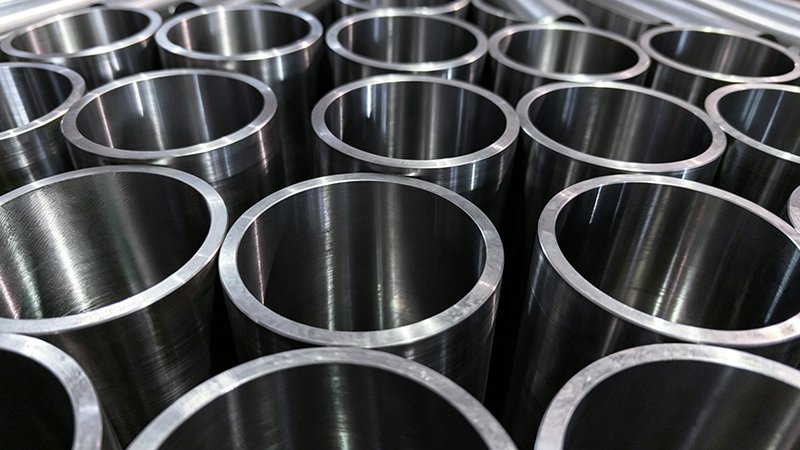
Why Bore Surface Finish Matters More Than Most Realize
Here’s the physics: a hydraulic piston rod seal rides on a microscopic film of oil on the bore surface. The quality of that oil film directly depends on bore surface geometry. If the bore is too rough: the roughness peaks create wear points where seal lip contacts hard asperities, cavities in rough surface can trap contaminant particles, the rough peaks wear away seal lip faster than designed, premature leakage develops. If the bore is too smooth (polished): the seal can’t develop stable oil film — it can stick or chatter, leakage can actually increase paradoxically, seal lip wear becomes inconsistent.
The correct bore finish is a balance: smooth enough for seal film stability, but with enough controlled roughness for the seal to “grip” properly. This optimal balance is different from what many suppliers provide by default.
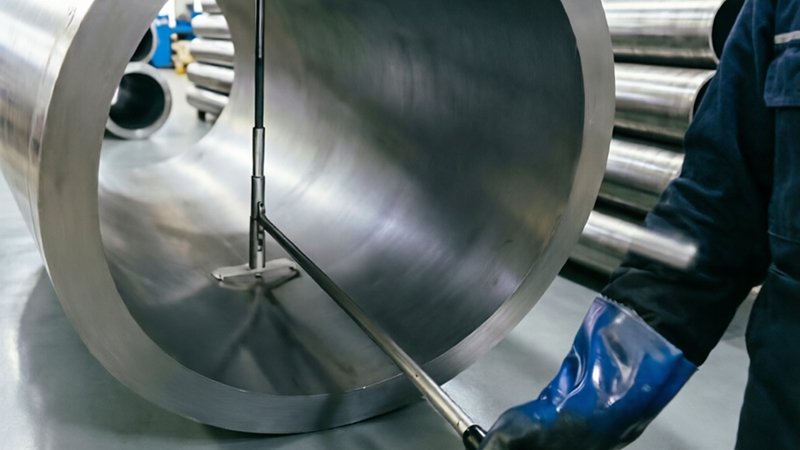
What Honing Actually Creates: Controlled Surface Finish
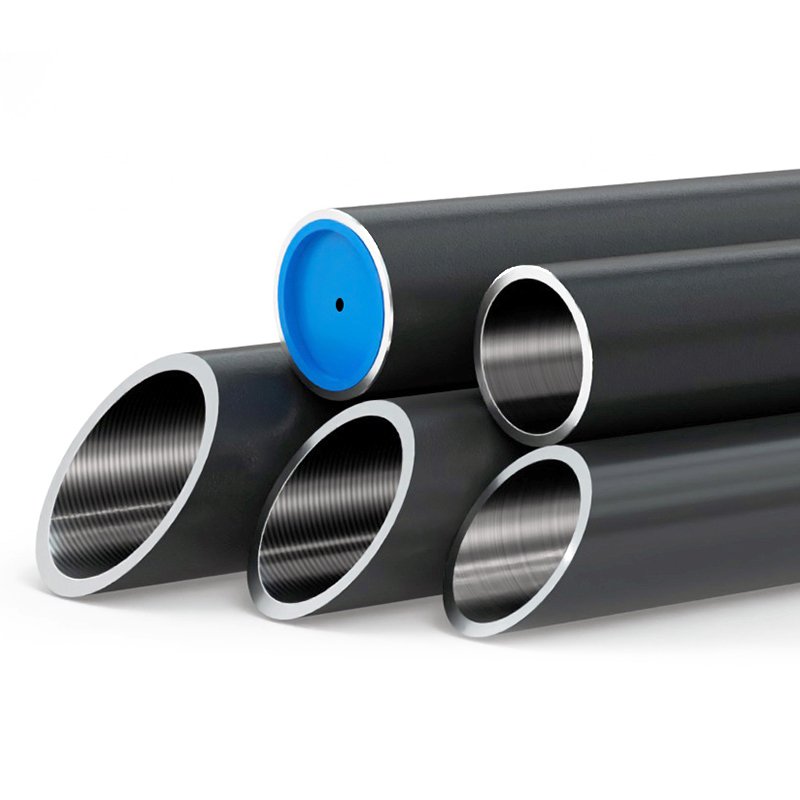
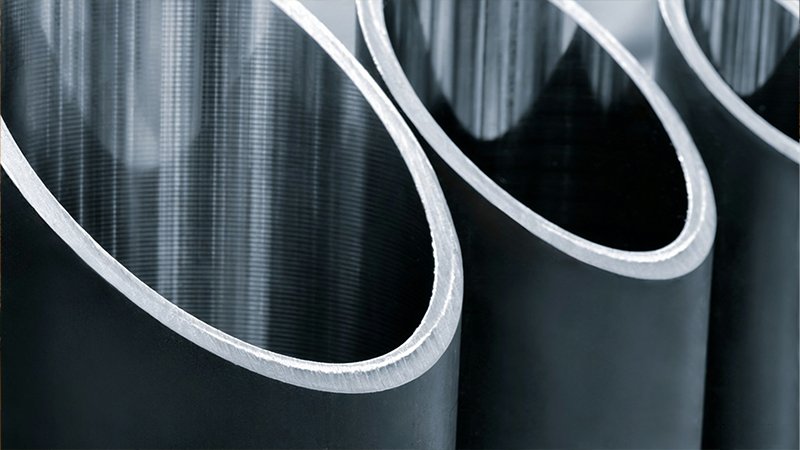
Honing is a precision abrasive process that creates a uniform bore diameter (bore sizing), creates a controlled surface finish pattern (honing “plateau”), leaves a specific surface roughness (Ra value, typically 0.4-0.8 µm for hydraulic cylinders), and creates straightness and roundness. That third point — the specific surface finish — is what most people don’t think about when they think “honing.” A honed bore has a characteristic crosshatch pattern. The pattern depth and angle are determined by stone type and grit, honing speed and feed rate, stone dressing angle, and number of honing passes. Different honing parameters create different surface finish characteristics — and seals respond differently to each.
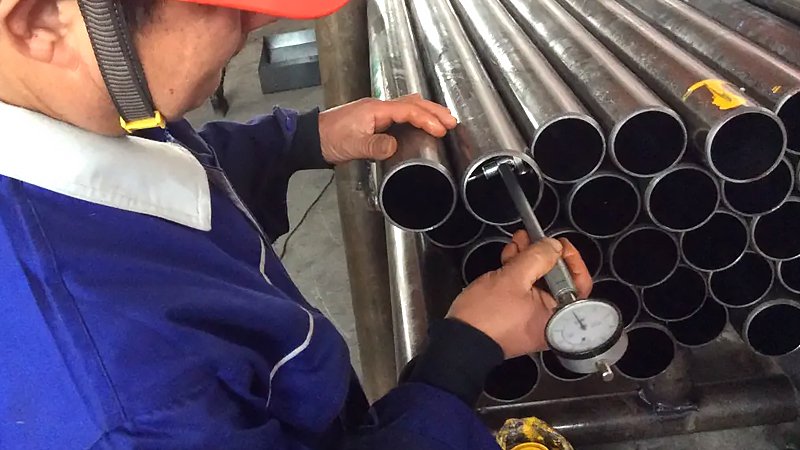
Three Levels of Bore Finish and Field Performance
Rough bore (Ra 0.8-1.2 µm) — common but problematic: single stone pass with fast feed and loose stone dressing tolerance creates coarse crosshatch pattern with obvious peaks and valleys under magnification. In service, seal lip wears on the rough peaks and contamination embeds in valleys. Service life is 1,500-2,500 hours (shorter than design). Field complaint: leakage develops gradually with short seal replacement intervals.
Medium finish (Ra 0.4-0.6 µm) — optimal for most hydraulics: multiple stone passes with controlled feed and precision dressing creates fine crosshatch pattern with consistent depth and controlled finish under magnification. In service, seal develops stable oil film with uniform wear across bore. Service life matches design specification (4,000+ hours typical). Field complaint: none, seals last as designed.
Ultra-smooth/polished (Ra <0.2 µm) — overspecified for most applications: final polishing pass with very slow feed and fine abrasive creates almost mirror-like appearance. In service, seal lip can chatter or stick with paradoxical wear patterns. Service life can actually be shorter than medium finish due to instability. Cost is 30-50% higher than medium finish. Real-world use: needed only for specialized applications (some agricultural equipment in dusty conditions, long-stroke cylinders).
For 95% of industrial hydraulic cylinders, medium finish (Ra 0.4-0.6 µm) is optimal.
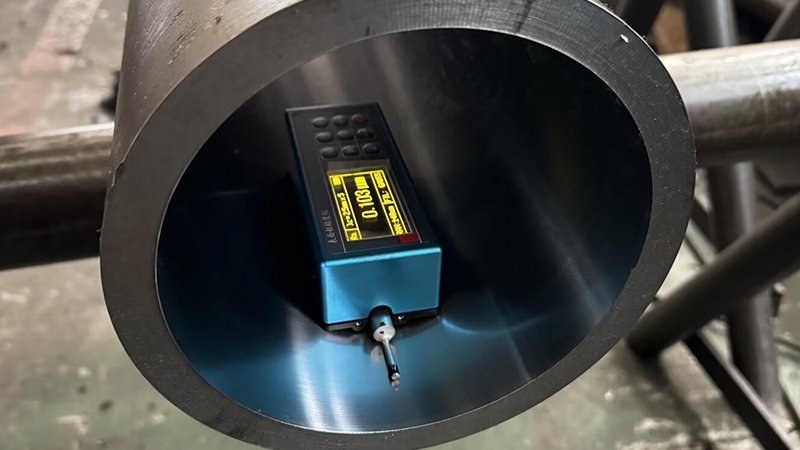
Real Agricultural Case: Why Bore Finish Became Critical
Back to that agricultural loader manufacturer: they were getting field failures with rough bore finish (Ra ~1.0 µm). The reason this mattered for agriculture specifically: dusty field conditions mean more contamination getting into the cylinder, long storage periods mean condensation and corrosion on the bore, rough bore finish traps more contamination, seasonal duty cycles don’t allow seals to self-clean through constant fluid flow. The fix: change bore surface spec to Ra 0.5-0.7 µm (medium finish). What changed in the honing process: added a final honing pass with finer stone, tighter stone dressing tolerance, slightly slower feed rate on final pass, added quality check to verify finish before shipping.
Result: seal life extended to designed service life (4,000+ hours), field leakage complaints dropped 80%, warranty costs on that cylinder program decreased substantially. Cost impact: medium-finish honing costs 8-12% more per tube than rough finish (extra process pass, more frequent stone dressing). For production volumes, that’s significant but manageable. The value: eliminated warranty costs and field reputation damage from premature failures.
Measuring and Specifying Bore Surface Finish
If specifying bore surface finish, here’s what you need to know. Roughness measurement standards: Ra (arithmetic average) is the most common, measuring average height of roughness. Rq (root mean square) is similar to Ra with slightly different mathematics. Rz (peak-to-valley height) measures distance from highest peak to lowest valley. Rt (total height) measures maximum roughness over measured span. For hydraulic cylinders, Ra is the standard specification.
Typical specifications: industrial standard rough honed is Ra 0.8-1.2 µm, standard hydraulic is Ra 0.4-0.8 µm (midpoint ~0.6 µm), precision hydraulic is Ra 0.3-0.5 µm, ultra-precision/specialized is Ra <0.2 µm. What to include on your specification: bore surface finish Ra 0.5-0.7 µm (example), measurement standard ISO 4287 or equivalent, measurement location (specify if you want finish measured at bore ends, middle, or multiple points), honing pattern requirement optional but can specify for specific applications.
How Surface Finish Affects Seal Selection
Interestingly, seal material and design also interact with bore finish. Nitrile seals (standard): optimal bore finish is Ra 0.4-0.8 µm, too rough accelerates wear, too smooth can cause chatter. Fluorocarbon (FKM) seals: can tolerate slightly rougher finish Ra 0.4-1.0 µm, harder material handles roughness better. Polyurethane seals (special applications): require smoother finish Ra 0.2-0.5 µm, softer material is more sensitive to rough surfaces. When specifying both honed tube and seals, make sure they’re matched: standard seals go with standard bore finish (Ra 0.5-0.7), premium seals go with premium bore finish (Ra 0.3-0.5), don’t mix standard seals with ultra-smooth bore or premium seals with rough bore.
Cost-Benefit Analysis of Proper Bore Finish
Rough bore (Ra 1.0 µm) cost-cutting approach: honing cost 100,1,000cylinders/yearproduction,annualpartscost100,000, warranty cost for seal failures 40,000−60,000/year, total cost 140,000−160,000/year. Medium bore finish (Ra 0.6 µm) optimal approach: honing cost 109(9109,000, warranty cost for seal failures 3,000−5,000/year, total cost 112,000−114,000/year. Ultra-smooth bore (Ra 0.2 µm) over-specified approach: honing cost 145(45145,000, warranty cost 2,000−4,000/year (only marginal improvement), total cost 147,000−149,000/year.
The optimal choice is scenario two. Medium bore finish delivers the best total cost of ownership while ensuring seal reliability.
Related Reading:
External References:
- ASME B46.1: Surface Texture (Surface Roughness, Waviness, and Lay)
- SAE J816: Surface Texture Measurement
Optimize Bore Surface Finish for Maximum Seal Reliability
Stop accepting whatever bore finish your supplier provides by default. EASTAI-TECH’s precision finishing specialists help equipment manufacturers specify bore surface finish that extends seal life and prevents premature cylinder failures. Whether you’re designing new equipment or troubleshooting existing seal wear problems, we provide finish specification guidance backed by precision honing capability and complete surface measurement documentation.
What We Offer:
- Bore surface finish analysis and specification recommendations for your specific seal material and duty cycle
- Precision honed tubes with documented Ra finish measurements for every production batch
- Complete surface profilometry data showing crosshatch pattern, roughness parameters, and measurement locations
- Seal compatibility consultation matching bore finish to your seal material and performance requirements