
Written by Alex, Production Engineer at EAST AI
An engineer once specified a large-diameter chrome plated rod in CK45, hardened and tempered, exactly as he had done successfully for years on smaller rods, and was surprised when the large rod did not achieve the core properties he expected. The chemistry was right, the heat treatment was nominally correct, and the smaller rods in the same steel had always performed, yet the big rod was softer in the core than the specification demanded. The problem was not a mistake in processing; it was hardenability, a property of the base steel that becomes decisive as rod diameter grows and that quietly governs which steel is actually the right choice.
Chrome plated rod discussions often focus on the chrome layer and its thickness, but the base steel underneath carries the mechanical load, and selecting it correctly is a genuine engineering decision rather than a default. The common candidates, plain medium-carbon CK45, the chromium-molybdenum alloy 42CrMo, and the fine-grained micro-alloyed 20MnV6, each have distinct strengths, and the right choice depends on the rod diameter, the load, and the environment. Understanding how these steels differ in hardenability and mechanical behavior is what lets an engineer specify a rod that meets its properties through the full section rather than only at the surface.
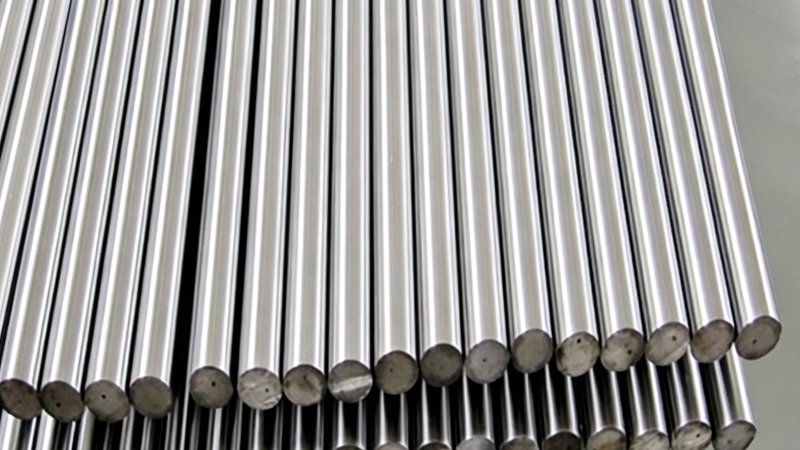
What the Base Steel Actually Does
Beneath the thin hard chrome layer, which handles surface wear and corrosion, the base rod is the structural member that carries the compressive, tensile, and bending loads the cylinder imposes. Its strength determines how much load the rod can carry without yielding or buckling, its fatigue resistance determines how long it survives cyclic loading, and its toughness determines how it tolerates shock and stress concentration. The chrome protects the surface, but it contributes nothing meaningful to the rod’s load-carrying capacity, so the base steel selection is where the rod’s mechanical performance is truly decided.
This division of labor is why treating all chrome rod as equivalent because it carries the same chrome finish is a mistake, since two rods with identical chrome can have entirely different structural capabilities depending on their base steel. A rod destined for heavy compressive loads and bending needs a base steel selected and heat-treated for high core strength and fatigue resistance, while a lightly loaded rod can use a simpler steel. Specifying the base steel to the mechanical duty, and the chrome to the surface duty, treats the rod as the two-part system it actually is rather than as a single commodity defined by its coating.
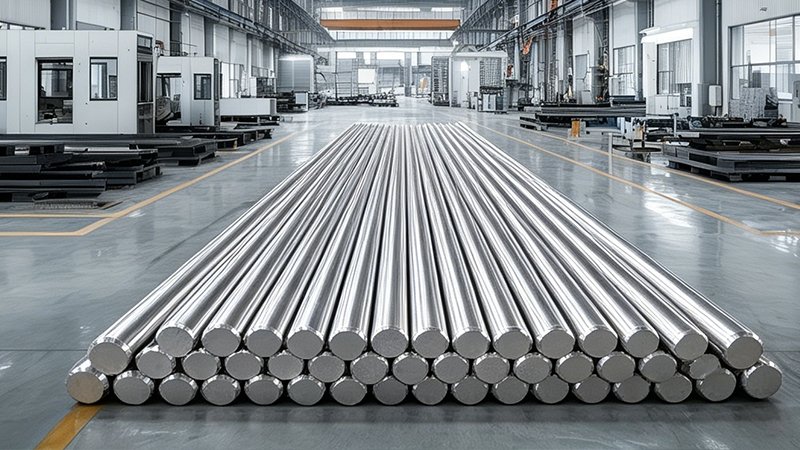
Hardenability and the Section-Size Effect
The property that surprised the engineer with the large CK45 rod is hardenability, which describes how deeply a steel can be hardened when quenched, and it is distinct from the maximum hardness the steel can reach. When a rod is quenched, the surface cools fastest and hardens fully, while the core cools more slowly, and whether the core also hardens depends on the steel’s hardenability. A plain carbon steel like CK45 has limited hardenability, so in small diameters the core hardens adequately, but as diameter grows the core cools too slowly to transform properly and ends up softer than the surface.
This section-size effect is precisely why CK45 can perform beautifully in small and medium rods yet fall short in large ones, and why the solution is an alloy steel with greater hardenability rather than more aggressive quenching. Alloying elements such as chromium and molybdenum slow the transformation during cooling, allowing the core of a large section to harden even at the slower cooling rate it experiences. Understanding the section-size effect is essential for any engineer specifying larger rods, because it means the correct base steel depends on diameter, and a steel that is ideal at one size can be inadequate at another.
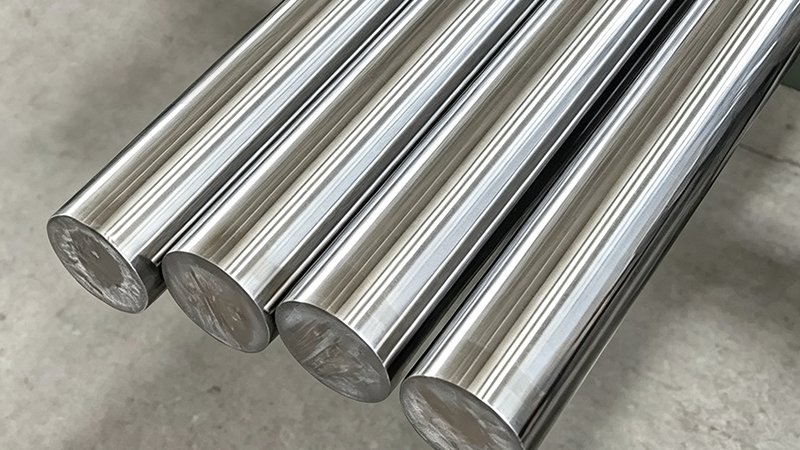
When CK45 Is the Right Choice
CK45, the medium-carbon plain steel also designated C45 or SAE 1045, is an excellent and economical base for chrome plated rod across the large population of small and medium diameters where its hardenability is sufficient. In these sizes it achieves good through-hardness in the quenched-and-tempered condition, provides solid strength and fatigue resistance, and takes chrome plating well, all at a cost that alloy steels cannot match. For general industrial and light-to-moderate duty rods within its hardenability range, CK45 is frequently the correct and most cost-effective choice, and specifying something more exotic adds cost without benefit.
The key discipline with CK45 is respecting the diameter limit beyond which its hardenability no longer delivers the required core properties, because pushing it into large sections is where the disappointment occurs. Within its range it is hard to beat on value, and it serves an enormous share of the market reliably, which is why it remains the default base steel for so many rods. Recognizing where that range ends, and switching to a higher-hardenability alloy steel when diameter or core-property requirements exceed it, is the mark of an engineer who understands the material rather than merely reusing a familiar grade.
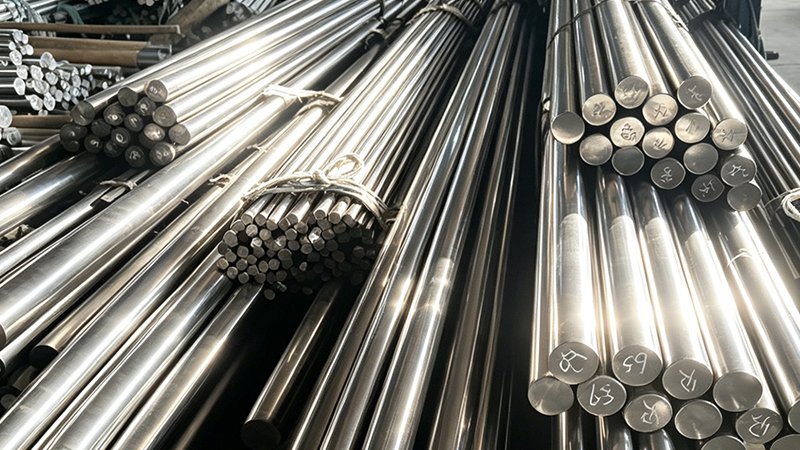
When 42CrMo or 20MnV6 Earns Its Place
For large-diameter rods and for high, sustained, or impact-laden loads, the chromium-molybdenum alloy steel 42CrMo comes into its own, because its high hardenability lets the core harden through even in substantial sections. This delivers high core strength and good fatigue resistance across the full diameter, which is exactly what heavy-duty, large-bore, and high-load cylinders require, and it is the reason 42CrMo is the workhorse base steel for demanding rod applications. Its cost is higher than CK45, but for the applications that need it the alternative is a rod that does not meet its core properties, which is no alternative at all.
20MnV6 occupies a different niche, offering a fine-grained micro-alloyed structure that combines good strength with excellent toughness, including low-temperature toughness, which makes it valuable where impact resistance and cold-service behavior matter alongside strength. Its refined grain simultaneously raises strength and improves toughness, so it suits rods that face shock loading or cold environments where a coarser steel might behave brittly. Choosing between 42CrMo and 20MnV6 comes down to whether the priority is maximum hardenable core strength in large sections or a balanced strength-toughness profile with cold capability, and understanding that distinction lets the engineer match the steel to the dominant demand.
Specifying the Base Steel With Confidence
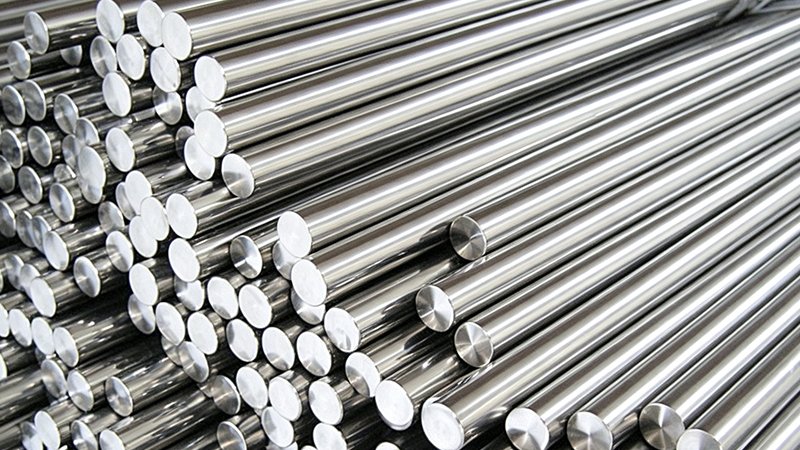
The disciplined path to the right base steel starts with the rod diameter and the load case, then selects the steel whose hardenability delivers the required core properties at that diameter and whose strength and toughness suit the duty. Small and medium rods under moderate load point to CK45; large rods and high or sustained loads point to 42CrMo; impact and cold service point toward the toughness of 20MnV6. The chrome thickness and the diameter tolerance are then specified on top of the correctly chosen base steel, completing a rod that is right in both its structure and its surface.
For the engineer whose large CK45 rod fell short, the resolution was to move that diameter onto 42CrMo, whose hardenability delivered the core strength the section required, while keeping CK45 on the smaller rods where it had always performed. Nothing about the heat treatment had been wrong; the base steel had simply been asked to harden a section beyond its hardenability. That is the essential lesson of base-steel selection: the right steel depends on the diameter and the duty, and matching it correctly, with material certificates to verify it, is what gives a chrome plated rod the mechanical performance its application demands.
Related Reading
- Chrome Plated Rod for Truck-Mounted and Crawler Cranes: Long-Stroke Straightness and Bending Resistance
- Chrome Plated Rod for Wind Turbine Pitch and Yaw Cylinders: Fatigue Life Under Continuous Micro-Cycling
- Chrome Plated Rod for Offshore and Marine Deck Equipment: Corrosion Resistance Beyond Standard Chrome Plating
Choose the Base Steel That Actually Meets Your Core Properties
The chrome protects the surface, but the base steel carries the load, and specifying the wrong steel for the diameter leaves you with a rod that is soft where it matters most. At EAST AI we select chrome plated rod base steel to your diameter and load case, using CK45, 42CrMo or 20MnV6 where each genuinely fits, and verify the core properties with material certificates so the rod performs through its full section.
What We Offer
- CK45 base rod for cost-effective small and medium diameters within its hardenability range
- 42CrMo alloy base rod for large-section, high-load rods needing full through-hardening
- 20MnV6 fine-grained base rod for impact and low-temperature toughness with strength
- Hard chrome and duplex coatings applied over the correctly specified base steel, fully certified