
A component service provider who quotes a chrome plated rod price to a downstream customer in January and delivers in April is carrying a real financial risk that most service providers don’t price explicitly — the risk that steel and processing costs move between the quote date and the delivery date, compressing or eliminating the margin they expected when they submitted the quote. The question of who bears that price movement risk — the service provider, the end customer, or shared between them — is one of the most important commercial structure decisions in an industrial distribution business, and most service providers answer it by default rather than by design.
Answering it by default typically means the service provider bears all of it, because quotes are submitted at fixed prices and customers expect to pay what they were quoted regardless of what happened to input costs in the intervening weeks or months.
Published: 2026-11-06 | Last Updated: 2026-11-06
The Anatomy of a Chrome Plated Rod Price
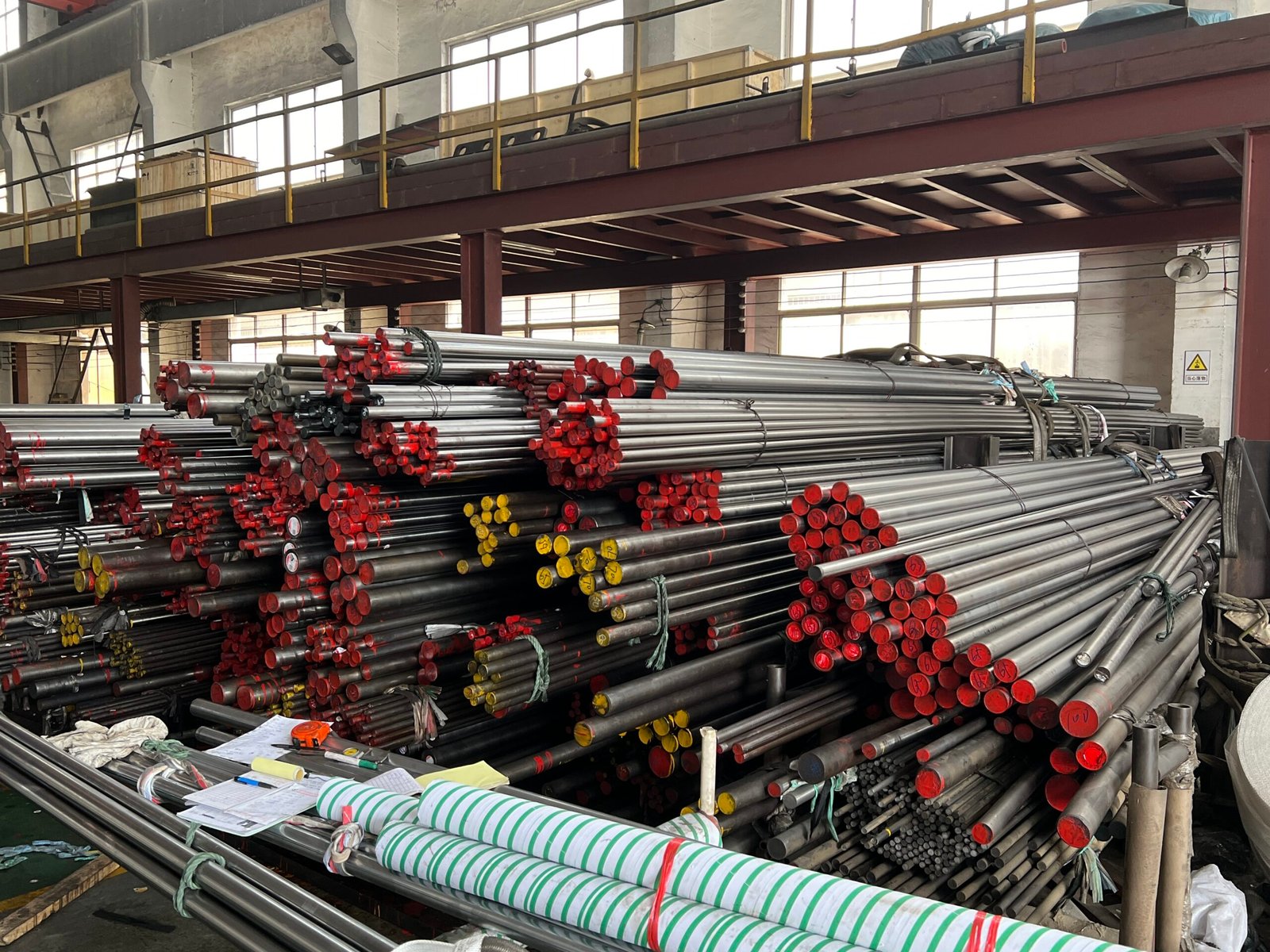
Before designing a risk-sharing approach, it helps to understand which components of a chrome plated rod price are actually exposed to market movement and which are relatively stable.
Steel billet cost is the most volatile component and the largest single input. Hot-rolled steel coil and DOM (drawn over mandrel) tube prices can move twenty to thirty percent within a twelve-month period during active commodity cycles. This component represents roughly forty to sixty percent of the finished rod price depending on diameter.
Chrome plating cost is more stable than steel — primarily because the main inputs (energy, chemicals, labor) don’t move as sharply as steel — but is not static. Energy cost movements, which affect electrolytic plating processes significantly, can add or remove five to ten percent from plating cost over a contract period.
Grinding and processing cost is largely labor and tooling, which is relatively stable over a twelve-month period in most manufacturing regions.
Freight and logistics is the component that has shown the most dramatic volatility in recent years, with sea freight rates capable of moving two to four times within a single year during supply chain disruptions.
| Price Component | Volatility Level | Typical Share of Total Price | Risk Mitigation Tool |
|---|---|---|---|
| Steel billet / tube | High | 40-60% | Index-linked pricing, futures hedging |
| Chrome plating | Low-Medium | 20-30% | Fixed-term supplier agreements |
| Grinding and processing | Low | 10-15% | Labor contracts, fixed tooling |
| Freight and logistics | Variable (can be very high) | 10-20% | Fixed-rate freight contracts, Incoterms choice |
The Three Commercial Structures for Price Risk Allocation
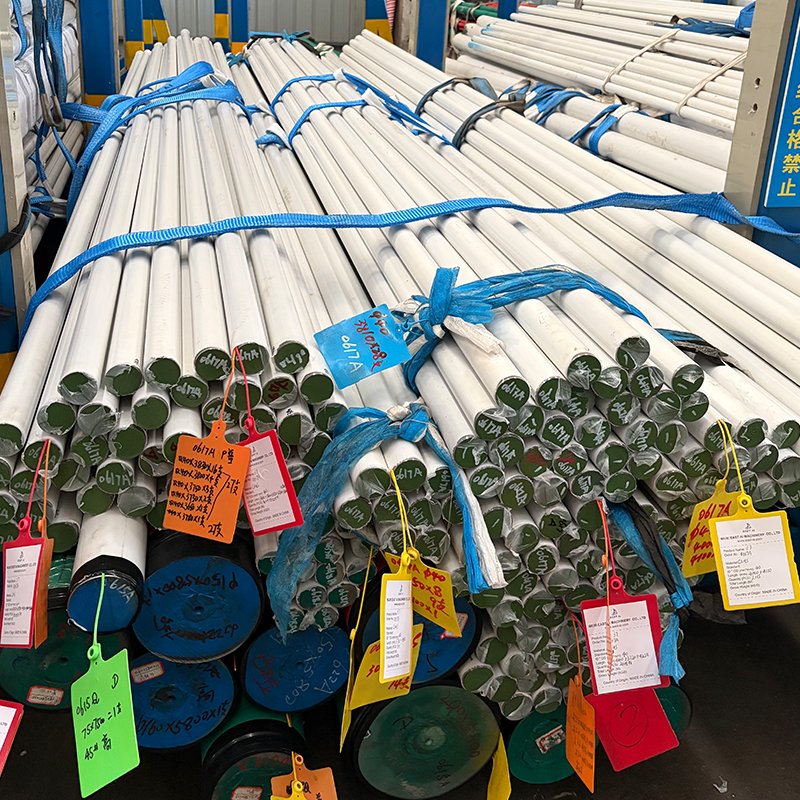
Fixed price with full risk absorption by service provider. The service provider quotes a firm price for the full delivery period and bears all input cost movement. This structure is simple for customers and maximally favorable for them. It is appropriate only when the delivery window is short (under four to six weeks), the order is for immediate or near-term delivery from existing stock, or the service provider has explicitly hedged the input costs through a supply agreement with their supplier.
Index-linked pricing with transparent adjustment mechanism. The base price is fixed at quote time, but a specific input cost adjustment clause allows the price to move up or down in proportion to a published index — typically hot-rolled coil price or a recognized steel price benchmark. This structure passes steel cost risk partially to the customer while maintaining price transparency, and is increasingly common in industrial distribution businesses that have experienced margin erosion from fixed-price quoting during volatile input cost periods. The key to making this work commercially is building the adjustment mechanism into the initial quote so the customer understands and accepts it upfront, rather than raising it as a surprise adjustment after order placement.
Cost-plus pricing with periodic reconciliation. The service provider bills at a fixed markup over documented input cost, with periodic reconciliation as actual costs are confirmed. This structure is rare in standard distribution but appears in long-term supply agreements for large, consistent volumes where both parties have visibility into input costs.
How to Introduce Price Risk Sharing Without Losing Business
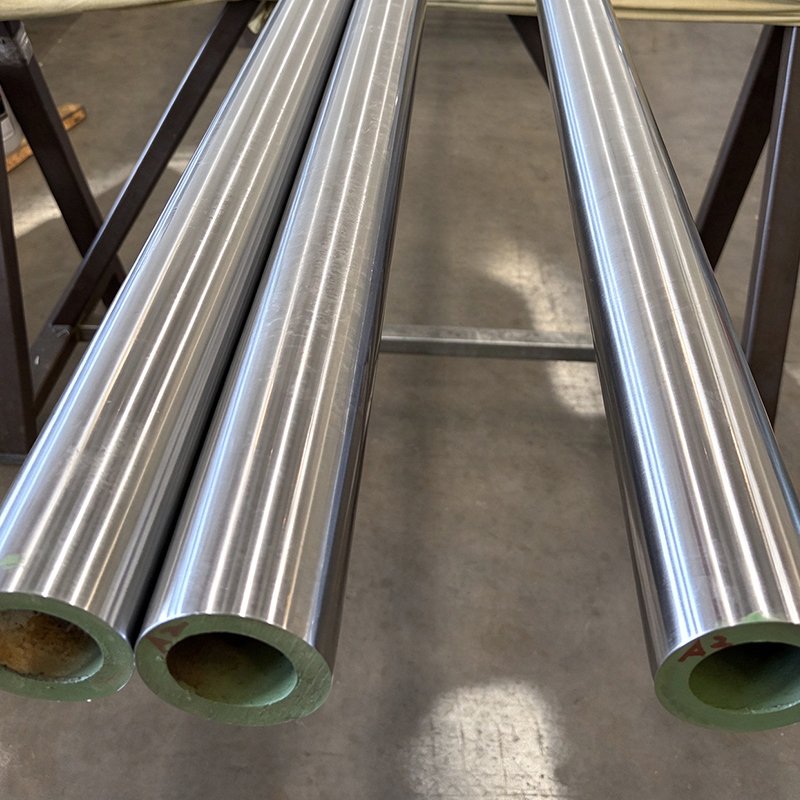
The commercial objection to index-linked pricing is that customers resist complexity and may take their business to a competitor who offers a simpler fixed price. This objection is real, but it is most significant in markets where competitive pressure is high and the buyer can genuinely substitute quickly — which is often not the case for established service provider relationships where qualification, documentation, and relationship history have real switching costs.
The most effective introduction of an index-linked price structure is framing it as a mechanism that protects the customer as well as the service provider — when steel prices decline, the adjustment reduces the customer’s price; when steel prices rise, it allows the service provider to continue supplying rather than discontinuing a relationship that is no longer viable at the fixed price.
This framing is accurate. A service provider who is absorbing significant input cost increases without a price adjustment mechanism will eventually either stop quoting or start substituting lower-cost inputs — neither of which serves the customer well. An explicit price adjustment mechanism protects supply continuity by ensuring the service provider can remain commercially viable through input cost cycles.
| Customer Concern | Honest Response | Supportive Evidence |
|---|---|---|
| “Price uncertainty makes budgeting harder” | Adjustment caps can limit maximum movement per period | Show historical adjustment magnitude over past 2 years |
| “Your competitor quotes a fixed price” | Fixed-price quotes build margin buffers for volatility | Ask if the competitor’s quality and reliability are identical |
| “We don’t want to track an index” | Service provider tracks and applies it transparently | Offer a clear, simple monthly adjustment notification |
Building an Upstream Supply Agreement That Matches Your Downstream Risk Structure
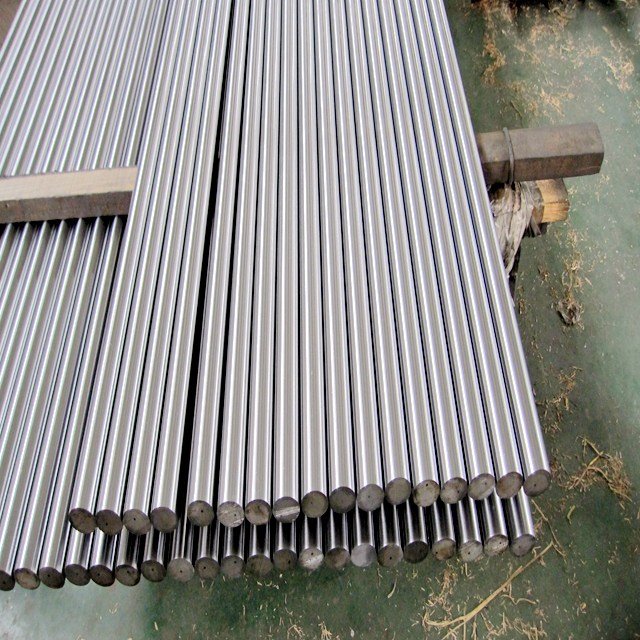
A service provider who has introduced index-linked pricing with customers but is still on fixed-price agreements with their own suppliers has shifted the risk internally rather than eliminating it — now the supplier is bearing the steel price risk rather than the customer, but the service provider is exposed to a supplier who may not honor the fixed price if costs move significantly against them.
The goal is to align upstream and downstream price structures so that the risk borne upstream is proportional to the risk passed downstream — ideally, the same index adjustment mechanism that applies to customer invoices also applies to supplier invoices, creating a pass-through rather than a speculative position.
Negotiating a steel-index-linked supply agreement with a chrome plated rod supplier is entirely feasible for buyers who represent meaningful consistent volume. Most suppliers are willing to discuss this structure because it reduces their own commercial risk and improves relationship stability. The negotiation requires agreeing on the specific index to use, the adjustment frequency, and any cap or floor on the adjustment range.
When your procurement or commercial team is working through how to structure chrome plated rod pricing to manage input cost volatility, EAST AI’s commercial team is glad to discuss how we approach index linkage and what structures we’ve implemented with other service provider accounts. Contact us at marketdi@east-ai.cn or +86 13382202696.
How to Communicate Price Adjustment Mechanisms to End Customers
Introducing an index-linked price adjustment to customers who are accustomed to fixed quotes is a communication challenge as much as a commercial one. The way the mechanism is explained at the outset determines whether customers experience it as a reasonable market-linked arrangement or as an unexpected and arbitrary price change.
Present the adjustment mechanism at the time of initial quoting — not after the first adjustment is calculated — and include a concrete historical example showing what the adjustment would have been over the past twelve months under actual market conditions. A customer who can see that the adjustment over the past year would have averaged 1.5% and never exceeded 3% in a single quarter has a much more grounded reaction than one who hears “prices may change based on market conditions” with no historical context.
The historical example also reveals whether the mechanism is genuinely symmetrical. A steel index that has been declining for twelve months shows a customer that the adjustment can reduce their price, not just increase it, which is often the most persuasive single piece of evidence that the mechanism is fair rather than a one-sided protection for the service provider.
Why Fixed-Price Quoting Incentivizes Material Substitution During Cost Spikes
A structural consequence of fixed-price supply agreements that buyers rarely consider explicitly is the incentive they create for suppliers during input cost spikes. A supplier locked into a fixed price who experiences a thirty percent steel cost increase has three options: absorb the loss, renegotiate the price, or find a way to reduce their own input cost. The third option — which typically means sourcing cheaper base steel, reducing plating thickness toward the lower tolerance limit, or shortening processing time — is the path of least resistance when a price renegotiation is difficult to initiate and absorbing the loss is not commercially sustainable.
The risk of material substitution during input cost spikes is highest with fixed-price agreements that have no adjustment mechanism, because the supplier has neither a commercial path to recovery nor a transparent disclosure mechanism. An index-linked agreement, by contrast, gives the supplier a legitimate commercial path that doesn’t require compromising the product — when costs rise, the price adjusts, and the material stays consistent.
This doesn’t mean every fixed-price agreement will produce substitution under cost pressure; most suppliers manage their costs without compromising product quality. But it does mean that the commercial structure of the agreement either supports or undermines the supplier’s incentive to maintain consistent material quality through market cycles.
How to Manage the Quarterly Adjustment Conversation Without Friction
The point at which an adjustment is actually applied — the first invoice under the new price — is when the mechanism is most likely to generate customer pushback, regardless of how clearly it was explained at the outset. Proactive communication before the adjustment takes effect nearly always produces less friction than the customer discovering the change on an invoice.
Send a brief written notification one to two weeks before a quarterly adjustment takes effect, stating the adjustment amount, the index used, the index movement that drove it, and the new effective price. This notification should be factual and brief — three to five sentences and the relevant numbers — not a lengthy explanation that implicitly signals defensiveness about the change.
A customer who has seen this notification process work smoothly through two or three quarters — including at least one quarter where the adjustment was zero because the index moved minimally — will have significantly more trust in the mechanism than one who has only seen it applied in an upward direction. Consistent, transparent execution of the mechanism over time is the proof that makes it commercially durable.
Related Reading
- Chrome Plated Rod Re-Inspection Failure: Return, Claim, or Accept
- Chrome Plated Rod Hardness: The Specification Most Often Misread
- Chrome Plated Rod Products
Written by Mike, Technical Director at EAST AI