
A honed tube supplier announces that they have doubled their production capacity. The announcement arrives as part of a sales outreach — a new facility, new equipment, expanded headcount. For a buyer who has been managing lead time pressure from this supplier, the news sounds like relief. For a buyer evaluating a new supplier, it sounds like stability. In both cases, the announcement deserves more scrutiny than it typically receives, because “capacity expansion” can mean anything from a transformative operational investment to a piece of machinery that won’t be fully operational for twelve months.
The credibility gap between a capacity announcement and actual usable capacity is often largest in the six to twelve months immediately after the announcement, when physical expansion is happening but operational reliability at the new scale has not yet been established. This is precisely the window when buyers are most likely to over-rely on the announcement and under-prepare for continued supply pressure.
Published: 2026-11-06 | Last Updated: 2026-11-06
What “Capacity Doubled” Actually Needs to Mean
Capacity can be measured in multiple ways, and a supplier who says capacity has doubled is not necessarily stating that any of the measurements a buyer would care about have doubled.
Machine capacity — the theoretical output of production equipment at full utilization — is the most commonly cited figure. Doubling machine capacity means the equipment can theoretically produce twice as much, but doesn’t account for staffing levels, raw material procurement lead times, quality control throughput, or any other constraint that limits the rate at which equipment capacity translates to finished output.
Practical throughput — the actual number of meters of finished, inspected, packed honed tube that leaves the facility per month — is the number that matters to a buyer. This figure is typically significantly lower than machine capacity and takes longer to scale after an expansion.
Available capacity for new orders — the portion of practical throughput not already committed to existing customers — is the most relevant number for a buyer considering a new or increased order allocation. A supplier who has doubled machine capacity but simultaneously won three large new customers may have less available capacity than before the expansion.
Before treating a capacity expansion announcement as an improvement to your supply position, ask the supplier specifically for their current practical throughput and their current available capacity after existing order commitments — these two numbers, not the theoretical machine capacity, are what determine whether the expansion helps you.
| Capacity Metric | What It Measures | Reliability for Planning |
|---|---|---|
| Machine capacity (theoretical) | Equipment output at 100% utilization | Low — never achievable consistently |
| Practical throughput (last 90 days) | Actual finished output | High — reflects real current performance |
| Available capacity (committed orders deducted) | What’s left for new business | Highest — directly relevant to your order |
| Post-expansion target throughput | Supplier’s projection | Low until demonstrated over 2+ quarters |
How Capacity Expansion Affects the Secondary Supplier in a Dual-Source Arrangement
For OEMs running a dual-source honed tube supply, a primary supplier’s capacity expansion creates a specific evaluation question: does the expansion change the allocation strategy between the two sources, and if so, how?
When a primary supplier expands capacity meaningfully, reassess whether the existing allocation between primary and secondary sources still reflects actual supply risk, because the primary supplier’s increased capacity may have reduced the operational justification for the secondary allocation while the secondary supplier’s performance and readiness may have changed in the same period. A dual-source arrangement that made sense at a sixty-forty allocation when the primary was supply-constrained may still make sense at a seventy-five/twenty-five allocation after the expansion — or may justify consolidating further, depending on what the secondary source has demonstrated over the same period.
This reassessment is also an opportunity to explicitly test the secondary source with a meaningful order — not just maintaining nominal volume to preserve the relationship — so that its actual performance under a realistic order is current in your evaluation rather than based purely on historical data from a period when it was receiving a larger and more consistent share of your total business and when both parties had more at stake in maintaining the relationship.
The Ramp-Up Period That Most Capacity Claims Don’t Acknowledge
Physical expansion — new equipment installed, new building operational — is the beginning of a capacity increase, not the end. A production line that is technically capable of running at a higher output rate typically takes six to twelve months to reach reliable operational performance at that rate, because process optimization, staffing adjustment, quality system calibration, and raw material procurement patterns all need to align with the new throughput level.
When a supplier announces a capacity expansion, ask specifically when the new equipment or facility reached full operational status and how long it has been running at the claimed new capacity level — a line that has been operational for two months is not comparable to one that has been running at the new level for eight months and demonstrably meeting its throughput targets.
This question is particularly important for buyers considering increasing their allocation to a recently-expanded supplier. A supplier in the middle of their ramp-up period is simultaneously managing higher throughput demands, new process parameters, and potentially new staffing — which is the combination most likely to produce quality or delivery inconsistencies at exactly the moment when a buyer has increased their dependency.
The Signals That Distinguish Real Expansion From a Sales Narrative
Buyers who have evaluated capacity claims from multiple suppliers develop a sense for which signals are more reliable than others. A few specific indicators consistently distinguish genuine operational expansion from a sales narrative that hasn’t yet caught up with reality.
Output evidence is the most reliable signal. A supplier who can provide shipping records — total meters shipped per month over the last six months — has demonstrated actual throughput at the new scale. This evidence is difficult to fabricate and impossible to confuse with theoretical capacity.
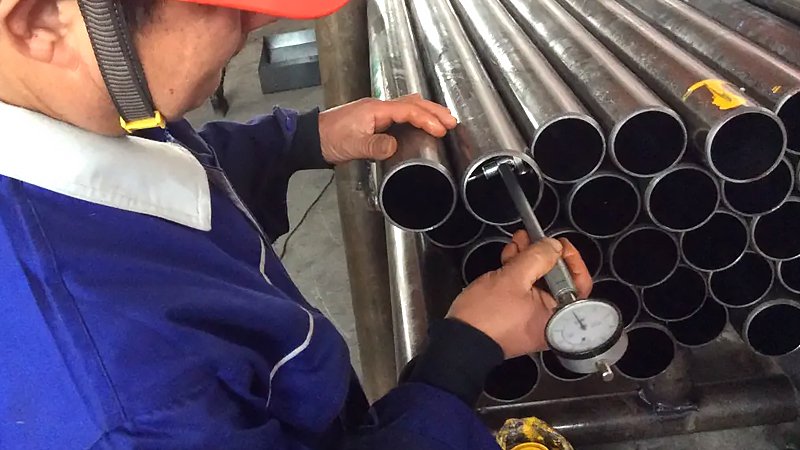
Quality system expansion is a necessary accompaniment. A honed tube facility that has doubled its production throughput without a corresponding increase in inspection and quality system capacity will eventually show quality degradation. Ask the supplier how their inspection capacity and quality team have scaled alongside the production expansion — a supplier who has doubled output but hasn’t added inspection resources has created a quality risk that will eventually surface as incoming inspection failures on your end.
Lead time performance post-expansion is the most direct test. A supplier whose lead times have actually shortened — confirmed by your own order history with them, not their sales claim — has demonstrated that the expansion translated to real available capacity. A supplier whose lead times have stayed the same or lengthened despite announcing an expansion has revealed that the new capacity went elsewhere.
| Evidence Type | How to Obtain | What It Demonstrates |
|---|---|---|
| Shipping records (last 6 months) | Request directly | Actual throughput at current scale |
| Inspection capacity (headcount + equipment) | Ask specifically during conversation | Quality system kept pace with output |
| Lead time trend (your order history) | Internal records | Whether expansion benefited your supply position |
| Reference from another buyer using expanded capacity | Supplier provides contacts | Third-party confirmation of improved performance |

How to Adjust Your Supply Plan During a Supplier’s Expansion Period
The practical supply chain implication of a supplier in active expansion is that their operational reliability may be temporarily lower than their historical baseline, even if the announced capacity is genuine. Managing this risk requires a short-term adjustment to your supply plan rather than immediate dependence on the expanded capacity.
During the six to twelve months following a supplier capacity expansion, maintain your existing safety stock levels and order lead time buffers rather than reducing them in anticipation of the improved supply position — treat the expansion as an opportunity to rebuild depleted safety stock rather than as permission to run thinner buffers.
This conservative posture costs nothing if the expansion performs as announced — you simply end the ramp period with healthier safety stock. It protects you significantly if the ramp takes longer than expected or produces temporary quality variability, because your supply plan was never dependent on the new capacity performing at full reliability from day one.
When you want to understand what EAST AI’s current production capacity, throughput, and available capacity look like for your specific bore sizes and specifications, our production team can provide a direct answer with actual output data. Contact us at marketdi@east-ai.cn or +86 13382202696.
Why New Equipment Doesn’t Immediately Mean More Reliable Quality
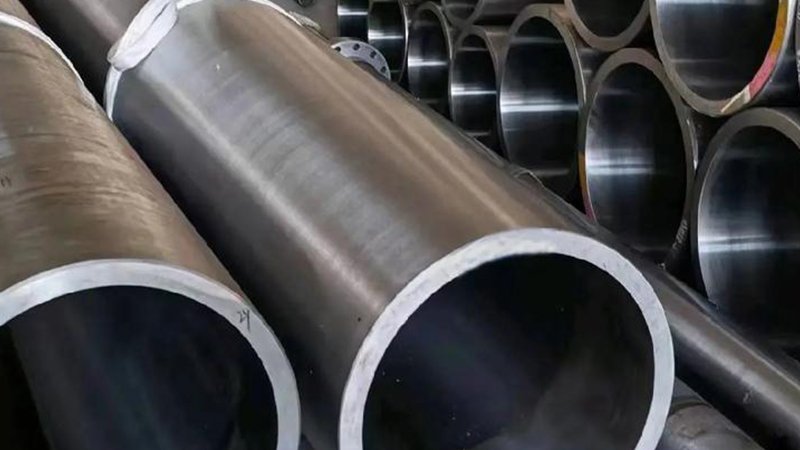
Capacity expansion through new equipment doesn’t just introduce more output — it introduces a new production variable that takes time to bring under the same quality control as established equipment. New grinding machines, new honing heads, and new plating lines all require process calibration, operator training, and iterative adjustment before they produce material at the same consistency as equipment that has been running the same parameters for years.
When a supplier has recently installed new honing or grinding equipment as part of their expansion, ask specifically whether material shipped during the ramp period came from the established equipment or the new equipment, and confirm that the new equipment’s output has been validated against your specification before it enters your supply chain. This question is especially relevant for bore surface finish requirements — new honing equipment often requires significant adjustment before it reliably hits a consistent Ra target on the first pass.
The ramp-up quality risk is not unique to any specific supplier — it is a structural feature of how production equipment works. Acknowledging it and asking about it directly is not an accusation; it is the kind of technically informed question that well-run suppliers expect from technically sophisticated buyers.
What a Genuine Capacity Expansion Looks Like in Supplier Communication
The way a supplier communicates about their capacity expansion is itself informative. A supplier who provides a detailed, specific account of what changed — specific equipment added, specific throughput targets by quarter, specific quality validation steps completed — is describing a managed process. A supplier whose capacity announcement is vague about specifics and heavy on marketing language is describing something they want you to believe rather than something they want you to verify.
This distinction applies not just to the initial announcement but to follow-up conversations. A supplier who, when asked about ramp-up timeline, provides a specific answer with milestones, is managing their expansion operationally. One who responds with reassurances about being “fully operational” without supporting detail is managing their sales narrative. The difference matters for how much reliance you place on the announced capacity in your supply planning.
Related Reading
- Short Lead Time Honed Tube Quotes: What the Compressed Timeline Hides
- Honed Tube Sample Approval Passed. Then Bulk Quality Dropped. Now What.
- Honed Tube Products
Written by Mike, Technical Director at EAST AI