
Hardness is one of the most frequently specified properties on a chrome plated rod drawing, and one of the most frequently misapplied. Manufacturers who specify induction-hardened rod for every application because “harder is better” are paying a consistent premium for a property that, in most hydraulic cylinder applications, adds nothing to service life — and in some cases, introduces brittleness risks that a softer, tougher grade would not.
The root of the problem is that hardness feels intuitive: a harder rod should resist wear better, last longer, and be less likely to fail. That intuition is correct in some applications and misleading in others, and the difference between those applications is specific and identifiable. Getting it right requires knowing what failure mode the specification is actually protecting against, and whether the selected hardness grade actually addresses that failure mode better than the alternatives.
Published: 2026-10-29 | Last Updated: 2026-10-29
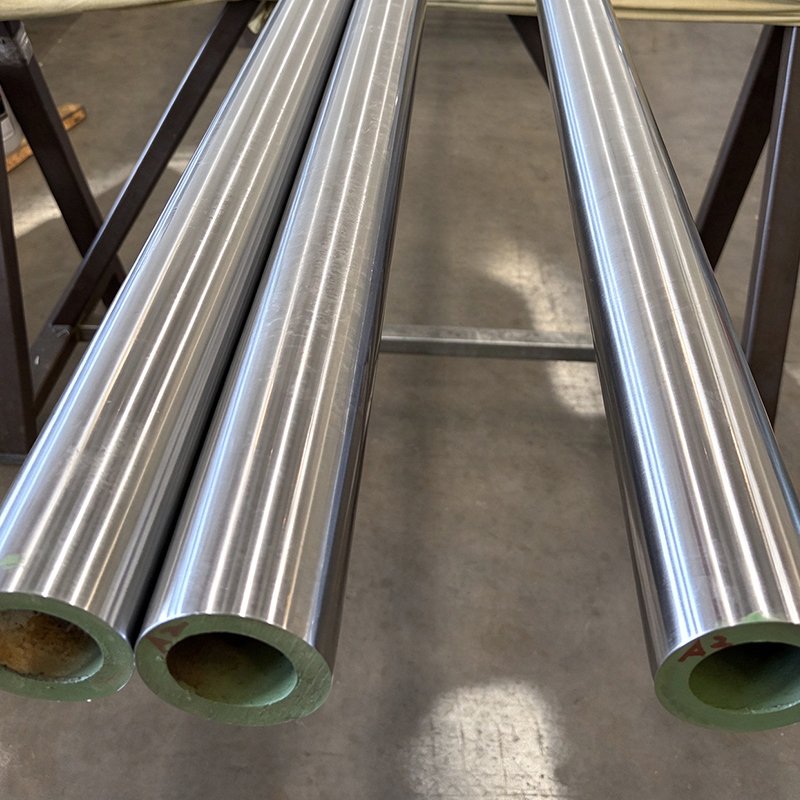
What Hardness Grades Are Actually Available and What They Cost
Chrome plated rod for hydraulic cylinder applications is commercially available in four primary hardness configurations, each suited to a different application profile:
| Grade | Hardness Range | Manufacturing Process | Relative Cost | Primary Failure Mode Addressed |
|---|---|---|---|---|
| Normalized | HRC 15–22 | Standard heat treatment; no case hardening | Baseline | Corrosion, seal wear under normal loads |
| Quenched & Tempered | HRC 25–32 | Through-hardening; improved toughness | +15–20% | Moderate fatigue load, higher cyclic stress |
| Induction Hardened | HRC 50–62 | Surface hardening only; tough core retained | +30–45% | High surface wear, abrasive environments, bending fatigue |
| Through-Hardened | HRC 40–50 | Full section hardening | +25–35% | High cyclic bending load across full section |
The cost column reflects typical premiums relative to normalized rod at the same diameter. These premiums recur on every reorder, which means a persistent specification mismatch compounds across the full production history of a product line.
The Failure Mode Logic That Should Drive Grade Selection
Hardness grade selection should start from a failure mode analysis, not from a “more is better” default. The relevant questions are:
What is the primary mechanism by which this rod would fail in service?
- If corrosion from environmental exposure (moisture, chemicals, salt): hardness grade has minimal effect; chrome plating quality and thickness matter more
- If seal wear from normal reciprocating motion: normalized grade is sufficient in most standard applications
- If surface wear from abrasive contamination (dirt, metal particles): induction hardening provides meaningful benefit
- If fatigue from cyclic bending load (side loading, boom cylinder applications): Q&T or induction hardening may be warranted depending on calculated stress
Ask your engineering team to document the primary failure mode for each application before confirming the hardness specification — a rod that has never experienced a fatigue failure in five years of production history almost certainly doesn’t need the induction-hardened specification that’s been carried forward from an abundance of caution.
This analysis often reveals that the same hardness grade has been applied across a product family with meaningfully different duty cycles, because the most demanding application in the family set the specification and every subsequent application inherited it without review.
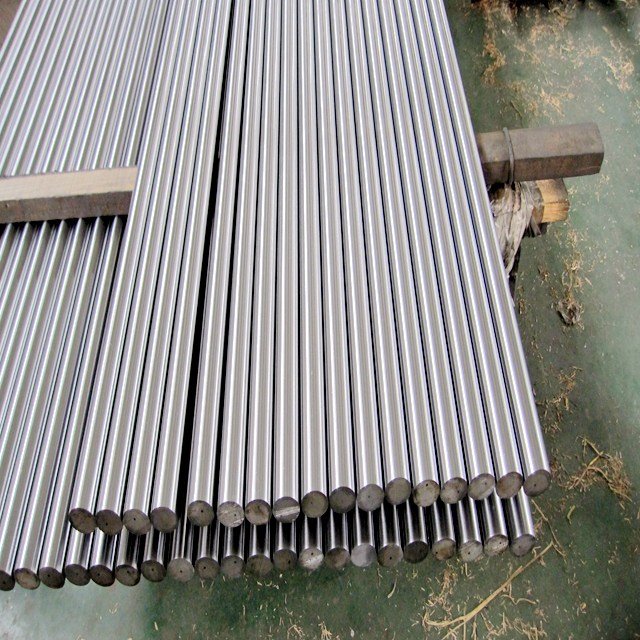
Side Loading Is the Application Variable Most Often Underestimated
The application condition that most clearly justifies higher hardness — and where normalized rod most commonly underperforms — is significant side loading: bending moment applied to the rod as it extends, from an off-axis mounting, a long stroke relative to bore diameter, or a load that applies lateral force to the extended rod. Under repeated side loading, the surface stress on the rod at the seal land and at the rod eye connection point drives a fatigue failure mode that hardness does address.
For any application with an extended stroke-to-bore-diameter ratio greater than approximately 10:1, or any application with documented off-axis loading, calculate the maximum bending stress at the rod surface and verify it against the fatigue limits for the specified hardness grade — this calculation is the correct basis for grade selection, not an intuitive assumption that longer or more loaded means harder.
A manufacturer who has never performed this calculation for a product line that uses induction-hardened rod “to be safe” may find, on review, that the actual bending stress is well within the fatigue capacity of Q&T rod — which would deliver the same service life at a fifteen percent lower material cost on every unit produced.
The Brittleness Trade-Off at High Hardness
High hardness introduces a genuine trade-off that is often overlooked in specifications that default to the hardest available grade: harder steels are more notch-sensitive and more brittle, which means they’re more susceptible to crack initiation from surface defects, handling damage, or stress concentrations at threads and transitions. A normalized rod that survives a handling impact without consequence may develop a fatigue crack initiation site from the same impact if it’s induction-hardened.
For applications that involve any risk of impact loading — cylinders on equipment that sees sudden load reversals, shock loading, or physically harsh handling environments — evaluate whether the brittleness penalty of high hardness creates more risk than the wear resistance benefit reduces.
This trade-off is real enough that some equipment manufacturers have moved from induction-hardened to Q&T rod in specific applications after investigating fatigue failures that traced back to impact-initiated cracks. The failure mode was not wear — it was crack propagation from an initiation site that the harder material was more susceptible to developing.
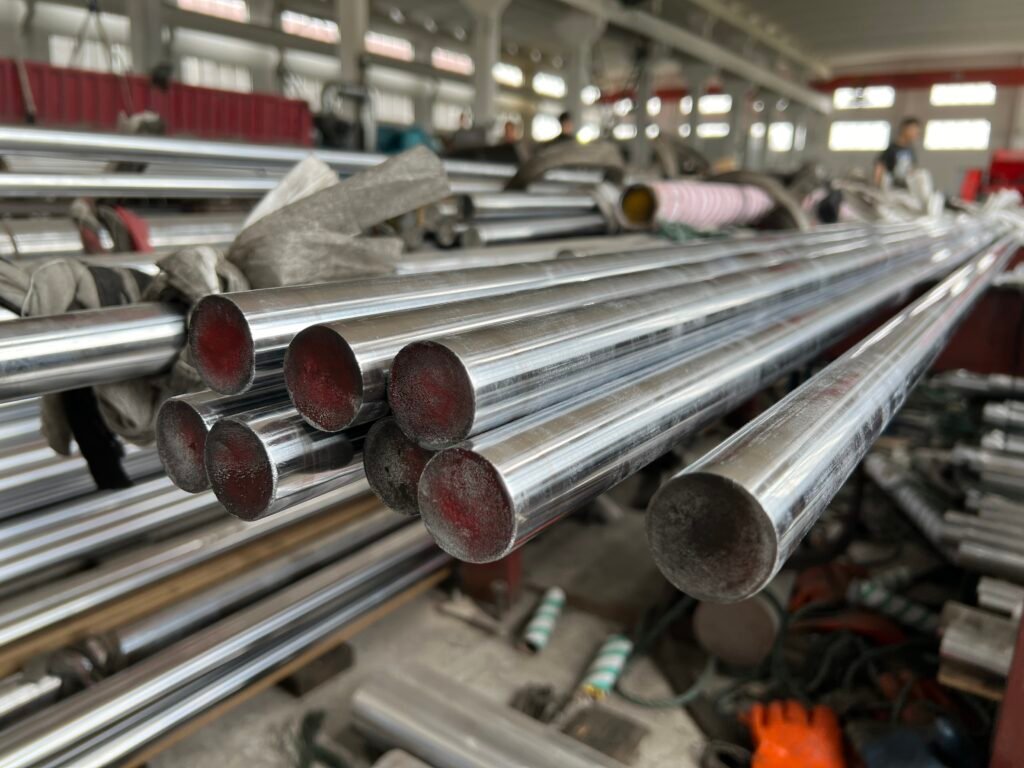
How to Systematically Review Active Specifications
For a manufacturer with an established product line, the most efficient way to identify over-specified hardness grades is a three-step review:
- Pull the field failure history for each rod-containing assembly over the last three years. If a product line has zero rod fatigue failures with a normalized specification on similar applications, there’s no evidence that a higher grade is needed.
- Calculate the bending stress at maximum extension and maximum lateral load for each application. Compare this against the endurance limit for normalized, Q&T, and induction-hardened grades to identify which is the minimum grade that provides adequate fatigue margin.
- Check the corrosion and abrasion environment for each application. If neither is a significant factor, chrome plating quality and thickness are the primary corrosion defense — hardness grade adds little to corrosion performance.
Document the outcome of this review as a specification rationale, and use it to establish a default grade for each application category rather than defaulting to the most expensive grade across the board.
This review typically takes one to two engineering days for a product line with twenty to thirty cylinder assemblies, and the cost savings from corrected specifications typically recover that investment within a single production run.
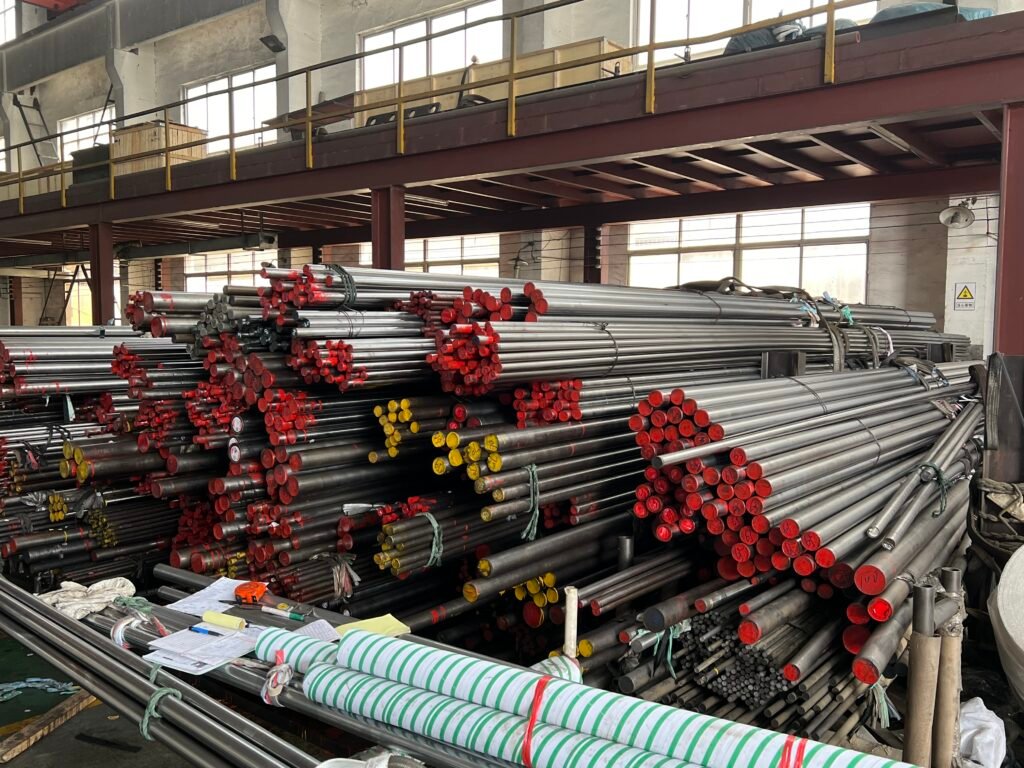
How Procurement and Engineering Alignment Prevents Grade Creep
Over-specified hardness grades often persist not because engineering recommends them, but because procurement inherited a specification from a previous engineer who has since left, or because a supplier originally recommended a conservative grade during a first-order qualification and that grade was never reviewed after the relationship was established. This process — which can be called grade creep by inertia — is common enough that a manufacturing company with five or more years of chrome rod procurement history will almost always find at least one over-specified grade on review.
Establish a formal sign-off requirement for any hardness grade above normalized when the application falls within the fatigue capacity of normalized steel, rather than allowing conservative grade selection to occur by default without explicit justification. This single procedural change — requiring an engineering sign-off rather than just a procurement approval for higher-grade rod — inserts a review checkpoint where none currently exists in most organizations. It doesn’t prevent induction-hardened rod from being specified when it’s actually warranted; it just ensures that the specification reflects a deliberate engineering decision rather than an unexamined default.
For procurement teams that manage chrome rod specifications without regular engineering input, scheduling an annual specification review with whoever owns the product engineering for each rod-containing assembly costs relatively little and consistently surfaces specification mismatches that procurement alone wouldn’t identify.
How Systematically Reviewing Specifications Across Accounts Compounds the Benefit
The point of this analysis is not that induction-hardened rod is never appropriate. There are applications where it clearly is: long-stroke construction equipment cylinders with heavy side loading, hydraulic cylinders on mining equipment operating in highly abrasive environments, and boom cylinders on mobile cranes where fatigue from combined bending and axial load is the primary failure risk.
In these applications, specifying a lower hardness grade to save material cost is a false economy — the first premature rod failure will cost more in warranty, downtime, and customer relationship damage than years of hardness-grade premium would have.
The goal is to match the specification to the actual application requirements, not to apply blanket conservatism. A manufacturer who has done this analysis and confirmed that induction-hardened rod is warranted for a specific application is making a justified, defensible decision. One who defaults to it across all applications without analysis is paying for performance that most of their products don’t need.
If your engineering team is reviewing chrome plated rod specifications for an active product line and wants input on grade selection based on application duty cycle and failure mode analysis, our team at EAST AI is glad to work through the specifics — reach us at marketdi@east-ai.cn or +86 13382202696.
What We Offer
- Chrome plated rod in all four hardness grades — normalized, Q&T, induction-hardened, and through-hardened — with accurate cost comparison at any diameter
- Application review support: we’ll review stroke, bore diameter, loading conditions, and service environment to provide a grade recommendation with documented rationale
- Hardness verification data (Rockwell measurements per lot) included with shipment for quality system documentation
- Side-by-side hardness grade comparison samples available for new product development or specification review projects
The Cost of Getting It Wrong in Both Directions
The cost of under-specifying hardness is visible and immediate: a premature rod failure, a warranty claim, a field service call, and the reputational consequence with the equipment end user. These costs are easy to see and motivate conservative specification decisions. The cost of over-specifying is invisible and gradual: a fifteen to forty-five percent material premium paid on every rod in every production run, compounding across years and across an entire product line. Neither failure mode is acceptable, and the right answer is not to default to the more visible risk — it’s to do the analysis that avoids both.
A manufacturer who has neither experienced a rod failure nor reviewed their hardness specifications in the last three years is almost certainly paying for over-specification somewhere in their product line. The analysis doesn’t require significant engineering investment. It requires pulling the fatigue load calculation for each rod application, comparing it against the endurance limits for each grade, and documenting which grade is actually required. Most product lines with ten to fifteen cylinder assemblies can complete this review in a day or two of engineering time — an investment that often recovers its cost in the first production quarter from specification corrections alone.
Related Reading
- Two Honed Tubes Can Report the Same Ra Value and Still Feel Completely Different to a Seal
- A Chrome Plating Thickness “Within Spec” Can Still Be the Wrong Thickness for Your Application
- Chrome Plated Rod Products
Contact EAST AI (eastai-tech.com) Email: marketdi@east-ai.cn Phone: +86 13382202696 Address: No. 108, Lunan Road, Wuxi, Jiangsu, China.
Written by Jeff, Founder of EAST AI