
Published: 2026-10-19 | Last Updated: 2026-10-19
An engineer specifying chrome plated rod who assumes the as-plated surface is automatically ready for final assembly, without checking whether the application’s dimensional and finish requirements actually demand a post-plating grinding operation, risks either over-speccing an unnecessary finishing step or under-speccing a rod that won’t meet the tolerance the seal actually needs. Whether post-plating grinding is required depends on the achievable as-plated tolerance and finish from the specific plating process versus what the application genuinely demands — not on a blanket assumption that grinding is always included or always optional.
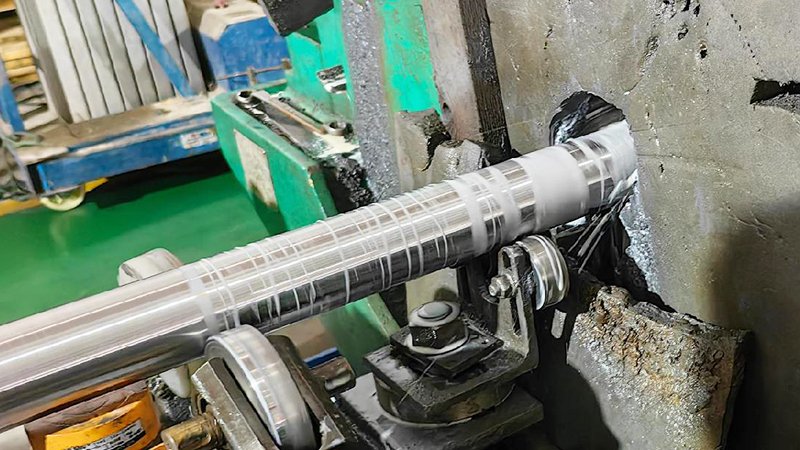
What As-Plated Surfaces Can and Can’t Achieve Reliably
Hard chrome plating, as a deposition process, follows the contour of the base steel surface it’s applied to — it doesn’t inherently correct dimensional inaccuracies or surface irregularities present before plating, and plating thickness itself can vary slightly across a rod’s length and circumference depending on process control. A well-controlled plating process on a well-prepared base steel surface can achieve reasonably tight as-plated tolerances, but “reasonably tight” and “precision ground” are different tolerance bands, and applications with demanding dimensional or surface finish requirements typically still need a post-plating grinding pass to reach final specification reliably.
When Post-Plating Grinding Is Typically Required
| Application Requirement | As-Plated Typically Sufficient? | Why |
|---|---|---|
| Standard industrial cylinder, moderate tolerance | Often yes | As-plated tolerance and finish usually fall within acceptable range |
| Tight diameter tolerance (precision fit, minimal clearance) | Usually no | Plating thickness variation can exceed the tolerance band |
| High-precision seal requiring very low Ra | Usually no | Grinding achieves finer, more consistent surface finish than as-plated |
| Rod ends requiring threading or machined features after plating | Depends on feature | Often ground locally at the specific feature even if the rest of the rod is as-plated |
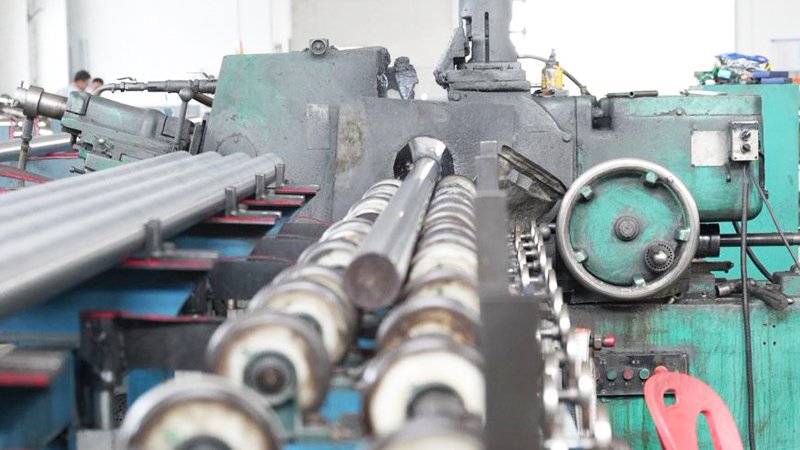
Why Grinding After Plating, Not Before, Is the Standard Sequence
Grinding is performed after plating rather than before specifically because the chrome layer itself is the final functional surface — grinding the base steel to final tolerance before plating would be undone by the plating process adding thickness back on top, reintroducing the dimensional variation the grinding was meant to eliminate. Post-plating grinding removes a thin layer of the chrome itself to bring the plated rod to final diameter and finish, which means the chrome thickness specification needs to account for this removal — a rod specified for a given final chrome thickness needs to be plated somewhat thicker than that target to leave adequate margin after the grinding pass removes material.
How Grinding Margin Affects Chrome Thickness Specification
This has a direct practical consequence for how chrome thickness gets specified on a rod that will be ground after plating: the plating thickness target needs to include the grinding allowance on top of the desired final thickness, and a specification that states only the final desired thickness without accounting for grinding removal risks the supplier either under-plating (leaving insufficient chrome after grinding) or over-plating unnecessarily (adding cost without benefit). Buyers specifying ground chrome plated rod should confirm with the supplier what grinding allowance is built into their process, and verify that the stated final chrome thickness is genuinely post-grinding, not a pre-grinding figure that overstates what the finished rod will actually carry.
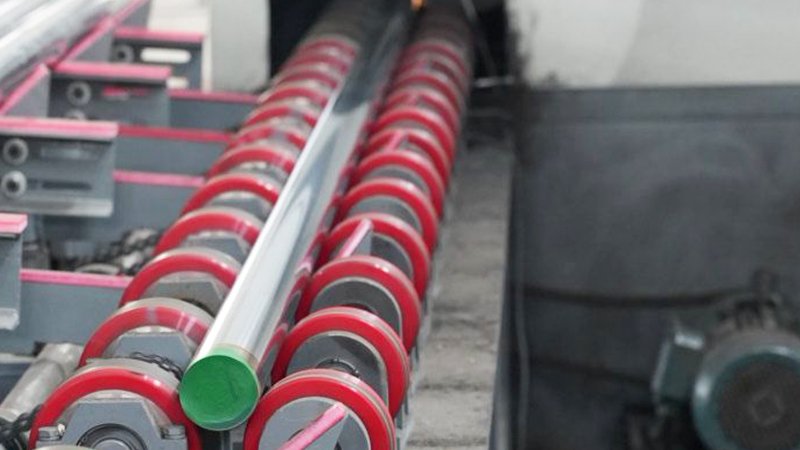
Surface Finish Differences Between As-Plated and Ground Surfaces
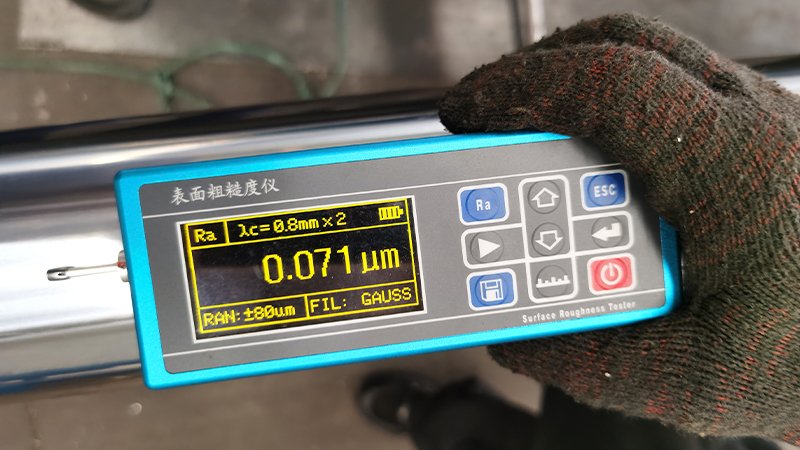
Beyond dimensional tolerance, grinding typically produces a different surface texture than as-plated chrome — generally smoother and more consistent, though the specific finish depends on grinding wheel grit and process parameters, which can themselves be tuned to target a particular Ra value for applications with specific seal compatibility requirements. An application with unusual seal or lubrication requirements should specify the target Ra value explicitly for the ground surface, rather than assuming grinding automatically produces whatever finish the application needs — grinding gives a supplier the ability to hit a tighter, more controllable finish target than as-plated chrome typically allows, but only if that target is actually communicated.
Cost and Lead Time Implications of Specifying Grinding
Post-plating grinding adds a processing step, which adds both cost and lead time compared to as-plated rod, and engineers should weigh whether their application’s actual tolerance and finish requirements justify this addition rather than defaulting to grinding as a standard practice regardless of need. Conversely, specifying as-plated rod for an application that actually needs tighter tolerance than as-plated processes reliably deliver risks dimensional rejections at receiving inspection or, worse, inconsistent field performance from rod that technically passed inspection but sits at the edge of the achievable as-plated tolerance band.
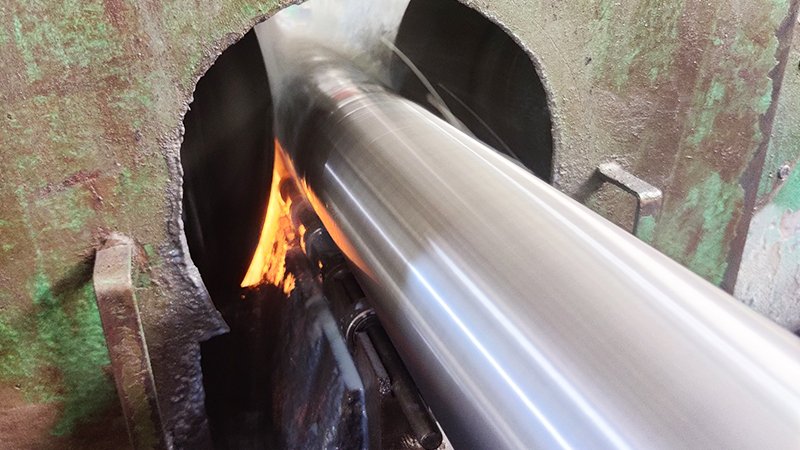
A Practical Specification Checklist
Engineers specifying chrome plated rod should state explicitly whether the application requires ground or as-plated surfaces, confirm the grinding allowance is included in the stated chrome thickness if grinding is specified, and state the target Ra value for ground surfaces rather than assuming a default finish — this level of specification detail prevents the kind of mismatch between what was ordered and what was actually needed that surfaces later as a seal life or fit problem rather than an obvious rejection at receiving.
How Centerless Grinding Differs From Other Grinding Approaches for Rod Work
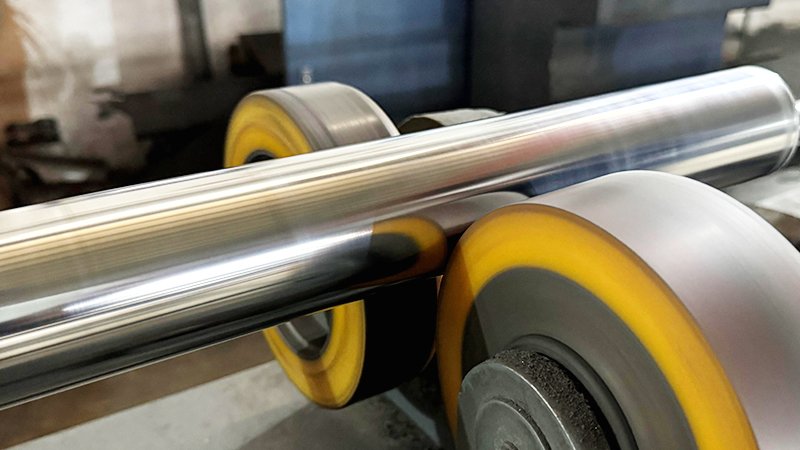
Most post-plating grinding on chrome plated rod uses a centerless grinding process, which supports the rod between a grinding wheel and a regulating wheel without clamping it at fixed centers, allowing consistent diameter control along the full length including the ends — a meaningful advantage for long rods where center-type grinding can introduce more variation near the rod ends where fixture support is weaker. Buyers specifying tight diameter tolerance across a long rod’s full length should confirm the supplier’s grinding process actually supports this end-to-end consistency, since not every grinding setup handles rod ends with the same control as the mid-length section, and a tolerance drawing that doesn’t distinguish end-zone tolerance from mid-length tolerance can mask a real process limitation until the rod is in final assembly.
Why Grinding Direction and Final Pass Parameters Affect More Than Just Dimension
The final grinding pass parameters — wheel speed, feed rate, and depth of cut on the last pass specifically — influence not just the measured Ra value but also subtler surface characteristics like residual stress state at the surface, which matters for fatigue-sensitive applications even when the Ra number alone looks identical across different grinding setups. Two suppliers can both report the same final Ra value on a ground chrome rod while using different final-pass parameters that leave different residual stress conditions at the surface, and for a genuinely fatigue-critical application, asking a supplier about their final-pass grinding parameters — not just the resulting Ra number — is a more complete way to evaluate whether their process matches the application’s actual demands.
When a Combination of Ground and As-Plated Sections Makes Sense on the Same Rod
Some rod designs benefit from a mixed approach — grinding only the specific sections where tight tolerance genuinely matters (a seal contact area, for instance) while leaving the remainder of the rod as-plated, which can reduce cost and lead time compared to grinding the entire rod length when only part of it actually needs the tighter tolerance. This selective approach requires clear communication with the supplier about exactly which zones need grinding and to what tolerance, and it’s a reasonable middle ground for rods where the functional requirement is genuinely localized rather than uniform along the full length — though it does add a layer of specification complexity that a uniformly ground or uniformly as-plated rod avoids.
How to Verify Grinding Quality Claims During Supplier Qualification
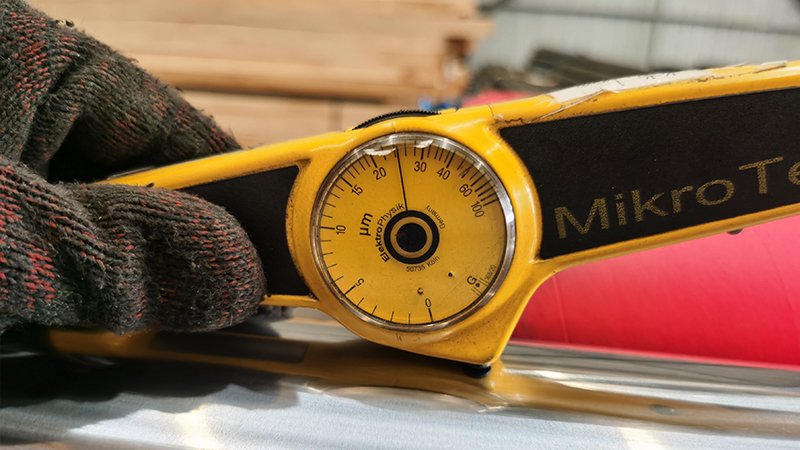
A supplier claiming a specific achievable ground tolerance and finish should be able to provide actual measured data from recent production, not just a stated process capability figure that may represent a best-case outcome rather than typical production reality. Requesting measured dimensional and surface finish data from several recent ground rod batches, rather than accepting a single stated capability number, gives a buyer a more honest picture of what the supplier’s grinding process actually delivers consistently — a supplier whose recent production data closely clusters around their stated capability is demonstrating genuine process control, while one whose stated capability doesn’t match what their recent batches actually show is worth further questioning before committing to a ground rod specification based on their claimed numbers.
What Happens When Grinding Reveals a Plating Defect Too Late
Occasionally a plating defect — a void, inclusion, or thin spot — isn’t visible until the grinding pass removes enough material to expose it, which means a rod that looked acceptable going into grinding can fail inspection coming out, after the grinding cost has already been incurred. Buyers should ask suppliers what their defect rate looks like specifically at the post-grinding inspection stage, not just their as-plated defect rate, since this later-stage catch point reflects a different and arguably more meaningful quality measure — a supplier with a low post-grinding defect rate is demonstrating that their plating process is clean enough to survive the material removal grinding performs, which is a more rigorous test of plating quality than surface inspection alone before any material has been removed.
How Rod Length Affects Grinding Process Consistency
Longer rods present more opportunity for grinding process variation along their length than shorter ones, simply because maintaining consistent wheel pressure, feed rate, and alignment over a longer traverse is mechanically more demanding than over a short one. Buyers specifying long ground rods should ask suppliers specifically about their process capability at length, not just their general stated tolerance, since a supplier’s standard capability figures may be based on more typical, shorter rod lengths and not necessarily reflect what their equipment can hold consistently across a longer traverse distance.
Why Final Inspection Location Matters as Much as the Measurement Itself
A supplier measuring a ground rod’s final diameter only at the two ends, rather than at multiple points along the full length, can miss a mid-length deviation that a shorter, end-focused sampling plan simply never checks. Buyers specifying tight-tolerance ground rod should confirm the supplier’s final inspection plan includes multiple points along the length, not just the ends, since end-point-only measurement is a common shortcut that understates actual dimensional variation on a rod where the grinding process shows more variability toward the middle of a long traverse than at either end.
Related Reading
- How Should a Cylinder Builder Decide How Much Chrome Thickness Is Actually Needed?
- Why Does the Same Chrome Plated Rod Specification Perform Differently Across Two Suppliers With Identical Paper Specs?
- How Does a Hydraulic Cylinder Builder Decide What Rod End Configuration to Specify on New Chrome Plated Rod?
Specifying Ground vs As-Plated Rod for a New Design
Unsure whether your tolerance and finish requirements need post-plating grinding? Contact our team and we’ll help match the process to your actual specification.
What We Offer
- Both as-plated and post-plating ground chrome plated rod capability
- Transparent grinding allowance accounting in chrome thickness specifications
- Target Ra value control on ground surfaces for seal-critical applications
- Technical consultation on matching process selection to actual tolerance requirements
Contact EAST AI (eastai-tech.com) Email: marketdi@east-ai.cn Phone: +86 13382202696 Address: No. 108, Lunan Road, Wuxi, Jiangsu, China.
Written by Alex, Production Engineer at EAST AI