
There’s a habit in this industry of reaching for through-hardened base steel whenever a bore wear problem shows up, on the assumption that harder is simply better. It’s not always the right call, and it’s worth understanding why before specifying it as a default.
Through-hardening increases bulk hardness uniformly, which does improve wear resistance at the bore surface, but it also reduces the steel’s toughness and ductility throughout the entire cross-section — including the outer diameter, where impact resistance and fatigue performance actually matter more in a lot of applications than bore-surface hardness alone. A tube that’s through-hardened to resist bore wear can become more susceptible to cracking from an impact or stress concentration at the OD that a tougher, less uniformly hard tube would have simply dented or deformed without propagating a crack.
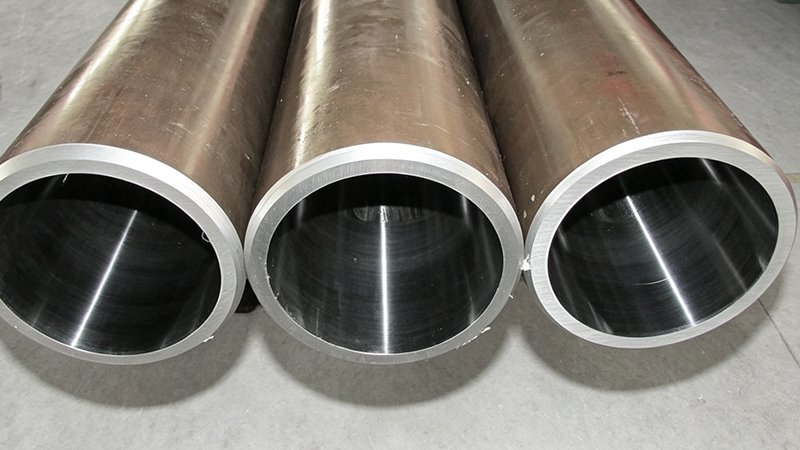
What Case Hardening Does Differently
Case hardening treats only the bore surface to a meaningful depth, leaving the bulk of the wall thickness and the outer diameter in a tougher, more ductile condition. This gives you the wear resistance where the piston and seal actually contact the material, while preserving the structural toughness that resists cracking under the kind of impact loading, pressure spikes, or handling abuse that a cylinder barrel realistically experiences over its service life.
The case depth is a real engineering variable, not a fixed number — it needs to be deep enough that normal wear over the component’s service life doesn’t wear through the hardened case into the softer core beneath it, but not so deep that it starts eroding the toughness benefit the softer core was supposed to provide.
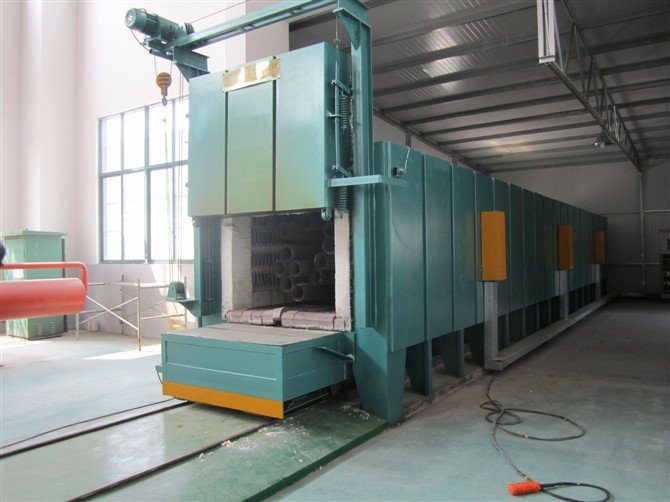
Where Through-Hardening Still Makes Sense
Through-hardening isn’t wrong for every application. Where the tube sees relatively low impact or shock loading, and the primary failure mode genuinely is bore wear with little risk of cracking from the hardening process itself or from service impact, uniform through-hardening is simpler to specify and verify, and it avoids the added process complexity of controlling case depth precisely. The decision point is really about whether impact resistance and crack propagation risk matter as much as bore wear resistance for your specific application.
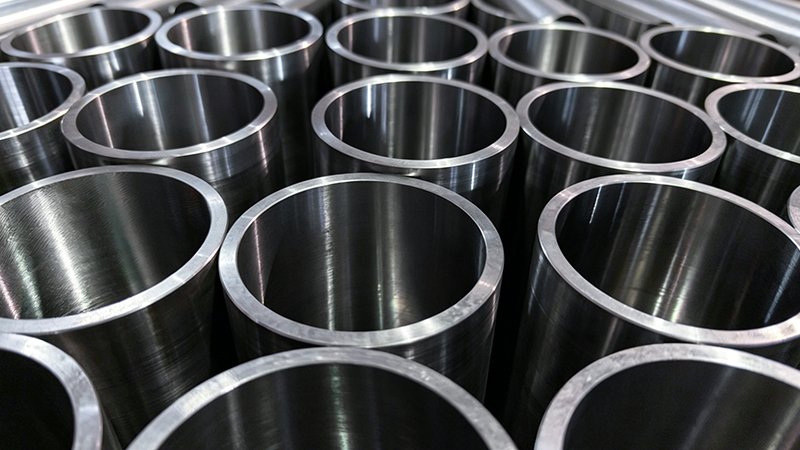
Where Case Hardening Earns Its Complexity
Applications with genuine impact exposure — demolition equipment, mining machinery handling rock and debris, any cylinder likely to take a side impact from material handling or collision with structure — benefit from case hardening’s combination of wear-resistant bore and tougher bulk material. The same logic that favors case hardening on gears and shafts subject to both surface wear and bending fatigue applies here: surface and bulk properties serve different functions, and treating them independently gets you closer to what the application actually needs than a single uniform hardness specification does.
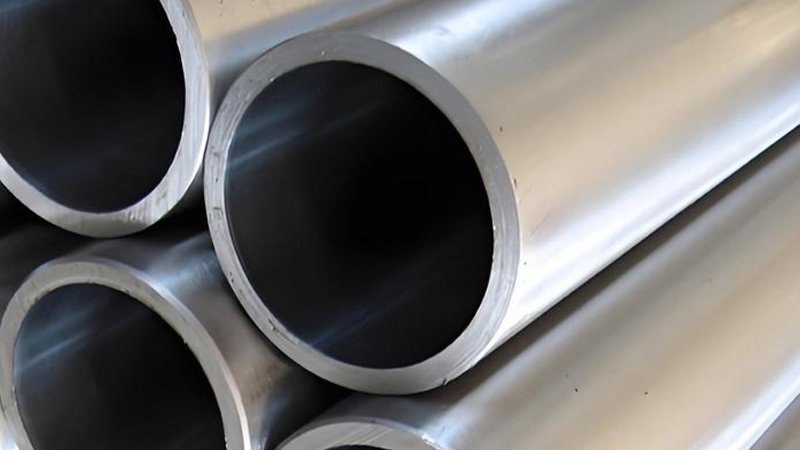
Verification Looks Different Too
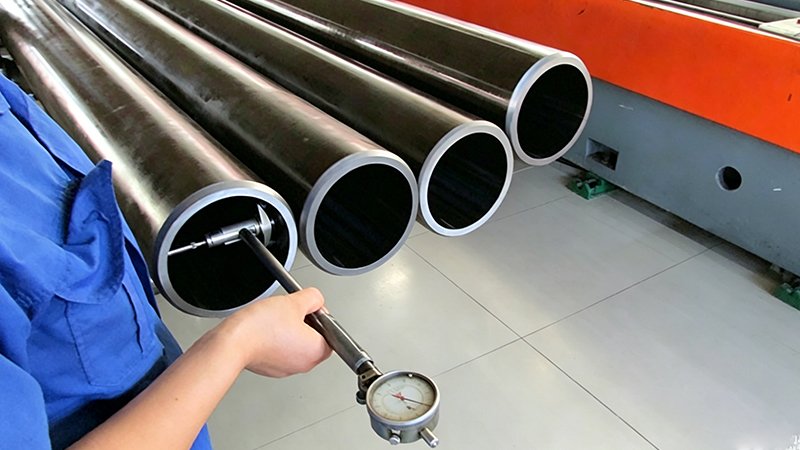
Verifying through-hardened material is straightforward — a hardness reading at essentially any point on the cross-section should land close to the specification. Case-hardened material needs verification at the correct depth, and a surface hardness reading alone doesn’t tell you whether the case depth itself meets requirement. Where case depth genuinely matters for the application’s expected wear life, specifying and verifying it explicitly — not just the surface hardness number — is the detail that actually protects performance.
The Decision Comes Down to Failure Mode
The practical question to ask before defaulting to either option is: what actually fails first in this application if the hardening strategy is wrong? If the honest answer is bore wear under relatively gentle handling conditions, through-hardening is probably fine and simpler. If the honest answer includes cracking from impact, fatigue, or handling abuse, case hardening’s extra process complexity is buying you something real.
At EAST AI we discuss both options with customers based on the actual service conditions described, rather than defaulting to whichever is easier to produce, because the wrong default genuinely does cost more in field failures than the extra conversation ever would.
Related Reading
- Honed Tube Concentricity: Wall Thickness Variation Around the Bore
- Honed Bore Surface Defects: Scratches, Pits, and Chatter Marks Explained
- Honed Tube for Steel Mill and Continuous Casting Equipment
What We Offer
- Honed tube available in through-hardened and case-hardened base steel conditions
- Technical consultation on which hardening strategy matches your actual failure mode risk
- Case depth specification and verification for applications where it genuinely matters
- Full material traceability from base steel heat through finished hardened condition
Contact EAST AI (eastai-tech.com) Email: marketdi@east-ai.cn Phone: +86 13382202696 Address: No. 108, Lunan Road, Wuxi, Jiangsu, China.
Written by Alex, Production Engineer at EAST AI