
A cylinder assembler once noticed that threads machined onto one batch of chrome plated rod developed fine cracks radiating from the thread roots within weeks of installation, while an apparently identical batch from a different production run showed no such problem after months in service. Both batches used the same base steel and the same chrome specification. The difference was in how the threads were made: one batch had its threads cut after plating, removing material and exposing a transition zone where cutting stress concentrated at each thread root; the other had its threads rolled before plating, a process that forms the thread by plastic deformation and leaves compressive residual stress at the root rather than a cut edge.
This article is for cylinder builders and procurement engineers specifying end preparation on chrome plated rod, and it explains the difference between thread rolling and thread cutting, why the choice affects both chrome integrity and fatigue resistance at the thread, and how to specify the right process for a given application.
Two Different Ways to Make a Thread
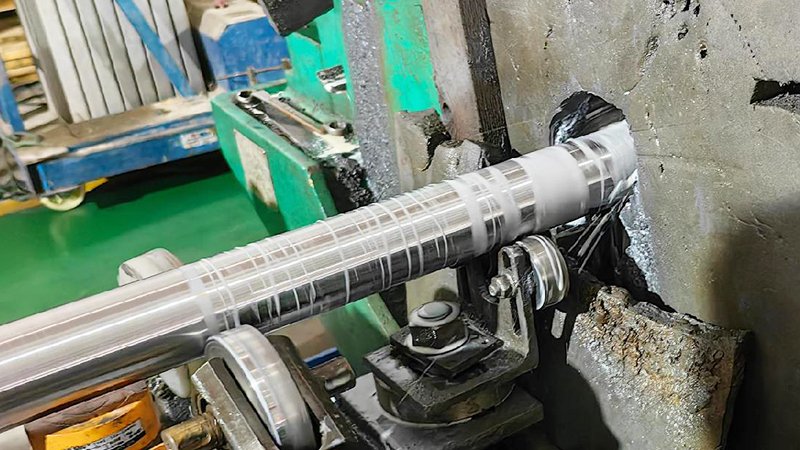
Thread cutting removes material with a cutting tool, lathe, die, or tap, to form the thread profile, and it can be performed on a finished diameter either before or after plating, though cutting after plating removes the chrome at the thread entirely and cutting before plating leaves a cut thread root for the chrome to be deposited over. Thread rolling forms the thread profile by pressing hardened rolling dies against the rod, displacing material plastically into the thread form rather than cutting it away, and it is performed before plating so the chrome is deposited over the already-formed, work-hardened thread profile.
Why the Thread Root Is the Critical Zone
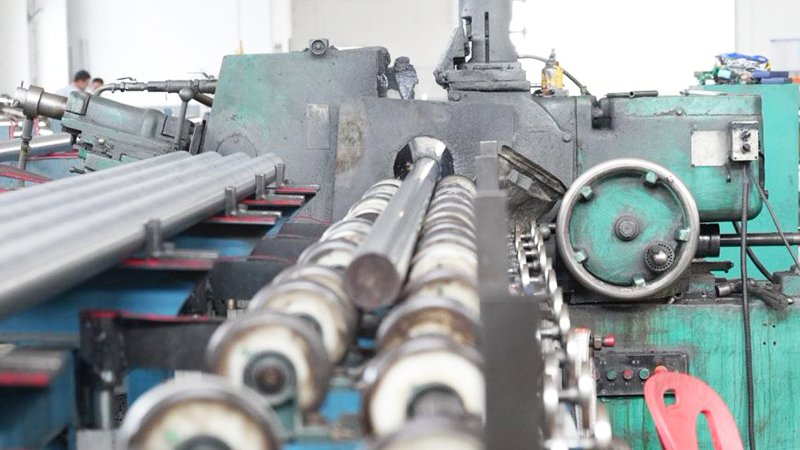
A thread root, the valley between adjacent thread crests, is a natural stress concentration point under any axial or bending load, because the geometry itself concentrates stress there regardless of how the thread was made. The question is how the manufacturing process leaves that root: a cut thread root carries the cutting process’s own stress state, essentially neutral to a slightly tensile condition at the surface, while a rolled thread root carries compressive residual stress from the plastic deformation of rolling, which actively resists the crack initiation that tensile stress at a stress concentration point tends to promote.
This is why the batch with cut threads in the example above developed cracks at the thread root under cyclic loading while the rolled-thread batch did not: the rolling process had already put the thread root into a stress state that resists fatigue cracking, while cutting had not.
Why Rolling Before Plating Protects the Chrome Itself
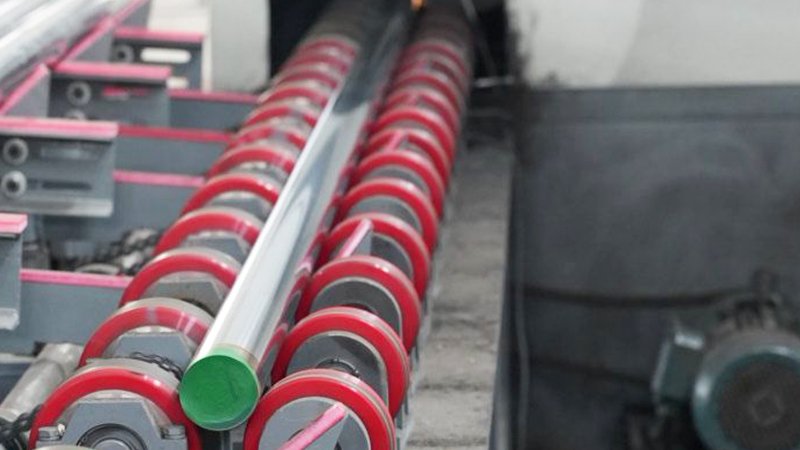
Rolling threads before plating also means the chrome layer follows a smoother, continuous, work-hardened surface rather than being deposited over freshly cut, sharper-edged material or, worse, being locally removed and the base steel exposed if threading happens after plating. Cutting threads into an already-plated rod, which sometimes happens when a standard plated blank is machined to a customer’s specific thread callout, exposes bare base steel at the thread and leaves it with no corrosion protection at all, a far more serious compromise than the fatigue consideration alone.
When Each Method Applies
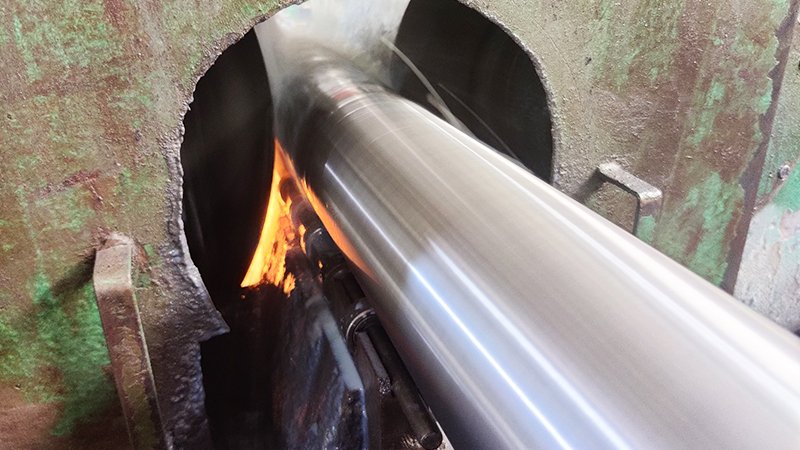
Thread rolling is the preferred method for standard thread sizes where tooling exists and the rod is designed with threading in mind from the start, delivering better fatigue resistance and preserving chrome integrity simultaneously. Thread cutting remains necessary for custom or non-standard thread forms where rolling dies are not practical, or for low-volume, one-off modifications, but it should be understood as the lower-fatigue-resistance option and, where possible, performed before plating rather than after, so the chrome at least covers the cut thread rather than leaving it bare.
Specifying End Preparation Deliberately
For cylinder applications with significant cyclic loading at the rod end, where the thread connects to the piston or a clevis under repeated tension and compression, specifying rolled threads explicitly, rather than leaving the end preparation method unstated, protects against exactly the kind of fatigue cracking described above. A supplier’s quotation or drawing should state which method will be used, and a buyer specifying critical, high-cycle rod ends should ask for rolling where the design and thread size allow it.
At EAST AI, standard thread sizes on chrome plated rod are rolled before plating as our default process, with cut threads available where a non-standard form requires it and the trade-off clearly communicated.
Related Reading
- Chrome Plated Rod End Preparation: Threads, Chamfers, and Machining Allowance
- Chrome Plated Rod Base Steel: Carbon Steel Core vs Alloy Steel Core
- Chrome Rod Runout vs Straightness: Two Different Geometric Errors
The Thread Root Remembers How It Was Made
A rolled thread root carries compressive stress that resists fatigue cracking; a cut thread root does not. Specify rolled threads for cyclic-load rod ends wherever the size permits, and confirm which method your supplier actually uses.
What We Offer
- Chrome plated rod with standard threads rolled before plating as our default process
- Fatigue-resistant thread root condition for cyclic-load rod end connections
- Cut threading available for non-standard forms, with trade-offs clearly communicated
- Full material traceability from base steel through finished thread preparation
Contact EAST AI (eastai-tech.com) Email: marketdi@east-ai.cn Phone: +86 13382202696 Address: No. 108, Lunan Road, Wuxi, Jiangsu, China.
Written by Alex, Production Engineer at EAST AI