
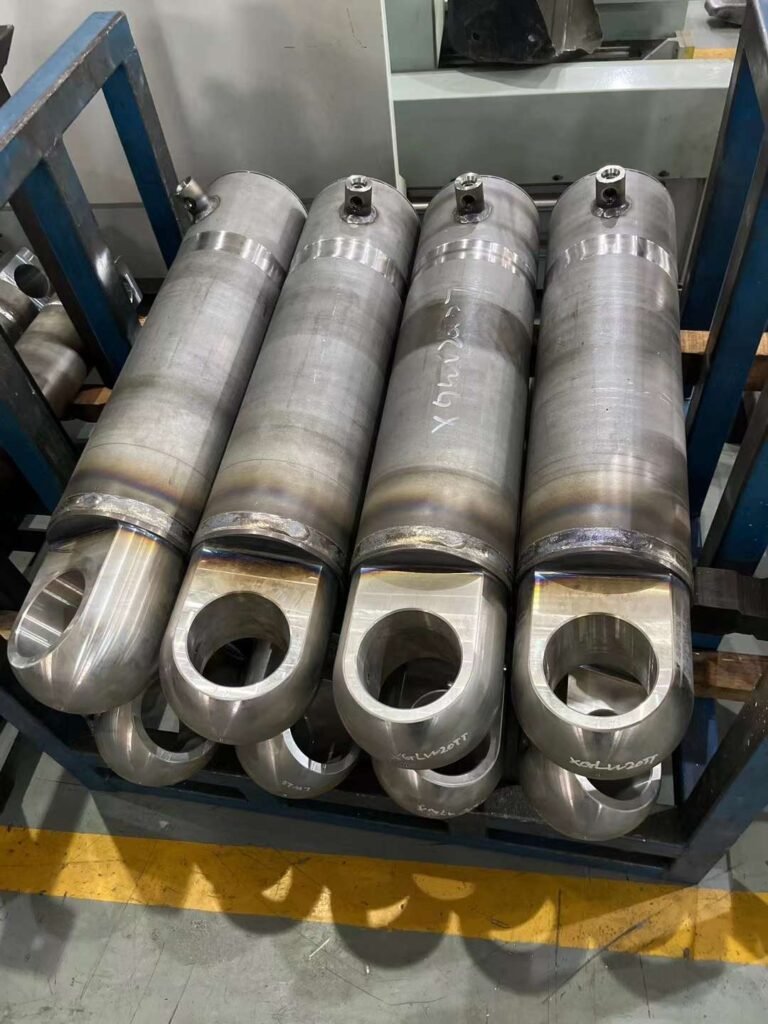
A fabricator built a batch of custom cylinders by welding oil ports and mounting bosses directly onto lengths of honed tube, then sent them for assembly. On the bench, pistons that should have slid freely dragged and stuck at specific points along the bore. Nothing was oversized or undersized in the raw tube. The welding had done it: the intense, localized heat of each weld had distorted the honed bore beneath and around it, pulling the precision surface out of round exactly where the heat went in. Welding onto a honed tube is one of the fastest ways to ruin a good bore, and it happens invisibly, inside the tube, where you cannot see it until a piston finds it.
This article is for cylinder fabricators, engineers, and welders who attach ports and bosses to honed tube, and it explains why welding distorts the bore, how to minimize it, and when to finish-hone after welding.
Why Welding Distorts a Precision Bore
Welding is intense, localized heating followed by rapid cooling. When you weld a boss or port onto the outside of a tube, the metal in and around the weld heats to very high temperature, expands, and then contracts as it cools. Because the heating is local and uneven, the contraction is uneven too, and it pulls the surrounding material with it. On a thick, rough structure this shows up as general weld distortion. On a honed tube, whose bore is held to tight roundness and diameter, even a small amount of this pulling deforms the bore locally, creating a tight spot, an oval region, or a bulge right under the weld.
Two factors make honed tube especially vulnerable. First, the precision of the bore means that distortion which would be trivial on a rough tube is out of tolerance on a honed one. Second, thinner-wall tubes distort more readily than heavy-wall ones, because there is less material to resist the weld’s contraction. A thin-wall honed tube with a boss welded on can show clear bore distortion under the weld, enough to bind a piston.
The Symptoms and Why They Are Hard to Catch
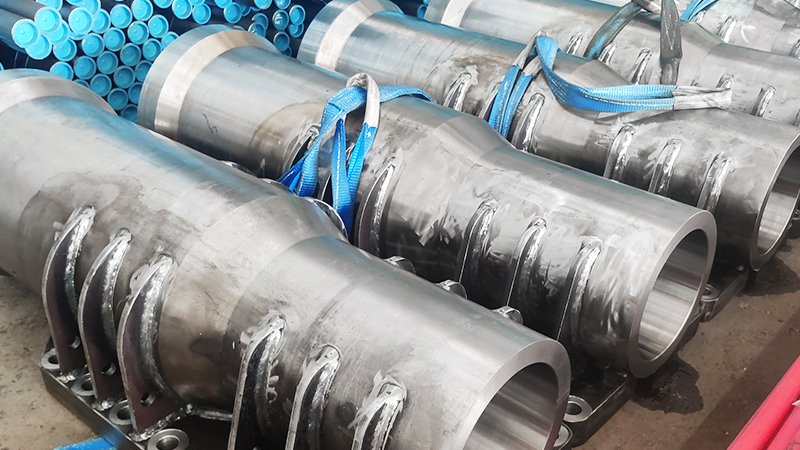
The distortion sits inside the tube, local to the weld, which is exactly where routine external inspection does not look. A piston or seal that binds or drags at a specific position along the stroke, corresponding to a welded feature, is the classic symptom. Because the raw tube measured fine before welding and the outside looks fine after, the cause is easy to miss and the blame often falls wrongly on the piston, the seal, or the tube supplier. Recognizing that the weld is the likely culprit when binding coincides with a welded feature is the first step to solving it.
Strategy One: Control the Heat Input
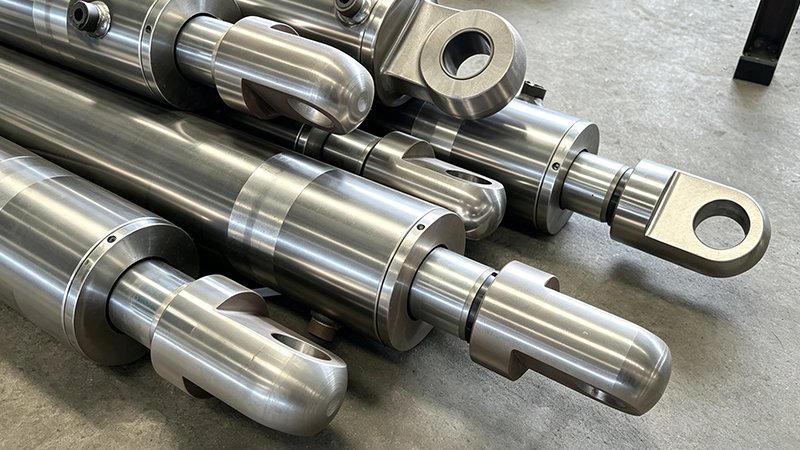
The most direct way to reduce distortion is to reduce and manage the heat input. Lower, well-controlled heat means less expansion and contraction and therefore less bore movement. Practical measures include using an appropriate welding process and parameters for the wall thickness, avoiding excessive weld size beyond what the joint actually needs, and not over-welding. A boss attached with more weld than the load requires simply pumps more heat into the tube for no benefit.
Sequencing matters as much as magnitude. Welding in a balanced, stepped sequence rather than laying one long continuous bead lets heat dissipate and distributes the contraction more symmetrically, reducing the net pull on the bore. Welding opposite sides alternately, and using shorter beads with cooling between them, keeps the peak local temperature and the resulting distortion down.
Strategy Two: Design to Resist Distortion
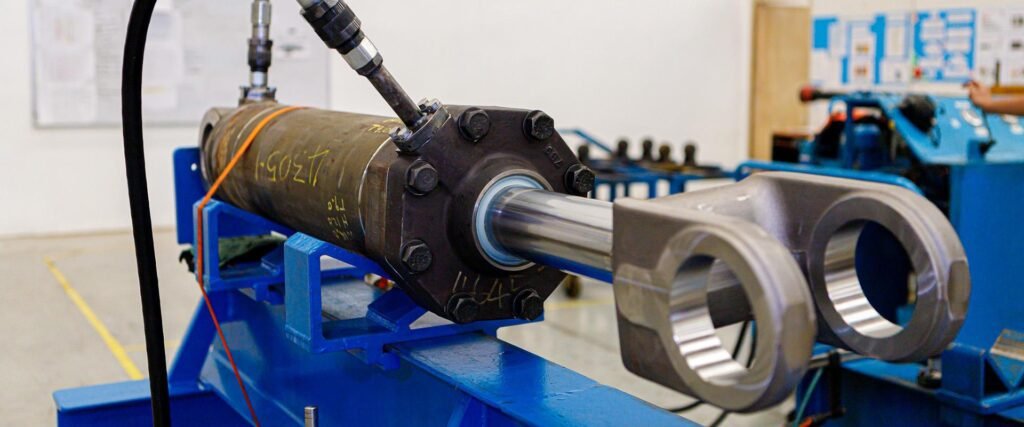
Distortion can be designed against, not just welded against. Placing bosses and ports where the tube is better supported, avoiding clustering welds in one region, and choosing a wall thickness with enough stiffness to resist the weld’s contraction all reduce bore movement. Where a heavy attachment is unavoidable, a thicker-wall tube in that design resists distortion far better than a thin one. Fixturing the tube during welding, so it is held straight and round while the weld cools, also limits how far the bore can be pulled.
The order of operations in the build can help too. Where possible, doing the welding before final honing, so that the finish honing corrects any weld-induced distortion, sidesteps the problem entirely, which leads to the most reliable strategy of all.
Strategy Three: Finish-Hone After Welding
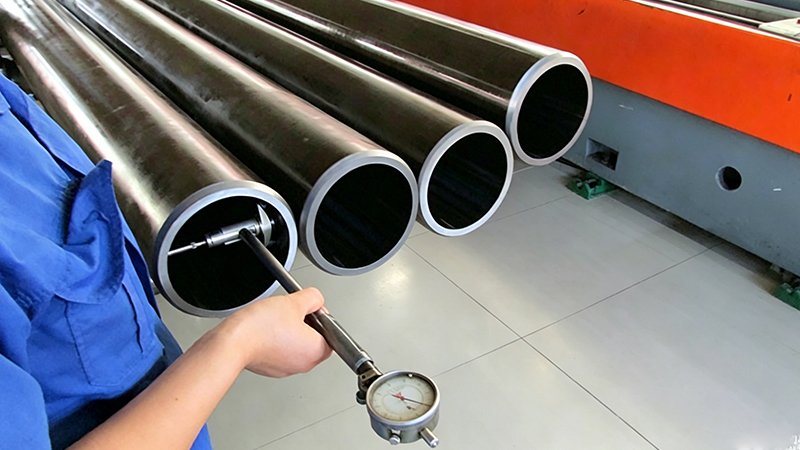
For cylinders where bore precision is critical and welding is unavoidable, the most dependable solution is to finish-hone the bore after welding is complete. This sequence, weld first, hone last, means any distortion introduced by the welding is machined out by the final honing pass, delivering a bore that is round and correctly sized in its finished, welded state. It is more work than welding onto a pre-honed tube, but it guarantees the result, and for high-precision or high-value cylinders it is the correct approach.
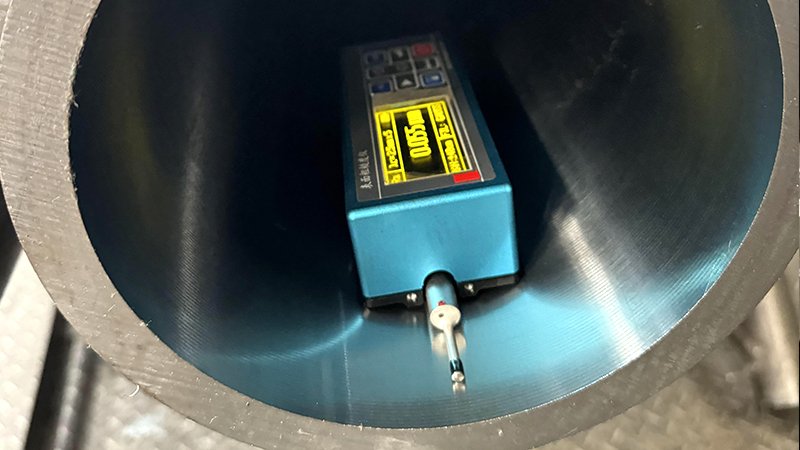
When finish-honing after welding is not practical and the tube must be honed first, then the heat-control and design strategies above become essential, and the finished cylinder should be checked for bore binding along its length before it goes into service. Catching a distorted bore on the bench is far cheaper than shipping a cylinder that seizes in the field.
Getting It Right From the Start
The recurring theme is that welding and precision bores are in tension, and the build has to be planned to resolve it. Deciding early whether to hone-then-weld with heat control or weld-then-hone for a corrected finish, choosing a wall thickness that resists distortion, and sequencing the welds to spread the heat all belong in the design and process planning, not in troubleshooting after a piston sticks. A tube supplier who understands cylinder fabrication can advise on wall thickness and finishing sequence for welded designs, so the bore that leaves the honing machine is the bore the cylinder actually gets.
Related Reading
- Honed Tube for Oil & Gas Drilling Equipment: Material Traceability and Wall Thickness
- Honed Tube for Crane and Lifting Equipment: Long-Stroke Straightness
- Honed Tube for Injection Molding Machine Clamping Cylinders
Weld Without Wrecking the Bore
Ports and bosses do not have to cost you a precision bore. Control the heat, design for stiffness, and finish-hone after welding where it counts—and the piston slides free from end to end.
What We Offer
- Honed tube in wall thicknesses chosen to resist weld distortion for fabricated cylinders
- Guidance on hone-then-weld versus weld-then-hone sequencing for your design
- Finish-honing options that correct weld-induced bore distortion
- Full traceability and support for custom welded cylinder builds
Contact EAST AI (eastai-tech.com) Email: marketdi@east-ai.cn Phone: +86 13382202696 Address: No. 108, Lunan Road, Wuxi, Jiangsu, China.
Written by Alex, Production Engineer at EAST AI