
A telehandler dealer once traced a recurring complaint, a faint impact and slight leak developing at one end of a lift cylinder after months of use, to something the operator never noticed: the cylinder was reaching full extension slightly harder than intended, every single cycle, because a factory-fitted cushioning feature had been omitted on a cost-reduced version of the cylinder to save a small amount on machining. The impact was too gentle to feel through the cab, but it was not too gentle to matter to the honed bore and the piston seal absorbing it thousands of times over the cylinder’s working life. Cushioning exists precisely for stresses too small to notice individually and too large to ignore in aggregate.
This article is for cylinder builders and equipment manufacturers, and it explains what end-of-stroke cushioning does, why omitting it shortens the life of the honed tube and seals even when the cylinder still “works,” and where cushioning earns its cost.
What End-of-Stroke Impact Actually Does
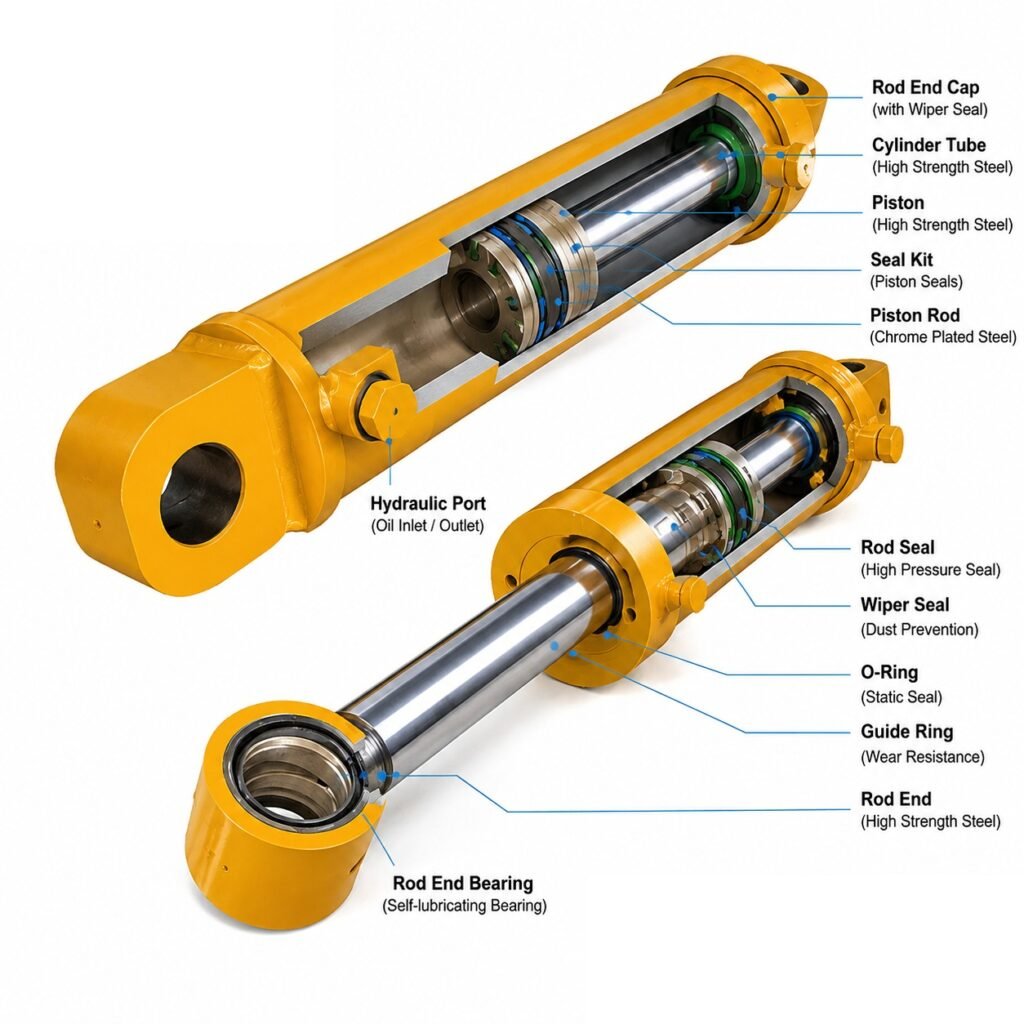
Without cushioning, a cylinder’s piston decelerates only as fast as the load and the operator’s valve control allow, and at the end of a stroke, particularly under gravity-assisted motion or with sudden valve closure, the piston can arrive at the end cap with meaningful velocity still remaining. That impact is absorbed by the piston seal, the end cap, and the honed bore surface at the point of impact, repeated every cycle. A single hard stop rarely damages anything visibly. Thousands of repeated stops, even gentle ones, fatigue seals faster than smooth operation would and can eventually mark the bore surface at the impact zone.
How Cushioning Works
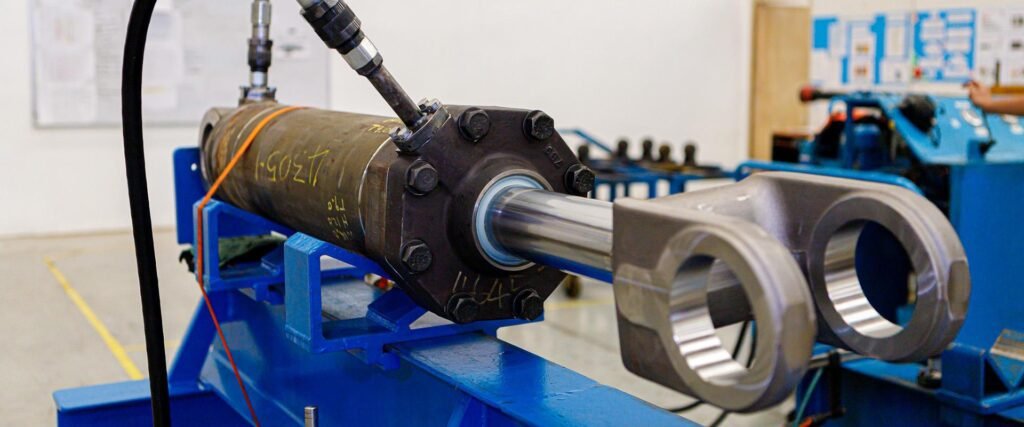
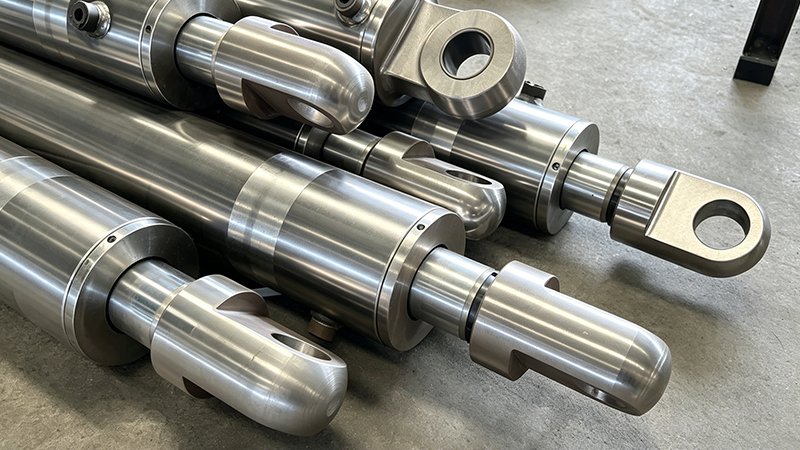
A cushioned cylinder incorporates a deceleration mechanism near the end of the stroke, commonly a tapered or stepped cushion sleeve that progressively restricts oil flow out of the chamber as the piston approaches full extension or retraction, slowing the piston smoothly before it reaches the end cap rather than letting it arrive at full velocity. Some designs use a needle valve to fine-tune the deceleration rate for the specific load and speed the cylinder will see in service. The effect is a smooth, controlled stop rather than an abrupt mechanical impact, protecting the seal, the end cap threads or welds, and the bore surface at the impact point.
Why This Matters for Bore and Rod Life Specifically
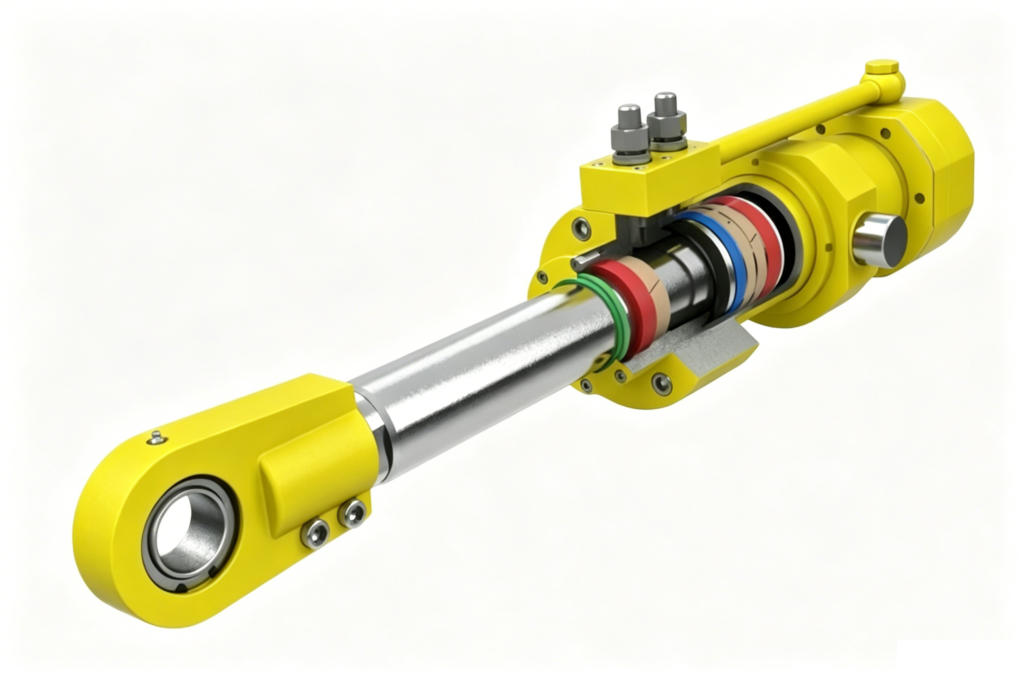
Repeated impact at a fixed point on the bore concentrates stress exactly where cushioning would otherwise prevent it, and over enough cycles this can contribute to the kind of localized wear or seal degradation that shows up as a slow leak developing specifically at one end of the cylinder’s travel, exactly the failure pattern in the example above. On the rod side, repeated hard stops also transmit shock load back through the rod and its connection to the machine structure, which can accelerate wear at pin joints and mounting points beyond the cylinder itself, a cost that a cushioning feature helps avoid but that rarely gets attributed back to its actual cause.
Where Cushioning Earns Its Cost
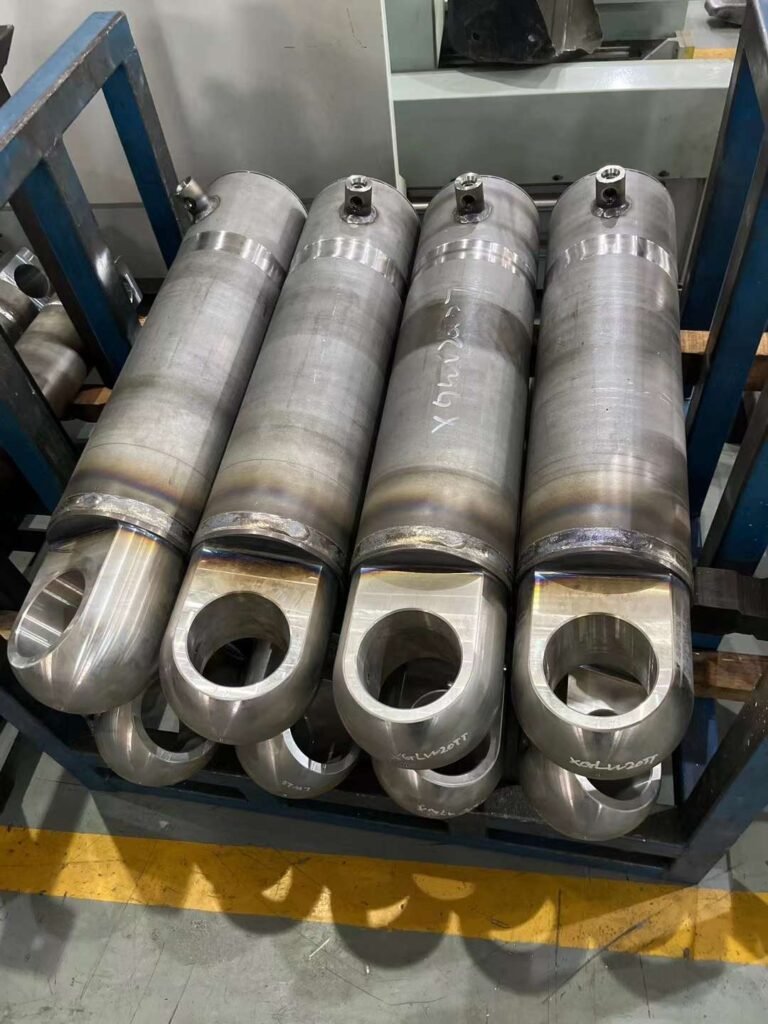
Cushioning adds machining complexity and cost to a cylinder, which is exactly why it sometimes gets removed from a cost-reduced design, as in the example above. It earns its cost clearly on cylinders that operate at speed, carry gravity-assisted loads that accelerate through the stroke, or cycle at high frequency, where uncushioned impact happens often enough and hard enough to matter within a normal service life. It matters less on slow, light, infrequently cycled cylinders where end-of-stroke velocity is naturally low and impact energy is correspondingly small.
Specifying Cushioning for the Right Applications
The practical question for a cylinder builder is not whether cushioning is generally good, but whether the specific application’s speed, load, and cycle frequency justify its cost on this particular cylinder. A lift cylinder on mobile equipment cycling many times a day under load, particularly where the load can accelerate the piston toward full extension, is a strong candidate. A cylinder that moves slowly, infrequently, and under light load may not need it. Making that assessment deliberately, rather than defaulting to whatever a previous design used or removing cushioning purely to save cost without checking the duty cycle, is what prevents the kind of quiet, cumulative bore and seal damage described here.
Related Reading
- Stop Tube in Long-Stroke Hydraulic Cylinders: Why It Extends Life
- Cylinder Drift and Internal Bypass Leakage: Diagnosing Piston Seal vs Valve Causes
- Roundness and Ovality of Honed Tubes: The Overlooked Seal Killer
The Impact You Don’t Feel Still Costs You
End-of-stroke impact too small to notice in the cab still fatigues seals and marks the bore, cycle after cycle. Specify cushioning where speed, load, and cycle frequency justify it, and stop losing bore life to a stop nobody heard.
What We Offer
- Honed tube finished for consistent bore quality that supports cushioned cylinder designs
- Technical guidance on when end-of-stroke cushioning is worth specifying
- Bore and seal-interface quality that protects against repeated impact stress
- Full material traceability for cylinder builders and equipment manufacturers
Contact EAST AI (eastai-tech.com) Email: marketdi@east-ai.cn Phone: +86 13382202696 Address: No. 108, Lunan Road, Wuxi, Jiangsu, China.
Written by Alex, Production Engineer at EAST AI