
Written by Alex, Production Engineer at EAST AI
A customer came to us last quarter convinced their cylinder bore problem was a sealing issue. They had been buying skived and roller burnished (SRB) tube for a mobile application that saw heavy side loading and frequent stop-start cycling, and their rod seals were wearing out well before the expected service interval. The tube itself met its published surface finish specification on paper, so nobody on their team had thought to question whether the manufacturing process was the right match for the duty cycle in the first place. By the time the tube reached us for review, they had already replaced three batches of seals and were beginning to suspect a seal supplier problem that did not actually exist.
That conversation is far more common than you might expect. Both SRB tube and honed tube produce a smooth, dimensionally controlled bore suitable for hydraulic cylinders, and both are legitimate, widely used processes with decades of field history behind them. The problem is that buyers frequently treat them as interchangeable commodities distinguished only by price per meter, when in reality the two processes arrive at their finished bore through completely different mechanical routes. Those routes leave behind different geometry, different surface characteristics, and different residual stress states in the material, and those differences are exactly what determine how the cylinder behaves in service.
How the Two Processes Actually Differ
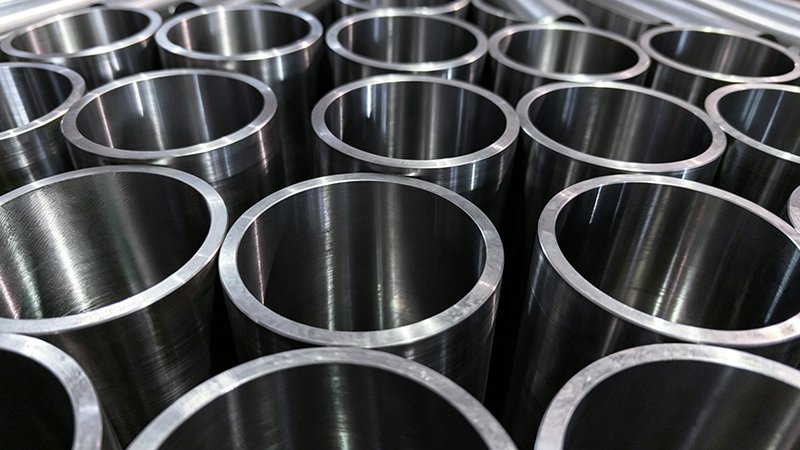
Skived and roller burnished tube starts from a cold-drawn tube blank that is machined internally by a skiving head, which shears away the rough as-drawn inner surface to bring the bore close to final size. Immediately behind the skiving head, a burnishing roller passes through the bore and plastically deforms the freshly cut surface, smearing the surface peaks down into the valleys to produce a smooth, work-hardened skin. The entire operation happens in a single continuous pass on a dedicated machine, and that single-pass efficiency is precisely what makes SRB tube economical for long production runs of standard diameters. The critical point to understand is that burnishing improves finish by cold-working and displacing material, not by removing it.
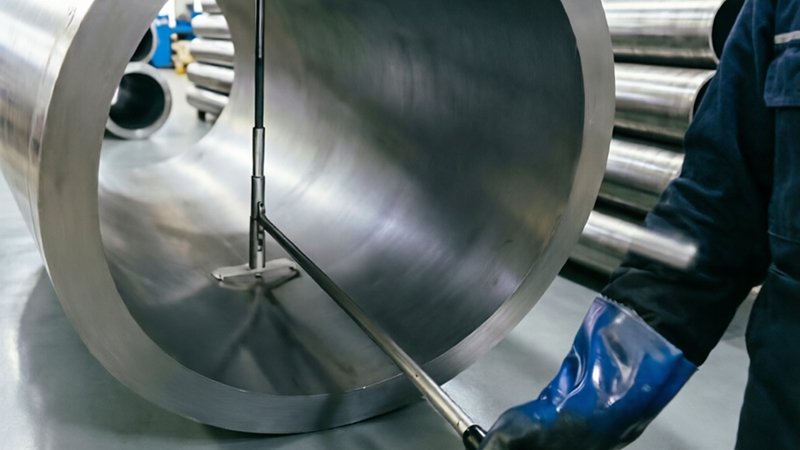
Honing arrives at a similar-looking surface by an entirely different mechanism. The bore is finished by abrasive stones mounted on an expanding tool that rotates and reciprocates through the bore simultaneously, cutting a controlled amount of material away with every pass. This produces the characteristic cross-hatch pattern of intersecting scratch lines and, more importantly, removes metal to actively correct the geometry of the bore. Because honing cuts rather than deforms, it can machine out the minor out-of-roundness, taper, bell-mouthing, and waviness that a tube inevitably carries in from drawing and prior handling. That geometric correction capability is the fundamental reason honing has remained the reference process wherever bore accuracy genuinely governs performance.
Surface Finish Is Not the Whole Story
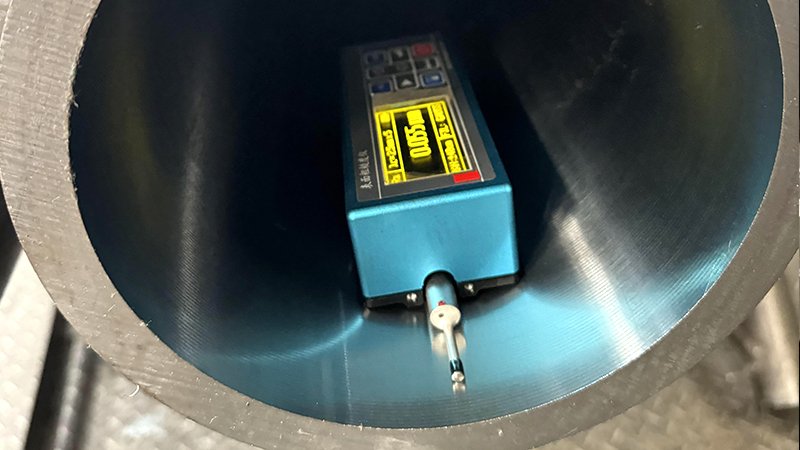
It is tempting to compare the two processes on a single number: average surface roughness, or Ra. On that metric alone the two can look almost identical, because a well-executed burnishing pass and a well-controlled honing operation can both land comfortably in the Ra 0.4 to 0.8 micron band that most hydraulic seal manufacturers specify. If Ra were the only thing that mattered, the price-driven choice would be defensible every time, and SRB tube would win on cost with no engineering downside.
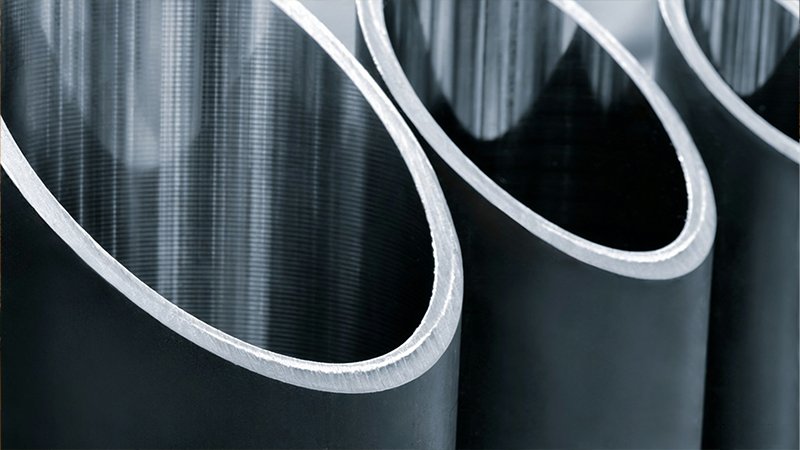
The reason Ra alone is misleading is that it says nothing about the shape of the surface profile or the underlying geometry of the bore. A burnished surface tends to have flattened, plateaued peaks with the original valleys partially sealed over, which changes how the bore holds a lubricant film compared to the sharply defined cross-hatch of a honed surface. Two bores can share an identical Ra value and still present very different bearing-area curves and oil-retention behavior to the seal riding against them, and it is that difference in profile character, not the headline roughness number, that shows up as seal wear over thousands of cycles.
Geometry compounds the effect. A burnishing roller follows the bore it is given and cannot correct a tube that entered the process slightly oval or tapered, so any geometric error from the drawing stage is preserved in the finished tube even when the surface finish reads perfectly. Honing, by removing material selectively where the bore is tight, brings the geometry back into round and straight within tolerance. When a seal has to accommodate both a demanding pressure-speed combination and a bore that wanders from true, the local contact pressure varies around the circumference and along the stroke, and that uneven loading is what quietly consumes seal life.
Tolerance, Wear, and Fatigue in Service
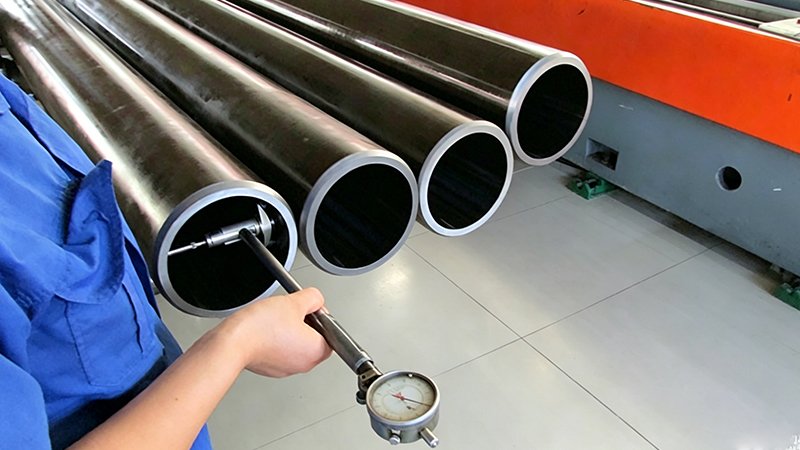
For hydraulic cylinder bores we typically hold honed tube to H8 or H9 tolerance, with straightness controlled to around 0.5 millimeters per meter and surface roughness in the Ra 0.4 to 0.8 micron range. That combination is not chosen arbitrarily; it is the operating window in which standard rod and piston seal packages are designed to run, and staying inside it is what lets the seal do its job without fighting local geometry errors. The tighter the duty cycle, the less margin the seal has to absorb deviations, and the more that dimensional accuracy earns back its cost.
The work-hardened skin left by burnishing does give SRB tube respectable wear resistance under clean, well-aligned loading, and for many applications that is entirely sufficient for the full design life. Where it becomes a liability is under side loading and repeated reversals, because the thin cold-worked layer carries residual stress and can behave less predictably than a honed surface once the cylinder is asked to tolerate misalignment. Under high side loads the burnished surface tends to wear unevenly, and the local high spots that result accelerate seal degradation in exactly the applications where downtime is most costly.
Fatigue considerations follow the same logic. A cylinder that reverses frequently and runs long strokes subjects both the bore surface and the seal to millions of load cycles, and any repeated local stress concentration, whether from geometry error or from uneven surface contact, becomes a durability problem over time. Honing’s ability to deliver a uniform, geometrically correct bore means the seal contact stays even across the full stroke and around the full circumference, which is the practical mechanism behind the longer service intervals that customers report after switching demanding applications to honed tube.
The Honest Cost Comparison
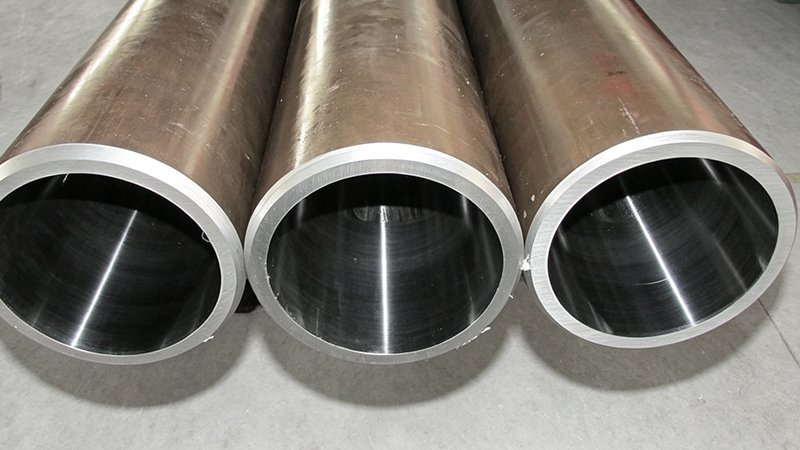
None of this makes honed tube the right answer for every cylinder, and it is important to be clear about that. For high-volume, cost-sensitive cylinders running moderate pressures with clean, well-guided duty cycles, SRB tube is frequently the correct economic choice and performs flawlessly for the full design life. The single-pass economics keep the landed cost competitive on large orders, the finish supports standard seals, and there is simply no engineering justification for paying a honing premium on an application that will never load the bore hard enough to notice the difference. Many agricultural and general industrial cylinders run happily on SRB tube for years.
The honest comparison therefore begins with the duty cycle and the consequence of failure, not with the per-meter price on the quotation. When a cylinder is lightly loaded, well aligned, and easy to service, the cheaper process wins and should be specified without hesitation. When downtime is expensive, when side loads are unavoidable, or when the seal package is being asked to accommodate a demanding pressure and speed combination over a long stroke, the higher tube cost is almost always recovered many times over in avoided field service, and treating the two processes as interchangeable on price becomes a false economy.
Closing the Loop on the Mobile Case
In the mobile application that opened this article, the fix turned out to be straightforward once we reframed the problem as a process question rather than a seal question. The side loading inherent to that machine was bearing unevenly against the burnished bore, and because the tube had entered its process with a slight geometric error that burnishing could not correct, the seal was never seating consistently across the full stroke. It was doing its job as well as any seal could against a bore that was working against it.
Moving to a honed tube held to H8 with a controlled cross-hatch finish let the seal seat evenly along the entire stroke and around the full circumference, and the premature wear pattern disappeared on the first production batch. The seal supplier, it turned out, had never been the problem. The slightly higher tube cost was recovered within the first avoided service interval, and the customer now specifies honed tube by default for every side-loaded cylinder in that product family while continuing to use SRB tube on their lighter-duty lines, which is exactly the right way to split the decision.
Related Reading
- Honed Tube for Oil & Gas Drilling Equipment: Material Traceability and High-Pressure Wall Thickness Requirements
- Honed Tube for Injection Molding Machine Clamping Cylinders: Precision and Repeatability at High Cycle Rates
- Honed Tube for Crane and Lifting Equipment: Long-Stroke Straightness Requirements
External Reference
- ISO 286-1 — ISO code system for tolerances on linear sizes (the basis for the H8/H9 bore tolerance grades cited above): https://www.iso.org/standard/45975.html
Talk to a Bore Process Engineer Before You Standardize
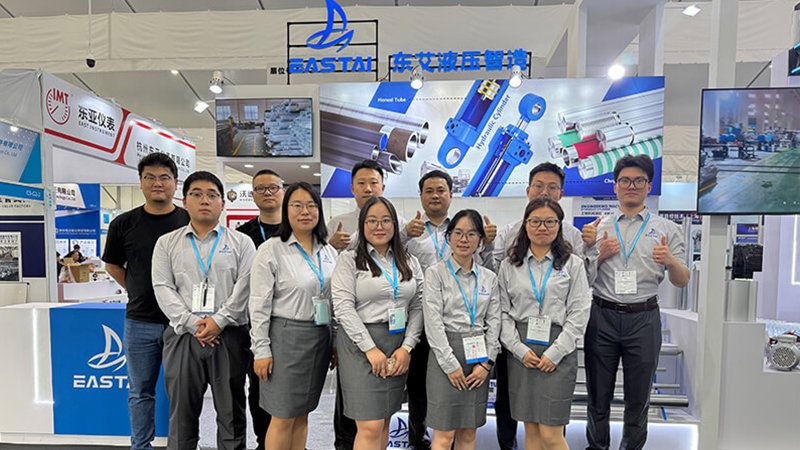
Choosing between SRB and honed tube is not a purchasing decision you want to make on price alone, because the wrong call quietly shows up months later as premature seal failure and field downtime that costs far more than the tube ever did. At EAST AI we manufacture honed tube to tight, documented tolerances, and we will tell you honestly when your application does not actually need it, because getting the process match right is what keeps customers coming back to us order after order.
What We Offer
- Honed tube held to H8 / H9 bore tolerance with Ra 0.4–0.8 μm controlled surface finish
- Straightness control to 0.5 mm/1000 mm for long-stroke and side-loaded cylinders
- Material selection guidance across CK45, ST52, E355 and 20MnV6 for your pressure and temperature envelope
- Honest process recommendations, including when a lower-cost SRB option is the right fit for your duty cycle