
Written by Alex, Production Engineer at EAST AI | Published September 28, 2026
I’m going to walk you through a decision that looks simpler than it is. On a drawing, you’ll see “hard chrome plated rod” and assume that means one specific thing. In reality, there are multiple paths to get there — and picking the wrong one can cost you 30-50% of your cylinder service life. This is the most common technical decision we help customers correct. On a pure material cost basis, the decision looks simple: cheaper option versus more expensive option. But total lifecycle cost tells a completely different story. Let me show you the engineering reality behind this decision.
The Three Heat-Treatment Routes and Their Characteristics
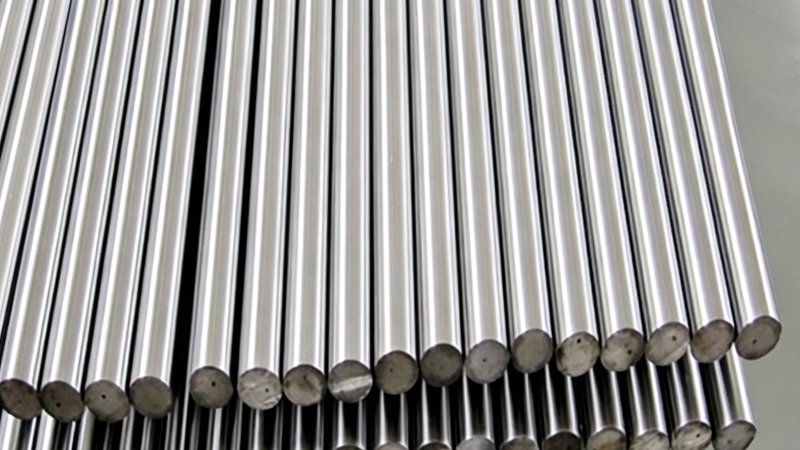
Route one: induction hardened involves heating the rod via induction coil to near-hardening temperature, then rapidly quenching. This creates a hard outer layer (HRC 50-62) while the core stays ductile. Route two: quenched and tempered treats the entire rod through full-section heat treatment to HRC 25-32 throughout the cross-section, with tempering to relieve internal stress. Route three: normalized applies light treatment to HRC 15-22 — lowest cost, lowest performance. Most suppliers default to what’s on your drawing. Many customers don’t specify which route — they just say “hard chrome rod” and hope. When you don’t specify, suppliers often choose Q&T by default because it’s simpler to manage process-wise (full-section treatment means less risk of process variation compared to induction hardening’s localized surface treatment).That choice is often wrong for high-cycle industrial service.
Why Induction Hardening Wins for High-Cycle Service
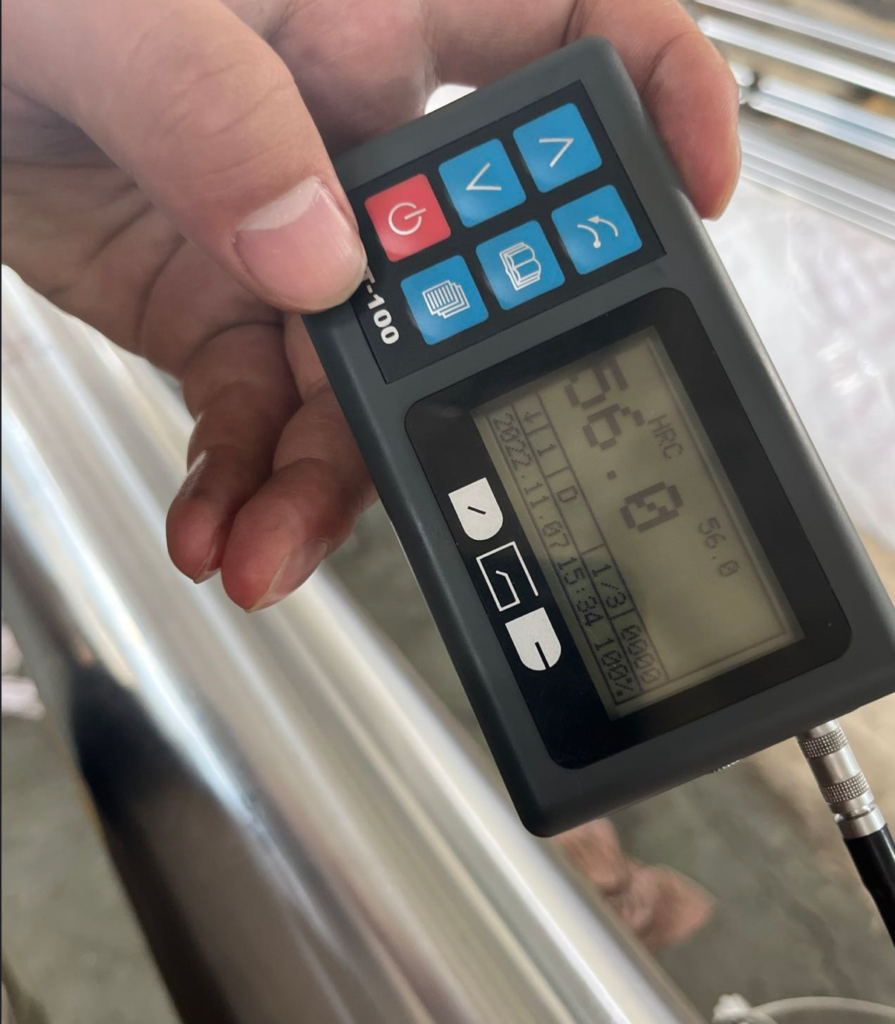
Here’s the engineering principle: surface wear resistance and core toughness require different hardness levels. A rod working under thousands or tens of thousands of cycles needs a hard surface (to resist wear) but a tough core (to absorb shock and flexing without cracking). Induction hardened rods achieve this: the hard outer layer resists progressive wear and micro-cracking from repeated seal friction, the ductile core absorbs bending stress from off-axis loading, the transition from hard to soft creates stress distribution that handles cyclic loading better than uniform moderate hardness.
Q&T rods don’t achieve this as well: uniform moderate hardness means moderate wear resistance everywhere, moderate hardness also means the surface work-hardens and micro-cracks under repetitive stress, tempering relieves some stress but doesn’t prevent progressive surface fatigue. Real-world failure pattern: a Q&T rod shows light scoring after 2-3 years and visible pitting after 4 years in high-cycle service. The same equipment with an induction-hardened rod shows minimal surface change after 5+ years.
Real Mining Equipment Case Study
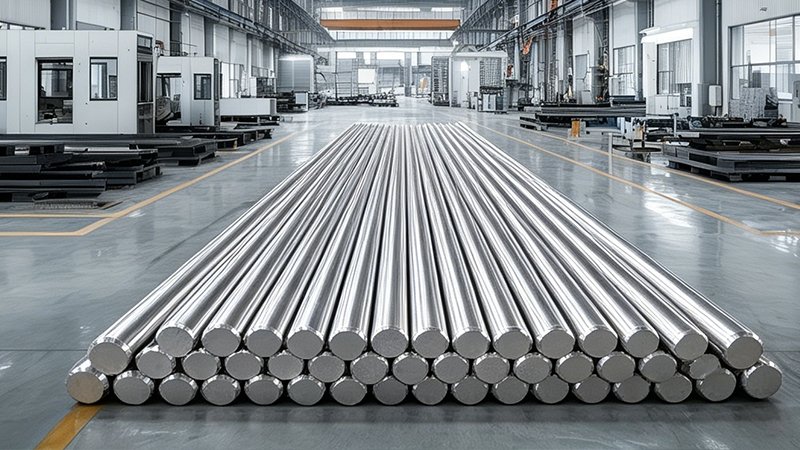
A manufacturer of bucket cylinders for mining shovels was getting field complaints about rod wear. The cylinders were designed to run 5,000-10,000 cycles per season, multiple seasons of use. They’d been specifying Q&T rods (HRC 28) as their standard “hard chrome” spec. What they observed: Year 1-2 showed light surface scoring visible on inspection. Year 3-4 showed deeper scoring with seal replacement intervals reduced. Year 5+ showed heavy surface wear with customers complaining about leakage. What they recommended: switch to induction hardened (HRC 55 surface). What the customer did: tried it on a pilot fleet of 5 cylinders. Results after equivalent service life: induction hardened rods showed minimal surface scoring after 10,000 cycles, seal intervals extended to original design spec, zero field complaints on the pilot fleet.
Cost impact: induction hardened costs 18-25% more per rod. For 500-unit annual production, that’s 5,000−8,000 extra per year. Value delivered: eliminated field complaints, eliminated warranty costs for premature wear, extended reputation as “equipment that holds up in the field.”
Why Quenched & Tempered Still Has A Place
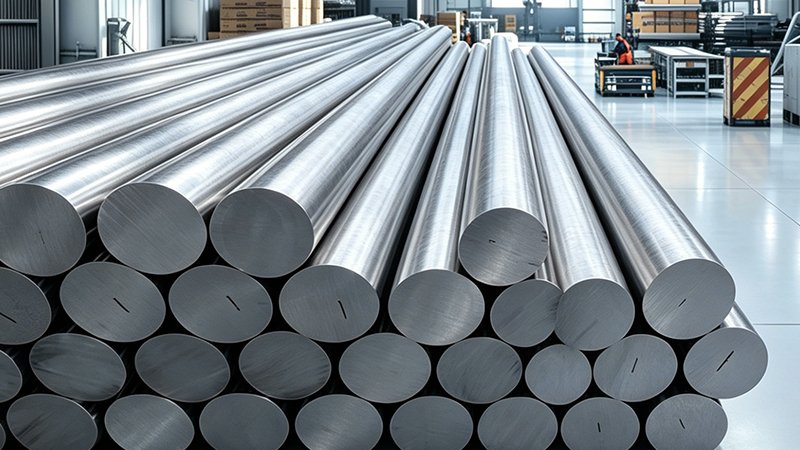
Q&T is the right choice when: cycle count is low (under 50,000 total cycles in the rod’s service life) — long-stroke single-extension cylinders, clamping applications operating once per minute or less, positioning cylinders with infrequent strokes. Q&T is right when shock resistance matters more than wear resistance — impact-driven equipment, equipment with sudden pressure spikes, pile drivers or similar dynamic equipment. Q&T is right for very long rods under bending stress — very long rods under bending stress handle bending-induced stress better with uniform hardness distribution than induction-hardened. Q&T is right when cost is dominant factor — OEM equipment where price point is critical, equipment expected to be replaced within 2-3 years anyway. But if cycle count is moderate to high, don’t default to Q&T. It’s the wrong choice.
Decision Matrix: Which Should You Specify?
Question one: how many cycles will this rod see? Under 50,000 cycles: Q&T acceptable or induction hardened okay. 50,000-500,000 cycles: induction hardened recommended. Over 500,000 cycles: induction hardened required. Question two: will the rod experience side loading or bending stress? Primarily axial loading only: Q&T acceptable. Moderate side loading: induction hardened recommended. Heavy side loading or long rod under bending: induction hardened required.
Question three: what’s the actual bore and stroke geometry? Small bore, short stroke: Q&T acceptable. Large bore, long stroke: induction hardened recommended. Very long rod (>1500mm): consider Q&T for bending resistance. Question four: is seal maintenance cost a significant factor? Field-replaceable seals, frequent change expected: Q&T acceptable. Long-interval maintenance planned: induction hardened required. If you answered “induction hardened” to ANY TWO questions, specify induction hardened.
Specification and Verification Requirements
Don’t just say “hard chrome plated rod.” Your RFQ should say: “Chrome plated rod, induction hardened base steel to HRC 50-62 surface hardness with ductile core. Surface hardness verified by calibrated hardness testing per ASTM E18. Chrome thickness: [your spec]. Rod diameter: [size]. Length: [length]. Batch test certificates required.” If a supplier pushes back saying “we can save you 15% with Q&T,” ask them why. If they can’t give you technical reason based on your actual duty cycle, that’s a cost-cutting decision, not engineering.
For every batch of induction hardened chrome plated rods, we verify: surface hardness testing on random samples from each batch, core hardness spot checking (confirming ductility is there), chrome thickness measurement, visual inspection for plating consistency and defects, dimensional verification to drawing. For industrial OEMs, we provide test certificates with every batch documentation.
One Important Caveat: Don’t Over-Harden
There’s an upper limit to beneficial hardness. Rods hardened to HRC 65+ start becoming brittle. You gain wear resistance but lose impact toughness. That’s not an upgrade. The HRC 50-62 range is the proven sweet spot for most industrial applications. If a supplier promises HRC 70, ask what the core hardness is. If the core is also very hard, you’ve got a rod that’s tough under wear but brittle under shock — that’s counterproductive for most applications.
Bottom Line
For industrial equipment with moderate to high cycle counts, induction hardened chrome plated rods aren’t a luxury — they’re the correct engineering choice. Yes, they cost more upfront. Over the lifetime of the equipment accounting for seal replacement, maintenance, and downtime, they’re significantly cheaper. Get this decision right at design stage, and you’ll have equipment lasting as designed. Get it wrong, and you’ll have field complaints and warranty costs that dwarf the initial savings.
Related Reading:
External References:
- ASTM E18: Standard Test Methods for Rockwell Hardness of Metallic Materials
- ASM Handbook Volume 4: Heat Treating
- SAE J404: Chemical Compositions of SAE Carbon Steels
Select the Correct Chrome Rod Heat Treatment for Your Duty Cycle
Stop compromising on rod hardness specifications through default choices. EASTAI-TECH’s materials and engineering specialists help industrial OEMs, equipment designers, and cylinder manufacturers select the right heat treatment based on detailed duty cycle analysis, not cost alone. Whether you’re designing new high-cycle equipment or troubleshooting premature rod failures in existing designs, we provide engineering consultation backed by comprehensive hardness verification and complete batch certification.
What We Offer:
- Duty cycle analysis to determine optimal rod hardness and heat treatment route for your application
- Chrome plated rods with verified HRC surface and core hardness across every production batch
- Engineering consultation directly comparing Q&T versus induction hardening trade-offs for your specific equipment
- Full hardness certification, test documentation, and microstructure analysis for your quality assurance requirements