
Written by Alex, Production Engineer at EAST AI
Salt air is unforgiving on hydraulic equipment, and a port crane or container handler cylinder doesn’t get the luxury of a climate-controlled environment. Salt-laden humidity works its way into every seal gap and every scratch in a protective coating, and once corrosion starts on a cylinder barrel, it doesn’t stop on its own.
We’ve supplied honed tube to enough port equipment manufacturers to know that a tube spec written for general industrial duty simply doesn’t hold up in this environment, even when the pressure rating and bore tolerance look identical on paper.
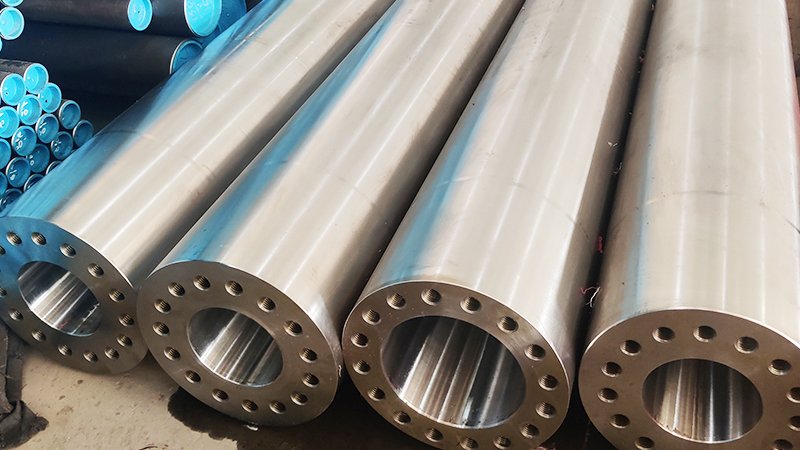
Why Salt Spray Duration Is the Wrong Single Metric
Salt spray test hours get quoted a lot in marine equipment specs, and it’s a legitimate test — but it measures accelerated corrosion resistance under one specific lab condition, not the combined effect of humidity, temperature cycling, and mechanical wear that a working port crane cylinder actually experiences.
A honed tube can post a strong salt spray number and still underperform in the field if the underlying surface preparation, coating adhesion, or bore finish isn’t matched to continuous marine exposure. We treat the salt spray figure as one data point among several, not the entire spec.
Surface Protection Strategy for the Bore and OD
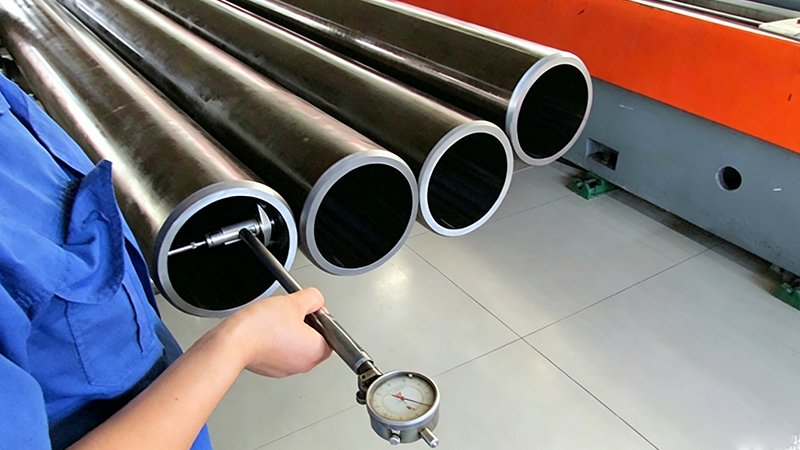
The external surface of a honed cylinder tube needs corrosion protection because it’s exposed directly to salt air, but the internal bore needs a different kind of attention — it’s protected from direct salt exposure by the piston and seals, but any moisture that does get past the wipers sits against the bore in a low-airflow environment, which can actually be worse for localized corrosion than open air exposure.
We specify anti-rust oil treatments and, where the application calls for it, enhanced coating processes on both surfaces rather than assuming the bore is automatically protected just because it’s enclosed.
Material Grade Selection for Marine Duty
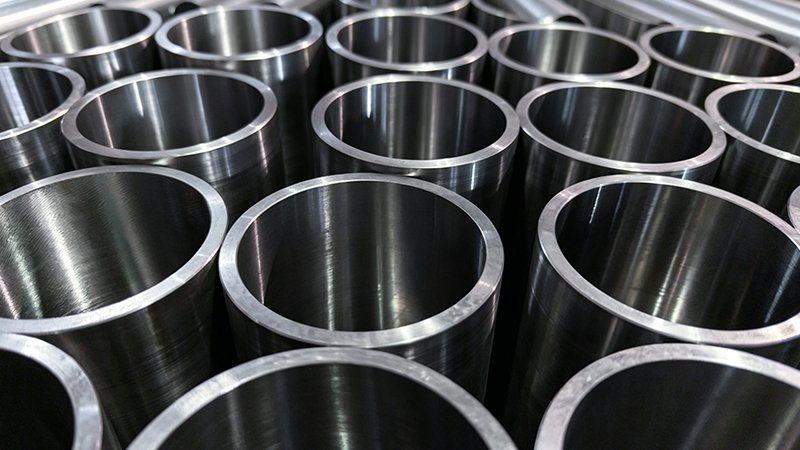
Standard carbon steel tube can work for marine applications when the protective coating and anti-rust treatment are matched correctly, but for equipment with higher corrosion risk — cranes working dockside in tropical humidity, or equipment exposed to direct sea spray — we often recommend upgrading the base material or adding supplementary corrosion protection rather than relying on coating alone.
This is a case where the material decision and the coating decision need to be made together. A good coating on a marginal base material still fails early once the coating gets even a small scratch from normal handling or assembly.
Straightness and Fit for Welded Marine Cylinder Assemblies
Port equipment cylinders are frequently large-bore, long-stroke designs, and they’re typically welded into their end caps just like other heavy equipment cylinders. The same straightness verification principle applies here as with other welded applications — checking straightness only before welding misses distortion introduced during the weld cycle itself.
For marine-duty tube specifically, we also check that the anti-rust coating survives the weld heat-affected zone without breaking down, because a coating that degrades near the weld seam creates a corrosion starting point exactly where the cylinder structure is most stressed.

A Corrosion Case Worth Knowing About
One pattern we’ve seen in port equipment: a cylinder barrel passes its salt spray certification test and initial inspection, then develops visible corrosion at the weld heat-affected zone within the first year of dockside service, well before the rest of the barrel shows any issue. The salt spray test result was accurate for the base tube — it just didn’t account for what happens to the coating during the customer’s own welding process downstream.
The fix in this type of case involves either specifying a coating that better tolerates the expected weld heat input, or applying supplementary corrosion protection to the heat-affected zone after welding is complete. It’s a reminder that a tube’s certification test result and its performance after the customer’s own fabrication process are two different things.
How We Verify Corrosion Performance
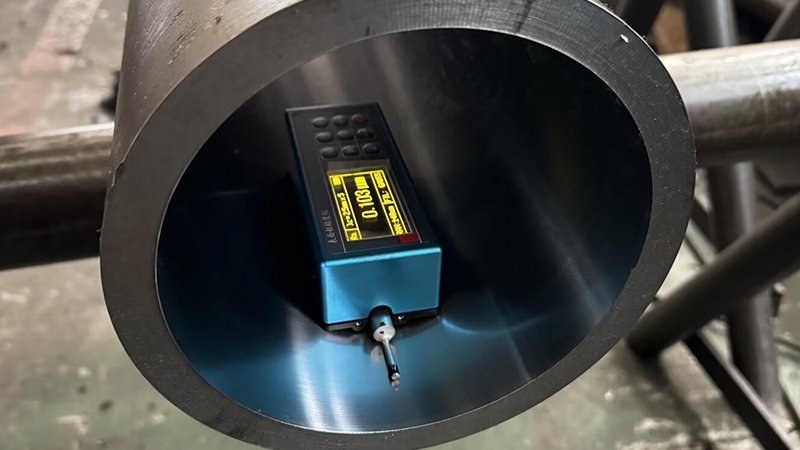
We run salt spray testing on request for customers who need documented corrosion resistance data for their own end-customer submittals, alongside our standard dimensional and surface inspection. For marine-duty orders, we also visually inspect coating consistency across the full tube length rather than relying only on spot checks, since a thin patch anywhere along the tube becomes the corrosion starting point.

What to Send With Your RFQ
For marine or port equipment applications, tell us the expected environment (dockside, open sea spray, or enclosed marine engine room), whether the tube will be welded into the finished cylinder, and any salt spray duration requirement from your own specification. This lets us recommend the base material and coating combination together instead of quoting a generic industrial tube.
Frequently Asked Questions
Is a high salt spray test rating enough to guarantee marine performance?
Not on its own. Salt spray testing measures accelerated corrosion resistance under a specific lab condition, but real-world performance also depends on coating adhesion, bore finish, and how the coating survives downstream processes like welding.
Does the internal bore of a marine cylinder need corrosion protection too?
Yes. Moisture that gets past the seals can sit against the bore in a low-airflow environment, which can be worse for localized corrosion than open air exposure on the external surface.
Can honed tube coating survive the welding process for marine cylinder assembly?
It depends on the coating type and the weld heat input. We check that the anti-rust coating tolerates the heat-affected zone, and can recommend supplementary protection for that area when needed.
What information helps you recommend the right marine-duty honed tube?
The expected operating environment, whether the tube will be welded, and any salt spray duration requirement from your own specification. This lets us match base material and coating together rather than quoting generically.
References & Further Reading
Internal resources:
External references:
- ASTM B117, Standard Practice for Operating Salt Spray (Fog) Apparatus — the standard test method behind salt spray hour ratings referenced in this article: astm.org
- ISO 9001:2015, Quality Management Systems — Requirements, referenced for our batch-inspection process: iso.org

Tell Us Your Environment, Not Just Your Salt Spray Number
If you’re specifying honed tube for port, marine, or coastal equipment, a salt spray hour figure alone doesn’t tell the whole story. Tell us the actual operating environment and your fabrication process, and we’ll recommend a base material and coating combination that’s matched to how the cylinder will actually be built and used.